Recipe
Serves
2 to 3 1×
Serves 2 to 3Prep 10 minCook 15 minTotal 25 min
Ingredients
Method
- Combine the kombu dashi, soy sauce, and mirin in a saucepan. Heat until steaming, then remove from the heat.
- Cut the vegetables into thin, even pieces. Dry them thoroughly with kitchen paper.
- Heat the frying oil to 170 to 180°C in a heavy saucepan.
- Beat the cold egg with the ice-cold water. Add the flour and cornflour, then stir briefly until lumpy.
- Dust a small batch of vegetables with flour. Dip them in the batter and allow excess batter to drip away.
- Fry in small batches until pale golden and crisp. Cook thin soft vegetables for 1 to 2 minutes and denser vegetables for 3 to 4 minutes.
- Drain the tempura on a wire rack. Skim crumbs from the oil before frying the next batch.
- Serve immediately with the dipping sauce and optional grated daikon or ginger.
Crispy Vegetable Tempura (Japanese, 25 Min)
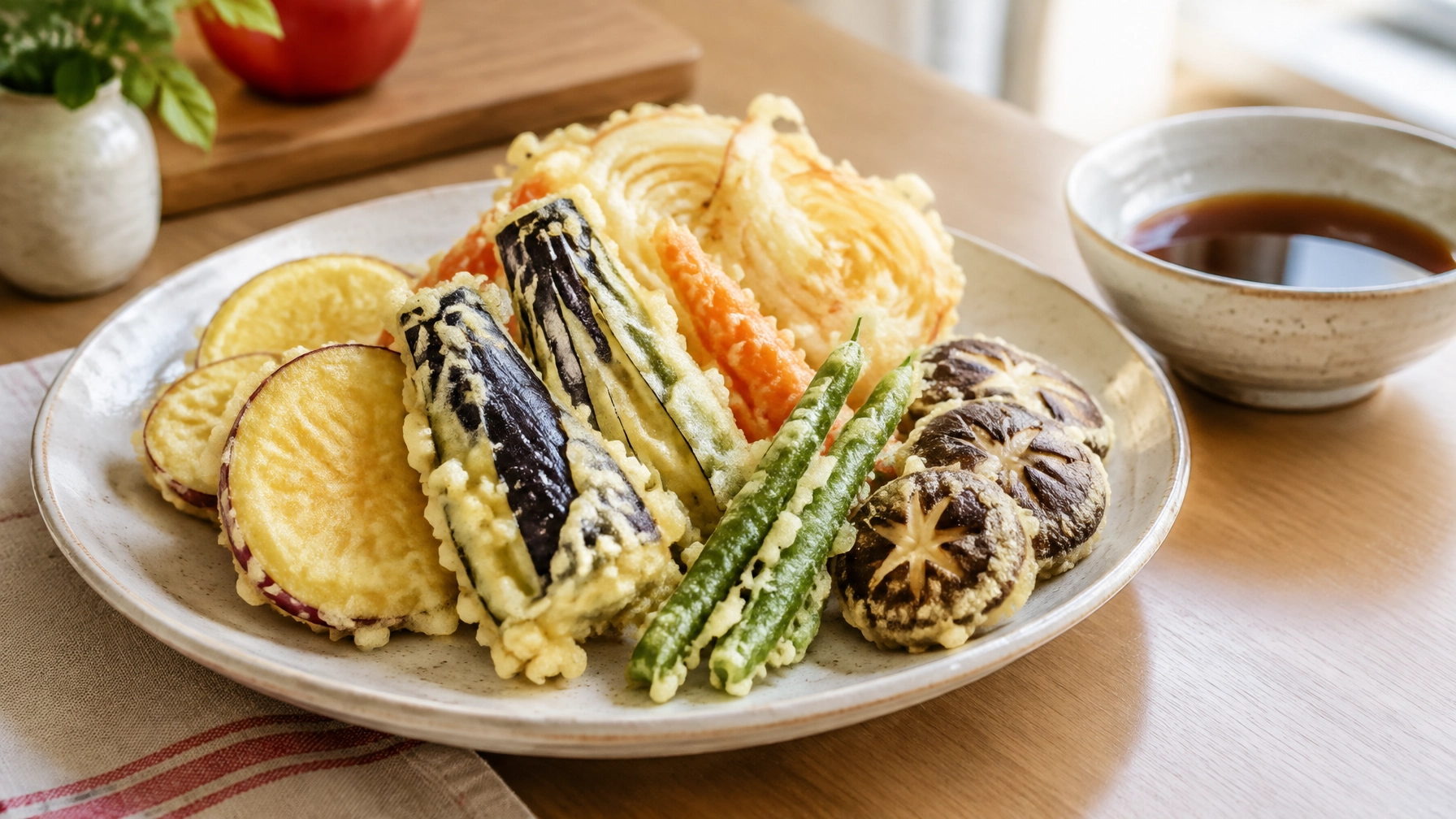
Crispy vegetable tempura uses cold batter, dry vegetables, and carefully controlled oil to produce a light, delicate coating in 25 minutes.
Overview
Vegetable tempura is a Japanese dish of vegetables coated in a thin batter and fried until pale golden. The batter should remain light and irregular rather than thick and smooth. The method depends on three controls: cold ingredients, minimal mixing, and stable oil temperature.
This recipe serves two to three people. It uses a selection of vegetables, including sweet potato, aubergine, carrot, onion, green beans, and shiitake mushrooms. Use all of them or select four or five based on availability.
The accompanying dipping sauce is a simple kombu-dashi mixture with soy sauce and mirin. It is savoury, lightly sweet, and designed to complement rather than cover the crisp coating.
Tips
Keep the batter cold
Cold water and a cold egg slow gluten development. Keep the bowl over ice if the kitchen is warm. Prepare only as much batter as required, and use it immediately.
Do not overmix
A smooth batter is not the goal. Overmixing develops gluten and produces a dense, chewy coating. A few lumps create the uneven, delicate surface associated with Japanese tempura.
Control the oil
Oil that is too cool produces greasy tempura. Oil that is too hot darkens the coating before the vegetables are tender. Maintain the temperature between 170 and 180°C, checking between batches.
Do not overcrowd the pan. Adding too many pieces at once causes the temperature to drop. The food will absorb more oil and the batter may become soft.
Choose suitable vegetables
Thinly sliced firm vegetables cook reliably within the stated time. Sweet potato, carrot, aubergine, pumpkin, onion, mushrooms, and green beans are suitable choices. Dense vegetables should be cut thinner than watery vegetables.
Pat vegetables dry before battering. Wet surfaces can cause oil to spit and prevent the batter from forming an even coating.
Drain on a rack
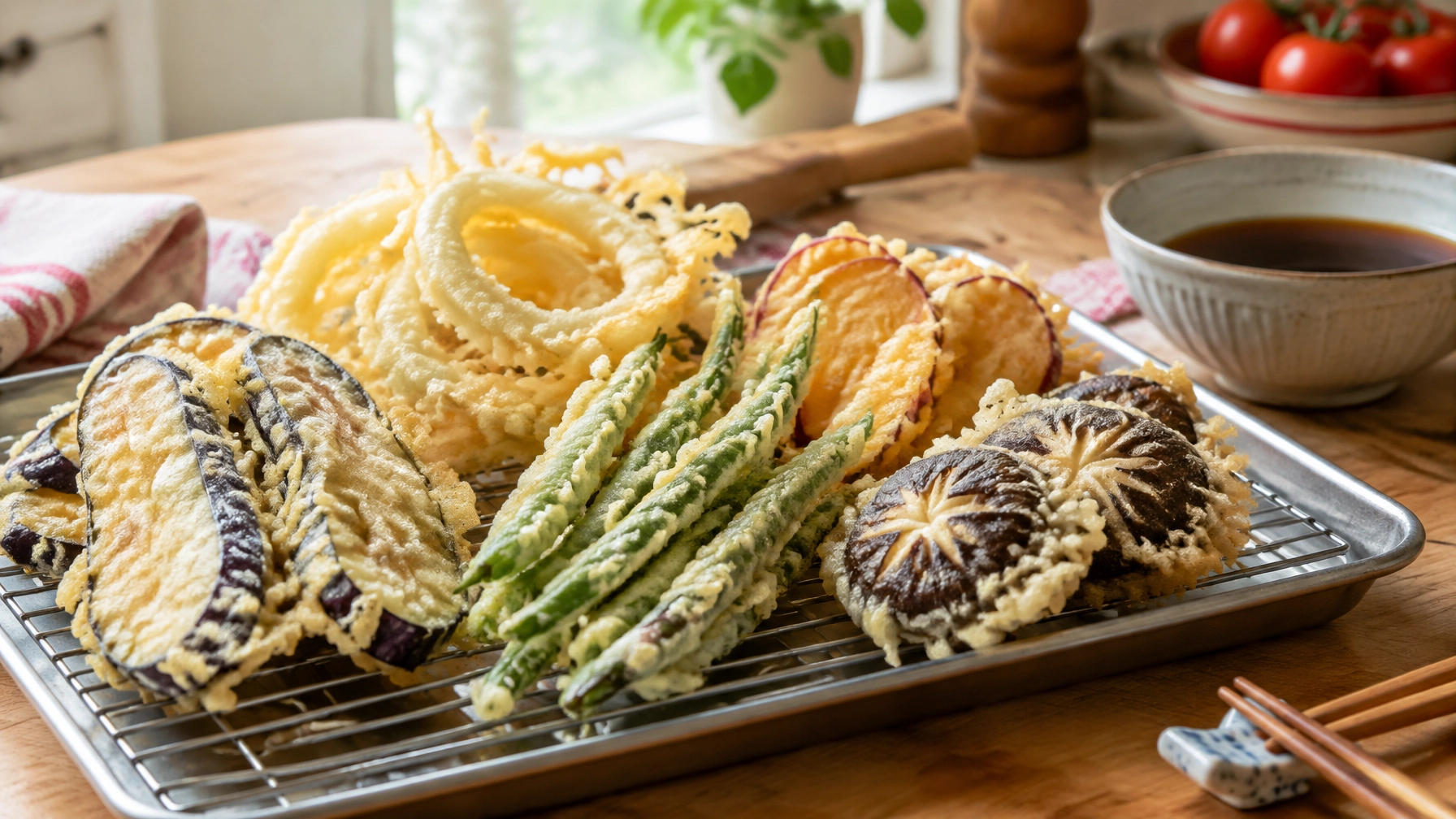
A wire rack allows steam and excess oil to escape. A flat layer of kitchen paper can also be used, but do not place the pieces directly on top of one another.
Variations
Gluten-free tempura
Replace the plain flour with a gluten-free flour blend. Use gluten-free soy sauce or tamari in the dipping sauce. Check the product labels if avoiding gluten strictly.
Mushroom tempura
Use shiitake, oyster, or chestnut mushrooms. Wipe them clean rather than soaking them. Large mushrooms can be halved, while small mushrooms can be fried whole.
Spicy dipping sauce
Add a small amount of grated ginger, sliced spring onion, or shichimi togarashi to the soy dipping sauce. Add these at the table so the sauce remains clear and fresh.
Plant-based batter
Replace the egg with an additional 50 ml of ice-cold sparkling water. The batter will be slightly less rich but will remain light if it is mixed briefly and used immediately.
Food Safety
Hot oil requires direct supervision. Use a heavy pan on a stable hob, keep handles turned away from the edge, and never leave the oil unattended. Keep raw batter away from ready-to-eat foods and wash hands, utensils, and work surfaces after handling the egg.
The Food Standards Agency provides guidance on safe cooking temperatures, oil management, and avoiding overloading frying equipment. The FDA also advises treating raw eggs as a potential Salmonella risk and keeping egg-based mixtures properly chilled before cooking.
Allow used oil to cool completely before handling. Strain it only when cool enough to manage safely. Discard oil that is dark, smoky, foamy, or unpleasant in smell.
FAQ
Why is my tempura batter not crispy?
The oil may be too cool, the batter may have been overmixed, or the pan may have been overcrowded. Check the oil temperature and fry in smaller batches.
Can I prepare the batter in advance?
No. Tempura batter is best made immediately before frying. As the flour absorbs water, the batter becomes heavier and less delicate.
Why does the batter fall off the vegetables?
The vegetables may be wet or the coating may be too thick. Dry the vegetables thoroughly, dust them lightly with flour, and allow excess batter to drip briefly before frying.
Can I reheat vegetable tempura?
Tempura is best served immediately. If reheating is necessary, place it on a rack in a hot oven or air fryer until crisp. Avoid sealing hot tempura in a container, as steam will soften the coating.
What oil is best for tempura?
Use a neutral oil with a high smoke point, such as rapeseed, sunflower, vegetable, or peanut oil. Avoid strongly flavoured oils that compete with the vegetables and dipping sauce.
Is tempura vegetarian?
Vegetable tempura is vegetarian when made with vegetable ingredients and a vegetarian dashi. Use kombu dashi rather than fish-based dashi, and check the soy sauce and mirin labels if required.
<a id="recipe"></a>