Recipe
Prep 1H35 minCook 30 minTotal 2H5 min
Ingredients
Method
- Put both flours and the yeast in a large bowl. Stir to combine.
- Dissolve the sugar in the warm milk. Pour it into the flour mixture and beat with a wooden spoon for 3 to 4 minutes, until smooth and elastic.
- Cover the bowl and leave the batter in a warm place for about 1 hour, or until risen and bubbly. If the room is cool, allow up to 90 minutes.
- Stir the bicarbonate of soda and salt into 150 ml of warm water. Beat this mixture into the batter. Add more water gradually, as needed, until the batter falls from a spoon in a thick ribbon.
- Cover the bowl and rest the batter for 20 minutes. Meanwhile, lightly grease four crumpet rings and a flat griddle or heavy-based frying pan.
- Set the rings in the pan over medium-low heat. Spoon batter into each ring, filling it about halfway.
- Cook for 5 to 8 minutes, until bubbles have formed and broken and the tops look mostly set. If the bases brown too fast, reduce the heat.
- Carefully lift off the rings with tongs. Turn the crumpets and cook for 1 to 2 minutes more, until set through.
- Transfer to a plate and repeat with the remaining batter, greasing the rings and pan as needed. Serve warm with butter, or cool and toast later.
Crumpets (Homemade)
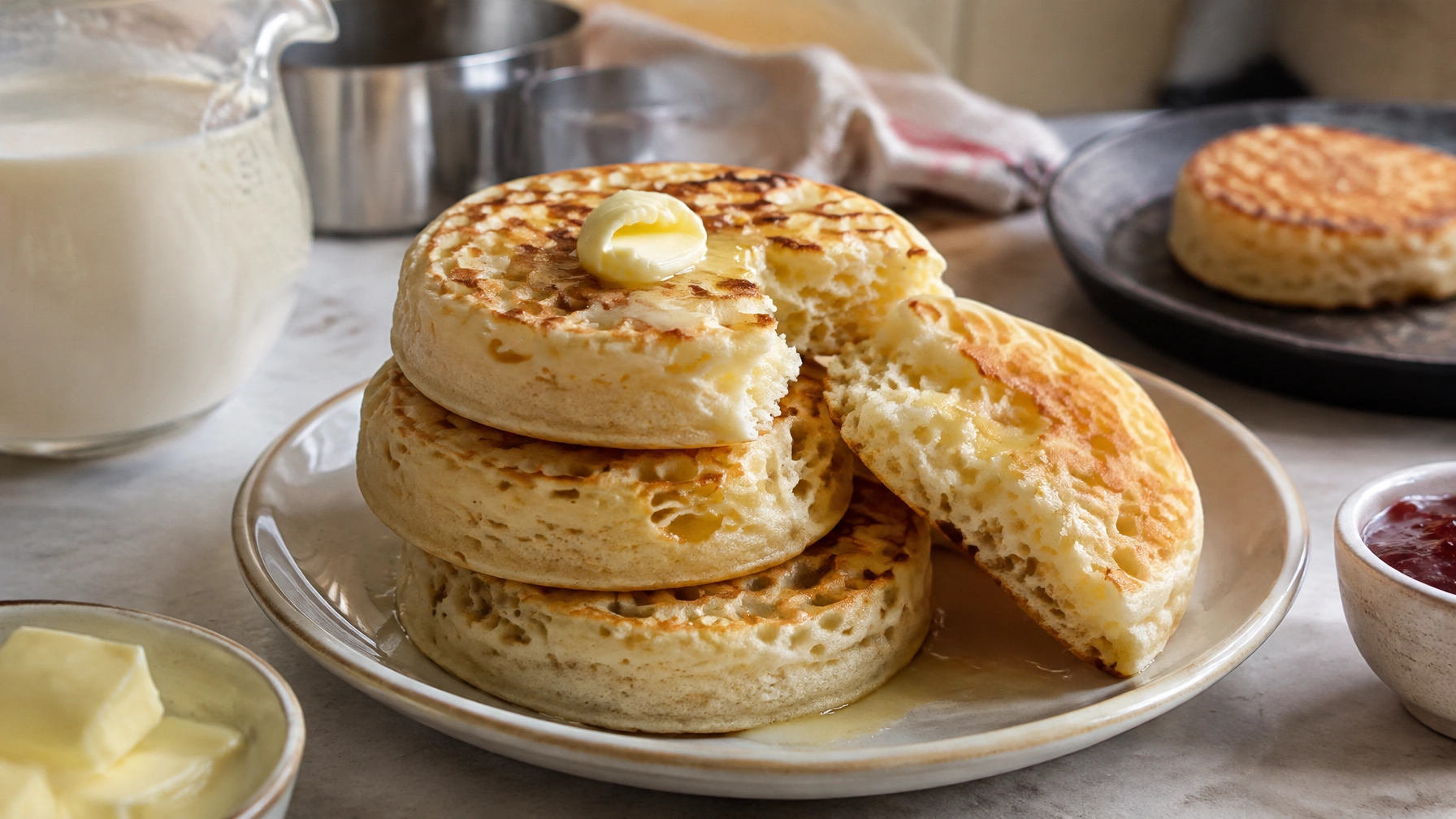
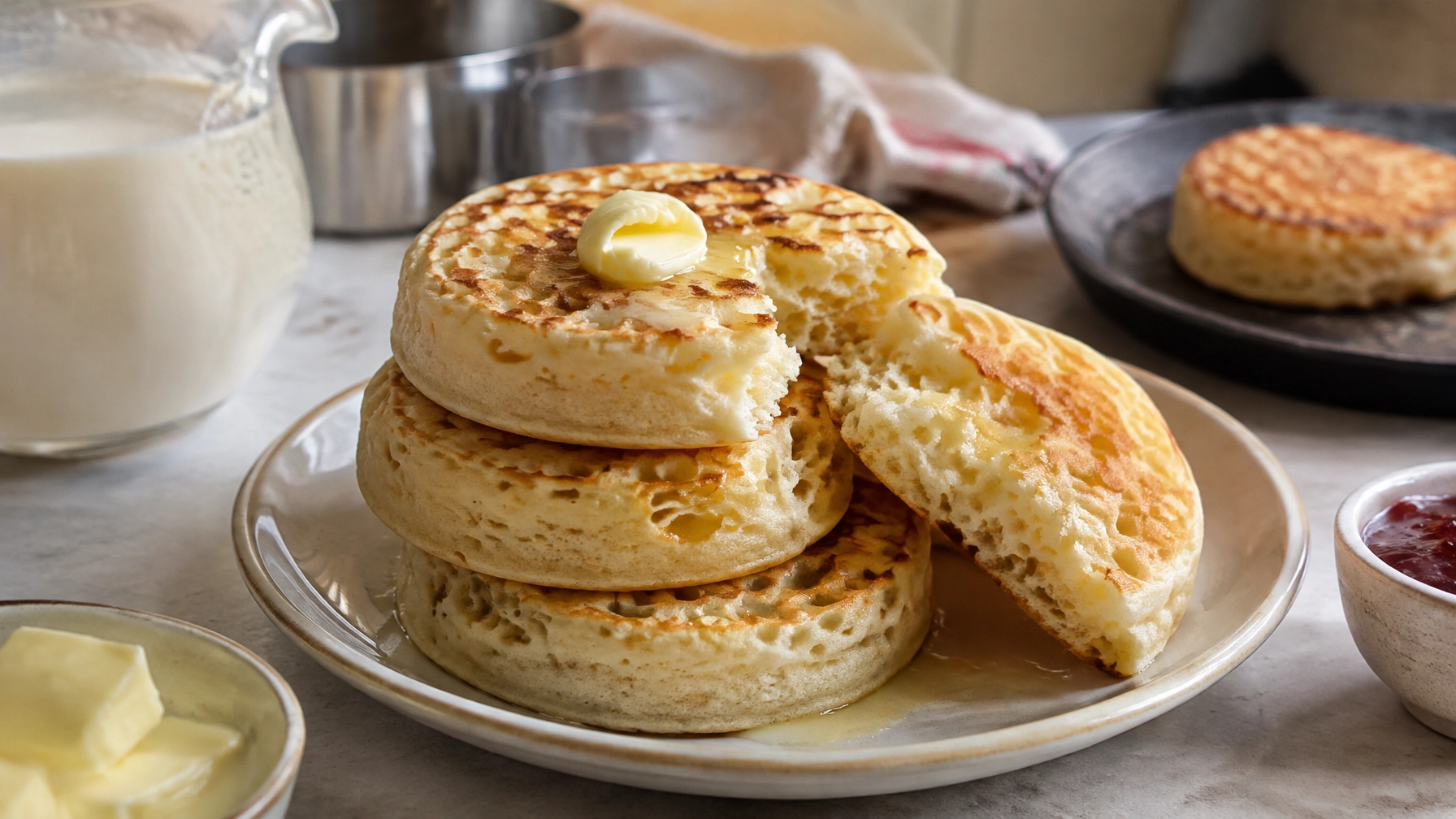
Homemade crumpets are yeast-raised griddle breads with a soft centre, a lightly browned base and a surface full of small holes.
This method makes ten crumpets using a simple batter, metal rings and a heavy-based frying pan or griddle. Allow time for the batter to rise and rest before cooking. For the most even results, keep the pan at medium-low heat and wait for bubbles to appear before turning each crumpet.
Making the batter
Crumpets depend on a loose, well-aerated batter. Yeast gives it lift, while bicarbonate of soda helps create a light texture and visible holes. Beating the flour and milk together for several minutes develops the batter and helps it hold its shape inside the rings.
The batter should be thicker than pouring cream but loose enough to settle level in each ring. Flour absorbs liquid differently, so add the water gradually. Begin with 150 ml, then add more a little at a time if the mixture seems stiff. It should fall from a spoon in a thick ribbon.
A warm, draught-free place helps the yeast work. After the first rise, the batter should look airy and may show bubbles across the surface. The exact time can vary with room temperature. Give it up to 90 minutes if needed, but judge its appearance as well as the clock.
Cooking the crumpets
Use a flat griddle or heavy-based non-stick pan. Medium-low heat gives the batter time to cook through while the bubbles open. If the pan is too hot, the base can brown before the top has set. If it is too cool, the crumpets may cook slowly and remain dense.
Grease the pan and the inside of the rings lightly. Set the rings in the pan and allow them to warm briefly before adding batter. Fill each ring only about halfway, leaving room for the mixture to rise. A small ladle or a few spoonfuls is usually enough, depending on ring size.
Watch the surface during cooking. Bubbles should form, rise and break. When the top looks mostly set and no longer wet, lift the ring carefully with tongs. Turn the crumpet and cook the second side briefly to set it. If you prefer a paler top, you can finish cooking without turning, provided the centre is fully cooked.
Troubleshooting
If the crumpets have few holes, the batter may need more time to rise, or the pan may be too hot. Let the mixture rest until it is visibly aerated. Lower the heat and give the bubbles time to form and break.
If the batter spreads beneath the rings, check that the rings sit flat and are greased lightly rather than heavily. The batter may also be too thin. Stir in a spoonful of flour, wait a few minutes, then test another crumpet.
If the bottoms brown quickly while the tops remain wet, reduce the heat. If the crumpets are dense, check that the yeast is in date and that the milk was warm rather than hot. Hot liquid can damage yeast activity.
Serving and storing
Serve the crumpets warm with butter. For a crisp edge, let them cool completely, then toast them before serving. Their open texture holds melted butter well, so split or toast them just before eating.
They also work with jam, honey or marmalade. For a savoury option, serve with a soft cheese or a poached egg. Keep toppings simple if you want the crumpet’s toasted flavour and texture to remain the focus.
Storing leftovers
Cool cooked crumpets before packing them in a clean, covered container. Refrigerate leftovers promptly and eat them within two days, or freeze them for longer storage. Toast chilled or frozen crumpets until hot throughout.
Do not taste uncooked batter. Flour can contain harmful bacteria, and it needs to be thoroughly cooked before eating. The Food Standards Agency provides guidance on handling flour and flour products safely.
Recipe
Servings
Makes 10 crumpets.
Prep time
1 hour 35 minutes, including rising and resting.
Cook time
About 30 minutes.
Total time
About 2 hours 5 minutes.
Tips
- Use warm, not hot, milk and water.
- Add water gradually. The batter should be thick but not stiff.
- Avoid overfilling the rings; the crumpets need space to rise.
- Keep the heat moderate so the centres cook before the bases become too dark.
- Cook one test crumpet first. Adjust the heat or batter consistency before cooking the rest.
Variations
- Replace up to 50 g of plain flour with wholemeal flour for a slightly nuttier flavour.
- Add a pinch of cinnamon to the dry ingredients for a gently spiced version.
- For savoury crumpets, add finely chopped chives to the batter after its final rest.
- Use a dairy-free milk alternative if preferred. Warm it gently before mixing.
FAQ
Why are there no holes in my crumpets?
The batter may not have risen enough, or the pan may be too hot. Let the batter become visibly bubbly and cook over medium-low heat.
Can I make the batter ahead?
This recipe is designed to be mixed, risen and cooked in one session. For best results, follow the stated rise and rest times rather than leaving the batter out for an extended period.
Do I have to turn the crumpets?
Turning helps set the top and cook the centre. You can leave them unturned if the tops are fully set and the crumpets are cooked through.
Can cooked crumpets be frozen?
Yes. Cool them fully, pack them in a freezer-safe container and freeze. Toast from frozen until hot throughout.