Recipe
Prep 15 minCook 22 minTotal 37 min
Ingredients
Method
- Heat the oven to 180C. Line a 12-hole muffin tin with paper cases. If your cases are very thin, place two together so they hold their shape more securely.
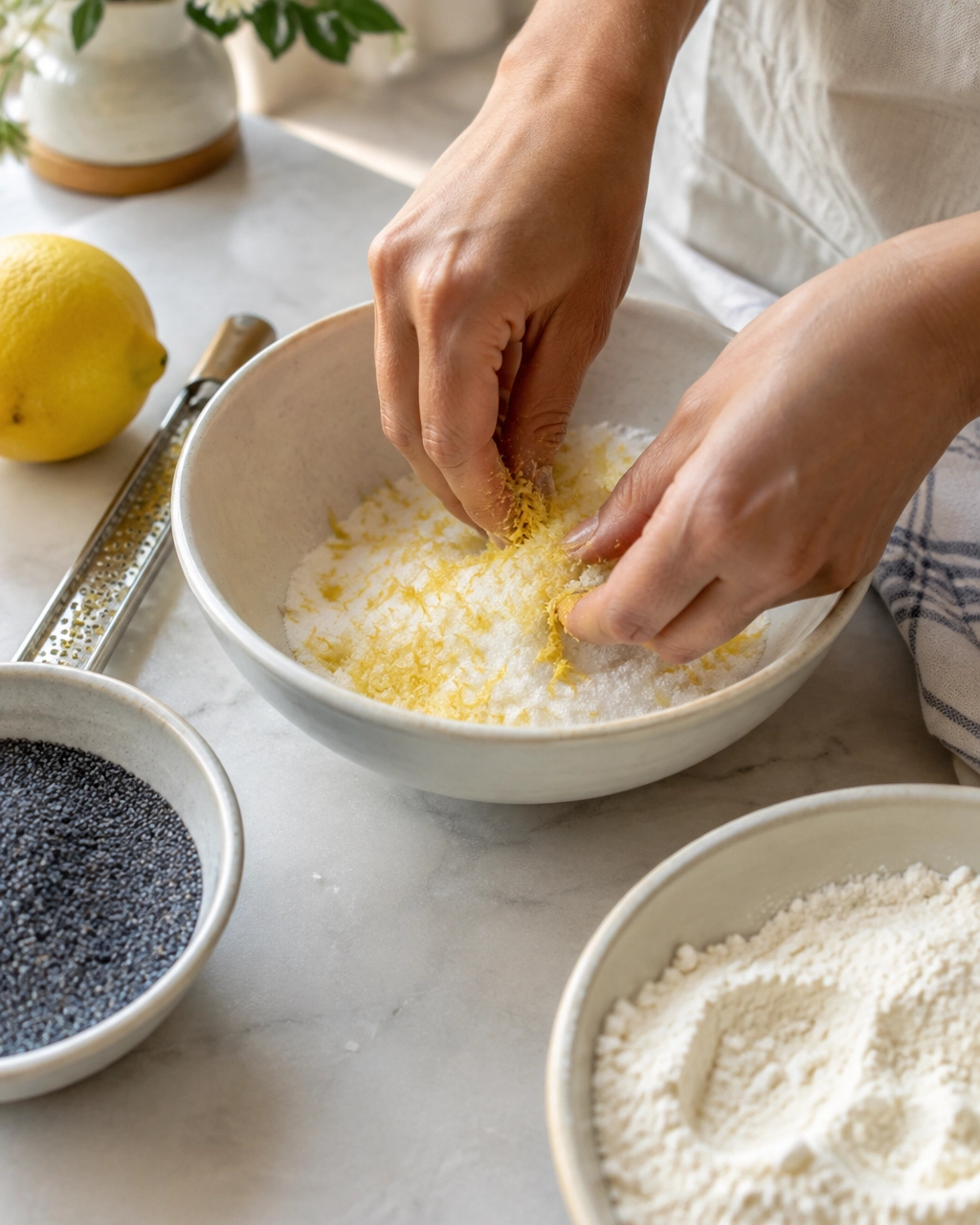
- Put the caster sugar and lemon zest in a large mixing bowl. Rub them together with your fingertips for about 30 seconds, until the sugar feels slightly damp and smells strongly of lemon. This releases the natural oils from the zest.
- In a separate bowl, whisk together the plain flour, baking powder, bicarbonate of soda, salt and poppy seeds. Make sure the raising agents are evenly distributed.
- Add the lemon juice to the plant milk. Stir briefly and leave the mixture for a minute or two. The lemon juice and plant milk form an acidic mixture that activates the bicarbonate of soda in the batter.
- Add the lemon and plant milk mixture, neutral oil and vanilla extract to the bowl containing the lemon sugar. Whisk until the wet ingredients are combined.
- Pour the wet mixture into the bowl of dry ingredients. Fold with a spatula until the flour has just disappeared. Do not beat the batter, and do not continue mixing to remove every small lump. Overmixing can make the muffins dense rather than tender.
- Divide the batter between the paper cases, filling each one about three-quarters full. Try to distribute the batter evenly so the muffins bake at the same rate.
- Bake for 22 minutes, or until the tops are lightly golden and a skewer inserted into the centre of a muffin comes out clean or with only a few moist crumbs attached.
- Leave the muffins in the tin for 5 minutes, then transfer them to a wire rack. Allow them to cool completely before glazing.
- To make the glaze, sift the icing sugar into a small bowl. Add the lemon juice gradually, stirring until you have a smooth, thick glaze. Drizzle it over the cooled muffins with a spoon.
Vegan Lemon Poppy Seed Muffins (Bakery Style)
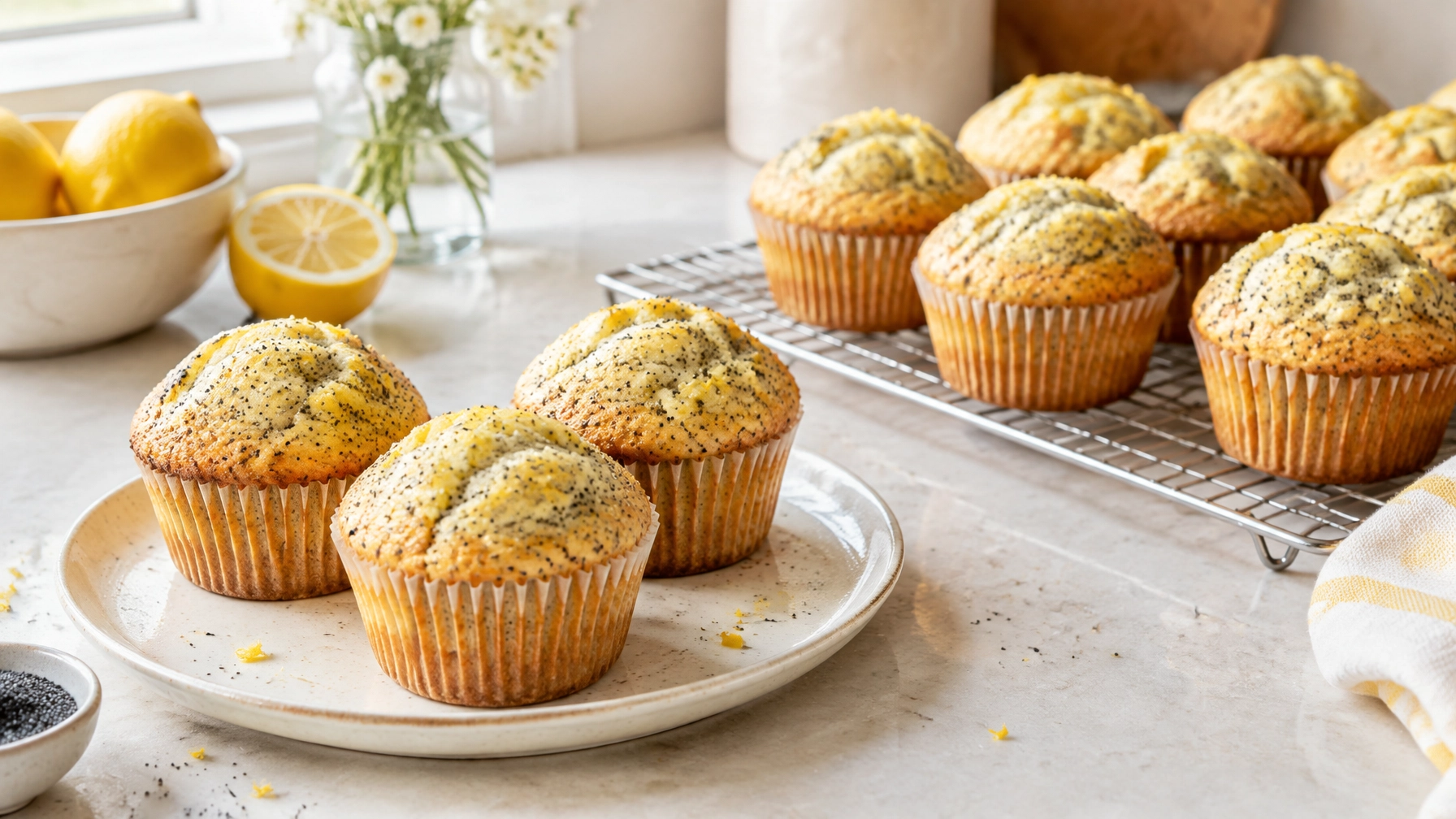
These muffins are easy to make with everyday ingredients and no eggs or dairy. Fresh lemon zest gives the batter a strong citrus aroma, while lemon juice and plant milk work with the bicarbonate of soda to help the muffins rise.
The method is simple: rub the zest into the sugar, mix the wet and dry ingredients separately, then fold them together gently. The less you mix, the softer the muffins will be.
Why you will like these muffins
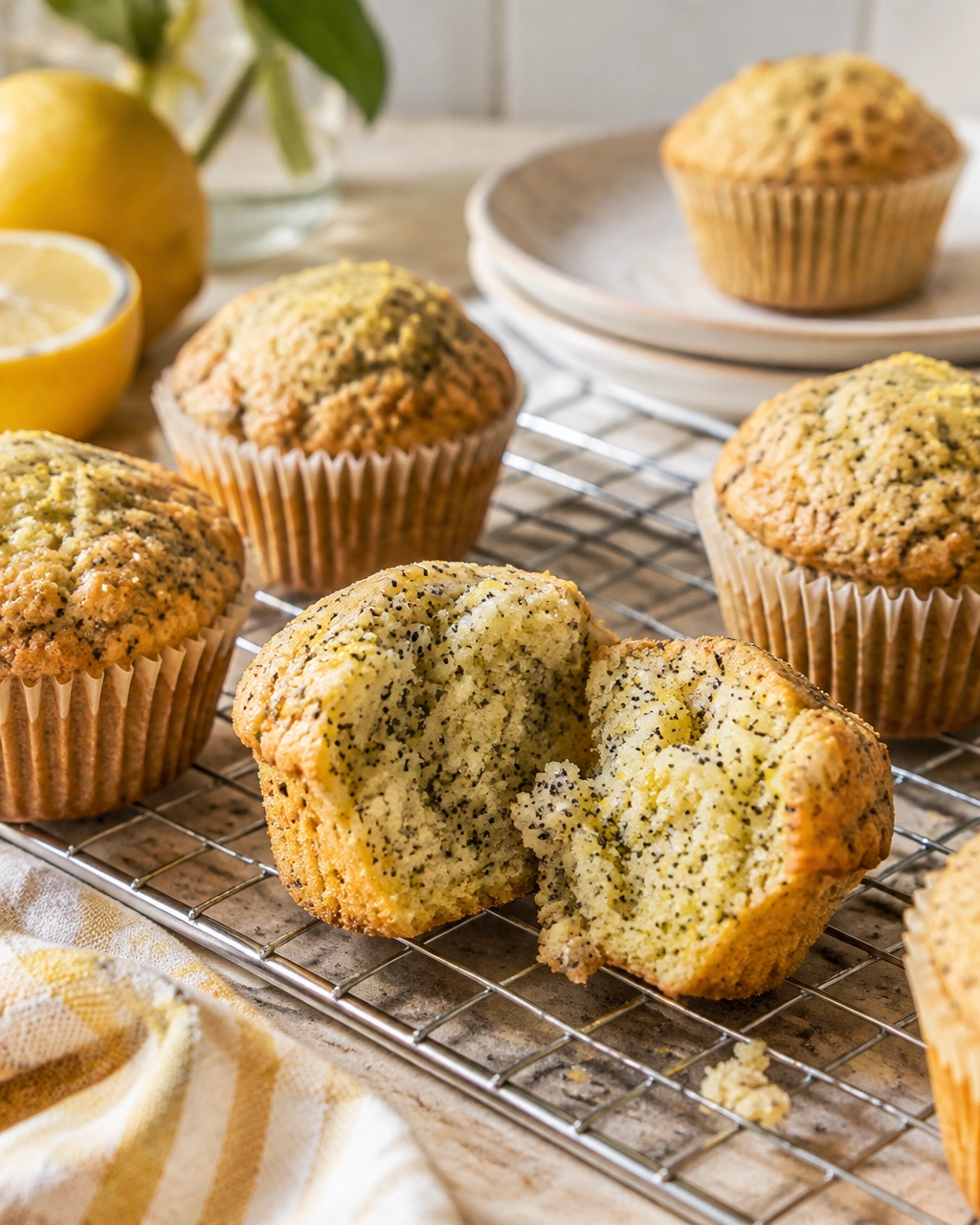
These lemon poppy seed muffins have the shape and texture of a bakery muffin without requiring specialist equipment. The tops are lightly golden, the centres stay moist, and the poppy seeds add a delicate crunch.
The recipe makes 12 muffins, which are ideal for breakfast, an afternoon bake or a simple dessert. The lemon glaze is optional, but it adds extra brightness and gives the muffins a polished finish.
For the best flavour, use unwaxed lemons if available. The zest carries much of the lemon's fragrant oil, so it is worth taking the time to rub it into the sugar before adding the other ingredients.
Recipe
Servings: 12 muffins
Prep time: 15 minutes
Cook time: 22 minutes
Total time: 37 minutes
Tips for the best muffins
Rub the zest into the sugar before adding the liquid ingredients. This takes less than a minute, but it gives the muffins a fuller lemon flavour than simply stirring the zest into the flour.
Measure the flour carefully. Too much flour can produce a dry, heavy muffin. For the most accurate result, weigh it with digital kitchen scales. If you use measuring cups, spoon the flour into the cup and level the top rather than scooping directly from the bag.
Do not overmix the batter. A few small lumps are normal. Fold only until the dry ingredients are incorporated, then stop. Mixing further develops the gluten in the flour and can reduce the tenderness of the crumb.
Use plant milk that is unsweetened and fairly neutral in flavour. Soy, oat and almond milk can all work well. Avoid strongly flavoured or heavily sweetened varieties, as they can change the taste of the finished muffins.
Check the muffins near the end of the cooking time. Every oven is different, and a fan-assisted oven may bake them slightly faster. The skewer test is more reliable than colour alone.
Cool the muffins completely before adding the glaze. If they are still warm, the glaze will melt into the tops instead of forming a neat finish.
Variations
For a stronger lemon flavour, add the finely grated zest of one extra lemon to the glaze. Use only the yellow outer layer of the peel, as the white pith can taste bitter.
For an orange and poppy seed version, replace the lemon zest and juice with orange zest and juice. Keep the method and quantities the same.
Add a small handful of blueberries to the batter before filling the cases. Fold them in carefully at the end, using as few strokes as possible.
For a more pronounced almond flavour, replace half the vanilla extract with almond extract. Use a small quantity, as almond extract is concentrated.
To make smaller muffins, divide the batter between 16 cases and begin checking them after 16 minutes. The total cooking time will depend on the size of the cases.
Storage
Store the glazed muffins in an airtight container at room temperature for up to 3 days. Keep them away from direct heat and sunlight.
The unglazed muffins can be frozen once completely cool. Wrap them individually or place them in a freezer-safe container for up to 2 months. Defrost at room temperature, then add fresh glaze before serving.
Frequently asked questions
Can I use a different plant milk?
Yes. Unsweetened soy, oat or almond milk are suitable. Choose a plant milk with a mild flavour so it does not overpower the lemon.
Why do the lemon juice and plant milk need to be combined?
The lemon juice adds acidity to the plant milk. This acidity activates the bicarbonate of soda when the wet and dry ingredients are combined, helping the muffins rise and creating a softer crumb.
Can I leave out the poppy seeds?
Yes. The muffins will still work without them. You can replace them with an equal quantity of finely chopped nuts, or simply omit them.
Why are my muffins dense?
The most common causes are overmixing, too much flour or old raising agents. Fold the batter only until combined, measure the ingredients carefully and check that the baking powder and bicarbonate of soda are within their use-by dates.
Can I make the glaze thicker?
Yes. Add a little more icing sugar for a thicker glaze. If it becomes too thick to drizzle, add lemon juice a few drops at a time until it reaches the consistency you want.