Recipe
Serves
6 1×
Serves 6Prep 20 minCook 1H15 minTotal 1H35 min
Ingredients
- 450 g (1 lb) beef stew meat, cut into 2 cm cubes
- 2 tablespoons olive oil or vegetable oil, divided
- 1 medium onion, diced
- 2 carrots, peeled and sliced
- 2 celery stalks, sliced
- 3 garlic cloves, minced
- 2 litres (5 cups) beef broth
- 1 can (400 g / 14 oz) diced tomatoes, including their juices
- 2 medium potatoes, peeled and cut into small cubes
- 250 g (about 2 cups) frozen mixed vegetables
- 1 teaspoon dried Italian seasoning
- 1 bay leaf
- 1 tablespoon Worcestershire sauce, optional
- 1 teaspoon salt, plus more to taste
- ½ teaspoon black pepper
- Chopped fresh parsley, optional, for serving
Method
- Pat the beef dry and season with salt and pepper.
- Heat 1 tablespoon of oil in a large pot over medium-high heat. Brown the beef in batches for 4–5 minutes per batch. Transfer it to a bowl.
- Add the remaining oil to the pot. Cook the onion, carrots and celery for 4–5 minutes.
- Add the garlic and cook for 30–60 seconds.
- Return the beef to the pot. Add the broth, tomatoes, Italian seasoning, bay leaf and Worcestershire sauce.
- Bring the soup to a boil. Reduce the heat, cover and simmer for 45–60 minutes.
- Add the potatoes and simmer for approximately 20 minutes, until nearly tender.
- Add the frozen vegetables and cook for another 5–10 minutes.
- Remove the bay leaf. Taste and adjust the seasoning.
- Rest the soup for 5 minutes, then serve.
Easy Beef Vegetable Soup (Hearty Weeknight Meal)
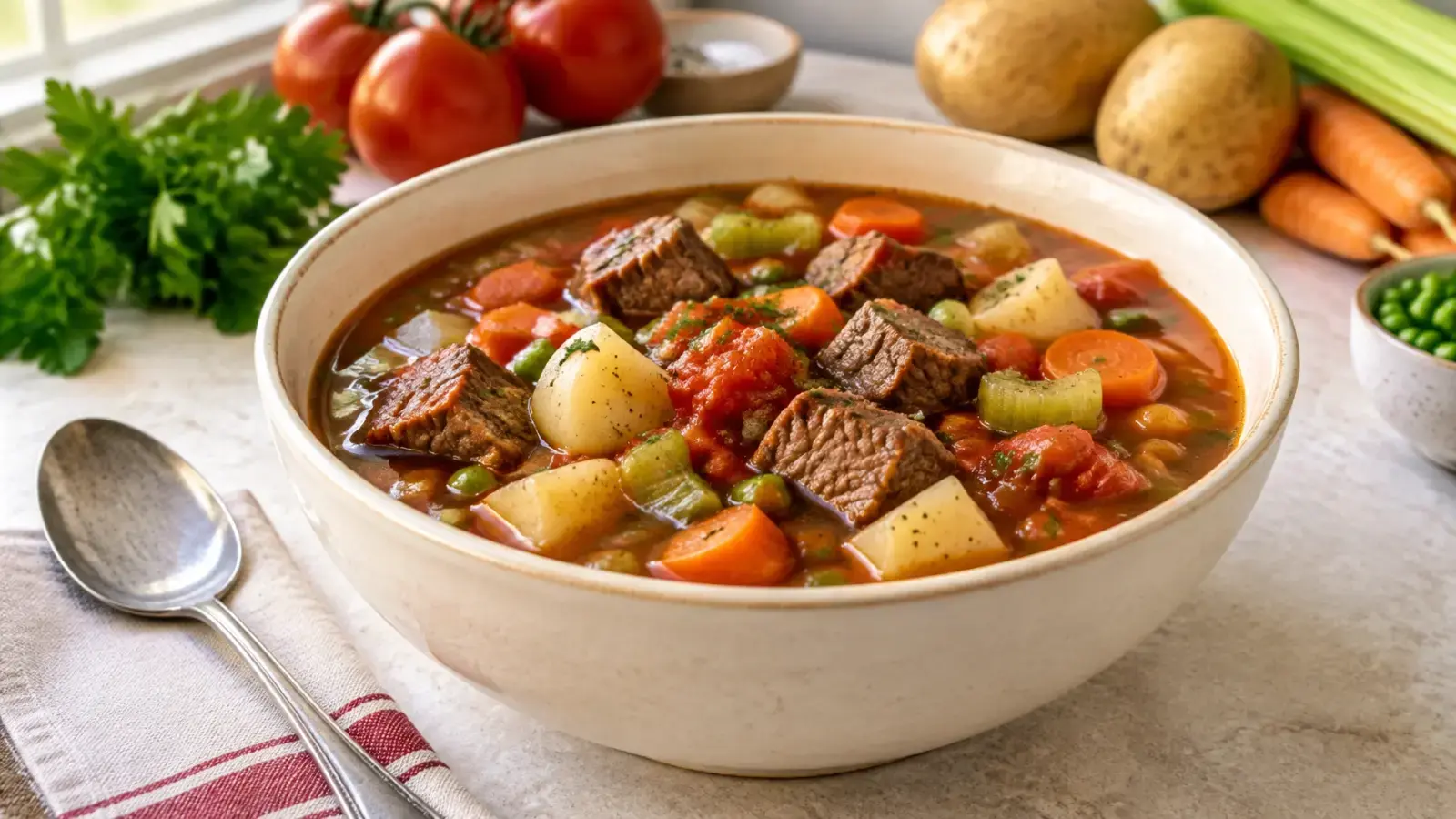
This easy beef vegetable soup is a practical one-pot dinner made with browned beef stew meat, everyday vegetables, potatoes, tomatoes and beef broth. The soup is filling without being complicated, and most of the cooking time requires only occasional stirring.
Browning the beef first develops a deeper flavour, while the vegetables add texture and balance. The finished soup can be served immediately or prepared ahead for lunches and reheated during the week.
Preparation
1. Brown the beef
Pat the beef dry with kitchen paper. Season it with a portion of the salt and black pepper.
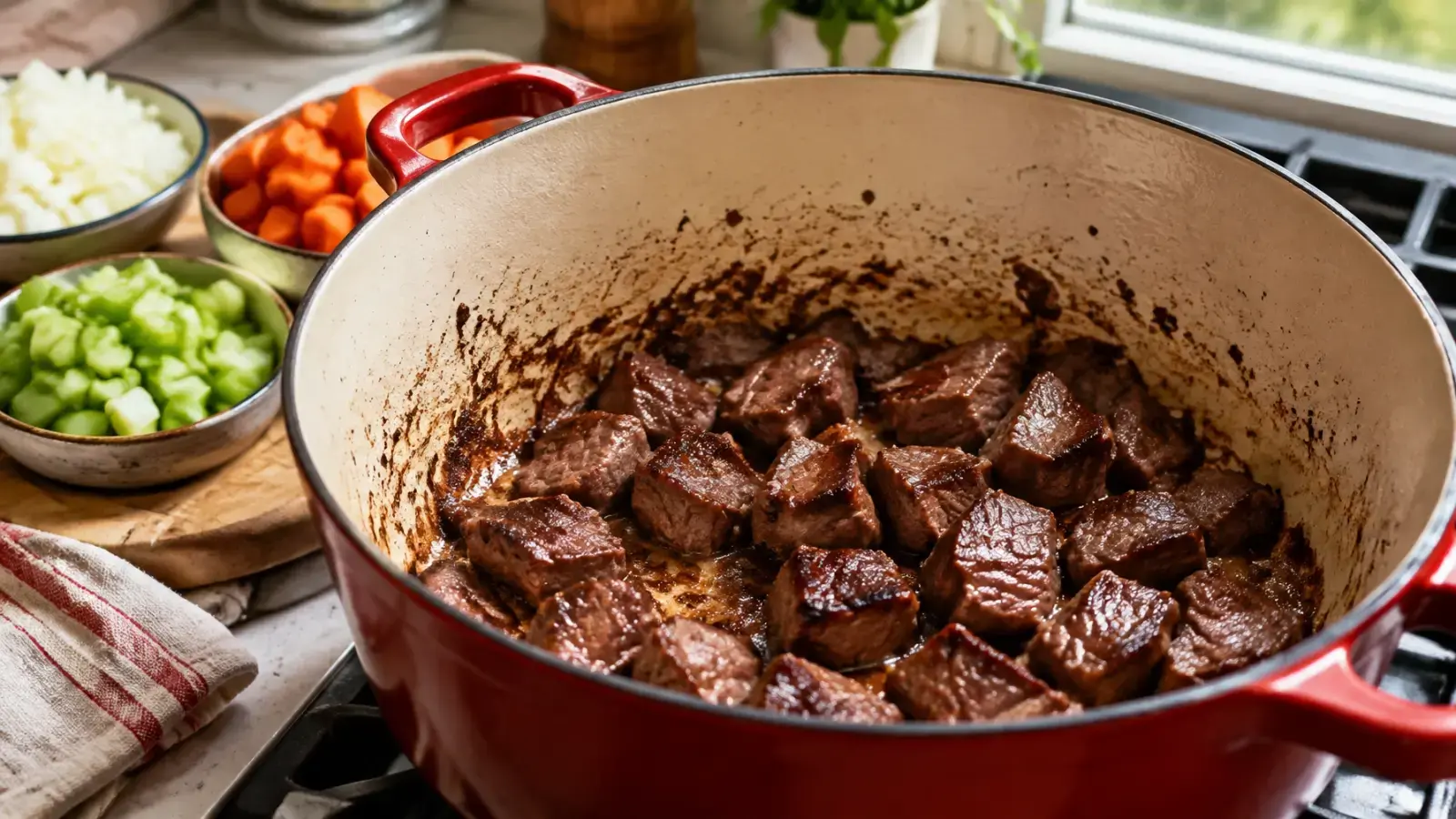
Heat 1 tablespoon of oil in a large heavy-based pot over medium-high heat. Add the beef in a single layer. Work in batches if necessary; overcrowding the pot will cause the beef to steam instead of brown.
Cook for approximately 4–5 minutes, turning the pieces occasionally, until browned on several sides. Transfer the beef to a clean bowl.
2. Cook the vegetables
Add the remaining oil to the pot. Add the onion, carrots and celery. Cook for 4–5 minutes, stirring regularly, until the onion begins to soften.
Add the garlic and cook for a further 30–60 seconds. Do not allow the garlic to brown heavily, as it can become bitter.
3. Add the broth and tomatoes
Return the browned beef to the pot. Add the beef broth, diced tomatoes, Italian seasoning, bay leaf and Worcestershire sauce, if using.
Stir firmly across the bottom of the pot to loosen any browned pieces. These pieces contribute flavour to the broth.
Bring the liquid to a full boil, then reduce the heat to low. The soup should maintain a gentle simmer.
4. Simmer the beef
Cover the pot and simmer for 45–60 minutes. Stir once or twice during cooking.
The beef may be safe to eat before it is tender, but stew meat requires extended gentle cooking to develop a soft texture. Continue simmering if the beef is still firm.
5. Add the potatoes
Stir in the diced potatoes. Cover the pot again and cook for approximately 18–20 minutes, or until the potatoes are nearly tender when pierced with a fork.
Cutting the potatoes into small, uniform cubes helps them finish at the same time as the other ingredients.
6. Add the mixed vegetables
Add the frozen mixed vegetables. Simmer for 5–10 minutes, until the vegetables are heated through and tender.
Remove the bay leaf. Taste the soup and adjust the salt and pepper as required. If the broth is too concentrated, add a small amount of water or additional broth.
Allow the soup to stand for 5 minutes before serving.
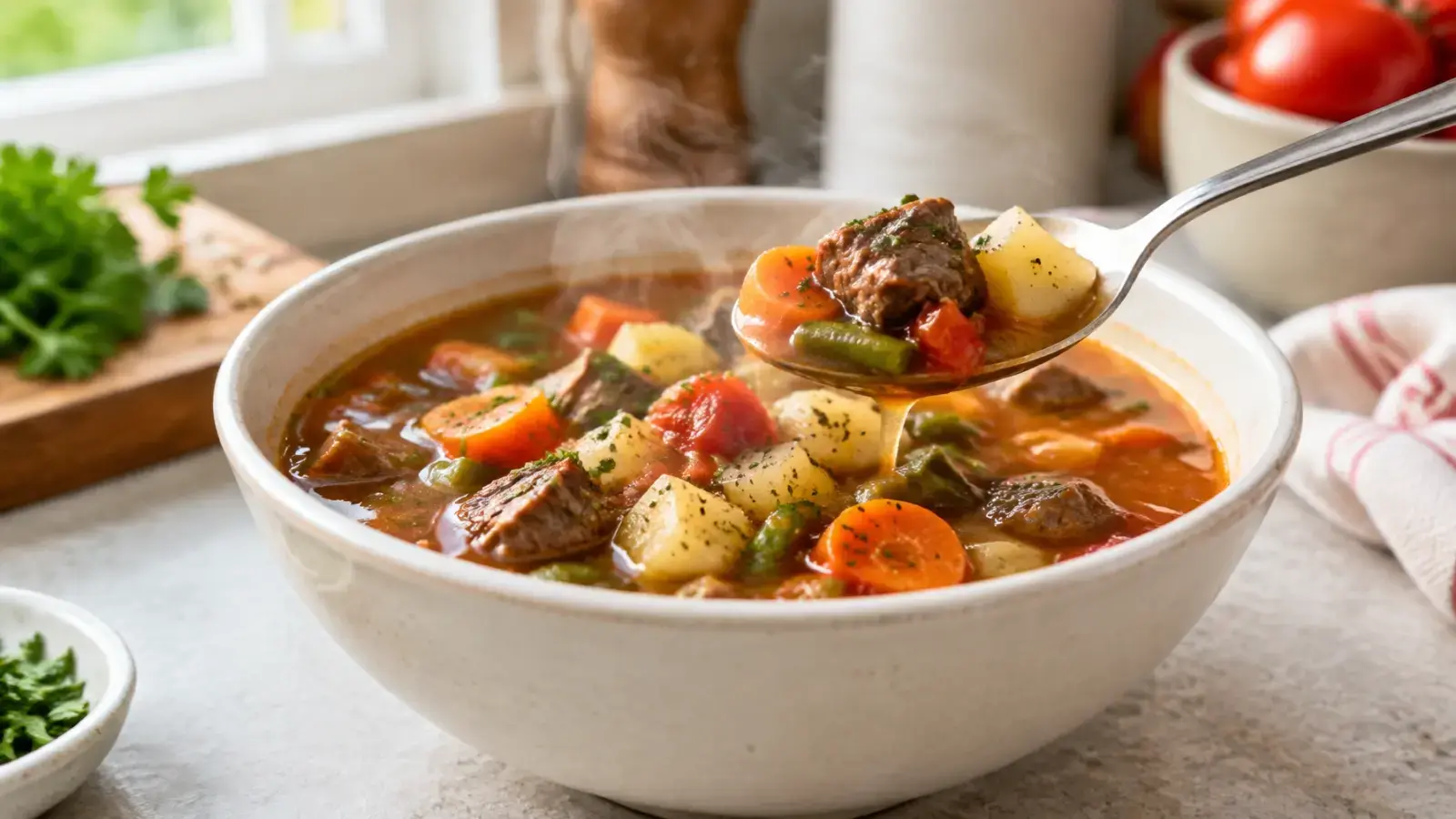
Serving
Serve the soup in warmed bowls with chopped parsley, if preferred. Crusty bread, toast or a simple green salad can be served alongside it.
The soup is substantial enough to function as a complete meal because it contains protein, starchy vegetables and several types of vegetables in one serving.
Tips
- Dry the beef before browning. Surface moisture prevents proper browning.
- Avoid overcrowding the pot. Brown the beef in batches when necessary.
- Use a gentle simmer. Vigorous boiling can make the broth cloudy and may toughen the meat.
- Cut vegetables evenly. Similar-sized pieces cook more consistently.
- Check the broth before adding extra salt. Commercial beef broth and Worcestershire sauce may already contain significant salt.
- Use a large pot. The ingredients should be covered by liquid without filling the pot to the rim.
- Allow resting time. Five minutes off the heat gives the broth time to settle and the flavours time to combine.
Variations
Use ground beef
Replace the stew meat with 450 g of lean ground beef. Brown it thoroughly, breaking it into small pieces, then continue with the recipe. Ground beef produces a different texture but reduces the simmering time.
Add beans
Add one drained and rinsed can of kidney beans, cannellini beans or butter beans with the mixed vegetables. This increases the fibre and makes the soup more substantial.
Change the vegetables
Use green beans, sweetcorn, peas, courgette, cabbage or chopped spinach. Add quick-cooking vegetables near the end so they retain some texture.
Make it spicy
Add ½ teaspoon of smoked paprika, a pinch of chilli flakes or a diced fresh chilli with the garlic.
Make it gluten-free
Check the labels on the beef broth, Worcestershire sauce and seasoning blend. Use certified gluten-free products where required.
Storage and reheating
Cool leftover soup promptly and transfer it to shallow, airtight containers. Refrigerate within 2 hours of cooking. The soup can be kept in the refrigerator for 3–4 days.
For longer storage, freeze the soup in individual portions. Leave space at the top of each container because the liquid expands as it freezes. For best quality, use frozen soup within 2–3 months.
Reheat on the hob over medium heat until steaming hot throughout. If using a microwave, stir the soup during reheating to distribute heat evenly. Add a little water or broth if the soup has thickened.
For general beef-handling guidance, refer to the USDA beef food-safety information.
FAQ
Can I make beef vegetable soup ahead of time?
Yes. The soup can be made one day ahead and refrigerated after cooling. The flavour often becomes more developed after resting overnight. Reheat it gently before serving.
Why is my beef still tough?
The beef may need more time at a gentle simmer. Stew meat becomes tender through slow cooking, so continue cooking until it can be easily pierced with a fork. Avoid boiling the soup aggressively.
Can I use fresh vegetables instead of frozen?
Yes. Add fresh vegetables according to their cooking time. Hard vegetables such as carrots and green beans can be added with the potatoes, while peas and spinach should be added near the end.
Can I make this soup in a slow cooker?
Yes. Brown the beef first for improved flavour, then transfer it to a slow cooker with the onion, carrots, celery, garlic, broth, tomatoes and seasonings. Cook on low for 7–8 hours or high for 4–5 hours. Add the potatoes during the final 2 hours and the frozen vegetables during the final 30 minutes.
How can I thicken the soup?
For a thicker broth, mash a few cooked potato pieces against the side of the pot and stir them into the soup. Alternatively, mix 1 tablespoon of cornflour with 2 tablespoons of cold water, stir it into the simmering soup and cook for 2–3 minutes.
Can I freeze beef vegetable soup with potatoes?
Yes, but the potatoes may become slightly softer after freezing and reheating. For the best texture, cook them until just tender rather than soft before freezing.