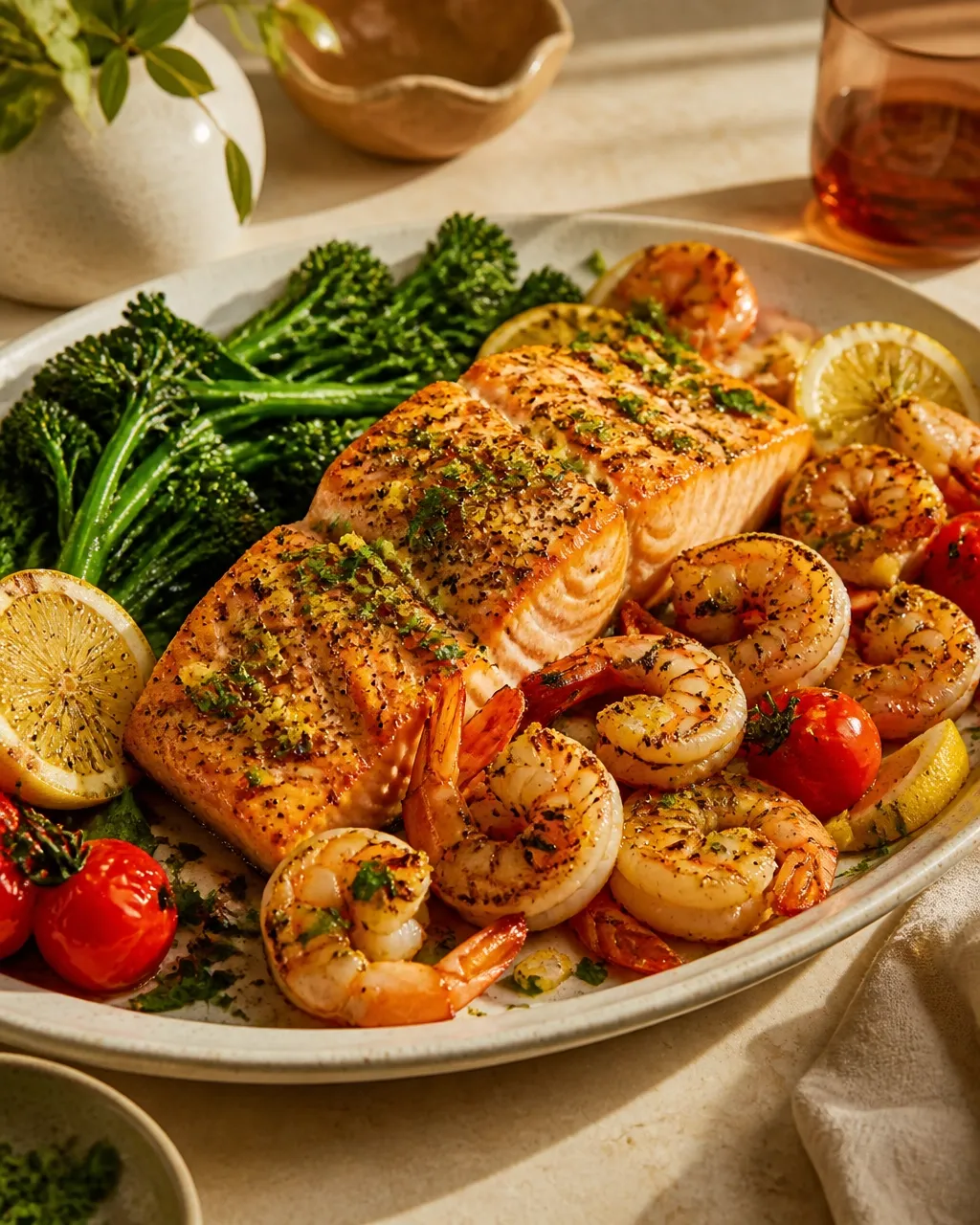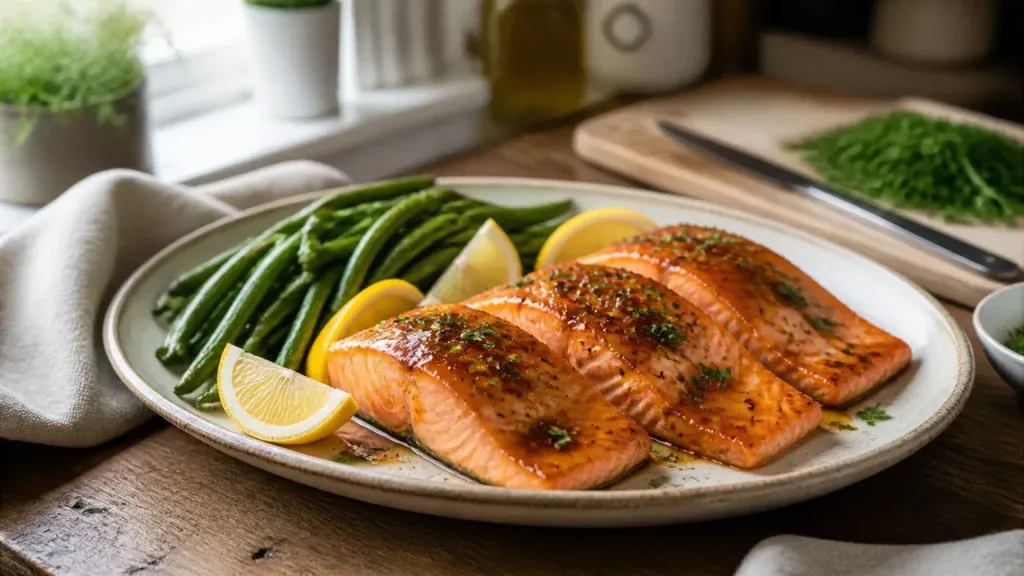
Recipe
Servings
Servings 1×
Ingredients
- Salmon
- Shrimp
- Garlic
- Lemon
- Honey
- Mustard
- Cream
- Butter
Method
- Pat the salmon thoroughly dry before you do anything else.
- Press the paper towel firmly over the top and sides, especially if the fillets came from a package with excess liquid.
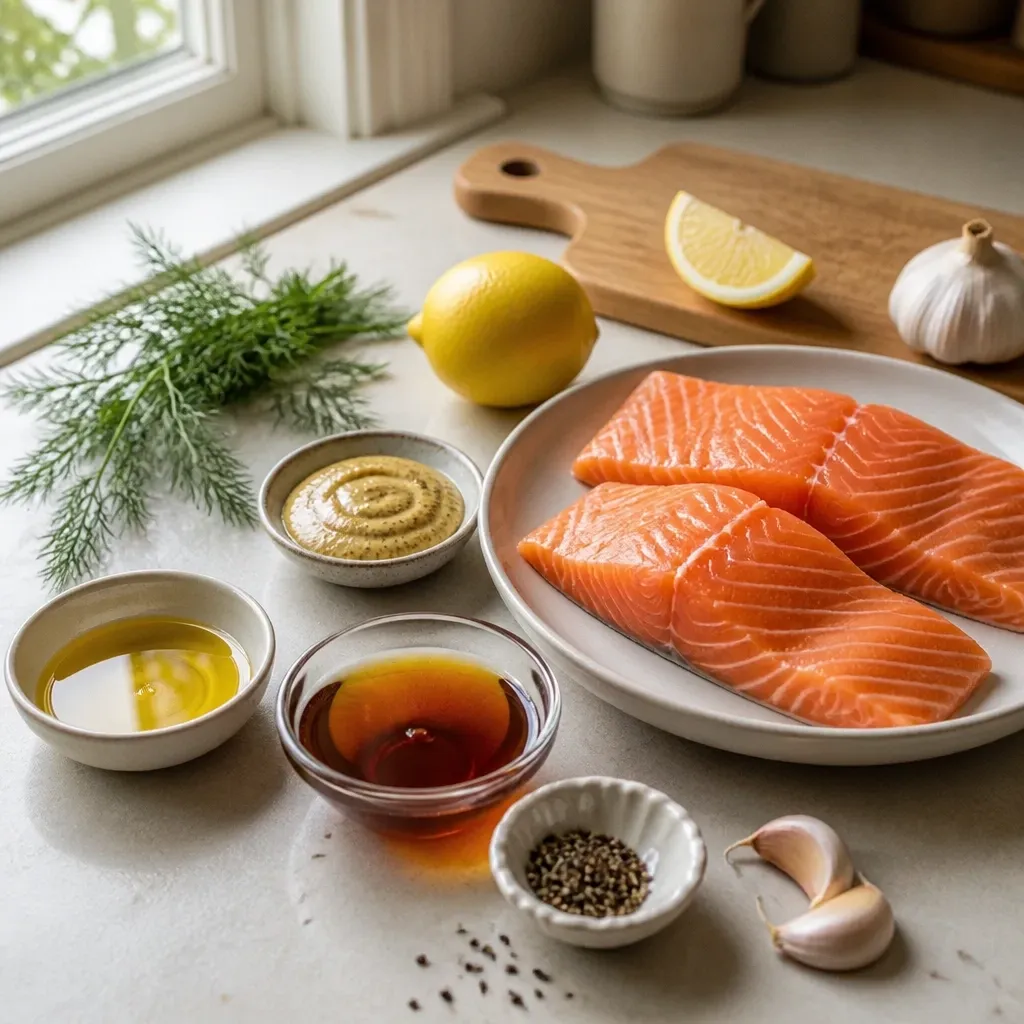
- Start with a glaze that tastes slightly sharper than you want at the table.
- Heat softens mustard’s bite, while the salmon’s fat rounds out the overall flavor.
- Add a small amount of lemon juice or mild vinegar when the mixture feels heavy.
- Brush on a thin coating first.
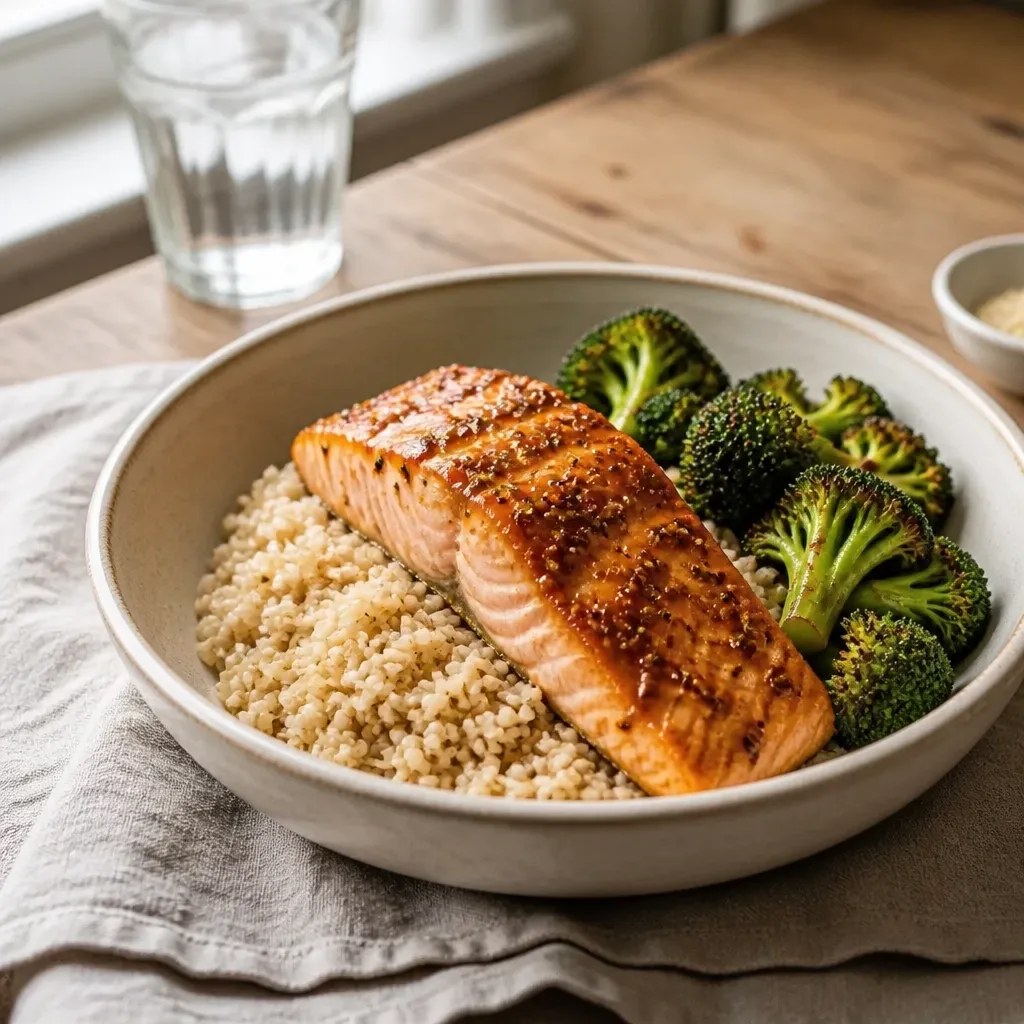
Maple and mustard were clearly meant to meet over salmon. One brings mellow sweetness, the other brings sharpness, and together they create a glaze that tastes far more complicated than it is. These salmon fillets are fast enough for a busy evening, polished enough for guests, and forgiving enough for anyone who has ever stared at a fish fillet wondering, “Is this done yet?” Use a few firm techniques, and dinner takes care of itself.
Tips & Technique: Make the Glaze Work for You
Dry salmon browns; wet salmon sulks
Pat the salmon thoroughly dry before you do anything else. This is not fussy chef behavior. It is basic surface chemistry.
Moisture on the fish must evaporate before the surface can become hot enough to brown. While that water is steaming away, the salmon is essentially being gently boiled at the exterior. You may still end up with cooked fish, but the glaze will look pale and slide around rather than cling and caramelize.
A dry surface allows heat to move directly into the outer layer. That encourages browning reactions, which create the savory, nutty flavors that keep sweet maple syrup from tasting one-dimensional. Press the paper towel firmly over the top and sides, especially if the fillets came from a package with excess liquid.
Keep the glaze balanced
Maple syrup supplies sugar, body, and color. Mustard contributes pungency and acidity. Salmon supplies richness. Your job is to keep those three forces from arguing too loudly.
Start with a glaze that tastes slightly sharper than you want at the table. Heat softens mustard’s bite, while the salmon’s fat rounds out the overall flavor. If the uncooked glaze tastes perfectly sweet and gentle, the finished dish may land a little flat.
Add a small amount of lemon juice or mild vinegar when the mixture feels heavy. Acidity does not make the salmon sour when used carefully. Instead, it reduces the perception of sweetness and helps your palate reset between bites. This is the same reason a squeeze of lemon can rescue a rich cream sauce. Brightness is a tiny ingredient with excellent manners.
Apply sugar in stages
Do not bury the salmon under a thick layer of maple glaze before it goes into a hot oven. Maple syrup contains sugar, and sugar can burn before the center of the fish is ready.
Brush on a thin coating first. This gives the salmon flavor and starts the browning process without creating a sticky sugar shield. Reserve some glaze for the final minutes or for brushing over the cooked fillets.
That second application tastes fresher and looks more vibrant. It also gives you control. If the surface is browning quickly, wait until the salmon is nearly cooked before adding more. If the fish looks dry, a final brush restores shine without forcing you to keep cooking it.
Use this staged approach for other sweet sauces too. Honey, brown sugar, and fruit preserves all behave better when you respect their tendency to caramelize, and then burn if ignored.
Match heat to the thickness
Salmon fillets do not cook according to the clock alone. Thickness matters more than optimism.
A thin tail piece may be ready while a thick center-cut fillet is still translucent in the middle. Arrange pieces of similar thickness together whenever possible, or remove thinner pieces earlier. Use the center rack for even oven heat and start checking before you think the fish could possibly be done. It probably can.
A hot oven encourages quick cooking and light caramelization, but do not use maximum heat just to save a few minutes. The maple sugars may darken too quickly, leaving you with a bitter surface and an undercooked center. Moderate high heat gives the glaze time to color while the salmon cooks through.
Trust a thermometer more than a fork
Insert an instant-read thermometer into the thickest part of the fillet, approaching from the side if possible. This gives you a much more useful reading than checking the thinnest edge.
For the official food-safety benchmark, the USDA guidance for seafood recommends cooking fish to 145°F. At that temperature, the salmon will be opaque, firm, and fully cooked.
Many cooks prefer to remove salmon earlier for a softer, moister texture, allowing carryover cooking to finish the center. If you choose that route, pay close attention to the fish’s source, handling, and your household’s food-safety needs. When in doubt, follow the official 145°F recommendation. A thermometer is cheaper than a ruined dinner and much less dramatic than poking the fish repeatedly.
Leave the fish alone while it rests
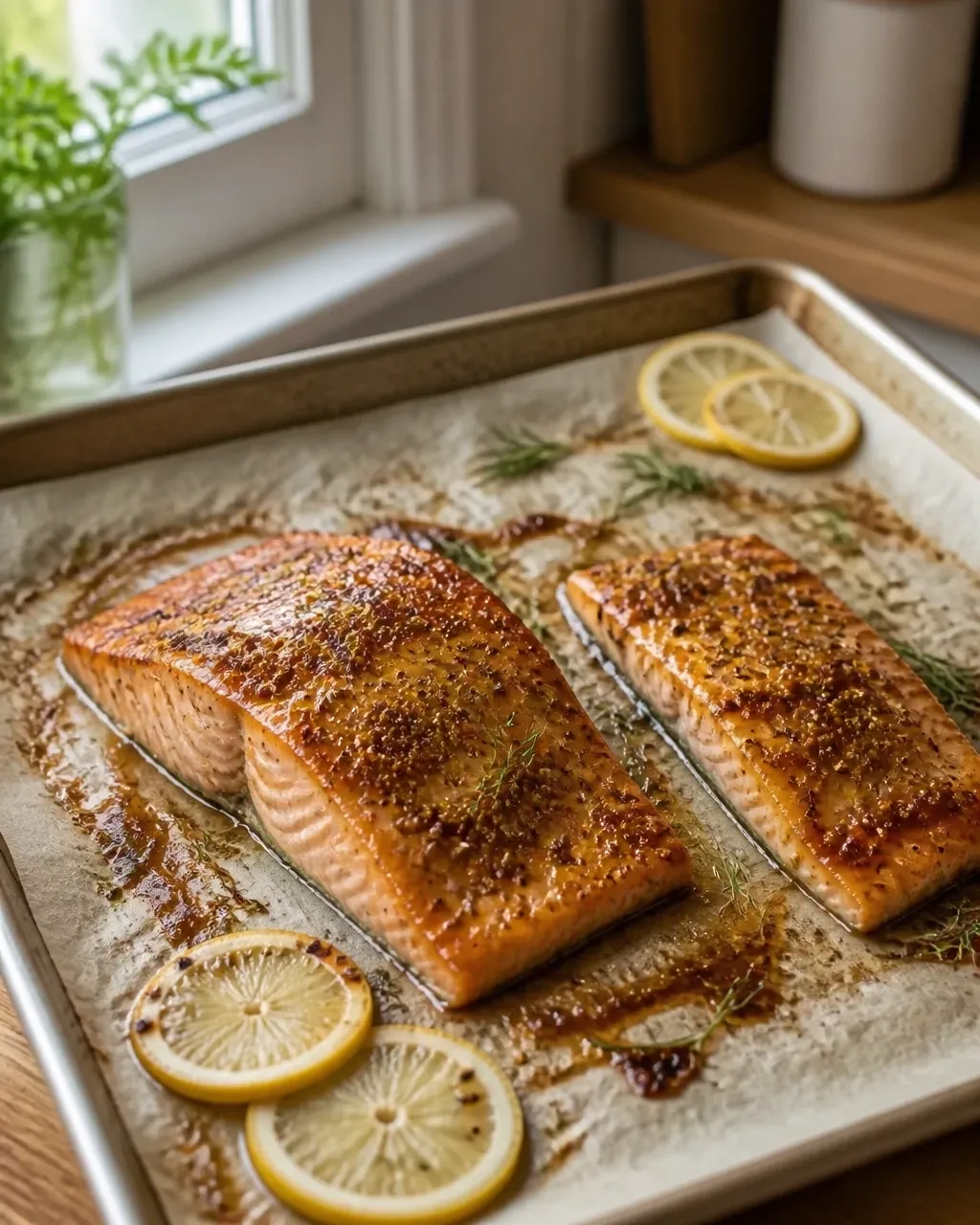
Give the salmon a few minutes to rest after cooking. This allows heat to distribute through the center and gives the juices a chance to settle.
Do not cover it tightly with foil. Trapped steam can soften the glaze and make the surface greasy. A loose piece of foil is fine if the kitchen is cold, but in most cases, simply move the tray away from the heat and start assembling the sides.
Look for flesh that has changed from translucent deep pink to a lighter opaque pink. It should separate into large flakes when gently pressed, not collapse into dry crumbs. If the fillet is leaking a lot of white protein, you have probably pushed it too far. That white material is albumin, a harmless protein forced out by excessive heat. Safe? Usually. Attractive? Not exactly.
These details are the backbone of reliable quick meals: control moisture, manage sugar, measure doneness, and stop cooking on time. The same principles make our 15-minute garlic butter shrimp dependable too, although shrimp offer a much smaller window between juicy and rubbery.
Variations: Change the Flavor, Not the Method
Keep the maple-mustard structure, then adjust the supporting flavors.
For a smoky version, add smoked paprika and a pinch of chili flakes. The smoke deepens the caramelized notes, while chili keeps the sweetness lively. Use this when you want salmon that can stand up to roasted potatoes or corn.
For a herby version, finish with dill, parsley, or chives after cooking. Fresh herbs contain delicate aromatic compounds that lose their lift under prolonged heat, so add them at the end. Dill is especially good with mustard because its grassy flavor softens the sauce without making it heavier.
For a sharper glaze, use whole-grain mustard and extra lemon. The mustard seeds provide texture, while the acid keeps the maple from dominating. This version works well with crisp salads and steamed vegetables.
For a lighter, more savory direction, reduce the maple and add a small splash of soy sauce or tamari. The salt and umami make the salmon taste fuller without requiring more sugar. Balance carefully, because both mustard and soy sauce bring plenty of salt.
You can also make this dish part of a broader rotation of healthy dinner ideas by serving the salmon with vegetables and a modest portion of whole grains. “Healthy” should still mean satisfying. Nobody needs a plate of worthy sadness.
Side Dish Pairings: Add Contrast
Serve maple mustard salmon with sides that bring freshness, bitterness, crunch, or gentle starch.
Roasted broccoli, green beans, or Brussels sprouts work beautifully because their lightly charred edges echo the glaze. Finish them with lemon rather than another sweet sauce. Cooked vegetables already have natural sweetness; they do not need a second dessert situation.
Brown rice, quinoa, or roasted baby potatoes absorb the glaze and make the meal more filling. Keep their seasoning simple so the salmon remains the star. A spoonful of plain rice is not boring here, it is a very useful sauce sponge.
For a cooler contrast, serve a cucumber salad dressed with lemon or vinegar. The crisp texture and acidity cut through the salmon’s richness. A peppery arugula salad does the same job with a little more bite.
If you want a hands-off vegetable side, try Cookpedia’s air fryer roasted vegetables. Prepare them while the salmon cooks, but avoid overcrowding the air-fryer basket so the vegetables roast instead of steam.
FAQ: What If Something Goes Wrong?
What if the maple glaze burns before the salmon is cooked?
Lower the oven temperature slightly and move the tray farther from the heating element. Sugar browns quickly because it concentrates heat at the surface. If the glaze is already dark, cover the salmon loosely with foil to slow further browning while the center finishes.
Avoid adding another thick layer of glaze until the final moments. Brush it on after cooking if necessary. A fresh finish is much better than pushing a burnt coating through the rest of the bake.
What if my salmon is releasing white liquid?
That white substance is albumin, a protein naturally found in fish. Heat squeezes it out as the muscle fibers contract. A small amount is normal, but a large amount usually means the salmon has been cooked too aggressively or for too long.
Reduce the heat next time and start checking the thickest part earlier. Patting the fillets dry helps with browning, but it will not prevent albumin if the fish is overcooked.
What if my fillets are different thicknesses?
Treat them as separate pieces rather than pretending they are a matching set. Place thicker fillets toward the hotter center of the tray and thinner pieces nearer the edges. Check each one individually.
Remove the thinner fillets as soon as they reach your preferred doneness, then let the thicker pieces continue. Do not keep the thin pieces in the oven just because their larger cousins need more time.
What if the glaze tastes too sweet?
Add acidity, not more mustard by the spoonful. A few drops of lemon juice or vinegar can rebalance sweetness quickly. Taste after each small addition because acidity becomes obvious once the glaze is warm.
You can also serve the salmon with a sharper side, such as lemony greens or cucumber salad. Balance happens across the plate, not only inside the sauce.
Can I use frozen salmon?
Yes, but thaw it completely before glazing if you want the best texture and most even cooking. Frozen fish releases extra water as it cooks, which can dilute the glaze and interfere with browning.
Thaw the salmon safely in the refrigerator, then pat it very dry. Avoid thawing it on the counter or using a microwave unless you plan to cook it immediately and accept uneven texture.
Can I make this in an air fryer?
You can, although the glaze needs extra attention because the circulating heat is intense. Use a thin coating at the beginning and add more near the end. Check the salmon early, since air fryers vary widely in power and basket design.
This is a smart option for a weeknight collection of air fryer recipes dinner, but do not crowd the basket. Leave space around each fillet so hot air can circulate and the surface can caramelize.
How should I reheat leftovers?
Reheat salmon gently and briefly. Use a low oven covered loosely with foil, or warm it in a skillet with a splash of water and the lid on. The goal is to restore warmth, not cook the fish a second time.
Microwaving on high can dry the edges before the center is warm. If the salmon is already fully cooked, enjoy leftovers cold over greens or flaked into a grain bowl. The maple mustard glaze holds up nicely when chilled, which is a rare bit of good news from the leftovers department.