Recipe
Serves
4 1×
Serves 4Prep 10 minCook 50 minTotal 1H
Ingredients
Method
- Combine the dairy. Add the milk, heavy cream, sugar, salt, and cinnamon stick to a medium heavy-bottomed saucepan. If using ground cinnamon, add it later with the vanilla to reduce sediment.
- Heat gradually. Place the saucepan over medium heat. Stir until the sugar has dissolved and the dairy is hot. Small bubbles should begin to appear around the edge. Do not bring the mixture to a rapid boil.
- Add the rice. Stir the uncooked rice into the hot milk mixture. Reduce the heat to low or medium-low. The liquid should remain at a gentle simmer.
- Cook slowly. Cook uncovered for 45 to 50 minutes, stirring every few minutes. Scrape across the base and into the corners of the saucepan to prevent sticking. The rice is ready when the grains are tender and the mixture is thick but still fluid.
- Adjust during cooking. If the rice remains firm while the pudding becomes too thick, add a small splash of milk. Continue cooking until the rice is fully tender. Do not increase the heat substantially to accelerate the process. Milk can scorch, and the rice may remain unevenly cooked.
- Temper the yolks. Place the egg yolks in a small bowl and whisk them until smooth. Slowly whisk approximately ½ cup of hot pudding into the yolks. This raises their temperature gradually.
- Return the yolks to the pan. Pour the tempered yolk mixture into the saucepan while stirring continuously. Cook over low heat for 2 to 3 minutes, stirring without interruption. The pudding should become slightly thicker and glossy. Do not allow it to boil vigorously.
- Finish. Remove the saucepan from the heat. Stir in the vanilla extract. If using ground cinnamon instead of a cinnamon stick, add it now.
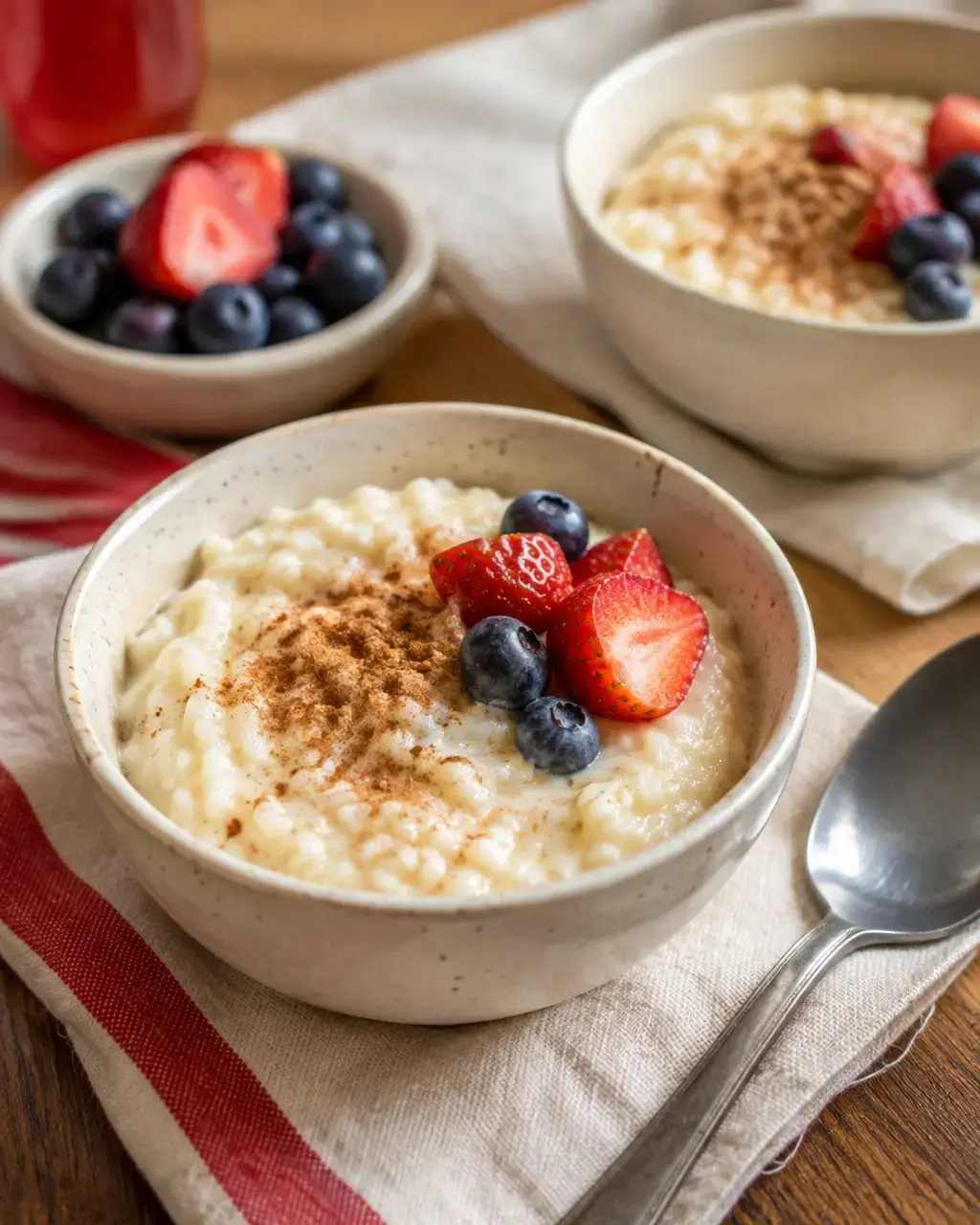
- Serve or chill. Spoon the rice pudding into bowls and serve warm with a small dusting of cinnamon. For chilled pudding, transfer it to covered containers and refrigerate once it has cooled promptly.
Easy Rice Pudding (Creamy Stovetop)
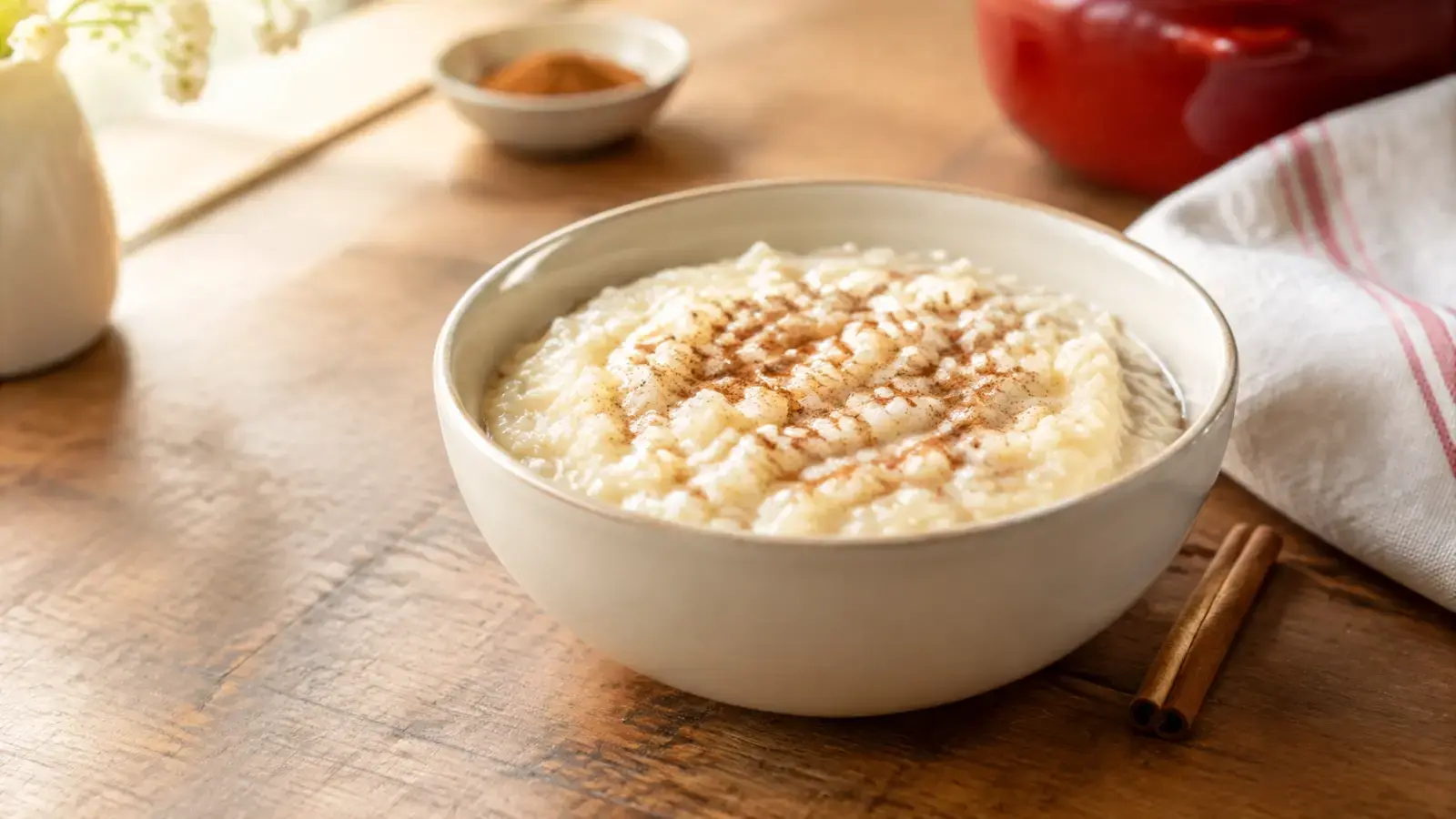
Rice pudding is a controlled combination of rice, dairy, sugar, and heat. This creamy stovetop version uses short- or medium-grain rice, whole milk, optional cream, egg yolks, vanilla, and cinnamon. The result is soft, spoonable, and suitable for serving warm or chilled.
The method is straightforward. The rice cooks slowly in sweetened milk until tender. Egg yolks are tempered into the hot mixture to provide a smooth custard texture without scrambling. The pudding thickens further as it cools.
Definition
rice pudding (noun): A sweet dish made by cooking rice in milk or another liquid until the grains are tender and the mixture is thick.
stovetop (adjective): Cooked directly in a saucepan over controlled heat rather than baked in an oven.
This recipe is designed for four servings. It uses ordinary ingredients and does not require pre-cooked rice.
Tips
Use the correct heat
Low, consistent heat is the primary control point. A rolling boil can scorch the milk, cause the dairy to split, and make the rice release starch unevenly. Keep the mixture at a gentle simmer.
Stir the base regularly
Rice can settle on the bottom of the pan. Stir every few minutes, especially during the final 15 minutes when the mixture thickens quickly. A heavy-bottomed saucepan provides additional protection against scorching.
Allow for carryover thickening
Rice pudding becomes thicker as it cools. Remove it from the heat when it is creamy and slightly looser than the final texture required. If the finished pudding is too thick, stir in milk one tablespoon at a time.
Temper the egg yolks
Adding yolks directly to the hot saucepan can cause them to curdle. Tempering means mixing a small quantity of hot pudding into the yolks first, then returning the warmed yolks to the pan. Stir continuously during the final cooking stage.
Observe food safety controls
Because this recipe contains egg yolks, cook the tempered mixture thoroughly without boiling it aggressively. Egg-containing mixtures should reach approximately 160°F (71°C). Use clean utensils, refrigerate leftovers promptly, and do not leave the finished pudding at room temperature for more than two hours.
Store covered rice pudding in the refrigerator and use within 3 to 4 days. Reheat gently with a splash of milk. The texture may become softer as it warms.
Variations
Raisin rice pudding
Add ⅓ cup of raisins or sultanas during the final 10 to 15 minutes of cooking. The fruit will soften and absorb some of the cinnamon-flavoured milk.
Orange rice pudding
Add 1 teaspoon of finely grated orange zest with the vanilla. Avoid grating the bitter white pith beneath the peel.
Cardamom rice pudding
Replace the cinnamon stick with 4 lightly crushed green cardamom pods. Remove the pods before serving.
Chocolate rice pudding
Stir 2 tablespoons of unsweetened cocoa powder into the sugar before adding the dairy. Add 60g of chopped dark chocolate at the end and stir until melted.
Egg-free rice pudding
Omit the egg yolks. Continue cooking the rice and dairy until the starch creates the required thickness. The finished pudding will be creamy but less custard-like.
Dairy-free rice pudding
Use an unsweetened, full-fat plant milk. Oat milk provides body; coconut milk adds a pronounced coconut flavour. Check that the plant milk is suitable for heating without separating.
FAQ
Can I use cooked rice?
Yes. Cooked rice can be used, but the texture will differ. Combine approximately 2 cups of cooked rice with 2½ cups of milk, the sugar, salt, and cinnamon. Simmer for 20 to 25 minutes, then temper and add the egg yolks. The grains will remain more distinct than uncooked rice cooked directly in the dairy.
Why is my rice pudding runny?
The rice may need additional cooking time, or the mixture may not have cooled sufficiently. Continue cooking over low heat for several minutes, stirring regularly. Remember that the pudding thickens significantly as it cools.
Why is my rice pudding too thick?
Stir in warm or cold milk one tablespoon at a time until the desired consistency is reached. Avoid adding a large quantity at once, as this can make the pudding unevenly diluted.
Can I make rice pudding without egg?
Yes. Egg yolks are used for a richer custard finish, but they are not essential. Omit them and cook the rice until the milk has thickened naturally through starch release.
Can I make this recipe with long-grain rice?
Yes. Long-grain white rice will produce a looser pudding with more separate grains. Use short- or medium-grain rice when a thick, creamy texture is the priority.
Can rice pudding be frozen?
Freezing is possible, but the dairy and rice may separate slightly after thawing. Cool the pudding completely, store it in an airtight container, and thaw it in the refrigerator. Reheat gently with milk and stir until smooth.
Should rice pudding be served warm or cold?
Both options are acceptable. Warm pudding is softer and more fluid. Chilled pudding is firmer and more spoonable. Add milk before serving if refrigeration has made the texture too dense.
Sources
This method follows the standard stovetop approach of slowly cooking rice in sweetened dairy and finishing with a custard element. Comparable technique references include Seasons and Suppers’ creamy rice pudding, Well Seasoned Studio’s rice pudding guide, and RecipeTin Eats’ creamy cinnamon rice pudding.