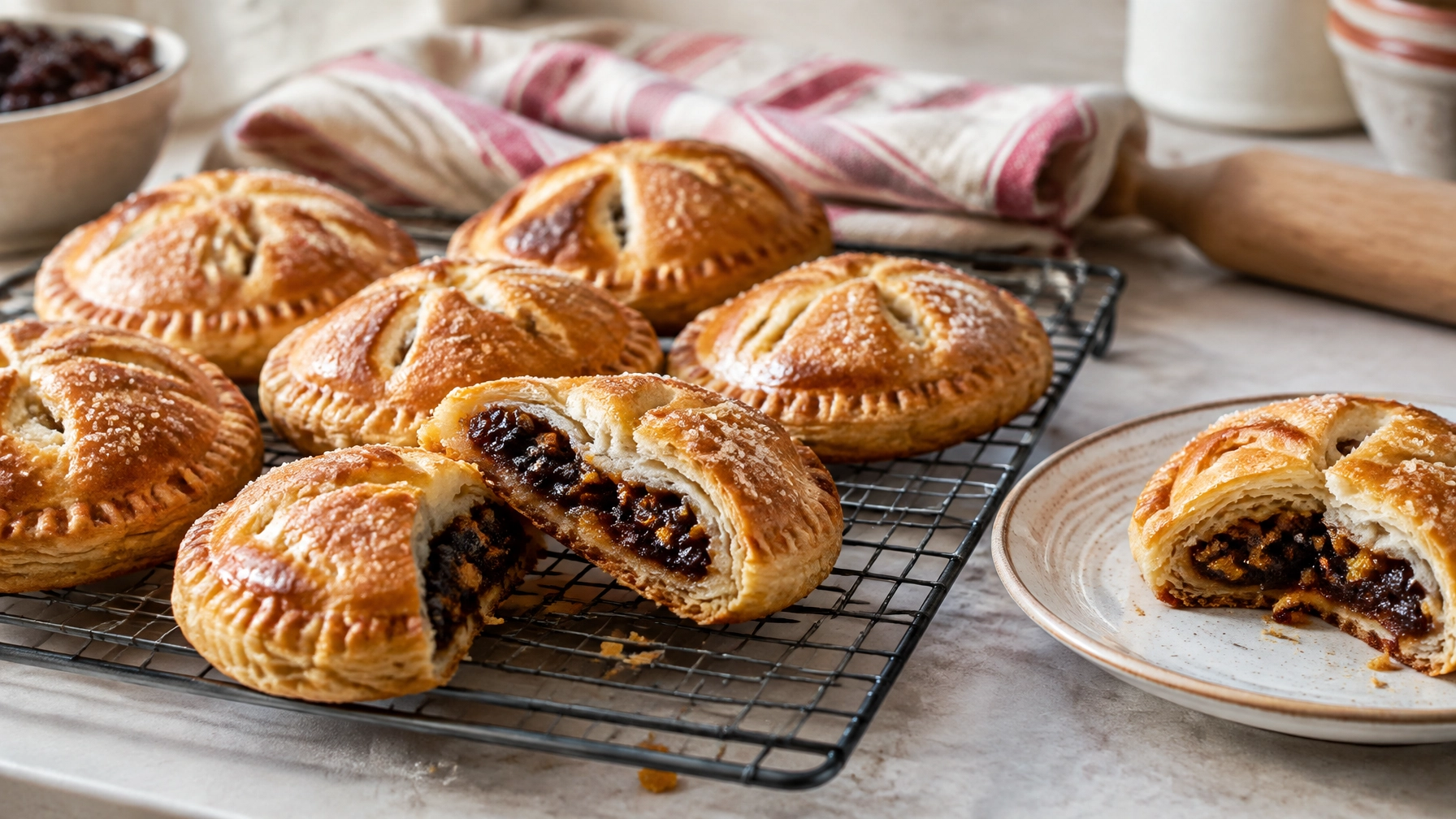
Recipe
Serves
12 1×
Serves 12 Eccles cakesPrep 1H15 minCook 25 minTotal 1H40 min
Ingredients
Method
- Mix the flour, caster sugar and salt in a large bowl. Add the cold butter and lard. Toss them through the flour, then lightly pinch and press some pieces flat. Keep visible pieces of fat in the mixture.
- Add cold water a little at a time, mixing with a table knife until the dough begins to clump. Bring it together gently with your hands. Do not knead it smooth. Flatten into a rectangle, wrap and chill for 20 minutes.
- On a lightly floured surface, roll the dough into a rectangle. Fold it into thirds, like a letter, turn it a quarter-turn and roll it out again. Fold into thirds a second time, wrap and chill for 15 minutes. Repeat the rolling and folding once more, then chill for at least 20 minutes.
- While the pastry chills, combine the currants, melted butter, brown sugar, candied peel, orange zest, orange juice, mixed spice and nutmeg. Stir until evenly mixed.
- Heat the oven to 200°C. Line a baking tray with baking paper. Roll the chilled pastry to about 4 mm thick. Cut out 12 rounds, approximately 9 cm wide, re-rolling the scraps gently if needed.
- Place a spoonful of filling in the centre of each round, leaving a border around the edge. Lightly dampen the pastry border with water. Gather the edges over the filling and pinch them together to seal.
- Turn each pastry parcel seam-side down. Gently roll it into a round, taking care not to break the pastry or push filling through. Place the cakes on the prepared tray, spaced apart.
- Brush the tops with egg white and sprinkle with demerara sugar. Make two or three shallow slits across the top of each cake.
- Bake for 25 minutes, until puffed and golden. Leave the cakes on the tray for several minutes, then transfer them to a rack to cool.
Eccles Cakes with Flaky Pastry
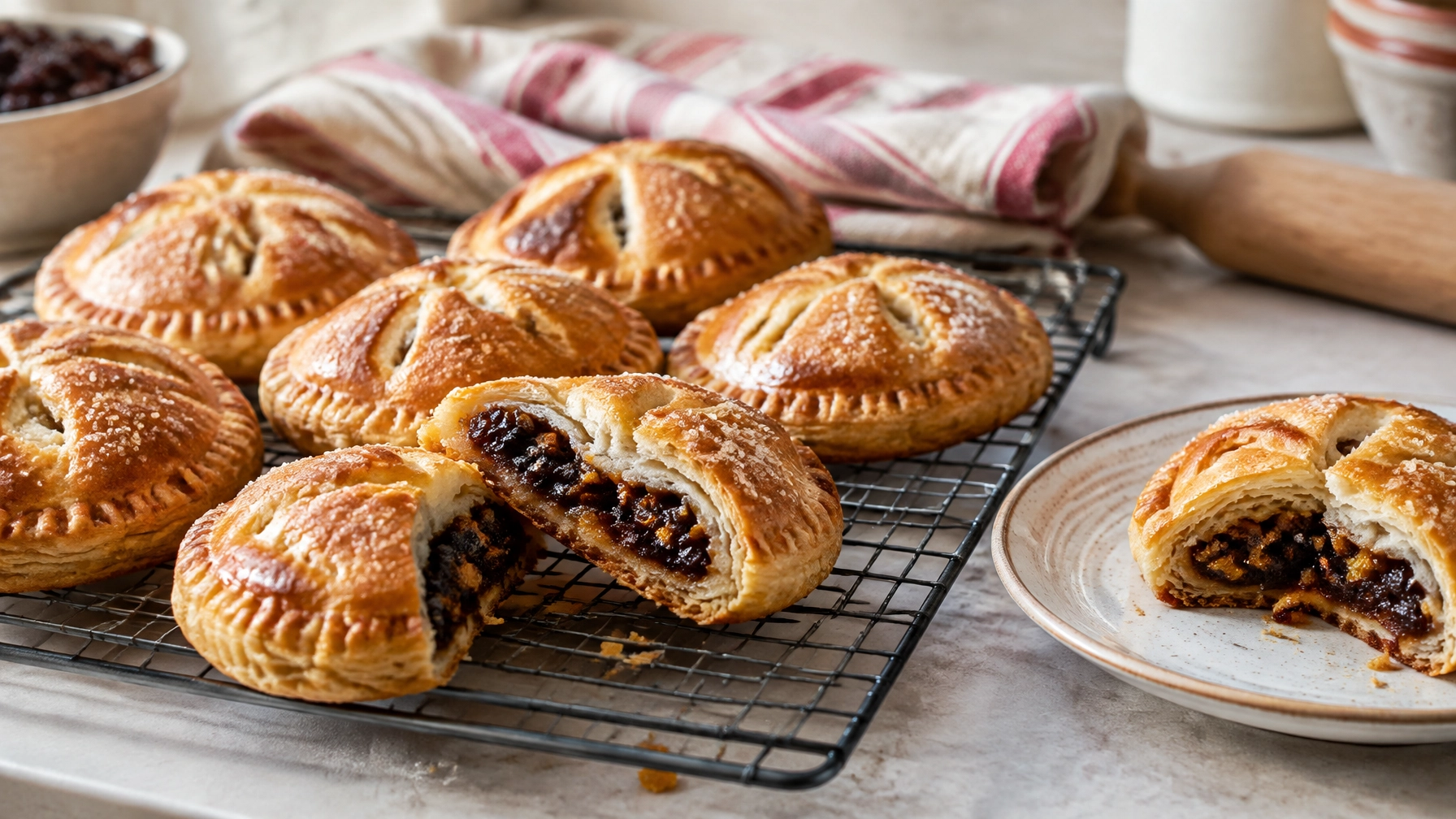
Eccles cakes are crisp, flaky pastries filled with buttery spiced currants and baked until golden.
Eccles cakes are small pastries, not sponge cakes. Their defining contrast is a crisp, layered shell around a sweet filling of currants, sugar, butter and warm spice. This version uses homemade flaky pastry and a little orange zest for a fresh, rounded flavour.
Origin
An Eccles cake is a small, round pastry filled with dried fruit and spice, associated with Eccles in Lancashire.
The pastry is commonly linked with Eccles and its historic fairs. One often repeated account places their commercial sale in the town in the late 18th century, although the precise origin is uncertain. Older British recipes for fruit-filled pastries provide context, but do not establish a direct line to the modern Eccles cake.
The name can suggest a cake, but the food is a pastry. Its structure comes from layers of dough and fat, while its filling is predominantly dried fruit. A sugared, scored top is characteristic: shallow cuts allow steam to escape, and sugar gives the crust a light crunch.
Texture
Good flaky pastry is defined by separate, delicate layers rather than a uniform, bread-like crumb. Cold pieces of butter and lard are worked into the flour without being completely blended. During baking, the water in the dough turns to steam and helps lift the layers.
Temperature matters. Warm pastry softens, making the fat more likely to blend into the flour. Keeping the dough chilled between folds makes it easier to handle and helps maintain a flaky finish. Work lightly, too: excessive kneading develops gluten and can make the pastry tough.
Currants give the filling its familiar concentrated fruit flavour. Brown sugar melts around them, while butter adds richness. Orange zest, candied peel and mixed spice bring fragrance without overpowering the fruit.
Preparation
Make the pastry before mixing the filling so it has time to chill. The dough should feel cool and firm when rolled, not sticky or greasy. If it becomes soft while shaping, return it to the refrigerator briefly.
The filling should be moist enough to hold together but not wet. A small amount of orange juice is sufficient; too much liquid can escape through the pastry seams. Leave a clear border around each mound of fruit so the edges can be sealed securely.
Cutting vents into the top is a functional step, not just decoration. Make a few shallow slits after shaping and avoid cutting so deeply that the filling is exposed. A little egg white helps the sugar adhere and encourages even browning.
Serving
Eccles cakes are best served after cooling until warm or at room temperature. The filling is very hot when the pastries first leave the oven, so allow time for it to settle before eating.
Serve them plain with tea or coffee. Their sweetness also suits a spoonful of plain yoghurt or a small portion of sharp fruit.
Recipe
Servings
12 Eccles cakes
Prep time
1 hour 15 minutes, including chilling
Cook time
25 minutes
Total time
1 hour 40 minutes
Tips
- Keep the pastry and work surface cool. If the dough starts to feel soft, chill it before continuing.
- Add water gradually. The dough should come together without becoming sticky.
- Seal the parcels carefully and place them seam-side down to reduce the chance of filling leaking out.
- Ovens vary. Use the stated time as a guide and check for a golden, puffed finish.
- Let the cakes cool before serving. The currant filling holds heat after baking.
Variations
- Butter-only pastry: Replace the lard with the same weight of cold butter. The pastry will taste more buttery and may have a slightly different texture.
- More citrus: Add a little extra orange zest, but keep the juice measured so the filling does not become wet.
- Different dried fruit: Replace a small portion of the currants with raisins or sultanas. Keep the total amount of dried fruit the same.
- Without candied peel: Omit it and add a little more orange zest for a simpler fruit filling.
FAQ
#### Can I make Eccles cakes without lard?
Yes. Use an equal weight of cold butter instead. Lard is traditionally used in some flaky pastry formulas, but an all-butter version works as an alternative.
#### Why does the pastry need to chill?
Chilling firms the fat and makes the dough easier to roll. It also gives the pastry time to rest between folds, helping prevent shrinkage and making the layers easier to handle.
#### Can Eccles cakes be made ahead?
Yes. Bake them in advance and cool fully before storing in an airtight container. Rewarm briefly in a low oven if you want to serve them warm.
#### How should leftover Eccles cakes be stored?
Once completely cool, store them in an airtight container at room temperature and eat within three days. Avoid sealing them while warm, as trapped steam can soften the pastry.
#### How do I know they are baked?
The cakes should look puffed and golden, with a dry, crisp-looking surface. If the pastry is still pale, allow it a little more time and check again. The filling will be hot, so cool the cakes before serving.