Recipe
Serves
4 1×
Serves 4Prep 8 minCook 7 minTotal 15 min
Ingredients
Method
- Toast the pita pieces in olive oil with a pinch of salt over medium heat for 5 to 7 minutes, turning regularly until crisp.
- Combine the romaine, tomatoes, cucumber, radishes, spring onions, parsley, mint, purslane, and red onion in a large bowl.
- Whisk the olive oil, lemon juice, pomegranate molasses, garlic, sumac, salt, and black pepper in a small bowl.
- Pour most of the dressing over the vegetables and toss gently.
- Add the toasted pita and toss briefly.
- Transfer to a serving bowl, add the reserved pita, and serve immediately.
Fattoush Salad (Crisp Lebanese, 15 Minutes)
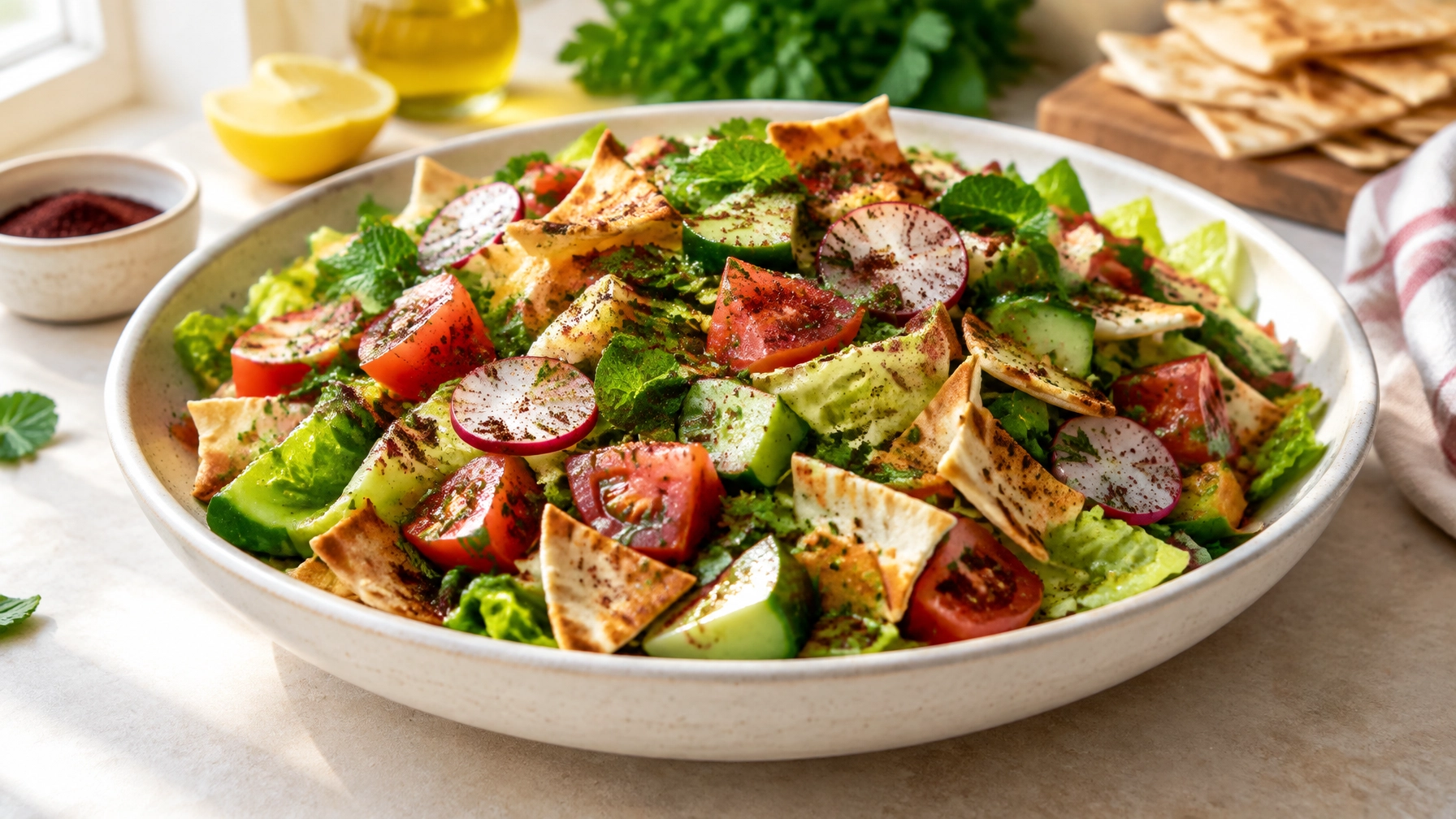
Fattoush is a Lebanese bread salad made with crisp vegetables, fresh herbs, toasted pita, and a sharp sumac dressing. This vegetarian main is ready in 15 minutes.
Overview
Fattoush is designed around contrast. The vegetables should remain cool and crisp. The pita should be toasted and dry. The dressing should be bright, salty, tart, and slightly sweet. The salad is assembled immediately before serving so the bread retains its texture.
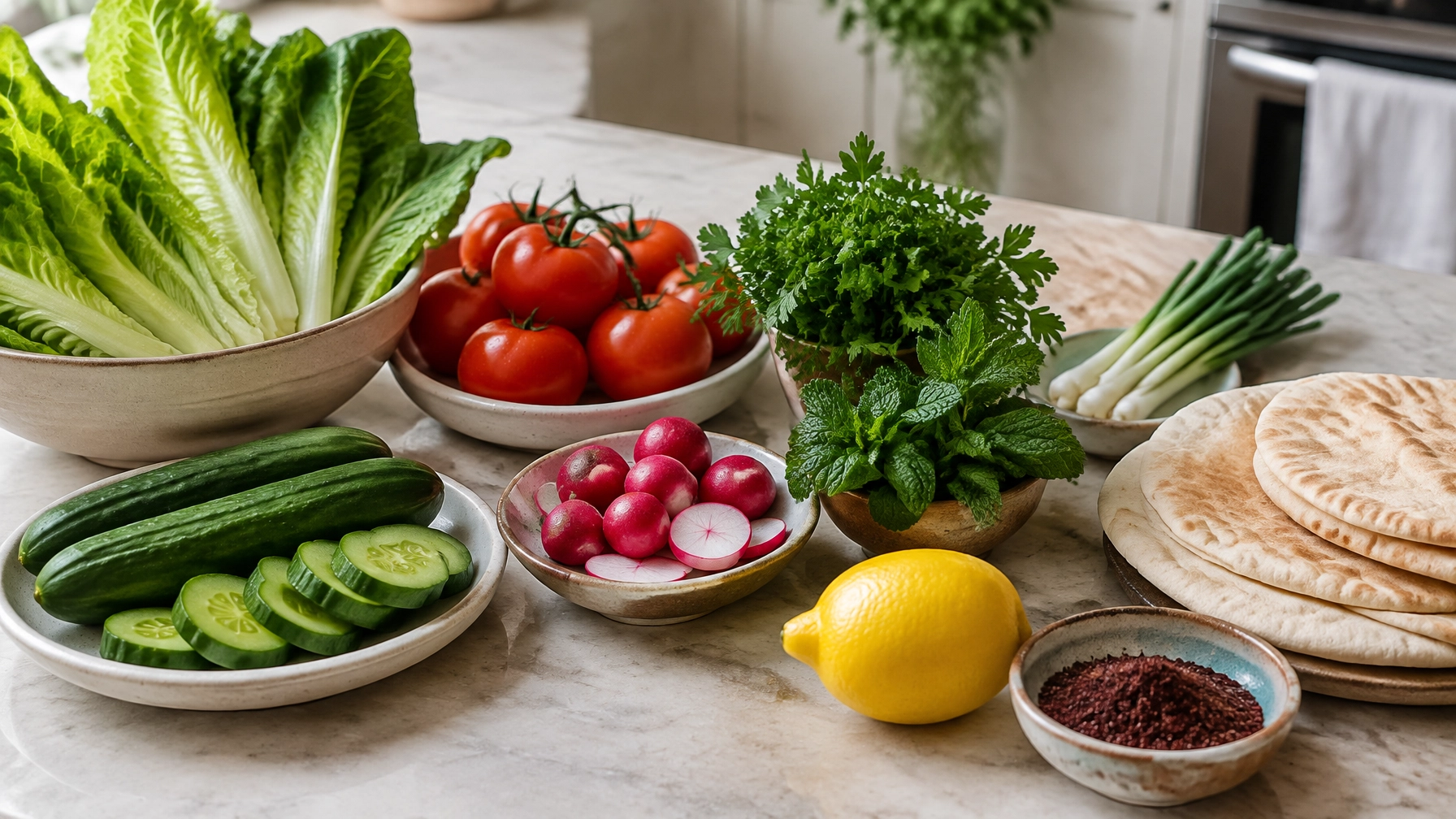
This version serves four as a light vegetarian main or six as a side dish. It uses romaine, tomatoes, cucumber, radishes, spring onions, parsley, and mint. Sumac supplies the characteristic citrus-like acidity. Pomegranate molasses adds depth, but the dressing remains balanced rather than sweet.
For more quick vegetarian meals, see the 10-minute dinners collection and the plant-based recipes collection.
Timing
The most efficient method is to toast the pita while preparing the vegetables and dressing.
- Pita: 5 to 7 minutes
- Vegetable preparation: 5 minutes
- Dressing: 2 minutes
- Final assembly: 1 minute
The total preparation time is approximately 15 minutes. If the vegetables are washed and dried in advance, assembly is faster. Wet lettuce or cucumber will dilute the dressing and soften the pita prematurely.
Crispness
The pita should be completely crisp before it is added to the salad. It can be toasted in a skillet, baked in the oven, or fried. The skillet method is suitable for a small batch and avoids heating the oven.
Do not dress the salad until just before eating. The dressing contains lemon juice and salt, both of which draw moisture from the vegetables. The pita will begin absorbing that moisture immediately.
For the best texture, keep a small amount of pita separate and add it directly to each serving. This maintains a clear difference between the soft vegetables and the crisp bread.
Choose tomatoes that are ripe but firm. Very soft tomatoes release excessive liquid. If the cucumber is particularly watery, remove some of the seeds before slicing. Dry the romaine thoroughly after washing.
Balance
A good fattoush dressing has four clear elements:
- Olive oil for body
- Lemon juice for acidity
- Sumac for dry, citrus-like sharpness
- Pomegranate molasses for restrained sweet-tart depth
Garlic and salt increase the savoury character. The dressing should taste more intense on its own than it does when combined with the vegetables.
Start with one tablespoon of pomegranate molasses. Some brands are more concentrated than others. Add more only after tasting the full dressing. Excessive pomegranate molasses can make the salad taste sweet rather than bright.
Sumac varies in acidity. If the sumac is mild, increase the quantity slightly. If it is very sharp, reduce the lemon juice by one teaspoon.
Serving
Serve fattoush as soon as it is assembled. It works as a vegetarian main with hummus, labneh, roasted vegetables, or warm flatbread. It can also be served as a side dish with grilled food.
For a more substantial vegetarian plate, add a source of protein such as chickpeas, white beans, lentils, or grilled halloumi. Keep additions separate from the salad until serving so the vegetables and pita remain distinct.
The salad is most effective at room temperature or slightly chilled. Very cold vegetables can mute the fragrance of the herbs and reduce the perceived acidity of the dressing.
Storage
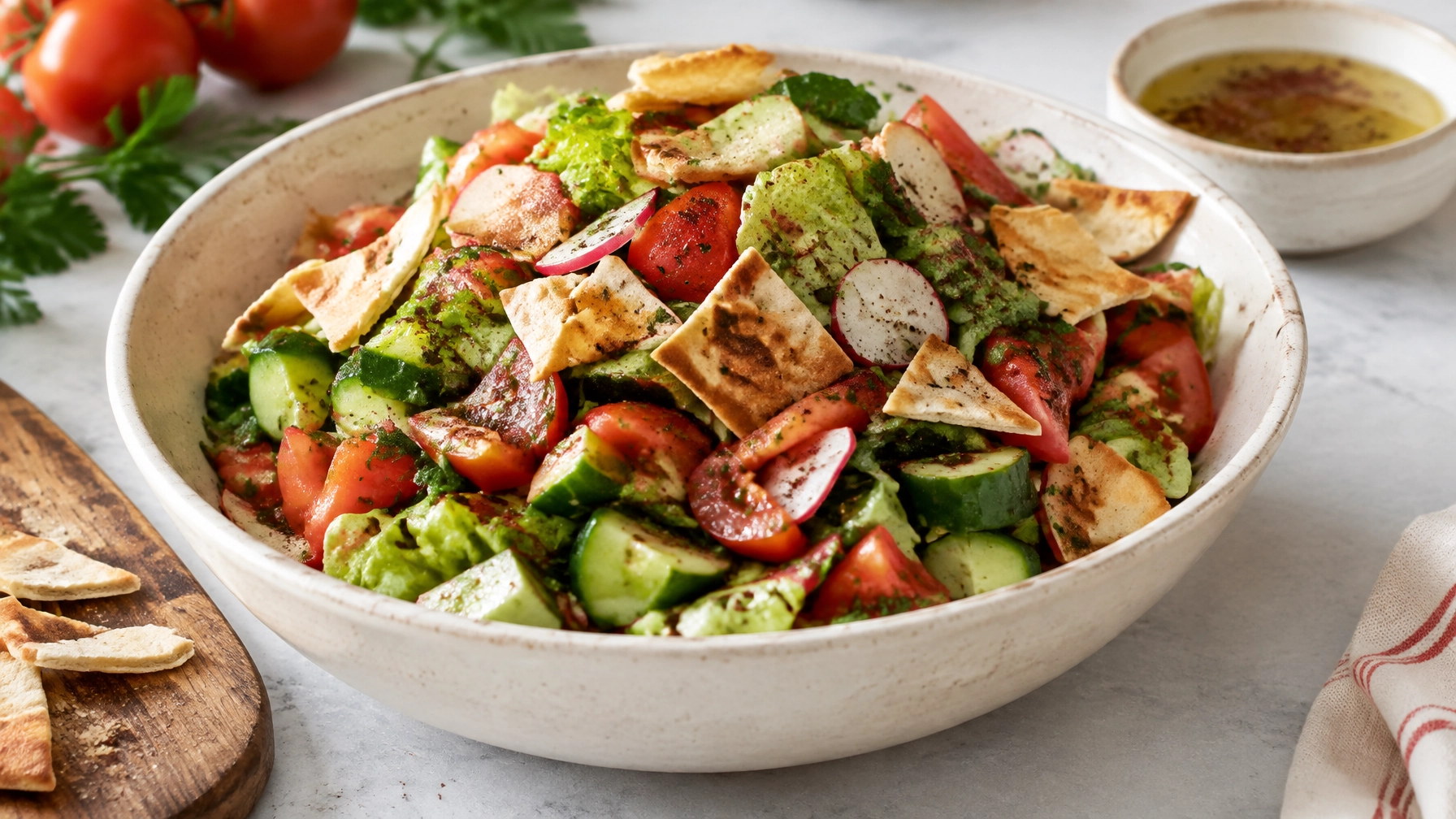
Store the vegetables, dressing, and toasted pita separately.
The chopped vegetables can be refrigerated for up to one day in a sealed container. Keep the dressing refrigerated for up to three days and whisk it again before use. Store toasted pita at room temperature in an airtight container for up to two days.
Do not freeze fattoush. The lettuce, cucumber, and tomatoes will lose their structure after thawing.
If storing leftovers, remove as much pita as possible before refrigeration. The vegetables will remain usable, but the pita will no longer be crisp. Add fresh toasted pita before serving.
FAQ
Can fattoush be made without pomegranate molasses?
Yes. Use additional lemon juice and a small pinch of sugar if needed. The result will be sharper and less rounded, but it will still function as a fattoush dressing.
Can the pita be baked instead of toasted in a skillet?
Yes. Toss the pita with olive oil and salt, spread it on a baking tray, and bake at 200°C for 8 to 10 minutes. Turn the pieces once during cooking.
Is fattoush served warm or cold?
It is usually served at room temperature or lightly chilled. The toasted pita can be warm when added, but the salad itself should not be heated.
Can fattoush be prepared in advance?
The components can be prepared in advance, but final assembly should take place immediately before serving. Keep the dressing and pita separate from the vegetables.