Recipe
Ingredients
Method
- Add the lemon juice, olive oil, Dijon mustard, garlic, salt, and black pepper to a large mixing bowl.
- Whisk until the dressing is combined. It does not need to emulsify completely.
- Add the rinsed beans, red onion, capers, tomatoes, and herbs.
- Drain the tuna thoroughly. Add it to the bowl and flake it gently with a fork. Avoid overmixing; some larger pieces provide better texture.
- Fold the ingredients together until the dressing coats the beans and tuna.
- Taste and adjust the seasoning. Add more lemon juice for acidity, olive oil for richness, or black pepper for heat.
- Serve immediately over rocket or mixed leaves. Alternatively, refrigerate for 10 to 20 minutes before serving to allow the flavours to combine.
Healthy Tuna & White Bean Salad (15-Minute)
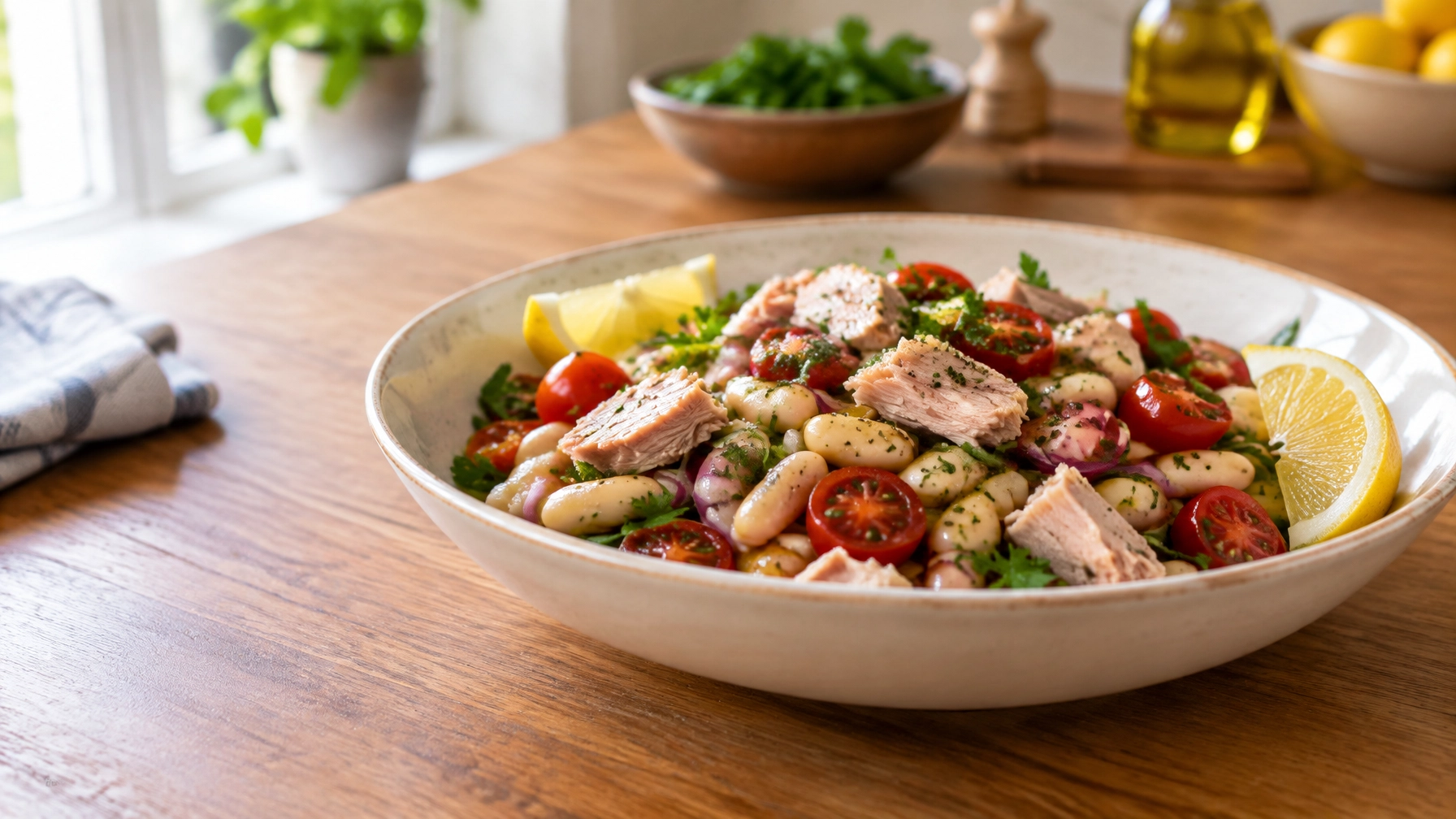
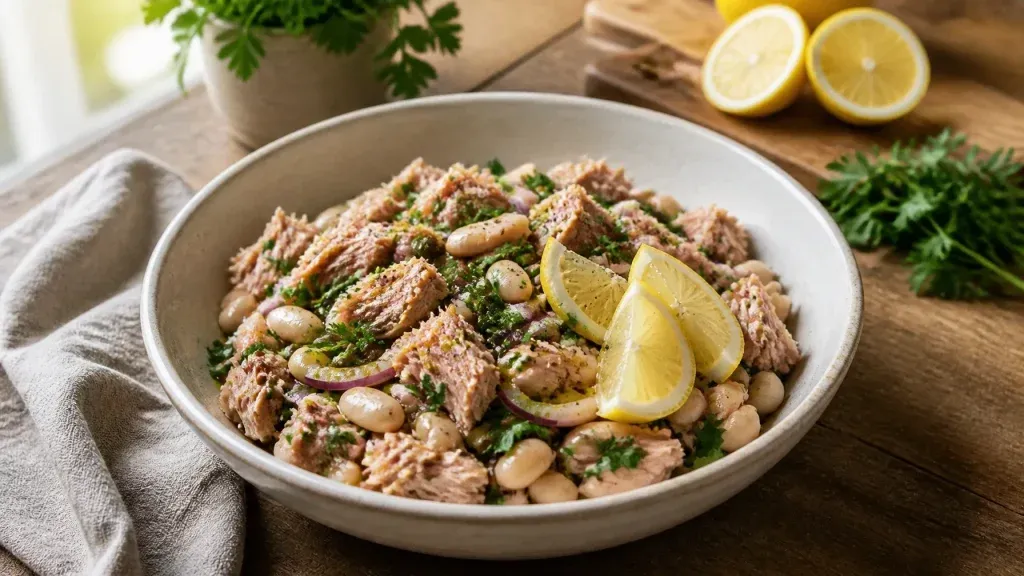
A tuna and white bean salad is a practical cold lunch built from pantry ingredients. It requires no cooking, uses one mixing bowl, and provides a useful combination of protein, fibre, vegetables, and healthy fats.
Salad (noun): a prepared mixture of ingredients served cold. In this case, the mixture is tuna, white beans, vegetables, herbs, and lemon dressing. The procedure is short. The result is suitable for lunch, meal preparation, or a fast evening meal.
Recipe
Servings
2 substantial servings or 3 lighter servings
Prep
15 minutes
Cook
0 minutes
Total
15 minutes
Nutrition
Approximate nutrition per serving, assuming two servings and tuna packed in water:
- Calories: approximately 400–450
- Protein: approximately 30–38 g
- Carbohydrates: approximately 30–40 g
- Fibre: approximately 9–12 g
- Fat: approximately 14–18 g
Values vary according to the tuna, beans, olive oil, serving size, and sodium content of the canned products. These figures are estimates and are not a substitute for product-specific nutritional information.
Tips
- Use a large bowl. It gives the ingredients room to combine without crushing the beans.
- Rinse the beans thoroughly, especially when using standard-sodium canned beans.
- Drain the tuna completely. Residual liquid can dilute the dressing.
- Add salt gradually. Capers and canned tuna may already contain significant sodium.
- Use fresh lemon juice rather than bottled lemon juice when available.
- Allow the salad to rest for 10 minutes if time permits. The beans absorb some of the dressing.
- Keep salad leaves separate during meal preparation. Add them immediately before eating so they remain crisp.
- For food safety, refrigerate the salad within two hours of preparation, or within one hour when the ambient temperature is above 32°C / 90°F. USDA guidance states that refrigerated tuna salad should generally be used within 3 to 5 days. See the USDA food-safety guidance for further information.
Variations
Mediterranean
Add chopped cucumber, Kalamata olives, oregano, and a small amount of crumbled feta. Reduce the added salt because olives and feta are naturally salty.
Crunchy
Add finely chopped celery, radish, or cucumber. These ingredients provide contrast to the soft beans and tuna.
Spicy
Add red pepper flakes, sliced pickled jalapeños, or a small amount of smoked paprika to the dressing.
Green
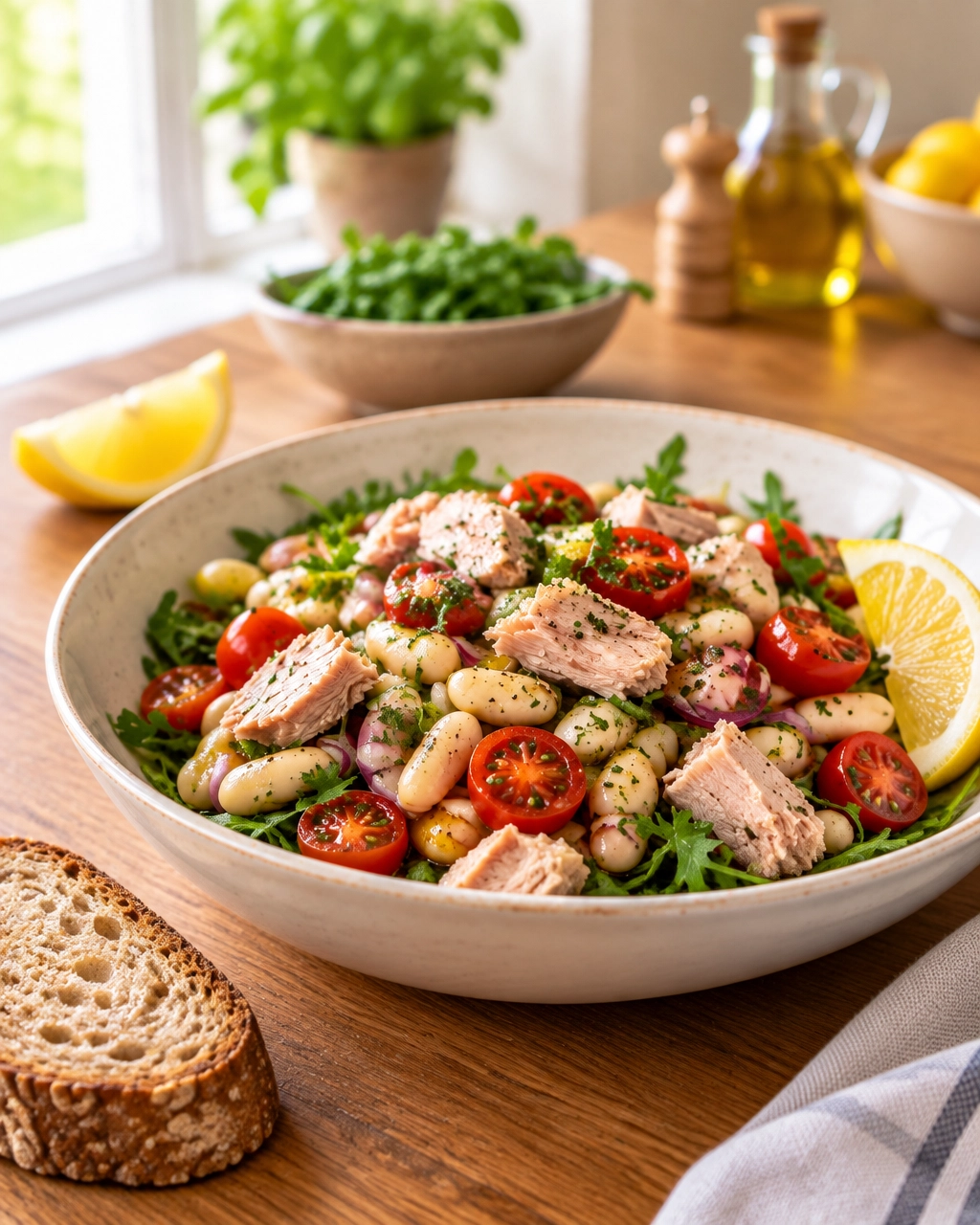
Serve the salad over spinach, rocket, chopped romaine, or kale. Massage kale briefly with a teaspoon of dressing before adding the tuna mixture.
Sandwich
Mash part of the beans into the dressing, then spoon the mixture into whole-grain bread, a pita, or a wrap. Keep the filling chilled until serving.
Dairy-free
The base recipe is dairy-free. Do not add feta or other cheese if a dairy-free meal is required.
Vegetarian
Replace the tuna with an additional can of beans, cooked lentils, or chickpeas. The result will have a different protein profile but will retain the same lemon-herb structure.
FAQ
Can I make tuna and white bean salad ahead of time?
Yes. Prepare the tuna and bean mixture up to three days ahead and store it in a sealed container in the refrigerator. Keep salad leaves, bread, or wraps separate until serving.
Which white beans are best?
Cannellini beans are creamy and large. Great Northern beans are slightly firmer. Navy beans are smaller and softer. All three work in this recipe.
Can I use tuna packed in oil?
Yes. Drain the tuna before adding it. You can use one tablespoon of the tuna oil in place of some of the olive oil, provided the oil is fresh and the flavour is suitable.
Is this salad gluten-free?
The salad itself is gluten-free when all canned and packaged ingredients are labelled gluten-free. Serve it with gluten-free bread or leaves if required.
Can I use dried beans?
Yes, but dried beans must be fully cooked, cooled, and drained before use. Canned beans are used here because they keep the preparation time within 15 minutes.
Is canned light tuna or albacore better?
Both can be used. Canned light tuna is generally lower in mercury than albacore or white tuna. The FDA lists canned light tuna as a “Best Choice” and albacore tuna as a “Good Choice.” Review the official guidance when planning tuna intake for pregnancy, breastfeeding, or children.
Why is my salad watery?
The beans or tuna may not have been drained sufficiently. Drain both ingredients thoroughly. Tomatoes can also release water, particularly after refrigeration. Add tomatoes shortly before serving if necessary.
Can I freeze this salad?
Freezing is not recommended. The beans may become soft and the dressing can separate after thawing. Prepare a fresh batch or refrigerate the finished salad instead.
What can I serve with it?
Serve it over salad leaves, with whole-grain toast, inside a pita, or alongside vegetable soup. Lemon wedges provide additional acidity at the table.
Source note
The recipe structure is based on common tuna and bean salad methods, including the use of lemon dressing, beans, capers, herbs, and leafy greens. Comparable proportions and preparation techniques are documented by Skinnytaste’s tuna and white bean salad. Food-safety and fish-consumption information should be checked against current government guidance.