Recipe
Servings
16 squares 1×
Serves 16 squaresPrep 15 minCook 30 minTotal 45 min
Ingredients
- 225g unsalted butter
- 200g dark chocolate, roughly chopped
- 60g unsweetened cocoa powder
- 300g granulated sugar
- 4 large eggs, preferably at room temperature
- 2 teaspoons vanilla extract
- 125g plain flour
- ½ teaspoon fine salt
Method
- Prepare the tin. Preheat the oven to 180°C conventional, or 160°C fan. Line a 23cm square metal baking tin with baking parchment, leaving some overhang on two sides for lifting out the brownies.
- Melt the butter and chocolate. Place the butter and chopped dark chocolate in a heatproof bowl. Melt over a pan of barely simmering water, or in short microwave intervals, stirring between each interval. Continue until smooth. Allow the mixture to cool for several minutes.
- Add the cocoa. Whisk the cocoa powder into the warm chocolate mixture until evenly combined. This disperses the cocoa through the fat and creates a deeper chocolate flavour.
- Whisk the eggs and sugar. In a separate large bowl, whisk the sugar, eggs and vanilla extract for 2–3 minutes. The mixture should become lighter, thicker and glossy. This step supports the shiny, crackly surface.
- Combine the mixtures. Slowly pour the warm chocolate mixture into the egg mixture, whisking continuously until smooth. Do not add the chocolate mixture while it is very hot, as this can partially cook the eggs.
- Fold in the flour. Sift the flour and salt over the bowl. Fold with a spatula until no dry streaks remain. Stop mixing immediately once the batter is combined. The finished batter will be thick and glossy.
- Bake. Transfer the batter to the prepared tin and spread it into an even layer. Bake for approximately 30 minutes. The top should be shiny and lightly cracked, the edges should be set, and the centre should still appear slightly soft.
- Check the centre. Insert a skewer into the middle. It should come out with moist crumbs attached, not wet batter and not completely clean. A clean skewer indicates that the brownies may be overbaked.
- Cool before cutting. Leave the brownies in the tin for at least 1 hour, or until completely cool. Lift them out using the parchment and cut into 16 squares with a sharp knife.
Fudgy Chocolate Brownies (Crackly Top)

INTRODUCTION
FUDGY (adjective): dense, moist and chocolate-rich, with a soft centre rather than a light, cake-like crumb.
CRACKLY TOP (noun): a thin, shiny brownie surface formed as the whisked egg-and-sugar mixture sets during baking.
These classic traybake chocolate brownies use melted butter, dark chocolate, cocoa powder, sugar, eggs, vanilla and flour. The result is rich and dense, with a glossy, papery top and a soft centre that firms as the brownies cool.
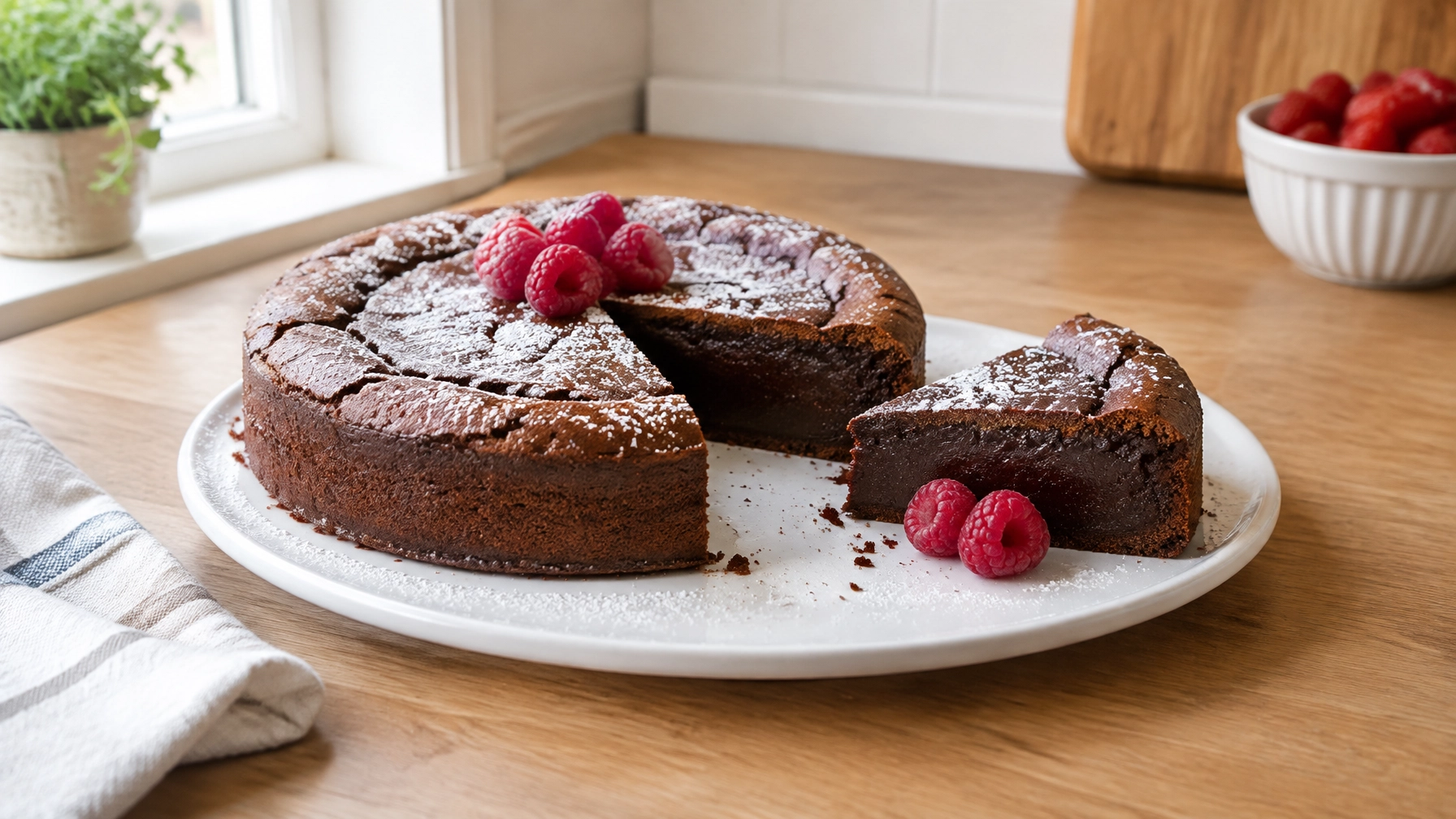
This is a standard brownie recipe, not a flourless chocolate cake and not a lava cake. Flour provides structure, while the controlled baking time keeps the middle fudgy instead of liquid.
The main controls are straightforward: whisk the eggs and sugar thoroughly, fold in the flour without overmixing, and remove the brownies when a skewer shows moist crumbs rather than a clean result. The technique is consistent with the guidance on developing a shiny crust from King Arthur Baking.

RECIPE
Recipe details
- Servings: 16 squares
- Prep time: 15 minutes
- Cook time: 30 minutes
- Total time: 45 minutes
- Pan: 23cm square metal baking tin
- Oven: 180°C conventional / 160°C fan / 350°F
Ingredients
- 225g unsalted butter
- 200g dark chocolate, roughly chopped
- 60g unsweetened cocoa powder
- 300g granulated sugar
- 4 large eggs, preferably at room temperature
- 2 teaspoons vanilla extract
- 125g plain flour
- ½ teaspoon fine salt
Method
Prepare the tin. Preheat the oven to 180°C conventional, or 160°C fan. Line a 23cm square metal baking tin with baking parchment, leaving some overhang on two sides for lifting out the brownies.
Melt the butter and chocolate. Place the butter and chopped dark chocolate in a heatproof bowl. Melt over a pan of barely simmering water, or in short microwave intervals, stirring between each interval. Continue until smooth. Allow the mixture to cool for several minutes.
Add the cocoa. Whisk the cocoa powder into the warm chocolate mixture until evenly combined. This disperses the cocoa through the fat and creates a deeper chocolate flavour.
Whisk the eggs and sugar. In a separate large bowl, whisk the sugar, eggs and vanilla extract for 2–3 minutes. The mixture should become lighter, thicker and glossy. This step supports the shiny, crackly surface.
Combine the mixtures. Slowly pour the warm chocolate mixture into the egg mixture, whisking continuously until smooth. Do not add the chocolate mixture while it is very hot, as this can partially cook the eggs.
Fold in the flour. Sift the flour and salt over the bowl. Fold with a spatula until no dry streaks remain. Stop mixing immediately once the batter is combined. The finished batter will be thick and glossy.
Bake. Transfer the batter to the prepared tin and spread it into an even layer. Bake for approximately 30 minutes. The top should be shiny and lightly cracked, the edges should be set, and the centre should still appear slightly soft.
Check the centre. Insert a skewer into the middle. It should come out with moist crumbs attached, not wet batter and not completely clean. A clean skewer indicates that the brownies may be overbaked.
Cool before cutting. Leave the brownies in the tin for at least 1 hour, or until completely cool. Lift them out using the parchment and cut into 16 squares with a sharp knife.

TIPS
Use a metal tin
A metal tin transfers heat efficiently and helps the edges set while the centre remains soft. A glass or ceramic dish may require a different baking time. If using one, begin checking the brownies a few minutes earlier or later according to the depth and material of the dish.
Do not overheat the chocolate
The butter and chocolate only need to be melted and smooth. Excessive heat is unnecessary and may cause the mixture to separate or become too hot when combined with the eggs.
Whisk for the crackly top
The eggs and sugar should look noticeably lighter and glossy before the chocolate mixture is added. This creates an aerated egg-and-sugar layer that contributes to the thin, shiny crust.
Fold, do not beat
Once the flour is added, use a spatula and fold only until combined. Excessive mixing develops gluten and can produce brownies that are tougher or more cake-like.
Use the moist-crumb test
Fudgy brownies are not finished when a skewer comes out perfectly clean. Look for moist crumbs. The residual heat in the tin will continue setting the centre while the brownies cool.
Cool completely
Warm brownies are soft and difficult to cut cleanly. Cooling allows the chocolate and butter to firm and gives the centre its proper fudgy texture. For especially neat squares, refrigerate the cooled slab for 30 minutes before slicing.
Storage
Store the cooled brownies in an airtight container at room temperature for up to 4 days. Refrigeration will make them firmer and denser. Individually wrap the squares and freeze for up to 2 months. Defrost at room temperature before serving.
VARIATIONS
Salted chocolate brownies
Add ½ teaspoon flaky sea salt to the top of the batter before baking. The salt provides a direct contrast to the dark chocolate.
Chocolate chip brownies
Fold 100g dark or milk chocolate chips into the batter immediately before transferring it to the tin. Use chips that are designed to hold their shape during baking.
Espresso brownies
Add 1–2 teaspoons of instant espresso powder to the melted chocolate and butter. The coffee flavour should remain secondary to the chocolate.
Nut brownies
Fold in 100g of toasted walnuts or pecans with the flour. Chop the nuts into small, even pieces so they distribute through the batter.
Orange chocolate brownies
Add the finely grated zest of one orange to the egg, sugar and vanilla mixture. Dark chocolate and orange provide a standard flavour combination without changing the method.

FAQ
How do I get a shiny, crackly top on brownies?
Whisk the eggs, sugar and vanilla until the mixture is lighter, thicker and glossy. Use granulated sugar and melted chocolate, then avoid overmixing after adding the flour. These steps help form the thin surface layer that becomes shiny and crackly during baking.
Why did my brownies turn out cakey?
The most common causes are too much flour, overmixing, adding a raising agent or baking for too long. This recipe contains no baking powder or baking soda. Fold in the flour gently and remove the brownies when the centre still gives a moist-crumb result.
Can I use milk chocolate instead of dark chocolate?
Yes, but the brownies will be sweeter and less intensely chocolatey. For the best balance, use dark chocolate containing approximately 50–70% cocoa solids. If using very sweet milk chocolate, reducing the sugar is possible, but the crackly top and final texture may change.
Are these brownies the same as flourless chocolate cake?
No. These are classic traybake brownies containing plain flour. Flourless chocolate cake usually has a softer, more cake-like or truffle-like structure and is often baked in a round tin. These brownies are designed to be cut into squares and have a firm edge with a fudgy centre.
Are these brownies the same as lava cake?
No. Lava cake is intentionally underbaked so that the centre remains fluid and flows when cut. These brownies should have a soft, dense centre with moist crumbs, but they should not contain liquid batter.
How do I know when fudgy brownies are done?
The edges should be set, the top should be shiny and lightly cracked, and the centre should have only a slight wobble. A skewer inserted into the centre should come out with moist crumbs. It should not come out coated in raw batter.
Can I make the brownies ahead?
Yes. Bake and cool them completely, then store them in an airtight container. They can be made up to 4 days ahead. For longer storage, wrap the squares individually and freeze them for up to 2 months.
Why should brownies cool before slicing?
The chocolate, butter and starches need time to set. Cutting while the brownies are hot can produce untidy pieces and a gummy centre. Cooling also allows the fudgy texture to develop fully.
SERVING
Serve the brownies at room temperature for a soft, dense texture. For a firmer, more concentrated chocolate flavour, chill them before serving. Ice cream, whipped cream or fresh berries are optional additions; the recipe is complete without toppings.