Recipe
Serves
2 1×
Serves 2Prep 10 minCook 15 minTotal 25 min
Ingredients
- 2 salmon fillets, about 140–170 g each
- 150 g uncooked white or brown rice
- 1 tablespoon olive oil or avocado oil
- 1 small cucumber, thinly sliced
- 1 avocado, sliced
- 100 g shelled edamame, cooked
- 2 spring onions, thinly sliced
- 1 teaspoon sesame seeds
- Salt and black pepper
- 3 tablespoons low-sodium soy sauce
- 1 tablespoon rice vinegar
- 1 tablespoon honey or maple syrup
- 1 teaspoon sesame oil
- 1 teaspoon freshly grated ginger
- 1 small garlic clove, grated or finely minced
- 1 teaspoon sriracha, optional
- 1 tablespoon water
Method
- Cook the rice. Rinse the rice under cold water until the water runs mostly clear. Cook according to the packet instructions. When tender, remove from the heat, cover and leave to stand while you prepare the salmon.
- Mix the sauce. Add the soy sauce, rice vinegar, honey, sesame oil, ginger, garlic, sriracha and water to a small bowl. Whisk until the honey has dissolved. Set aside.
- Prepare the salmon. Pat the salmon dry with kitchen paper. Season both sides lightly with salt and black pepper. If the fillets are very thick, cut them into large cubes so they cook more quickly and evenly.
- Sear the salmon. Heat the oil in a large non-stick frying pan over medium-high heat. Place the salmon in the pan and cook for 3–4 minutes on the first side, without moving it, until browned.
- Turn and glaze. Turn the salmon and pour in half of the sauce. Cook for another 3–4 minutes, turning the pieces gently so the sauce coats them. If using whole fillets, spoon the sauce over the top as they cook.
- Check the temperature. Insert a clean digital thermometer into the thickest part of the salmon. For food safety, cook until it reaches at least 63°C . The salmon should also appear opaque and flake easily with a fork. For further food-safety information, consult the FoodSafety.gov safe minimum temperature chart.
- Prepare the vegetables. While the salmon cooks, slice the cucumber, avocado and spring onions. Cook the edamame according to the packet instructions, then drain well.
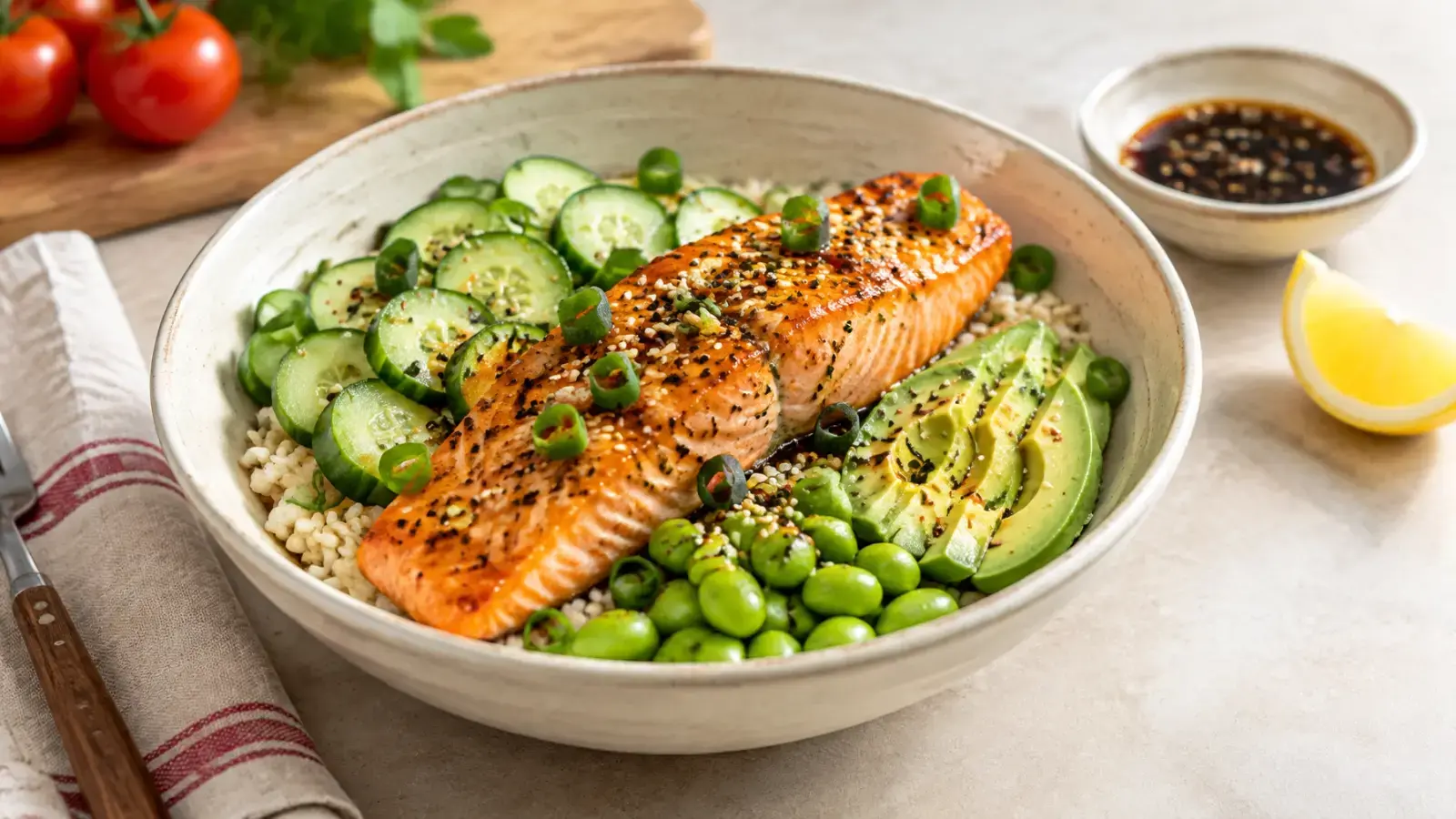
- Assemble the bowls. Divide the cooked rice between two bowls. Add the cucumber, avocado and edamame. Top with the salmon and spoon over the remaining sauce.
- Finish and serve. Scatter over the spring onions and sesame seeds. Serve immediately while the rice and salmon are warm.
Healthy Salmon Rice Bowl (Easy 25-Minute)
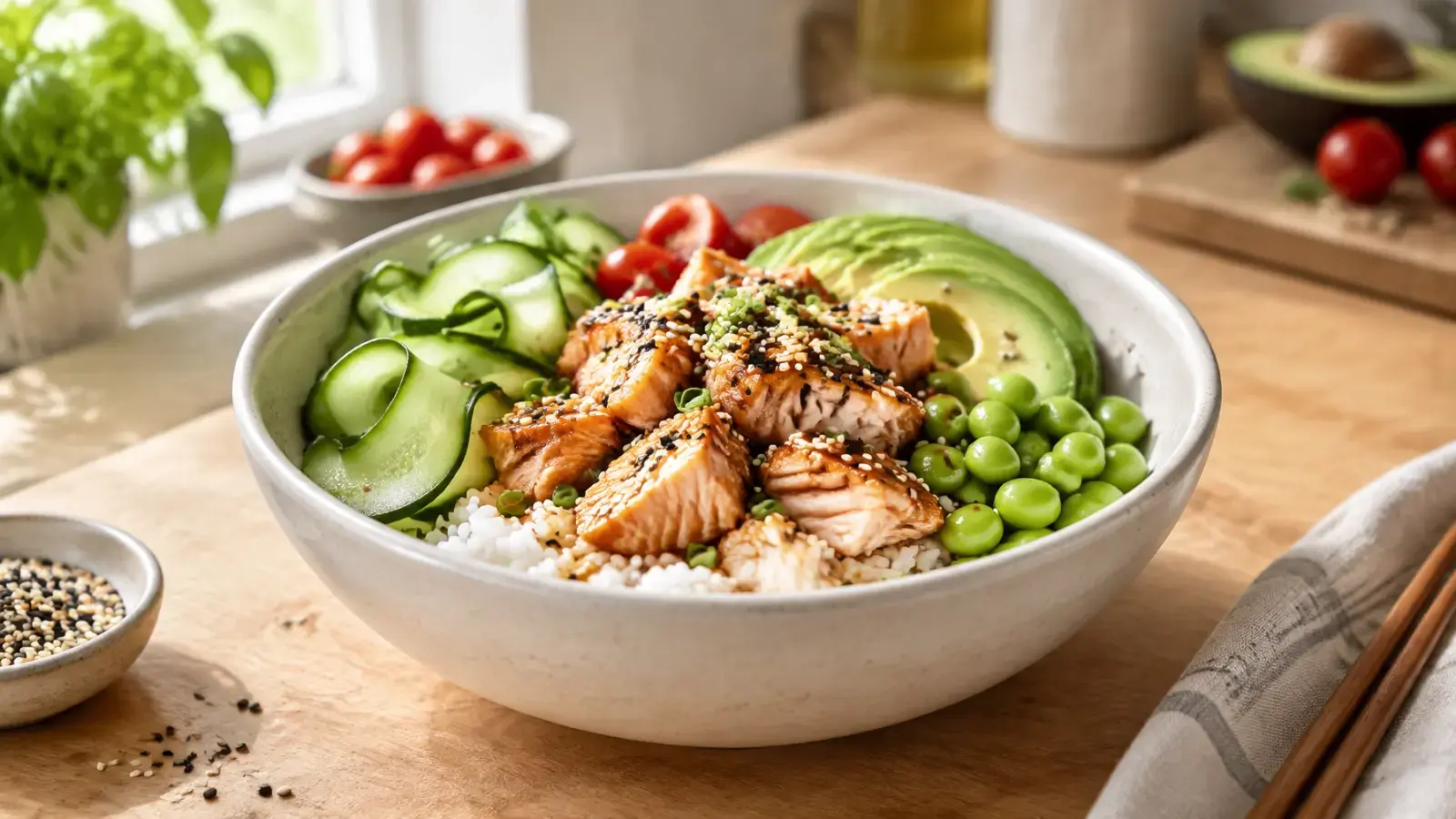
This healthy salmon rice bowl is a quick, balanced dinner made with flaky salmon, fluffy rice, fresh vegetables and a simple soy-ginger sauce. It takes about 25 minutes from start to finish and uses everyday ingredients.
The recipe is easy to adapt with brown rice, quinoa, broccoli, edamame or leftover vegetables. Pan-searing the salmon keeps the method fast, while the sauce adds savoury, slightly sweet flavour without requiring a separate dressing.
er salmonFlake leftover cooked salmon into the bowls just before serving. It does not need to be pan-seared again. Reheat it gently until piping hot, taking care not to dry it out.
Storage
Store leftover salmon, rice and vegetables in separate airtight containers in the refrigerator for up to 2 days. Cool cooked rice promptly and refrigerate it within 1 hour where possible.
Reheat the rice and salmon until piping hot. Add the fresh cucumber and avocado after reheating. Do not repeatedly reheat the same portion.
The sauce can be prepared up to 3 days ahead and stored in a sealed container in the refrigerator. Stir before using.
Nutrition
The approximate nutrition per serving is:
- Calories: 600–650
- Protein: 35–40 g
- Carbohydrates: 65–75 g
- Fat: 22–28 g
- Fibre: 7–9 g
Values vary according to the type of rice, the size of the salmon fillets and the amount of sauce used. The estimate does not account for optional toppings or substitutions.
FAQ
Can I bake the salmon instead of pan-searing it?
Yes. Place the seasoned salmon on a lined baking tray and bake at 200°C fan or 220°C conventional for approximately 10–14 minutes, depending on thickness. Brush with some of the sauce during the final few minutes. Confirm that the thickest part reaches 63°C.
Can I use frozen salmon?
Yes. Thaw the salmon completely in the refrigerator before cooking and pat it dry. Cooking salmon from frozen can produce uneven results, particularly in a frying pan.
Is this salmon rice bowl healthy?
It provides protein from the salmon, carbohydrates from the rice, and vegetables including cucumber, avocado and edamame. The sauce contains soy sauce and honey, so use low-sodium soy sauce and adjust the quantity if you are monitoring salt or added sugar.
Can I prepare this recipe ahead of time?
You can cook the rice, mix the sauce and prepare the vegetables in advance. For the best texture, cook the salmon shortly before serving. If preparing the complete bowls in advance, keep the avocado and sauce separate until serving.
What can I use instead of salmon?
Trout, cooked prawns, tinned tuna, chicken or firm tofu can be used. Cooking times will vary. Check chicken for an internal temperature of 74°C, and cook tofu until heated through and lightly browned.
How do I stop the avocado from turning brown?
Slice the avocado just before serving and add a little lime or lemon juice. Store it in an airtight container if it must be prepared ahead.
Can I make this recipe gluten-free?
Yes. Use tamari or a certified gluten-free soy sauce instead of standard soy sauce. Check all labels, including those on stock, sauces and prepared edamame.