Recipe
Prep 10 minCook 10 minTotal 20 min
Ingredients
- 1 pound peeled and deveined shrimp, medium or large
- 2 cups broccoli florets
- 1 small zucchini, sliced into half-moons
- 1 red bell pepper, thinly sliced
- 2 tablespoons olive oil or avocado oil, divided
- 3 garlic cloves, minced
- 1 tablespoon fresh ginger, grated or finely minced
- 3 tablespoons low-sodium soy sauce or tamari
- 1 teaspoon toasted sesame oil
- 1 tablespoon rice vinegar
- ¼ teaspoon red pepper flakes, optional
- ¼ teaspoon black pepper
- 2 green onions, thinly sliced, for serving
- 1 teaspoon sesame seeds, for serving
Method
- Combine the soy sauce or tamari, sesame oil, rice vinegar, and red pepper flakes in a small bowl.
- Pat the shrimp dry and season with black pepper.
- Heat 1 tablespoon of oil in a large skillet or wok over medium-high heat.
- Add the garlic and ginger. Stir for 30 seconds.
- Add the shrimp and cook for 1–2 minutes per side, until pink and opaque. Transfer to a clean plate.
- Add the remaining oil to the skillet.
- Add the broccoli and bell pepper. Stir-fry for 2–3 minutes.
- Add the zucchini and cook for another 2–3 minutes, until the vegetables are tender-crisp.
- Pour in the sauce and toss the vegetables. Cook for 1–2 minutes.
- Return the shrimp to the pan and toss for 1–2 minutes, until heated through.
- Garnish with green onions and sesame seeds. Serve immediately.
Healthy Shrimp Stir Fry (Low-Carb, 20 Minutes)
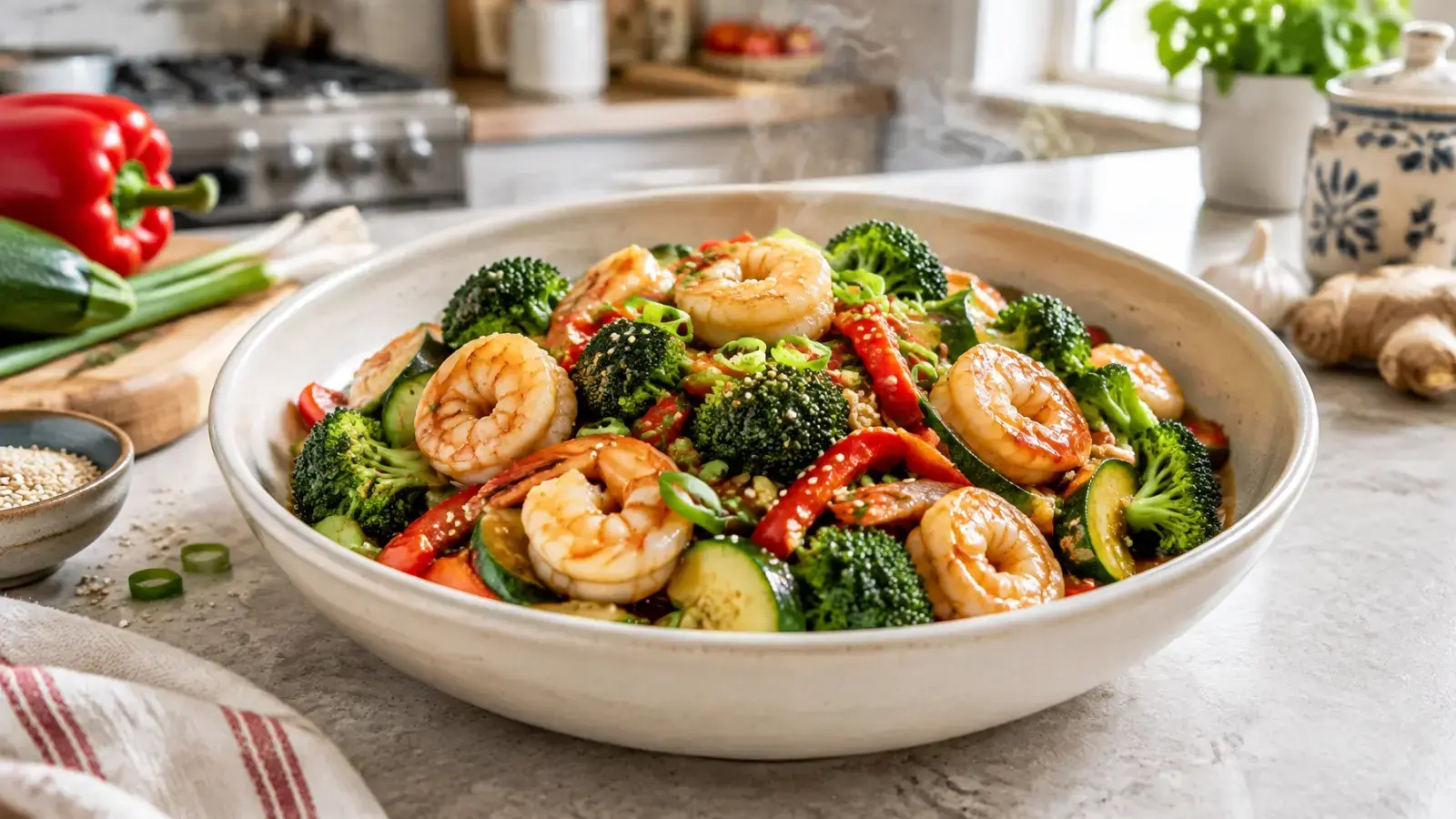
This healthy shrimp stir fry is a practical weeknight dinner made with shrimp, broccoli, zucchini, red bell pepper, garlic, ginger, and a simple soy-sesame sauce. It uses one pan, requires minimal preparation, and is ready in about 20 minutes.
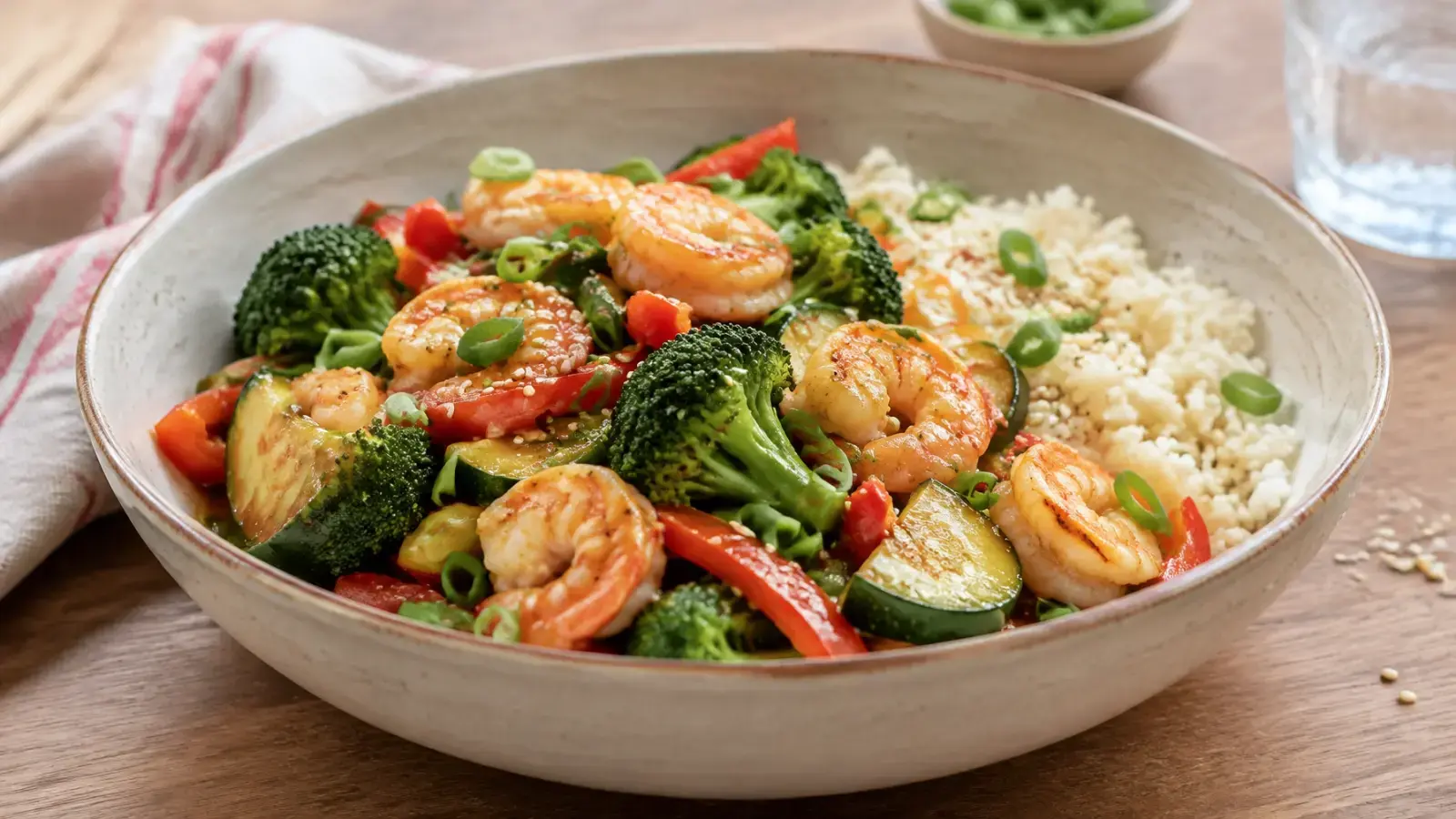
The shrimp cook quickly, while the vegetables remain tender-crisp rather than soft. Serve the stir fry on its own for a lower-carb meal, or add cauliflower rice for extra volume. For a gluten-free version, use tamari instead of standard soy sauce.
Why You’ll Like This Recipe
This recipe is designed for speed and flexibility. The ingredients are easy to find, the sauce does not require added sugar, and the shrimp and vegetables are cooked separately to help prevent overcooking.
It is also easy to adjust:
- Use frozen shrimp after thawing and drying them thoroughly.
- Replace the vegetables with cabbage, mushrooms, green beans, or asparagus.
- Use coconut aminos if you avoid soy.
- Add red pepper flakes or sriracha for heat.
- Serve over cauliflower rice to keep the meal low in carbohydrates.
One serving contains approximately 9–10 grams of net carbohydrates, depending on the vegetables and sauce used.
How to Make Healthy Shrimp Stir Fry
1. Prepare the sauce
In a small bowl, combine the soy sauce or tamari, sesame oil, rice vinegar, and red pepper flakes. Set the sauce aside.
Preparing the sauce before heating the pan keeps the cooking process organized. Stir-fry cooking moves quickly, so measuring ingredients in advance is useful.
2. Dry and season the shrimp
Pat the shrimp dry with paper towels. Season lightly with the black pepper.
Avoid adding much salt at this stage. Soy sauce and tamari already contain a significant amount of sodium.
3. Cook the shrimp
Heat 1 tablespoon of the oil in a large skillet or wok over medium-high heat.
Add the garlic and ginger. Stir for approximately 30 seconds, until fragrant. Add the shrimp in a single layer. Cook for 1–2 minutes on the first side, then turn and cook for another 1–2 minutes.
The shrimp are ready when they are pink, opaque, and slightly curled. Transfer them to a clean plate. Do not leave them in the pan while the vegetables cook, as they can become tough.
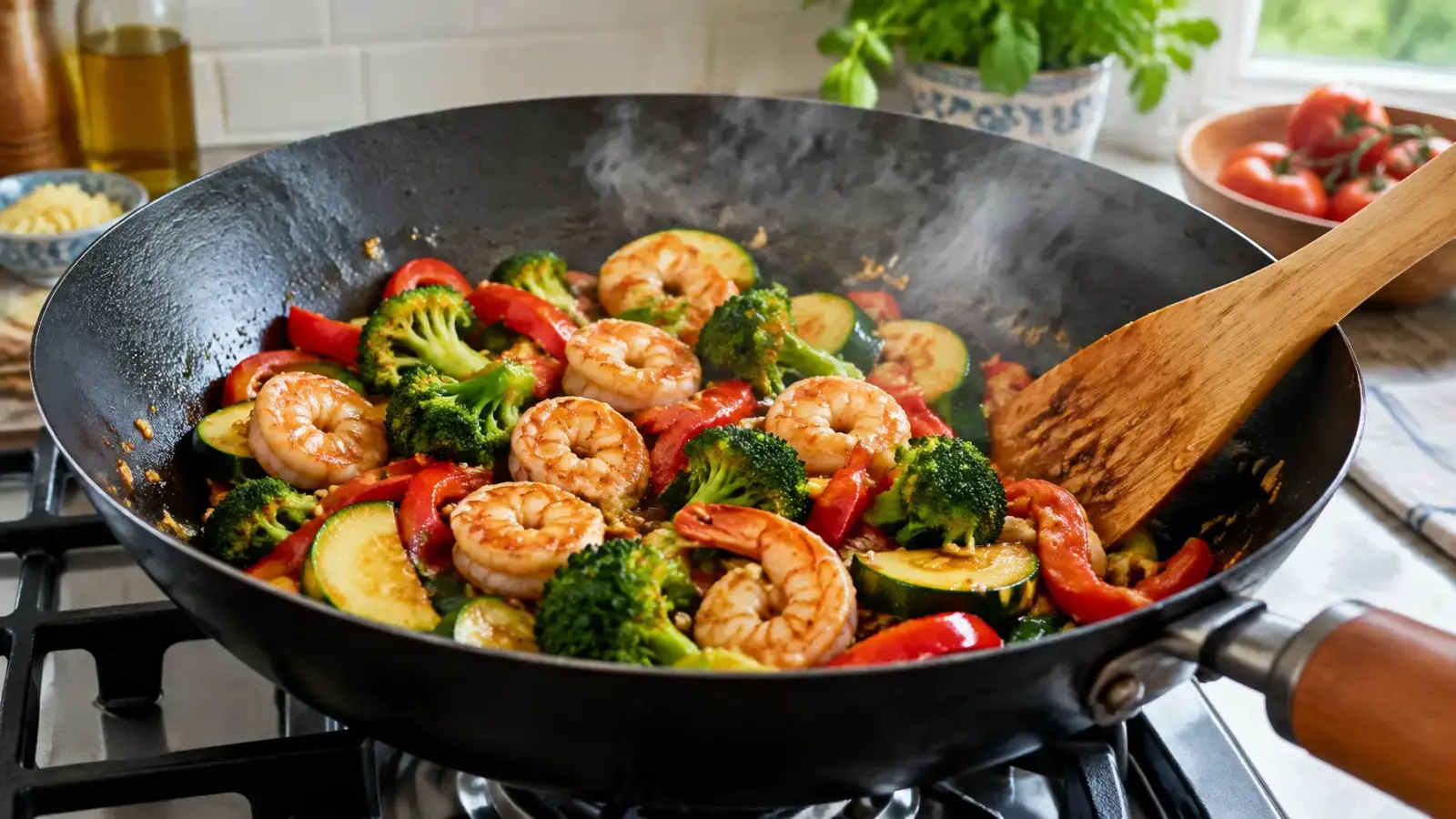
4. Stir-fry the vegetables
Add the remaining tablespoon of oil to the same skillet.
Add the broccoli and bell pepper first. Stir-fry for 2–3 minutes. Add the zucchini and continue cooking for another 2–3 minutes, until the vegetables are bright and tender-crisp.
If the pan appears dry, add 1 tablespoon of water. This helps the broccoli soften without requiring additional oil.
5. Add the sauce
Reduce the heat to medium. Pour the prepared sauce into the pan and toss the vegetables until evenly coated.
Cook for 1–2 minutes. The sauce should be hot and lightly reduced, but it does not need to become thick.
6. Return the shrimp to the pan
Add the cooked shrimp back to the skillet. Toss everything together for 1–2 minutes, just until the shrimp are heated through.
Remove the pan from the heat. Garnish with sliced green onions and sesame seeds.
Tips for the Best Stir Fry
Use a large pan. Overcrowding traps moisture and prevents the ingredients from browning. A wok or wide skillet is preferable.
Dry the shrimp thoroughly. Wet shrimp release water as they cook and may become pale rather than lightly seared.
Cook in stages. Shrimp cook faster than most vegetables. Removing them before cooking the vegetables helps maintain a firm texture.
Do not overcook the shrimp. Shrimp are finished when they are opaque and form a loose “C” shape. A tightly curled “O” shape usually indicates overcooking.
Use low-sodium sauce. This gives you more control over the final salt level. Taste before adding additional salt.
Cut vegetables evenly. Similar-sized pieces cook at a similar rate, which is especially important in a fast recipe.
Variations
Shrimp and broccoli stir fry
Omit the zucchini and bell pepper. Use 4 cups of broccoli, adding 1–2 tablespoons of water while it cooks to help it soften.
Spicy shrimp stir fry
Add 1 teaspoon of sriracha, chili-garlic sauce, or sambal oelek to the sauce. Increase the red pepper flakes if preferred.
Soy-free version
Replace soy sauce with coconut aminos. The flavor will be slightly sweeter, so reduce or omit the rice vinegar if needed.
Extra vegetable version
Add sliced mushrooms, shredded cabbage, green beans, or asparagus. Cook dense vegetables first and quick-cooking vegetables later.
Lemon garlic version
Omit the sesame oil and rice vinegar. Add 1 tablespoon of fresh lemon juice and 1 teaspoon of lemon zest to the finished dish.
Storage and Reheating
Cool leftovers promptly and store them in an airtight container in the refrigerator for up to 2 days. Reheat gently in a skillet over medium heat until hot throughout.
Shrimp can become rubbery when reheated at high temperatures. Add a small splash of water to the pan and cover briefly to warm the vegetables and shrimp evenly.
Nutrition Information
Approximate nutrition per serving:
- Calories: 230
- Protein: 29 grams
- Fat: 12 grams
- Total carbohydrates: 12 grams
- Fiber: 3 grams
- Net carbohydrates: 9 grams
- Sodium: 650–800 milligrams, depending on the soy sauce or tamari
Nutrition values are estimates. They vary according to the size of the shrimp, the brand of sauce, and the amount of oil used.
FAQ
Can I use frozen shrimp?
Yes. Thaw the shrimp completely, then pat them dry before cooking. Do not add frozen shrimp directly to the skillet because they will release excess water and reduce the pan temperature.
Can I make this recipe without soy sauce?
Yes. Use coconut aminos for a soy-free alternative. You can also use a small amount of fish sauce mixed with water, although the flavor will be stronger.
Is this shrimp stir fry keto-friendly?
It can fit many low-carb eating plans when served without rice or noodles. The vegetables and sauce contribute approximately 9–10 grams of net carbohydrates per serving.
How do I know when shrimp are cooked?
Cooked shrimp should be pink on the outside, opaque in the center, and slightly curled. For an additional safety check, seafood should reach an internal temperature of 145°F (63°C).
Can I prepare the vegetables ahead of time?
Yes. Chop the vegetables and store them in a sealed container in the refrigerator for up to 2 days. Prepare the sauce ahead of time and refrigerate it separately.
Can I use pre-cooked shrimp?
Yes, but add them only during the final step. Toss them with the hot vegetables and sauce for 1–2 minutes, just until warmed. Longer cooking can make pre-cooked shrimp tough.