Recipe
Servings
2 pita pockets, or 4 pita halves 1×
Serves 2 pita pockets, or 4 pita halvesPrep 15 minTotal 15 min
Ingredients
- 2 whole-wheat pitas
- 1 can tuna, about 5 ounces, drained
- 1 can cannellini or great northern beans, about 15 ounces, drained and rinsed
- ½ cucumber, diced
- 1 cup cherry tomatoes, quartered
- ¼ small red onion, thinly sliced
- ¼ cup chopped fresh parsley
- 2 tablespoons extra-virgin olive oil
- 1½ tablespoons fresh lemon juice
- ½ teaspoon dried oregano
- 2 cups arugula, spinach, or shredded lettuce
- Salt and black pepper, to taste
Method
- Whisk the olive oil, lemon juice, oregano, salt, and pepper in a bowl.
- Add the tuna, beans, cucumber, tomatoes, red onion, and parsley. Fold gently until coated, keeping most of the beans whole.
- Warm the pitas briefly if needed, then cut them in half and open the pockets.
- Add the greens, spoon in the tuna and bean filling, and serve immediately.
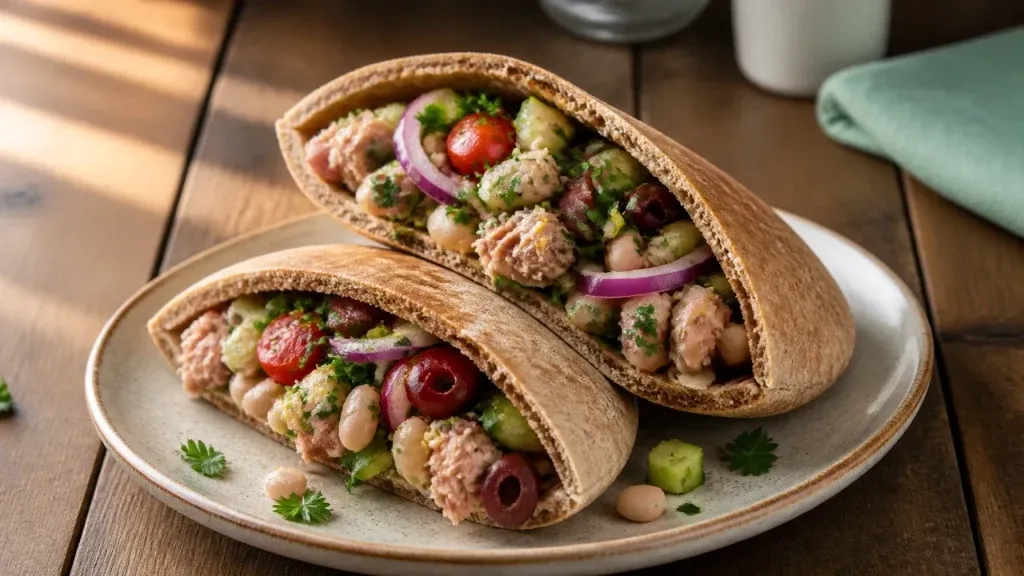
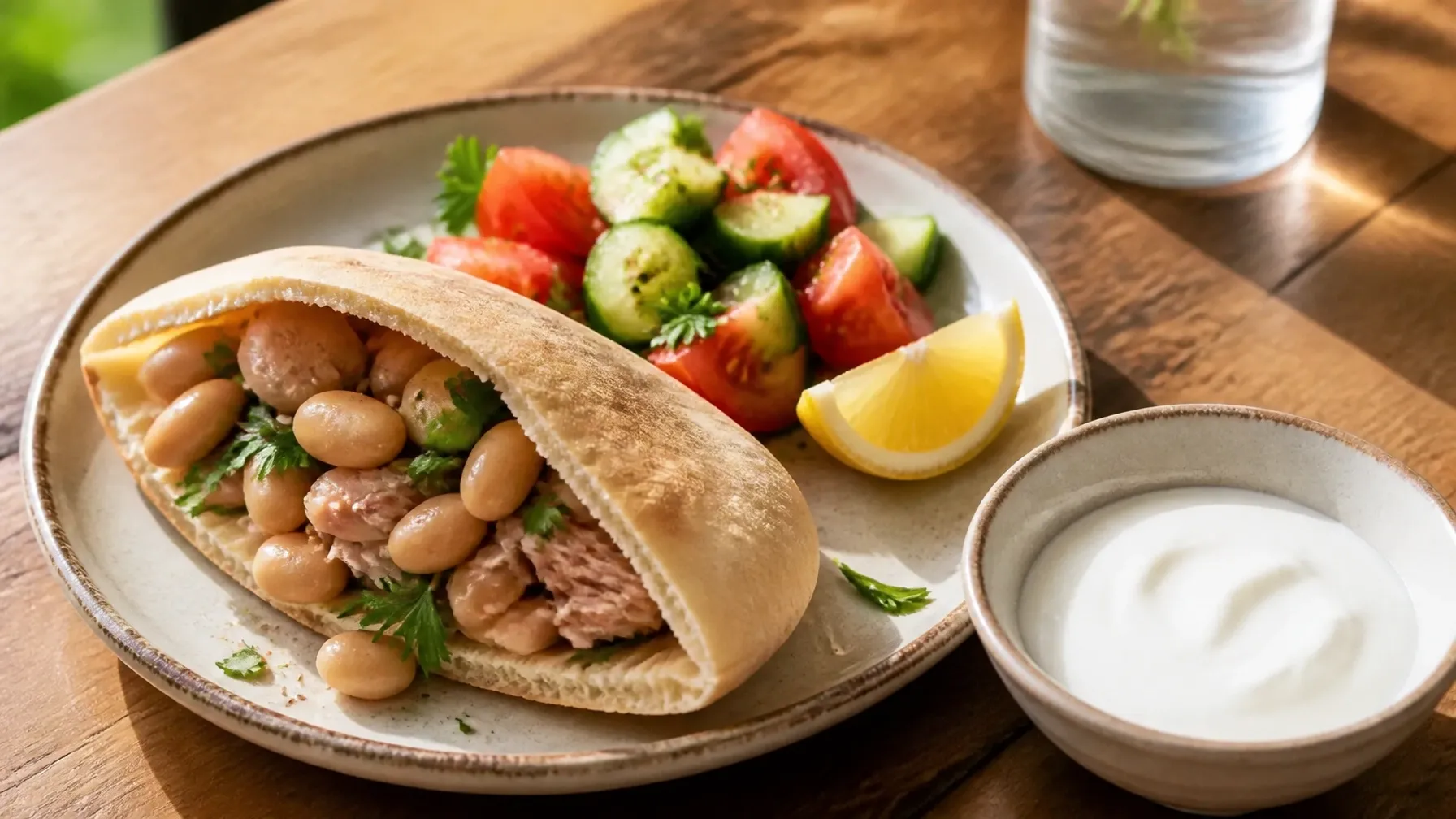
When lunch needs to happen before your next meeting, these Mediterranean tuna and white bean pita pockets are ready to help. They bring together creamy beans, protein-rich tuna, crisp vegetables, lemon, herbs, and whole-wheat pita without turning your kitchen into a disaster zone. Think of them as a tuna salad with better shoes: fresher, brighter, and sturdy enough for busy weekdays.
Why This Filling Works: Protein, Fiber, and Contrast
The clever part of this recipe is the partnership between tuna and white beans. Tuna provides satisfying protein, while beans add fiber and slow-digesting carbohydrates. That combination helps the pita feel like a proper meal rather than a snack wearing a tie.
A similar Mediterranean tuna and cannellini bean pita pocket provides roughly 350–420 calories, depending on the pita size and amount of olive oil. It can also deliver around 25–30 grams of protein and a useful amount of fiber. See the nutrition details for a comparable Mediterranean tuna and bean pita recipe if you want to compare portions.
Use canned white beans for speed, but rinse them thoroughly. Rinsing removes excess brine and gives the beans a cleaner, sweeter flavor. It also prevents the filling from tasting as though it has been trapped in a salt mine.
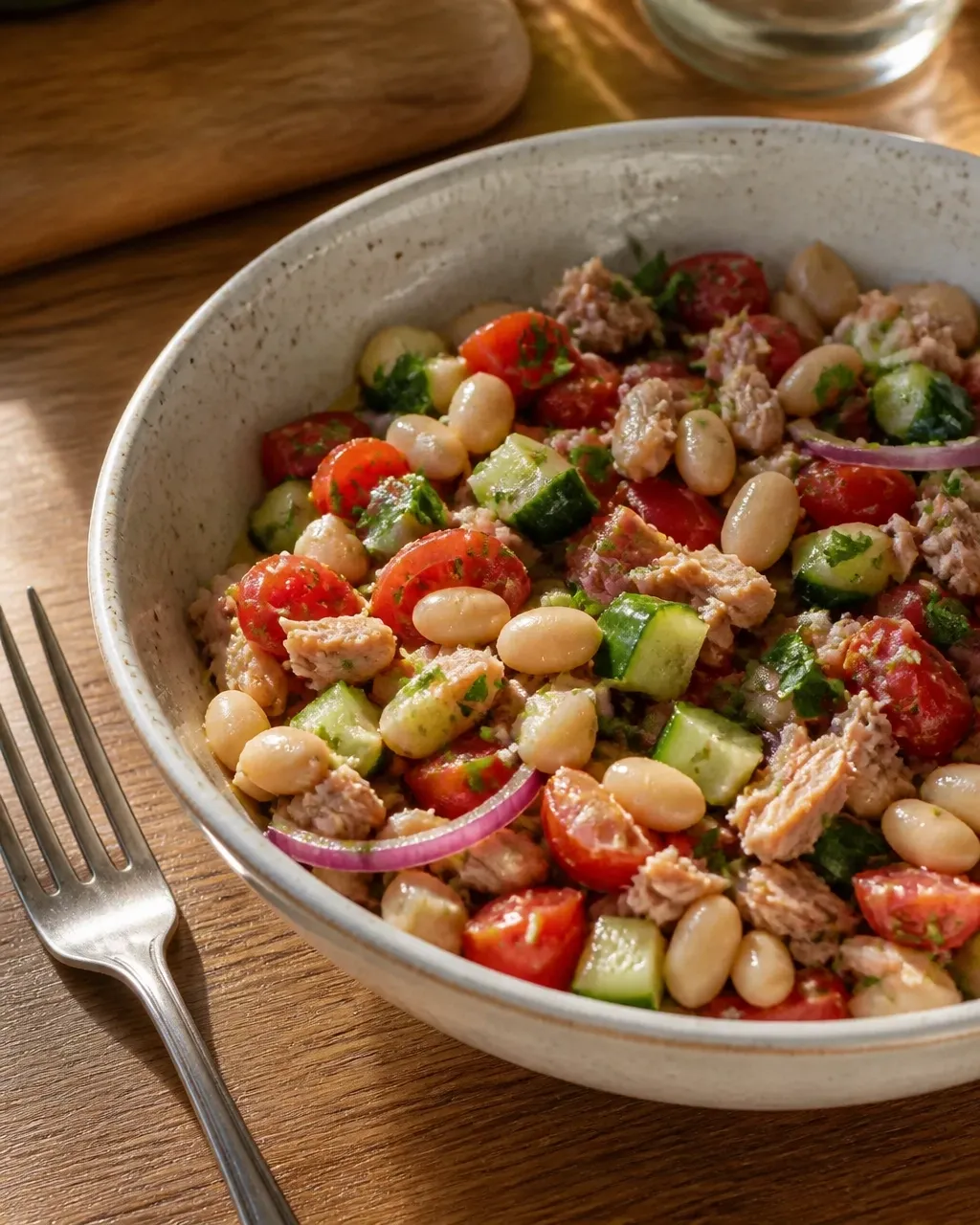
Keep the beans mostly whole. A few will break as you mix, and that is helpful because the creamy pieces lightly bind the filling. Mash everything, however, and you lose the contrast between soft beans, flaky tuna, and crisp vegetables.
Let Acidity Do the Heavy Lifting
Lemon juice is not just there to make the plate look Mediterranean. Its acidity balances olive oil, sharpens mild beans, and cuts through the richness of tuna. It also helps soften the slightly fishy notes that can appear in canned tuna.
Start with a moderate amount, then taste. If the mixture seems dull or heavy, add another small squeeze of lemon. If it tastes too sharp, round it out with a little more olive oil rather than immediately adding sugar. The goal is brightness, not lemonade with a tuna problem.
Add salt carefully. Tuna, olives, and canned beans can all contribute sodium, so taste after the mixture has rested for a few minutes. Flavors become more noticeable as the dressing spreads across the beans and vegetables.
Protect Texture With Smart Timing
Prepare the filling ahead, but keep it separate from the pita until you are ready to eat. Pita absorbs moisture quickly, especially when the filling contains lemon juice and juicy tomatoes. A pocket assembled hours too early can become less sandwich and more edible napkin.
For the best texture, place a layer of arugula, spinach, or crisp lettuce inside the pita first. The greens add crunch and create a small barrier between the bread and the wetter filling.
Warm the pita briefly if it feels stiff. Gentle heat makes the bread flexible, but overheating dries it out and encourages cracking. Open the pocket carefully, and do not pack it like you are preparing emergency rations. A loose, generous fill tastes better and keeps the pita intact.
This is exactly the sort of meal that belongs in a collection of 15-minute meals. It is fast because the ingredients are already cooked, but it still has enough texture and acidity to feel freshly made.
Easy Variations Without Losing the Balance
Turn up the Mediterranean character with chopped Kalamata olives, roasted red peppers, crumbled feta, or a pinch of sumac. Add mint for a cooler, more aromatic finish, or use basil when tomatoes are doing the talking.
For a creamier filling, replace part of the olive oil with plain Greek yogurt. The yogurt adds tang and softens the mixture without making it mayonnaise-heavy. A small spoonful of Dijon mustard can also add savory depth, though it shifts the flavor slightly away from a classic Mediterranean profile.
Make it vegetarian by replacing the tuna with extra beans and a handful of chopped walnuts. The walnuts supply texture and fat, while smoked paprika adds a little savory personality. For a lower-carbohydrate option, serve the filling over greens instead of using pita.
You can also make mini pockets for lunchboxes or casual gatherings. Just keep the filling cool and assemble close to serving time. Save this recipe alongside your favorite healthy dinner ideas and quick meals for the days when cooking needs to be useful, not theatrical.
Side Dish Pairings: Add Freshness, Not More Heaviness
Pair these pita pockets with a simple cucumber and tomato salad dressed with lemon and herbs. The vegetables echo the filling while adding extra crunch and water-rich freshness.
Plain Greek yogurt with grated cucumber makes a quick cooling side, especially if you add garlic, mint, and black pepper. Keep it lightly seasoned so it refreshes the meal rather than competing with the tuna.
For a heartier plate, add a small portion of roasted potatoes or a grain salad. Choose something earthy and mild, then bring in acidity with lemon or vinegar. The pocket already contains beans and bread, so avoid pairing it with a large creamy pasta salad unless you are deliberately planning a very cozy afternoon.
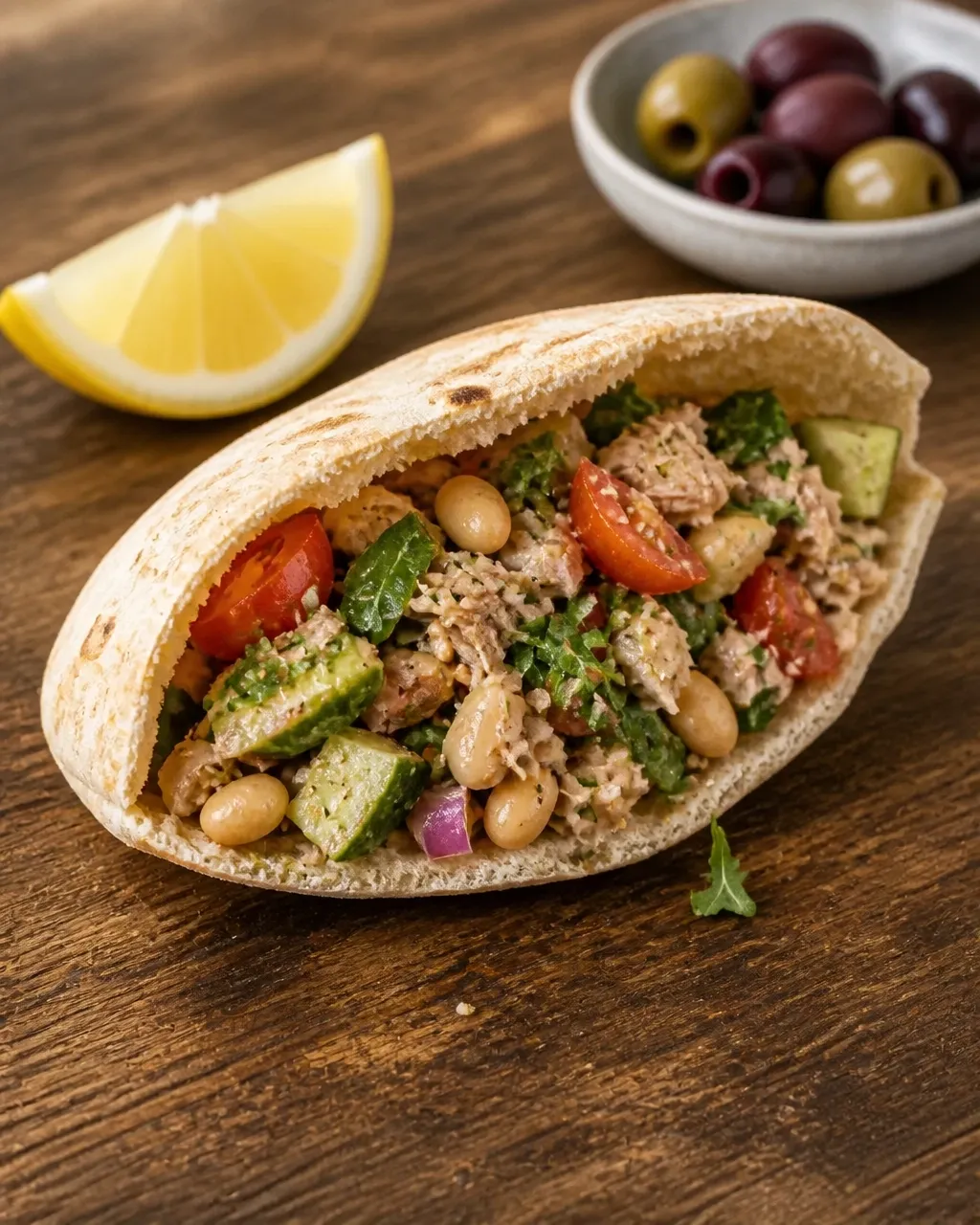
A few olives, sliced melon, or fresh fruit can also finish the meal neatly. Sweetness and acidity give the savory tuna filling a clean landing.
FAQ
Can I make the filling the night before?
Yes. Prepare the filling, cover it, and refrigerate it promptly. Keep the pita and greens separate until serving. The flavor may improve overnight as the lemon, herbs, and oregano mingle, but the vegetables will soften slightly. If you want maximum crunch, add the cucumber and tomatoes just before assembling.
Why does my filling taste bland?
Usually, it needs more acidity or salt, not a dozen extra seasonings. Add lemon juice first, taste, then adjust salt carefully. Check that your herbs are fresh and that the tuna has been drained well. Excess liquid can dilute flavor, while insufficient lemon can leave beans tasting flat.
What if my pita keeps tearing?
Warm it gently for a few seconds to make it flexible. Open the pocket from the cut edge rather than forcing a hole through the side. Add the greens before the filling, and avoid overstuffing. If the pita is very thin or damaged, serve the mixture over salad greens or scoop it with toasted pita wedges. A broken pita is not a culinary emergency; it is simply a deconstructed lunch.
Can I use tuna packed in oil?
Yes. Oil-packed tuna gives the filling a richer texture and deeper flavor. Drain it thoroughly, then reduce the added olive oil slightly if the mixture seems greasy. Tuna packed in water keeps the recipe lighter but may need a little extra olive oil for softness.
Are canned beans healthy enough for this recipe?
Absolutely. Canned beans are a practical source of fiber, plant protein, folate, potassium, and magnesium. Rinse them under cool water to reduce their sodium and remove the canning liquid. If you cook beans from dry, add lemon juice after the beans are tender; acidity can slow softening during cooking.
How long can tuna pita filling sit out?
Treat it as a perishable food. Refrigerate it at 40°F (4°C) or below, and do not leave it at room temperature for more than two hours, or more than one hour in very hot conditions. Lemon juice does not make tuna salad shelf-stable. For packed lunches, use an insulated bag and ice packs.
Can I freeze the filling?
Freezing is not recommended. Tuna and beans can technically be frozen, but cucumber, tomatoes, and herbs become watery and soft after thawing. Prepare only what you need, or refrigerate the filling and use it within 3–4 days. Freeze the pita separately if necessary.
Is this suitable for meal prep?
Yes, with one rule: assemble late. Portion the filling into airtight containers, keep the pita dry, and pack greens separately if possible. At lunchtime, open the pita, add the greens, and fill it. This makes a reliable option for quick family meals and a useful alternative to another rushed sandwich.
Can I cook the tuna filling?
You can warm the pita, but keep the filling cool or at room temperature. Heating canned tuna with fresh vegetables makes the cucumber limp and can intensify the fishy aroma. If you want a warm meal, serve the filling beside toasted pita or warm roasted vegetables instead. For a different fast dinner, browse Cookpedia’s 30-minute meals or save it next to your air fryer recipes dinner ideas.