Recipe
Prep 15 minCook 40 minTotal 55 min
Ingredients
Method
- Heat the oven to 200°C fan. Line a large roasting tray with baking paper.
- Scrub the carrots and parsnips. Peel them if preferred. Cut into even batons about 2 cm thick. Remove the tough central core from any large parsnips.
- Put the vegetables on the tray. Add the oil, salt and a few twists of black pepper, then toss to coat. Arrange in one layer, leaving space between the pieces.
- Roast for 20 minutes.
- Mix the honey, wholegrain mustard, cider vinegar and thyme in a small bowl.
- Remove the tray from the oven. Turn the vegetables, pour over the honey mixture and toss carefully to coat.
- Return the tray to the oven for 20 minutes, turning the vegetables once, until tender and golden at the edges. Check towards the end of cooking, as honey can darken quickly.
- Transfer to a serving dish and add extra thyme if desired. Serve hot.
Honey Roast Carrots and Parsnips
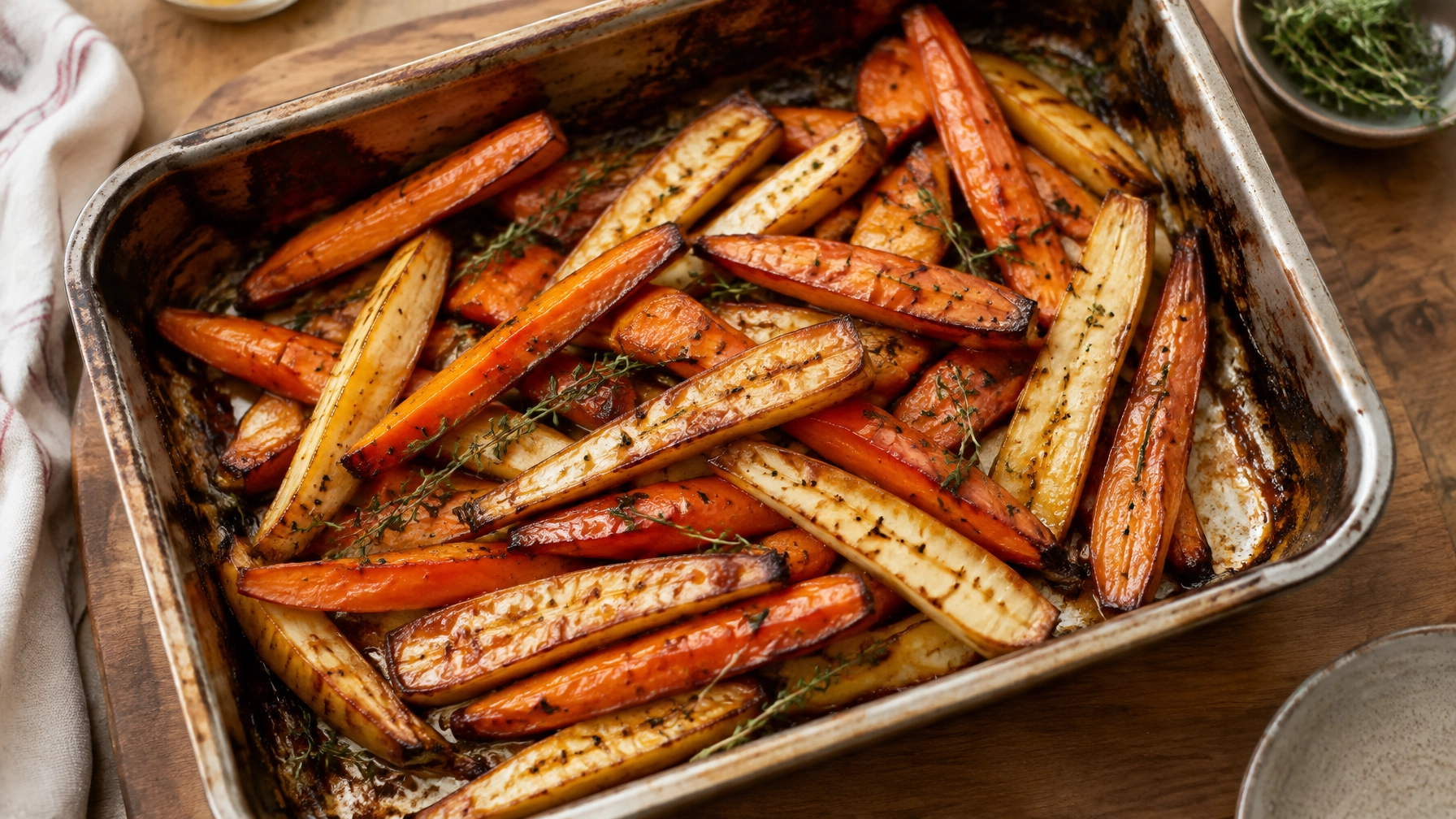
Honey roast carrots and parsnips are a practical side dish for a Sunday roast or a weeknight meal. Cut the vegetables to a similar size so they cook evenly, and add the honey partway through roasting to help prevent the glaze from burning.
Preparation
Choose firm carrots and parsnips of similar thickness. Scrub them well and peel them if you prefer a smoother finish. Cutting them into even batons matters more than achieving a particular shape: smaller pieces cook sooner, while thicker pieces need more time.
For larger parsnips, remove the woody central core if it feels tough. Cut the vegetables lengthways into batons about 2 cm thick. Try to keep them as even as possible so that the thinner ends do not darken before the centres are tender.
Roasting
Use a large roasting tray and arrange the vegetables in one layer. If they overlap or crowd the tray, they are more likely to steam than roast, which can leave them soft without much colour. Use two trays if needed, and swap their positions halfway through cooking.
Roast the vegetables first with oil and seasoning. This gives them time to soften and start browning before the honey is added. Mix the honey with wholegrain mustard and vinegar, then toss it through the partly roasted vegetables. Return the tray to the oven and turn the pieces once more before serving.
Look for tender centres and golden-brown edges. A small knife should pass through the thickest piece without resistance. Honey can darken quickly, so check the tray towards the end and remove any pieces that colour faster than the rest.
Terms
Caramelisation (noun): the browning and flavour development that occurs as the vegetable surfaces roast.
Glaze (noun): a thin coating of honey, mustard and vinegar that clings to the vegetables during the final part of cooking.
Serving
Serve these carrots and parsnips as a side with roast chicken, sausages, lentil loaf or a nut roast. They also work alongside a vegetarian meal. If serving them as part of a larger meal, transfer them to a warm dish shortly before eating so the glaze remains glossy.
For a little extra acidity, add a small splash of vinegar to the glaze. For a fresh finish, scatter over chopped parsley or thyme after roasting. Add herbs at the end if you want their flavour to remain distinct.
Storage
Cool leftovers promptly, place them in a covered container and refrigerate. Reheat until steaming hot throughout. The glaze may soften in storage, so spread the vegetables on a tray when reheating if you want to bring back some browned edges. Avoid leaving cooked vegetables at room temperature for an extended period.
Honey should not be given to children under 12 months, including when it has been cooked into a dish. See the NHS guidance on foods to avoid giving babies and young children.
Recipe
Servings
6, as a side dish
Prep time
15 minutes
Cook time
40 minutes
Total time
55 minutes
Tips
- Keep the vegetable pieces similar in thickness for even cooking.
- Do not crowd the tray. Use two trays if the vegetables do not fit in one layer.
- Add the honey mixture after the first 20 minutes to reduce the chance of the glaze burning.
- Check tenderness with a small knife; thicker pieces may need a little longer.
- If the glaze darkens before the vegetables are tender, reduce the oven temperature slightly and continue cooking until the centres are soft.
Variations
- Replace the thyme with rosemary or chopped parsley.
- Add finely grated orange zest to the honey mixture for a citrus note.
- Use maple syrup instead of honey for a different glaze.
- Add a pinch of ground cumin or smoked paprika to the vegetables before roasting.
- Leave out the mustard for a simpler honey glaze.
FAQ
Can I prepare the vegetables ahead of time?
Yes. Scrub, peel if desired and cut the vegetables in advance. Keep them covered in the refrigerator, then dry them well before adding the oil and seasoning.
Why are my carrots and parsnips soft rather than browned?
The tray may be overcrowded, or the vegetables may be too wet. Spread them out in one layer and leave space between the pieces so moisture can evaporate during roasting.
Can I make this recipe without mustard?
Yes. Omit it and mix the honey with the vinegar and thyme. The glaze will have a milder flavour.
How do I know when the vegetables are ready?
They should be tender through the centre and browned at the edges. Test the thickest piece with a small knife.
Can I use baby carrots?
Yes. If they are much smaller than the parsnip pieces, add them to the tray later so they do not overcook.