Recipe
Servings
Servings 1×
Ingredients
- Beans
- Tortillas
- Corn
- Lime
- Honey
- Cream
- Salt
Method
- Prepare the ingredients described in the article and heat the cooking surface or oven as directed.
- Cook the main ingredients using the heat and timing guidance in the article.
- Finish with the seasonings and garnishes named in the article, then serve.
If you’ve ever bitten into a scoop of ice cream only to find it feels more like a frozen gravel pit than a silky dream, you’ve met the enemy: large ice crystals. I’m obsessed with the physics of a perfect scoop, especially when we’re stripping away the fancy machinery. Making no-churn gelato isn’t just a kitchen hack; it’s a high-stakes battle against the laws of thermodynamics. In this post, I’m pulling back the curtain on how we manipulate fat, sugar, and air to keep those pesky water molecules from ganging up and ruining your dessert. Whether you're wrapping up one of your quick family meals or just craving a late-night science experiment, understanding the molecular landscape of your freezer is the first step to gelato greatness.
The Molecular Battlefield: Nucleation and Growth
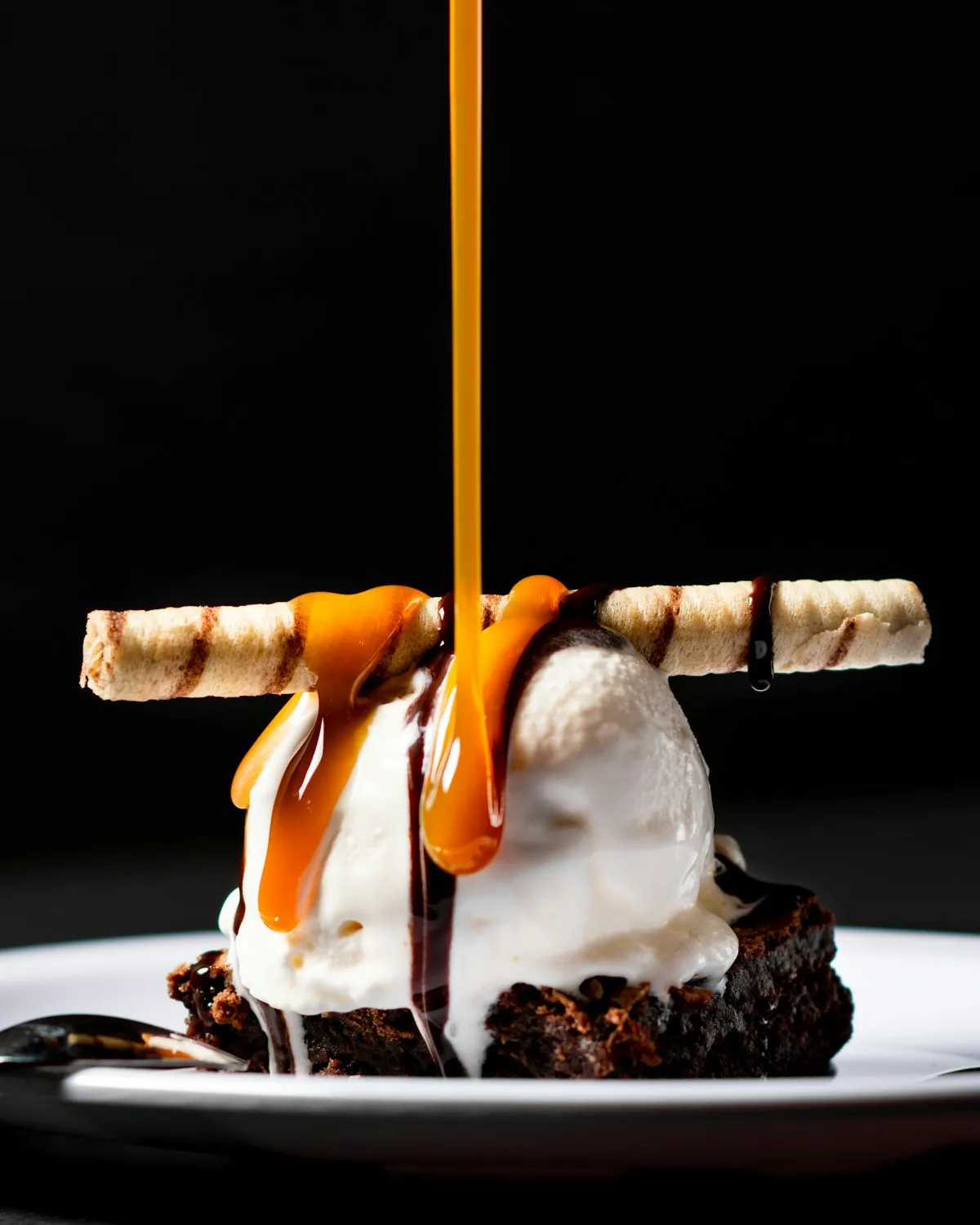
At its core, gelato is a complex four-phase system: ice crystals (solid), fat globules (solid/liquid), sugar solution (liquid), and air bubbles (gas). The goal is to keep all of these components as tiny and evenly dispersed as possible. When you put a liquid mixture in the freezer, the water molecules start to slow down and hook onto one another to form solid structures. This first step is called nucleation.
In a traditional churned gelato, the constant agitation of the paddle creates thousands of tiny nucleation points. In a no-churn recipe, you don’t have that mechanical advantage. You’re relying on "static freezing," which is the dangerous territory where ice crystals love to grow. Because the mixture freezes slowly from the outside in, the crystals have more time to attract neighboring water molecules, expanding into large, jagged shards.
To combat this, you must rely on freezing point depression. By using ingredients with a high sugar and fat content: specifically sweetened condensed milk: you are lowering the temperature at which the water in the cream begins to freeze. This means the mixture stays "liquid" even at lower temperatures, giving you a smoother mouthfeel. The sugar molecules physically get in the way of the water molecules, acting like a molecular chaperone that prevents them from forming a solid crystal lattice.
Furthermore, let’s talk about the role of lipids. Fat is your best friend when it comes to texture. The fat globules from the heavy cream coat the tiny ice crystals as they form, creating a physical barrier. This prevents "recrystallization": the process where small crystals melt and refreeze into larger ones during the inevitable temperature fluctuations of a home freezer. Use high-fat heavy cream; this is not the time for "light" alternatives. You need that fat to disrupt the water structure.
Finally, air is the "secret" ingredient. Since you aren't churning air into the mixture as it freezes, you must pre-incorporate it. This is why you whip the cream to stiff peaks before folding it in. These trapped air bubbles act as insulators, slowing down the heat transfer and providing a soft, pillowy structure that makes the final product feel "warm" on the tongue rather than like a block of ice.
Folding in Success: Technique Tips
Achieving a professional-grade texture without a machine requires a bit of finesse and a firm hand on the non-negotiables.
- Chill everything. I mean everything. Your bowl, your whisk, and your condensed milk should be as cold as possible before you start. Cold ingredients allow for smaller, more stable air bubbles during the whipping process.
- Whip to stiff peaks. You want the cream to hold its shape firmly. This air is the only thing standing between you and a rock-hard brick of frozen milk.
- Fold with purpose, but gently. Use a large rubber spatula and a "cut and fold" motion. If you stir vigorously, you’ll deflate all that precious air you just worked so hard to incorporate.
- Use real vanilla beans. Beyond the flavor, the tiny seeds in a vanilla bean provide "seed points" for nucleation. While they don't replace the need for cold temperatures, every little bit of structural interference helps.
- Seal it tight. Press a piece of plastic wrap directly onto the surface of the gelato before freezing. This prevents "sublimation," where ice on the surface evaporates and then refreezes as large, crunchy crystals on the top of your dessert.
If you're looking for healthy dinner ideas to balance out this rich treat, remember that a high-protein main can help offset the glycemic load of a sugar-heavy dessert. But let's be honest: when the gelato is this smooth, it’s the star of the show.
Flavor Physics: Variations and Adjustments
Once you master the base vanilla bean science, you can start experimenting with other inclusions. However, keep in mind that every addition changes the chemistry of the mix.
- The Alcohol Effect: Adding a tablespoon of vodka or bourbon can significantly improve texture. Alcohol has a much lower freezing point than water, which ensures the gelato stays soft even in deep-freeze conditions. Just don't overdo it, or you'll end up with a slushy that never sets.
- Invert Sugars: If you want an even silkier finish, replace a tiny portion of the condensed milk with honey or corn syrup. These are "invert sugars" that are even better at preventing crystal growth than standard sucrose.
- Acidic Swirls: If you’re adding fruit, always cook it down into a concentrated jam first. Fresh fruit has a high water content, which will lead to: you guessed it: giant ice crystals inside your smooth gelato. A concentrated raspberry or passionfruit swirl adds acidity that cuts through the intense richness of the fat.
- Fatty Pastes: Nut butters like pistachio or hazelnut are excellent additions because they add even more fat and solids, further inhibiting the formation of large ice structures. Just ensure they are smooth and thoroughly emulsified into the condensed milk before folding in the cream.
Science-Backed Pairings: Balancing the Palate
When you’re serving something as rich and dense as no-churn gelato, you need to think about contrast. The high fat content coats the tongue, which can eventually dull your taste buds. To combat this, pair your gelato with something that offers a different sensory experience.
- Acidity: A warm berry compote or a squeeze of fresh lime over a tropical variation works wonders. The acid cuts through the lipids, cleaning your palate for the next creamy bite.
- Texture: Pair your smooth gelato with something crunchy. A toasted almond biscotti or a sprinkle of flaky sea salt provides a structural contrast to the soft, aerated gelato.
- Temperature: Serving a cold scoop alongside a warm skillet dessert creates a delightful thermal contrast. The "Leidenfrost-adjacent" effect of the melting gelato forming a sauce around the warm cake is a classic for a reason.
If you’ve spent the evening trying out new air fryer recipes dinner options, finishing with a science-perfected scoop of vanilla bean gelato is the ultimate reward. It’s the perfect capstone to a night of efficient, delicious cooking.
FAQ: Solving the "What If" Scenarios
What if my gelato is too hard to scoop?
This usually means your freezer is set too low, or you didn't incorporate enough air. Scientifically, your gelato has reached a state where the "glass transition" has occurred, turning the sugar solution into a hard solid. Let it sit on the counter for 5–10 minutes. This allows the outer layers to undergo "phase transition" back to a semi-soft state, making it scoopable without breaking your wrist.
What if it feels "gritty" or "sandy"?
Grittiness is often caused by lactose crystallization. Sweetened condensed milk is highly concentrated; if it’s stored improperly or the mixture is frozen too slowly, the lactose (milk sugar) can fall out of solution and form tiny, sand-like crystals. To avoid this, ensure your condensed milk is fresh and your freezer is at its coldest setting to speed up the initial set.
Why did my gelato separate into layers?
This happens if your emulsion broke. If the whipped cream was over-beaten or if you folded it into the condensed milk too aggressively, the fat can clump together (becoming butter), leaving the watery serum to sink to the bottom. Once that serum freezes, it forms a solid block of ice at the base of your container. Ensure you fold gently and stop as soon as no white streaks remain.
Can I use a low-fat milk or cream?
Avoid this at all costs. In the world of no-churn, fat is the structural engineer. Without a high percentage of milk fat, there is nothing to coat the water molecules, and you will end up with a bowl of sweet ice. Stick to heavy whipping cream with at least 36% fat content for the best results.
Why does my gelato have a "filmy" feeling on the roof of my mouth?
This is a sign of "fat masking." If the fat content is too high or the fat hasn't been properly emulsified with the sugar, it can leave a coating on your palate. This is why we balance the recipe with the high sugar content of the condensed milk: it helps keep the fat in check and ensures a clean finish.
Does the type of vanilla matter for the science?
While flavor is subjective, using a high-quality extract or paste with a bit of alcohol content actually helps the freezing point depression slightly. More importantly, the particulates in vanilla bean paste can act as "impurities" in the water, which, counterintuitively, can help promote smaller, more frequent nucleation points rather than letting one large crystal take over.