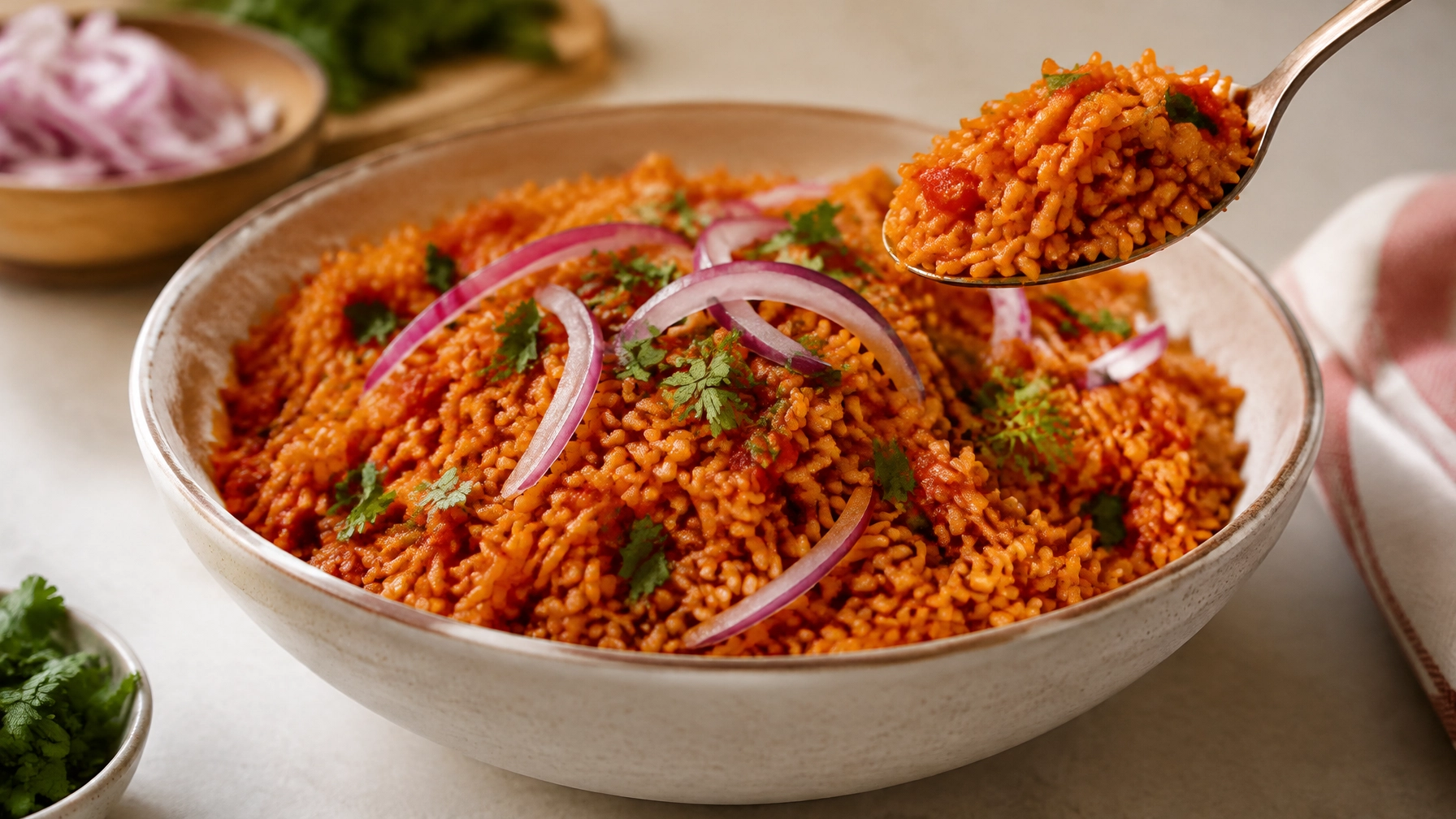
Recipe
Serves
4 1×
Serves 4Prep 15 minCook 55 minTotal 1H10 min
Ingredients
Method
- Rinse the rice in several changes of cool water until the water is less cloudy. Drain well and set aside.
- Put the tomatoes, red bell pepper, roughly chopped onion and scotch bonnet in a blender. Blend until smooth. For less heat, remove the scotch bonnet seeds or use half the pepper.
- Heat the oil in a heavy pot over medium heat. Add the diced onion and cook for 3 to 4 minutes, stirring, until softened. Add the tomato paste and cook for 2 minutes.
- Carefully add the blended tomato mixture. Bring it to a steady simmer, then cook uncovered for 15 to 20 minutes, stirring occasionally. The mixture should become thicker and lose its raw tomato smell.
- Stir in the thyme, curry powder, bay leaf, salt and black pepper. Add the drained rice and stir once to coat the grains in the sauce.
- Pour in 1 1/2 cups stock and stir gently. The liquid should come close to the level of the rice. If the rice is not partly covered, add hot stock a few tablespoons at a time. Bring the pot to a gentle simmer.
- Cover tightly, reduce the heat to low and cook for 25 to 30 minutes. Keep the lid on as much as possible. Check near the end: if the rice is still firm and the pot is dry, add a small amount of hot stock, cover and continue cooking.
- When the grains are tender, remove the pot from the heat. Keep it covered for 10 minutes, then remove the bay leaf and fluff the rice gently with a fork. Taste and adjust the seasoning before serving.
Jollof Rice (West African One-Pot)
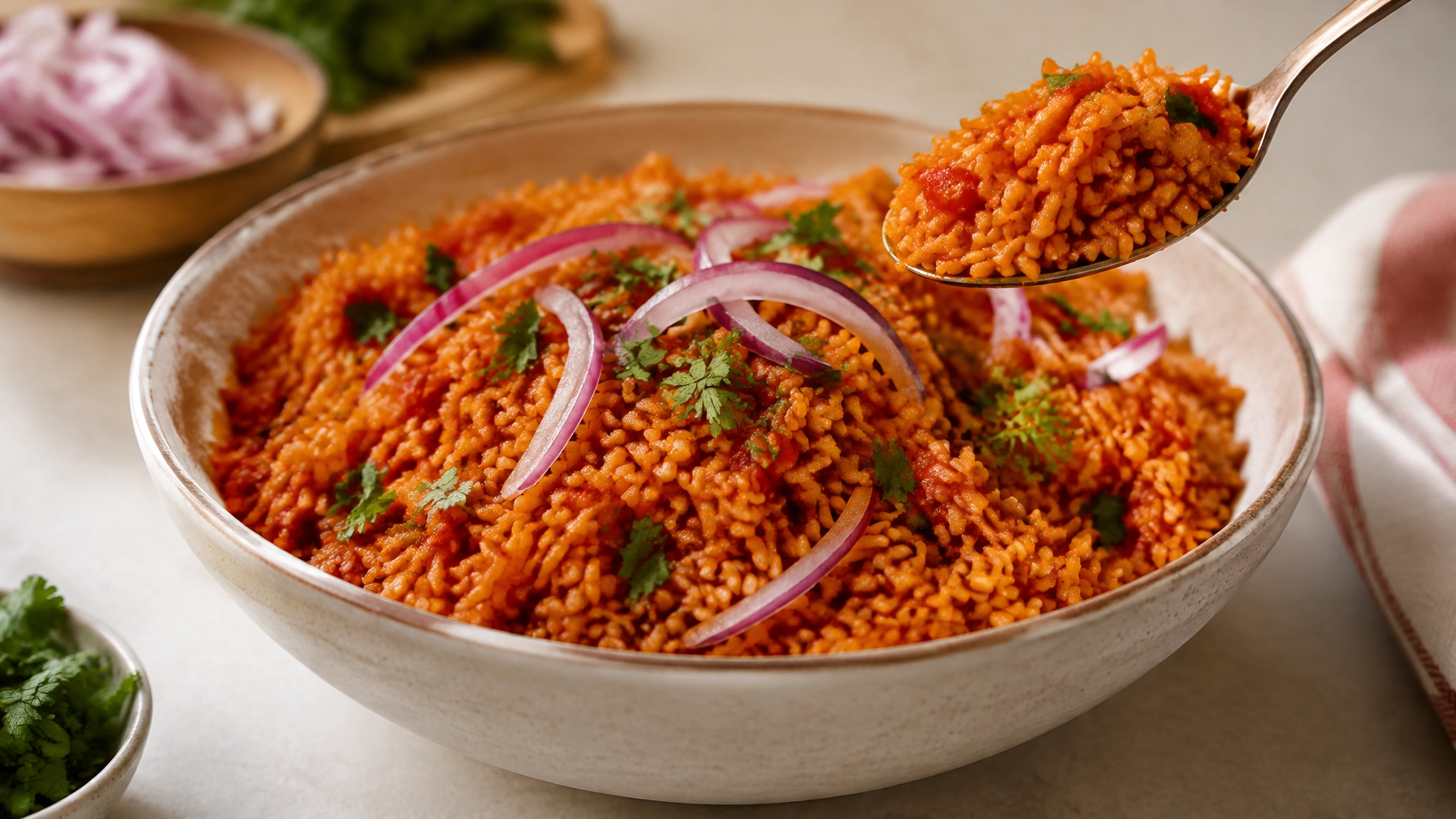
This West African-style jollof rice is cooked in a reduced tomato, pepper and onion sauce for a richly seasoned one-pot meal.
Jollof rice is a family of West African dishes, not one fixed formula. This version takes a Nigerian-style approach, using parboiled rice and a concentrated tomato-and-pepper base. The rice cooks in that sauce, absorbing its flavour as it steams.
Record
jollof (noun): a West African family of rice dishes cooked with a seasoned tomato and pepper base.
The dish is commonly associated with the Senegambian region and Wolof communities, though its history and spread are described in different ways. Across West Africa, cooks use different rice varieties, seasonings, cooking methods and accompaniments. This recipe offers one practical home version; it does not define every regional tradition.
Jollof is distinct from pilaf and jambalaya. Pilaf commonly begins by frying rice before adding stock, while jambalaya is a Louisiana dish shaped by different culinary traditions and ingredients. In this jollof recipe, the tomato and pepper sauce is reduced first, then the rice cooks in the seasoned mixture.
Recipe
Serves: 4
Prep time: 15 minutes
Cook time: 55 minutes
Total time: 70 minutes
Control
Reduce the sauce. A watery base makes it harder to cook the rice evenly. Give the blended vegetables enough time to thicken before adding the rice.
Keep the heat low. High heat can scorch the base before the rice is tender. Use the smallest steady simmer that cooks the rice.
Limit stirring. Stir once when adding the rice, then leave the pot covered. Repeated stirring can break grains and release starch.
Adjust for the pot. Wide pots lose moisture faster than deep, heavy pots. If the rice is undercooked but the base is dry, add hot stock in small amounts rather than pouring in a large quantity at once.
Variations
- Vegetarian: Use vegetable stock. Serve with fried plantain, beans or a simple salad.
- More heat: Add another small piece of scotch bonnet. Increase cautiously; its heat can dominate the sauce.
- Milder: Omit the scotch bonnet and use additional red bell pepper.
- With chicken: Serve with separately cooked chicken, or add cooked pieces at the end to warm through. Raw chicken requires a different cooking plan and should not be added without ensuring it cooks safely.
- Smokier: Let the bottom of the rice catch slightly during the final minutes, without letting it burn. The browned layer is a valued feature for some cooks, but it is optional.
Regional ingredients and methods vary. Adjustments change the result; they do not establish one version as the standard for all West African jollof.
FAQ
Can I use regular long-grain rice?
Yes, but cooking time and liquid needs can differ. Check the packet guidance and start checking the rice earlier. Parboiled rice is the more forgiving option for this method.
Why is my jollof rice still firm?
The pot may have lost too much moisture, or the heat may have been too low to maintain a gentle simmer. Add a few tablespoons of hot stock, cover and cook for several more minutes. Repeat only if needed.
Why is the rice mushy?
Common causes include excess liquid, a sauce that was not reduced enough, or frequent stirring. Measure the stock, reduce the sauce until thick and keep the pot covered while the rice cooks.
Can I make it ahead?
Yes. Cool leftovers promptly and refrigerate in a covered container. Reheat until steaming hot throughout, adding a splash of water or stock if the rice has dried out.
Is this the only authentic version?
No. Jollof has regional forms and household variations. This is one Nigerian-style home recipe, not a single authoritative definition of the dish.