Recipe
Serves
4 1×
Serves 4 main-coursePrep 1H15 minCook 10 minTotal 1H55 min
Ingredients
Method
- Prepare the pasta dough. Place the flour and salt on a work surface or in a large bowl. Make a well in the centre. Add the eggs and olive oil, then gradually incorporate the flour using a fork until a rough dough forms.
- Knead the dough. Knead for 5–10 minutes, or until smooth and elastic. If the dough feels dry, wet your hands and continue kneading rather than adding a large quantity of water. Wrap the dough and leave it to rest at room temperature for 30 minutes.
- Make the filling. Combine the drained ricotta, Parmesan, lemon zest, egg, salt, and pepper in a bowl. Mix until just combined. Do not overwork the mixture. Cover and refrigerate for at least 30 minutes.
- Divide the dough. Cut the rested dough into four equal pieces. Keep three pieces covered while working with the first. Flatten one piece and pass it through a pasta machine on the widest setting. Fold it in half and pass it through again. Repeat once or twice, then gradually reduce the setting until the pasta is approximately 1–2 mm thick.
- Portion the filling. Place the pasta sheet on a lightly floured surface. Spoon or pipe small portions of filling, approximately 2 teaspoons each, onto one half of the sheet. Leave about 5 cm between portions and keep the filling away from the edges.
- Seal the ravioli. Lightly brush the pasta around each portion with water. Fold the empty half of the sheet over the filling. Press firmly around each mound to remove trapped air and seal the pasta.
- Cut and dry. Cut the ravioli into squares using a pasta cutter or sharp knife. Transfer them to a floured tray or parchment-lined baking sheet. Repeat with the remaining dough and filling. Leave the ravioli uncovered for 20–30 minutes while preparing the sauce.
- Boil the water. Bring a large pot of generously salted water to a gentle boil. Avoid a violent boil, which can damage the pasta seals.
- Brown the butter. Add the butter to a light-colored skillet over medium heat. Allow it to melt and foam. Swirl the pan periodically. After approximately 4–5 minutes, the milk solids will turn golden brown and the butter will smell nutty.
- Add the sage. Add the dry sage leaves to the browned butter. Cook for 1–2 minutes, until fragrant and lightly crisp. Remove the skillet from the heat if the butter begins to darken rapidly.
- Cook the ravioli. Add the ravioli to the boiling water in batches if necessary. Cook for 3–5 minutes, depending on thickness, until the pasta is tender and the ravioli float. Reserve at least 60 ml of pasta water before draining.
- Finish the sauce. Add the lemon juice and a splash of reserved pasta water to the brown butter. Swirl the skillet to create a glossy emulsion. Season with salt and pepper.
- Combine. Lift the cooked ravioli directly into the skillet using a slotted spoon. Gently coat the pasta in the sauce. Add more pasta water if the sauce appears greasy or too thick.
- Serve. Divide the ravioli between warm plates. Finish with grated Parmesan, additional lemon zest, black pepper, and the crisp sage leaves. Serve immediately.
Lemon Ricotta Ravioli with Brown Butter
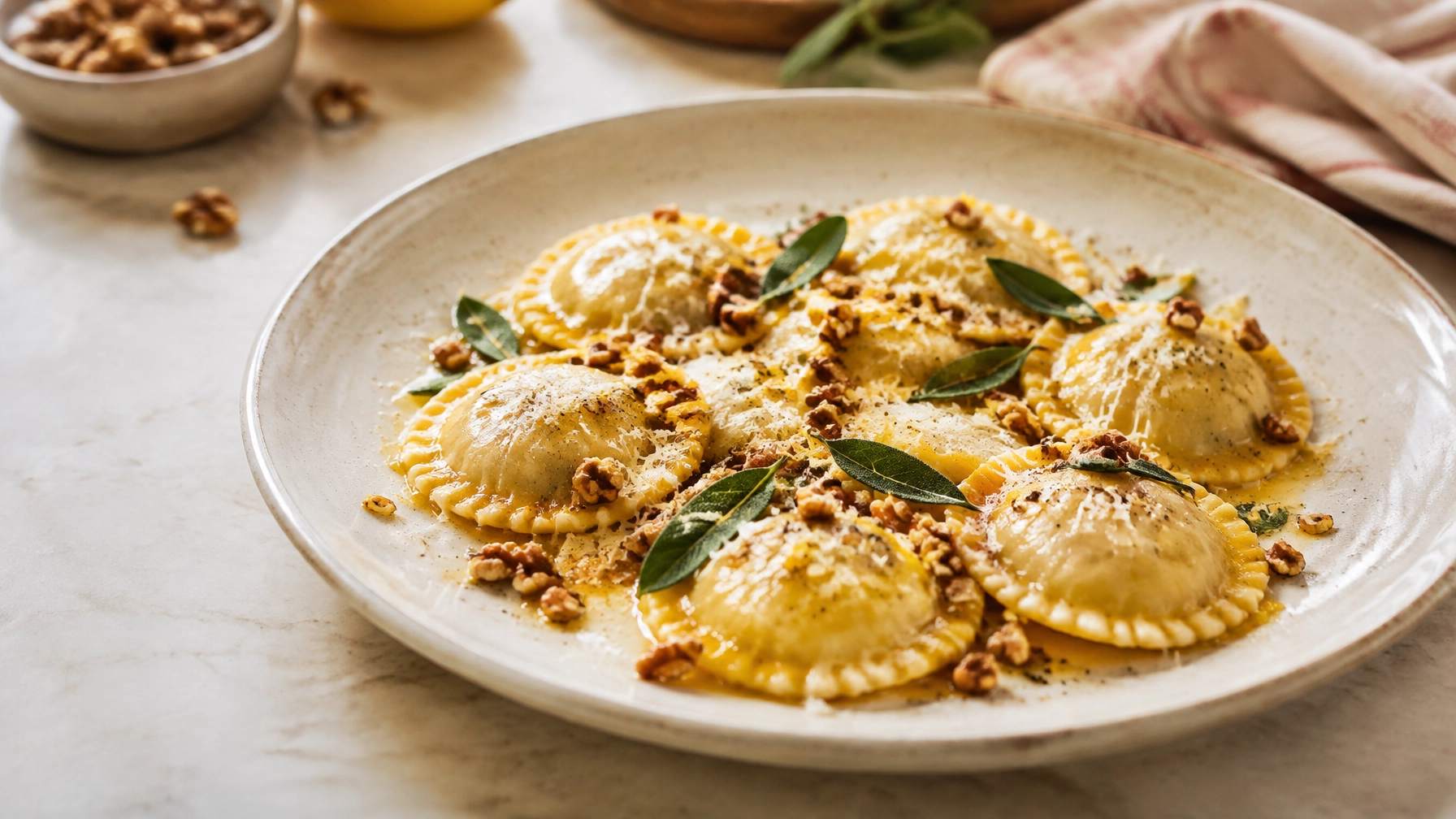
Bright lemon, creamy ricotta, fresh pasta, and nutty brown butter form the basis of this homemade ravioli recipe. The filling is rich but balanced, while lemon zest and juice provide acidity. Crisp sage leaves add fragrance and texture.
This recipe produces approximately 32 ravioli, enough for four main-course servings or six smaller first-course servings. The pasta can be prepared in advance, and the shaped ravioli can be refrigerated or frozen before cooking.
Tips
Drain the ricotta. Wet ricotta produces a loose filling that can spread or escape during shaping. Place it in a fine sieve for 30 minutes, or drain it overnight in the refrigerator.
Remove trapped air. Air pockets expand during cooking and can split the ravioli. Press from the filling towards the edge before sealing each piece.
Use a gentle boil. Fresh ravioli are delicate. The water should move steadily but should not violently agitate the pasta.
Watch the butter continuously. Brown butter can burn shortly after reaching the correct color. Remove the skillet from the heat when the milk solids are amber-gold and the aroma is nutty.
Reserve pasta water. Starchy water helps the butter and lemon juice form a smoother sauce. Add it gradually rather than all at once.
Work with dry sage. Excess water causes the butter to sputter. Pat the sage leaves dry before adding them to the skillet.
Variations
Add spinach. Squeeze excess water from 100 g of cooked spinach, chop it finely, and mix it into the ricotta filling. Reduce the ricotta slightly if the mixture becomes loose.
Use walnuts. Add 40 g of toasted, chopped walnuts to the finished dish for additional texture. Walnuts are also used in several traditional brown-butter ravioli preparations, including this lemon ricotta ravioli recipe.
Replace the sage. Fresh thyme or finely chopped rosemary can be used in smaller quantities. Sage remains the most direct pairing for brown butter.
Prepare the ravioli in advance. Refrigerate shaped ravioli on a floured tray for up to 4 hours. For longer storage, freeze them in a single layer, then transfer them to an airtight container. Cook from frozen and allow approximately 1–2 extra minutes.
Use purchased pasta sheets. Fresh pasta sheets reduce preparation time. They should be thin enough to fold easily but strong enough to hold the filling without tearing.
FAQ
Can I make lemon ricotta ravioli without a pasta machine?
Yes. Divide the rested dough into small pieces and roll each piece with a long rolling pin on a lightly floured surface. Continue rolling until the dough is thin enough to see the outline of your hand through it, but not so thin that it tears.
Why did my ravioli open during cooking?
Common causes include excess filling, trapped air, insufficient sealing, or pasta that was too dry. Use smaller filling portions, press the edges firmly, and cook the ravioli at a gentle boil.
Can I use salted butter?
Yes, but reduce the added salt in the sauce. Unsalted butter provides more control because the Parmesan and pasta water already contribute salt.
How do I know when brown butter is ready?
The butter first melts and foams. The foam then reduces, and small milk solids on the bottom of the skillet turn golden brown. The correct aroma is nutty and toasted. If the solids become dark brown or black, the butter is burned and should be replaced.
Can I make the filling ahead of time?
Yes. The lemon ricotta filling can be refrigerated in a sealed container for up to 24 hours. Stir it briefly before using. If liquid has collected on the surface, drain it before portioning.
What should I serve with the ravioli?
Serve the ravioli as a complete first course or main course with a simple green salad, roasted vegetables, or lightly dressed bitter greens. Keep side dishes restrained because the brown butter and Parmesan provide substantial richness.
For additional reference on brown butter and sage ravioli technique, see Food52’s ricotta ravioli with brown sage butter and Bakerita’s lemon ricotta ravioli.