Recipe
Serves
6 1×
Serves 6Prep 20 minCook 45 minTotal 1H5 min
Ingredients
Method
- Prepare the vegetables. Wash the leek thoroughly, dice the carrots and celery, chop the garlic, and slice the cabbage and kale.
- Warm the olive oil in a large saucepan over a medium heat.
- Add the leek, carrots and celery. Cook for 8 to 10 minutes, stirring occasionally, until softened.
- Stir in the garlic and cook for 1 minute.
- Add the chopped tomatoes, vegetable stock and parmesan rind. Bring the soup to a gentle boil, then lower the heat and simmer for 15 minutes.
- Add the savoy cabbage and kale. Simmer for 8 minutes, until the greens begin to soften.
- Stir in the cannellini beans and pasta. Cook for 8 to 10 minutes, or until the pasta is just tender.
- Remove and discard the parmesan rind. Taste the soup and season with salt and black pepper as needed.
- Take the pan off the heat. Stir in the pesto, then ladle into bowls and add grated vegetarian hard cheese if desired.
Minestrone with Winter Greens
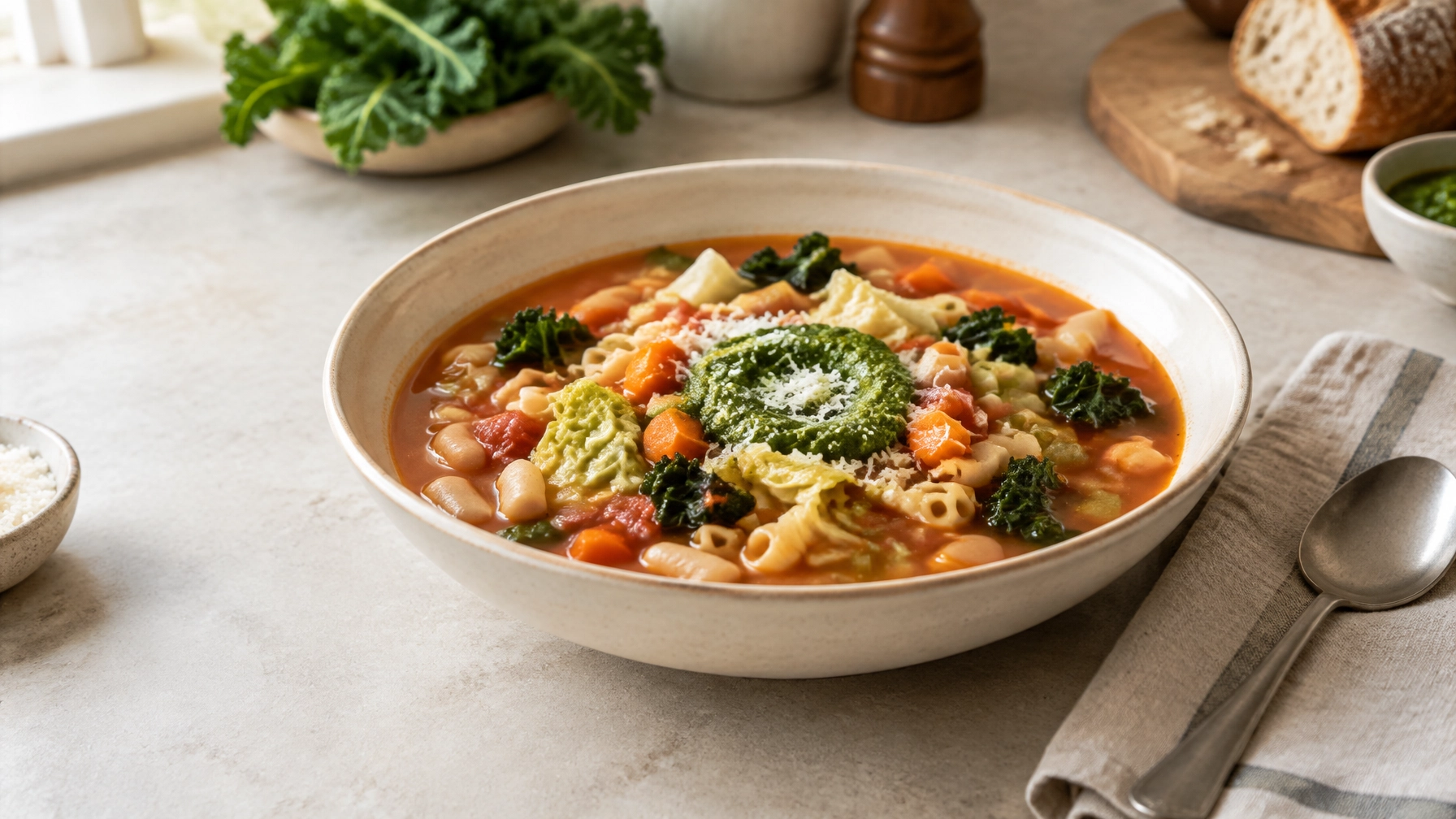
Winter minestrone is a generous, warming soup built around seasonal greens, tender vegetables, beans and pasta. Savoy cabbage and kale soften into a tomato and vegetable stock broth, while a parmesan rind adds savoury depth as everything simmers. A spoonful of pesto stirred in at the end gives each bowl a fresh, herby finish.
This is a flexible recipe, but its balance comes from giving the vegetables time to soften before adding the greens, beans and pasta. The method keeps the pasta pleasantly tender and the cabbage and kale distinct, rather than cooking everything down into one texture.
What makes this minestrone a winter soup
Minestrone has no single fixed ingredient list. It changes with the season and what is available. Here, leeks, carrots and celery make a mellow base, while savoy cabbage and kale bring the leafy character that suits colder days. Cannellini beans make the soup substantial, and small pasta gives it a familiar, comforting bite.
The parmesan rind simmers with the stock and tomatoes, releasing flavour gradually. Use a rind from vegetarian hard cheese if you want the soup to remain vegetarian, and check that the pesto is vegetarian too. The rind is removed before serving; it is there to season the broth, not to be eaten.
Preparing the vegetables
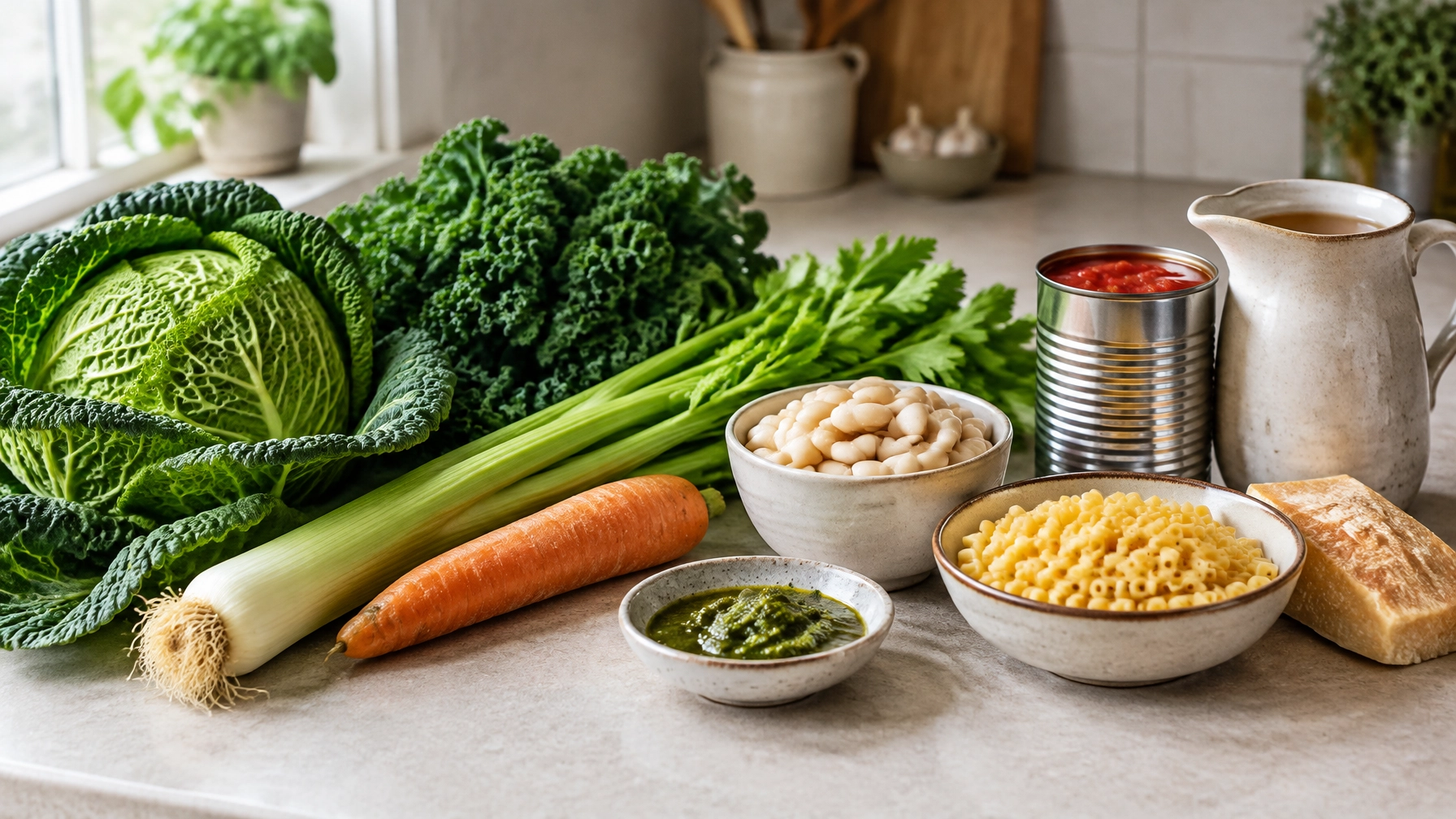
Leeks can hold grit between their layers, so wash them carefully. Trim the root and dark green tops, slice the pale part lengthways, then rinse between the layers under cold running water. Dry the leek before cooking so it softens in the oil rather than releasing too much water into the pan.
Remove any tough central ribs from the kale and slice the leaves into manageable strips. Cut the savoy cabbage into thin ribbons. Keep the carrot and celery pieces small and similar in size so they soften evenly. There is no need for perfect uniformity, but pieces of roughly the same size make for a more consistent spoonful.
Building flavour in the pot
Start with the leek, carrot and celery in olive oil. Cook them gently until softened, stirring now and then. This step gives the vegetables time to release their flavour before the liquid goes in. Add the garlic near the end so it becomes fragrant without browning.
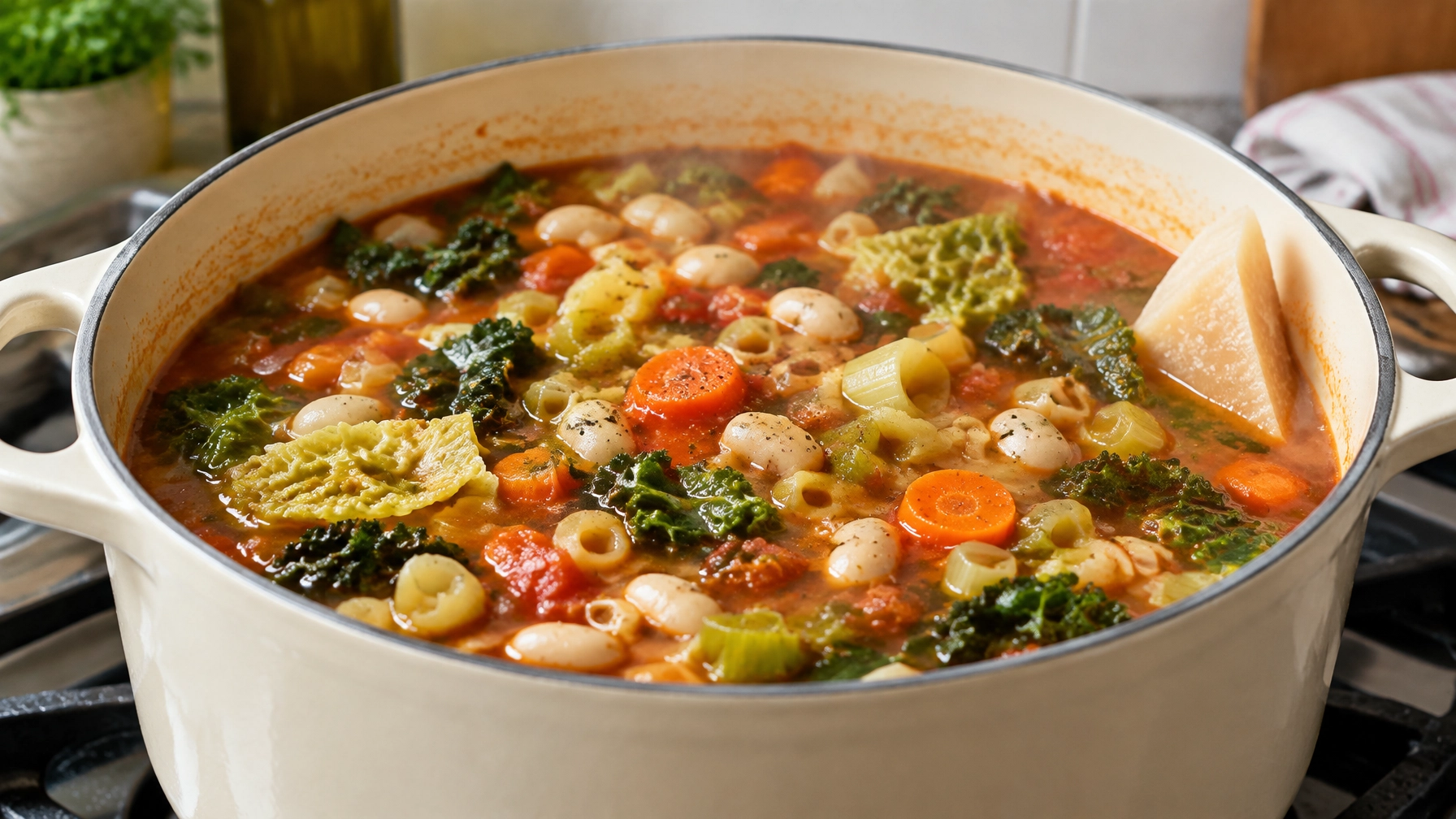
Once the tomatoes, stock and parmesan rind are in the pot, let the broth simmer before adding the greens. The cabbage and kale need less time than the root vegetables. Adding them later keeps their colour and texture, while still giving them time to turn tender.
Pasta and pesto
Small pasta shapes work well because they fit neatly into a spoonful with the beans and vegetables. Add the pasta towards the end and cook until just tender. It will continue to absorb liquid as the soup stands, so avoid cooking it for longer than the packet suggests.
If you plan to keep portions for another day, cook and store the pasta separately. This helps it retain its texture and stops it absorbing too much broth in the fridge. Add a little extra stock or water when reheating if the soup has thickened.
Pesto is stirred in after cooking, just before serving. Adding it at the end preserves its fresh, herbal flavour. You can stir a little through the pot or let everyone add a spoonful to their own bowl. Either way, taste before adding extra salt: the stock, pesto and cheese rind may already bring plenty of seasoning.
Serving and storing
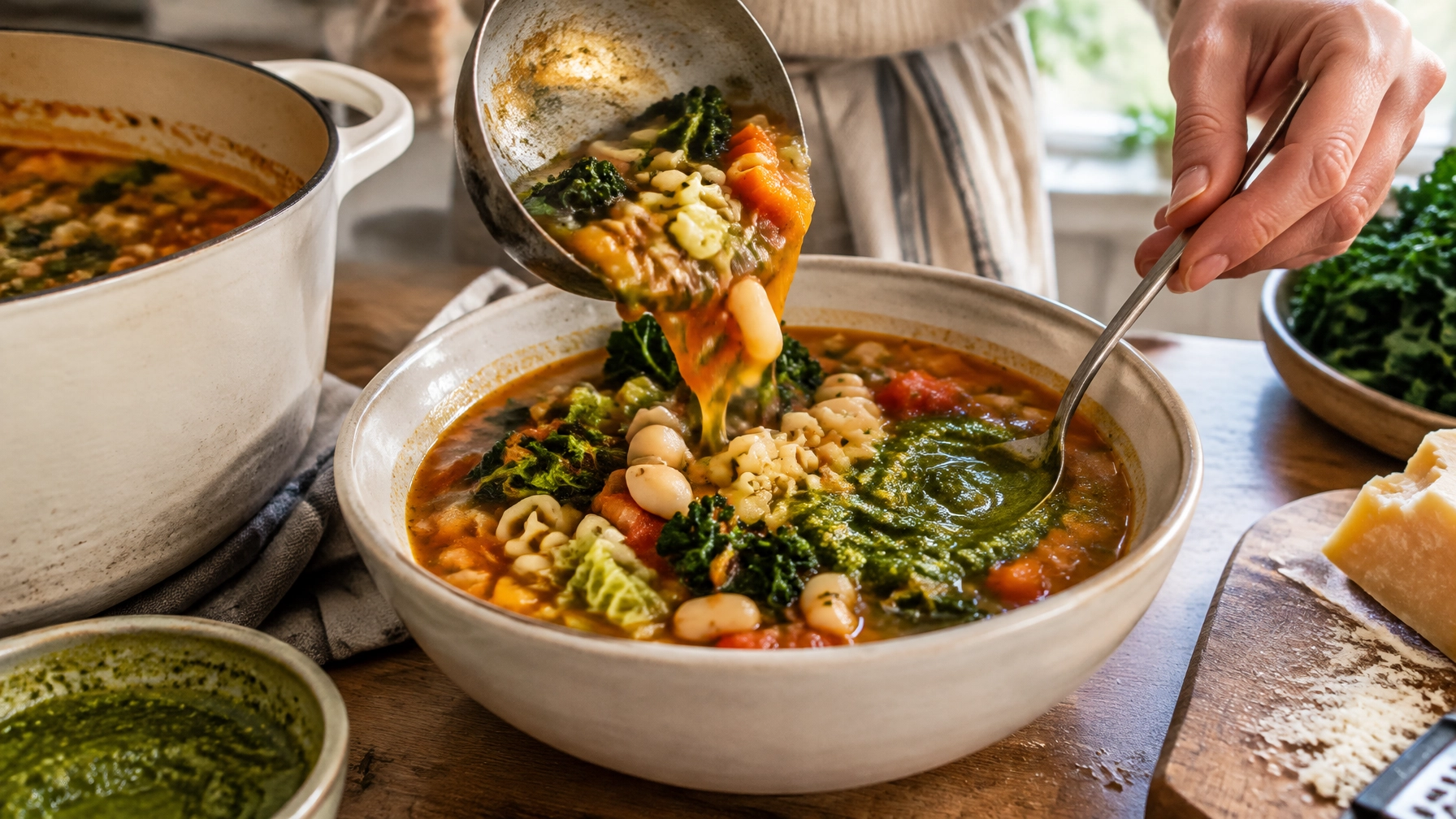
Serve the soup hot, with a little extra pesto or grated vegetarian hard cheese if you like. Crusty bread makes an easy side, and a simple green salad can balance the richness of the beans and pasta.
Cool leftovers promptly and refrigerate them in a covered container. For the best texture, store pasta separately where possible. Reheat the soup until steaming hot throughout, adding a splash of stock or water to loosen it as needed. If the pasta has been stored in the soup, expect it to be softer the next day.
Recipe
Servings: 6
Prep time: 20 minutes
Cook time: 45 minutes
Total time: 65 minutes
Tips
- Rinse the cannellini beans before adding them to the pot to remove their canning liquid.
- Keep the soup at a gentle simmer rather than a vigorous boil, which can break up the beans and overcook the greens.
- Check the pasta a minute before its suggested cooking time. It should be tender but still hold its shape.
- If the soup is thicker than you like, loosen it with a little hot stock or water.
- For a vegetarian version, check that the parmesan rind, hard cheese and pesto are all made with vegetarian ingredients.
Variations
Use butter beans in place of cannellini beans, or replace some of the kale with spinach. Spinach wilts quickly, so stir it in just before taking the pot off the heat. If you do not have a parmesan rind, leave it out and finish the soup with a little extra pesto.
For a more pronounced herb flavour, add a bay leaf with the stock and remove it before serving. To make the soup without pasta, leave it out and add a little more beans or vegetables instead.
FAQ
Can I make this soup ahead?
Yes. Make the soup ahead, but cook and store the pasta separately if possible. Add the pasta to each bowl before serving or stir it into the reheated soup.
Can I freeze winter minestrone?
Yes. Freeze the soup without the pasta for the best texture. Thaw it in the fridge, reheat until steaming hot throughout, then cook fresh pasta and add it to serve.
How do I keep the greens from overcooking?
Add the cabbage and kale after the stock has simmered, then cook them only until tender. Stir in the pesto once the pan is off the heat.