Recipe
Prep 10 minCook 15 minTotal 25 min
Ingredients
Method
- Bring the stock, ginger and garlic to a gentle simmer in a medium saucepan.
- Add the mushrooms and simmer for 5 to 7 minutes.
- Add the tofu and wakame. Cook for 2 minutes.
- Remove the saucepan from the heat.
- Whisk the miso with approximately 150 ml hot broth in a separate bowl.
- Return the dissolved miso to the saucepan and stir gently.
- Add sesame oil, then adjust with soy sauce or rice vinegar if needed.
- Serve with scallions, sesame seeds and chilli oil.
Miso Mushroom Soup (Umami, 25 Minutes)
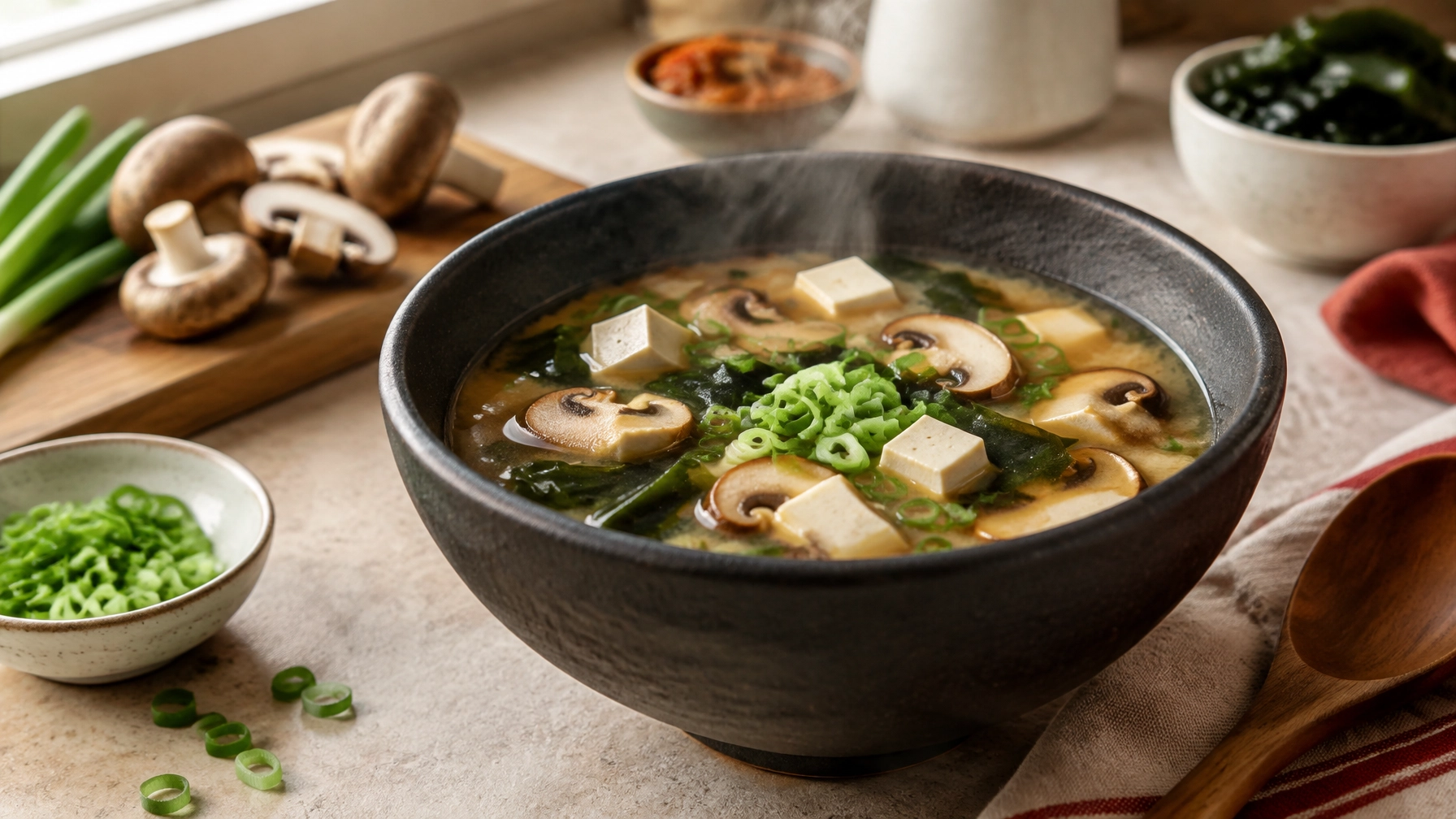
A savoury mushroom soup made with miso, vegetable stock, tofu and wakame in approximately 25 minutes.
Definition
miso (noun): A fermented paste made from soybeans, grains, salt and koji. It provides salt, depth and umami.
umami (noun): A savoury taste associated with ingredients such as mushrooms, fermented foods, seaweed and stock.
This soup uses both. Mushrooms supply a substantial savoury base. Miso supplies fermented depth. Wakame contributes a light marine note, while tofu makes the bowl more filling without adding significant preparation time.
The required procedure is straightforward. Simmer the mushrooms in stock. Remove the pot from direct heat. Dissolve the miso separately in hot broth, then return it to the soup. Miso should not be boiled for an extended period because high heat can flatten its aroma and produce a harsher finish.
Technique
The principal control point is the miso addition.
Miso is already fermented and ready to eat. It does not require prolonged cooking. Adding it after the saucepan has been removed from the heat allows the paste to dissolve evenly while preserving more of its aroma.
A separate bowl is also useful for texture control. Miso paste can form lumps if dropped directly into a full saucepan. Whisking it first with hot broth creates a smooth mixture that disperses quickly.
The mushrooms should be simmered rather than aggressively boiled. A gentle temperature preserves their texture and limits evaporation. If the soup becomes too concentrated, add a small amount of hot water or unsalted stock before serving.
For a stronger mushroom profile, use a combination of fresh shiitake and dried shiitake. For a softer, more neutral flavour, use cremini mushrooms. Oyster mushrooms provide a more delicate texture.
Tips
- Use fresh mushrooms: Choose mushrooms that are firm, dry and free from dark, wet patches.
- Do not wash mushrooms unnecessarily: Excess water can prevent browning and dilute their flavour. Wipe them clean unless they are visibly dirty.
- Taste before salting: Miso, stock and soy sauce all contribute salt.
- Keep the simmer gentle: Vigorous boiling can make tofu break apart and mushrooms become soft.
- Add greens at the end: Baby spinach, pak choi or finely sliced cabbage can be added during the final 1 to 2 minutes.
- Use a fine strainer: Strain dried shiitake soaking liquid before adding it to the pot.
- Serve promptly: The soup is most aromatic immediately after the miso has been incorporated.
A small amount of rice vinegar is optional but useful. It does not make the soup taste sour when used sparingly. It simply provides contrast to the fermented and savoury ingredients.
Variations
Noodles
Add 100 to 150 g cooked soba, udon or rice noodles to each bowl. Cook the noodles separately where possible. This prevents excess starch from clouding the broth and allows the soup to retain a clean texture.
Spicy
Add chilli oil, chilli crisp or a pinch of dried chilli at the end. Fresh ginger can also be increased to 2 teaspoons. Do not add a large amount of chilli before tasting because heat can obscure the mushroom and miso flavours.
Vegan
Use vegetable stock or kombu dashi. Confirm that the miso is made without fish-based ingredients. Avoid traditional bonito dashi.
Creamy
Blend 100 g of silken tofu with a small amount of hot broth, then stir it into the finished soup. This creates body without adding cream. Do not boil the blended mixture after adding the miso.
More substantial
Add edamame, sweetcorn, shredded cabbage or thinly sliced carrots. Hard vegetables should be added with the mushrooms. Quick-cooking vegetables can be added near the end.
Storage
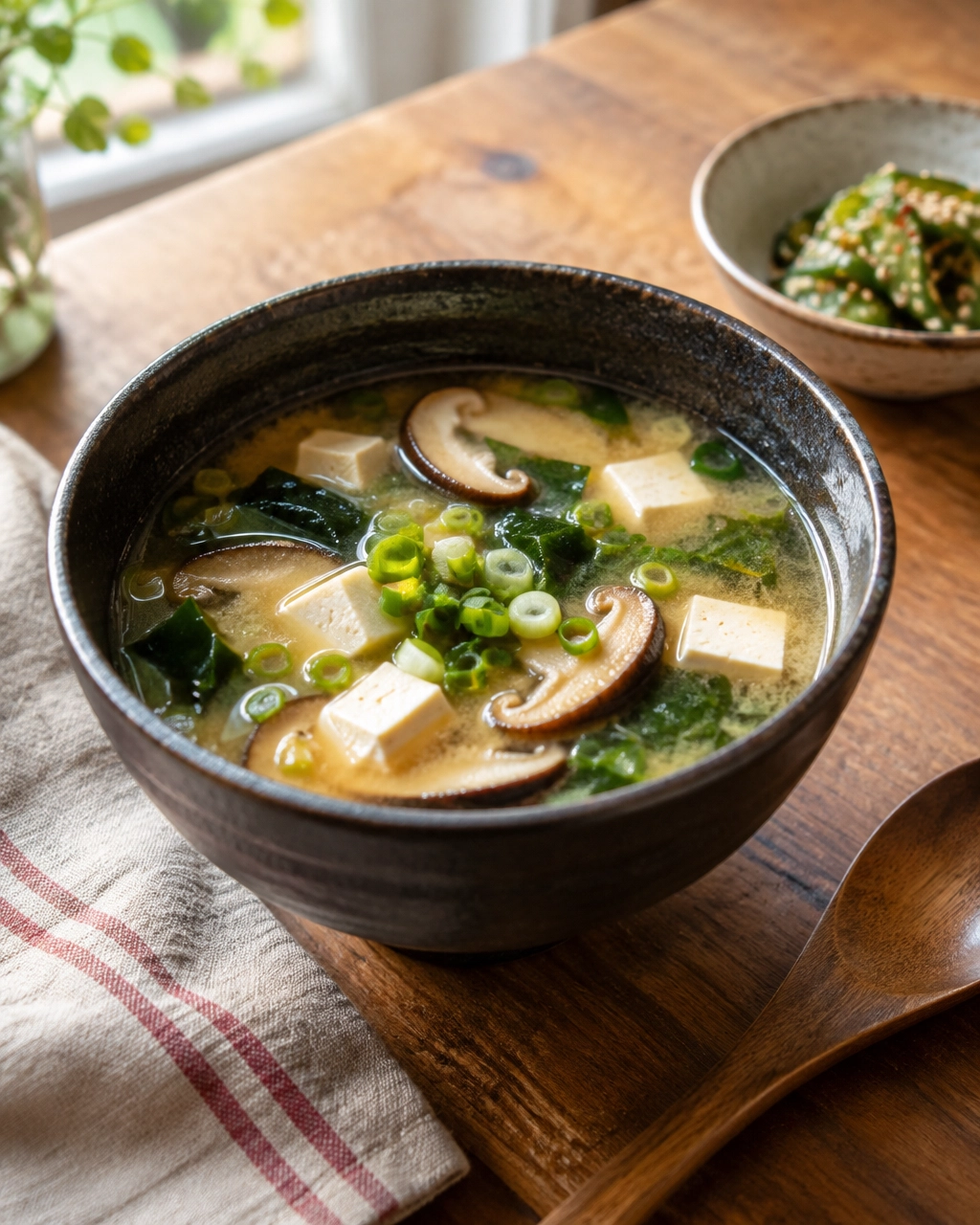
Transfer leftover soup to a covered container and refrigerate it promptly. Food safety guidance from the U.S. Food and Drug Administration recommends keeping cooked soups and similar leftovers refrigerated for 3 to 4 days.
For faster cooling, divide a large quantity into shallow containers. Reheat only the portion required and bring it thoroughly up to serving temperature. The texture of tofu and mushrooms may soften after storage, but the flavour remains suitable for next-day use.
Freezing is possible, although the texture of tofu may change. If freezing, allow the soup to cool, place it in a suitable airtight container and leave room for expansion. Thaw it in the refrigerator before reheating.
FAQ
Can I use only white miso?
Yes. Use 2 to 3 tablespoons of white miso, depending on the strength of the stock and your preferred salt level. White miso is generally milder and sweeter than red miso.
Can I use red miso only?
Yes. Red miso creates a darker, more assertive soup. Start with 2 tablespoons, taste after dissolving it, then add more if required.
Why should miso be added off the heat?
Removing the saucepan from direct heat makes it easier to preserve miso's aroma and prevents the paste from being boiled unnecessarily. The residual heat is sufficient to warm and incorporate it.
Can I make this soup without tofu?
Yes. Omit the tofu and add extra mushrooms, noodles, edamame or greens. The basic method does not change.
What can I use instead of wakame?
Use finely sliced cabbage, spinach or pak choi. Wakame provides a distinct seaweed flavour, so there is no exact substitute. The soup remains functional without it.
Can I prepare the soup in advance?
Prepare the stock, mushrooms and tofu in advance, then cool and refrigerate them. Reheat gently and add the miso after removing the saucepan from the heat. This gives a fresher flavour than boiling a fully finished batch.
How do I correct a soup that is too salty?
Add unsalted stock or hot water in small amounts. You can also increase the quantity of mushrooms, tofu or greens. Do not add sugar as the primary correction because it changes the balance rather than reducing the salt.
Recipe
Miso Mushroom Soup
- Servings: 2 generous servings or 3 smaller servings
- Prep time: 10 minutes
- Cook time: 15 minutes
- Total time: 25 minutes