Recipe
Serves
4 1×
Serves 4Prep 10 minCook 30 minTotal 40 min
Ingredients
Method
- Finely chop the onion, garlic and celery. Trim the courgettes and cut them into small pieces. Pick the basil leaves from the stalks and set both aside.
- Make the vegetable stock with boiling water in a heatproof jug. Keep it hot while you cook.
- Set a large, heavy-based pan over a medium-low heat. Add the olive oil and butter. Stir in the onion and celery and cook for about 5 minutes, stirring occasionally, until softened but not browned.
- Add the garlic and cook for 30 seconds. Tip in the rice and stir for about 1 minute, until the grains look slightly translucent around the edges.
- Pour in the wine, if using. Stir until it has mostly been absorbed. If not using wine, move straight to the stock.
- Add a ladleful of hot stock and stir. When most of the liquid has been absorbed, add another ladleful. Continue in this way, stirring frequently and keeping the rice at a gentle simmer.
- After roughly two-thirds of the stock has been added, stir in the courgette. Continue adding stock gradually until the rice is tender but still has a slight firmness in the centre. This usually takes about 18–25 minutes from the first addition of stock. If the rice is not ready when the stock runs low, add a little boiling water.
- Take the pan off the heat. Stir in the grated cheese and most of the basil. Season with black pepper and taste before adding salt, as the stock and cheese may already be salty.
- Cover the pan and leave the risotto to stand for 2 minutes. Stir once more, adding a splash of hot water if it seems too thick. Serve straight away with the remaining basil.
One-Pot Courgette and Basil Risotto
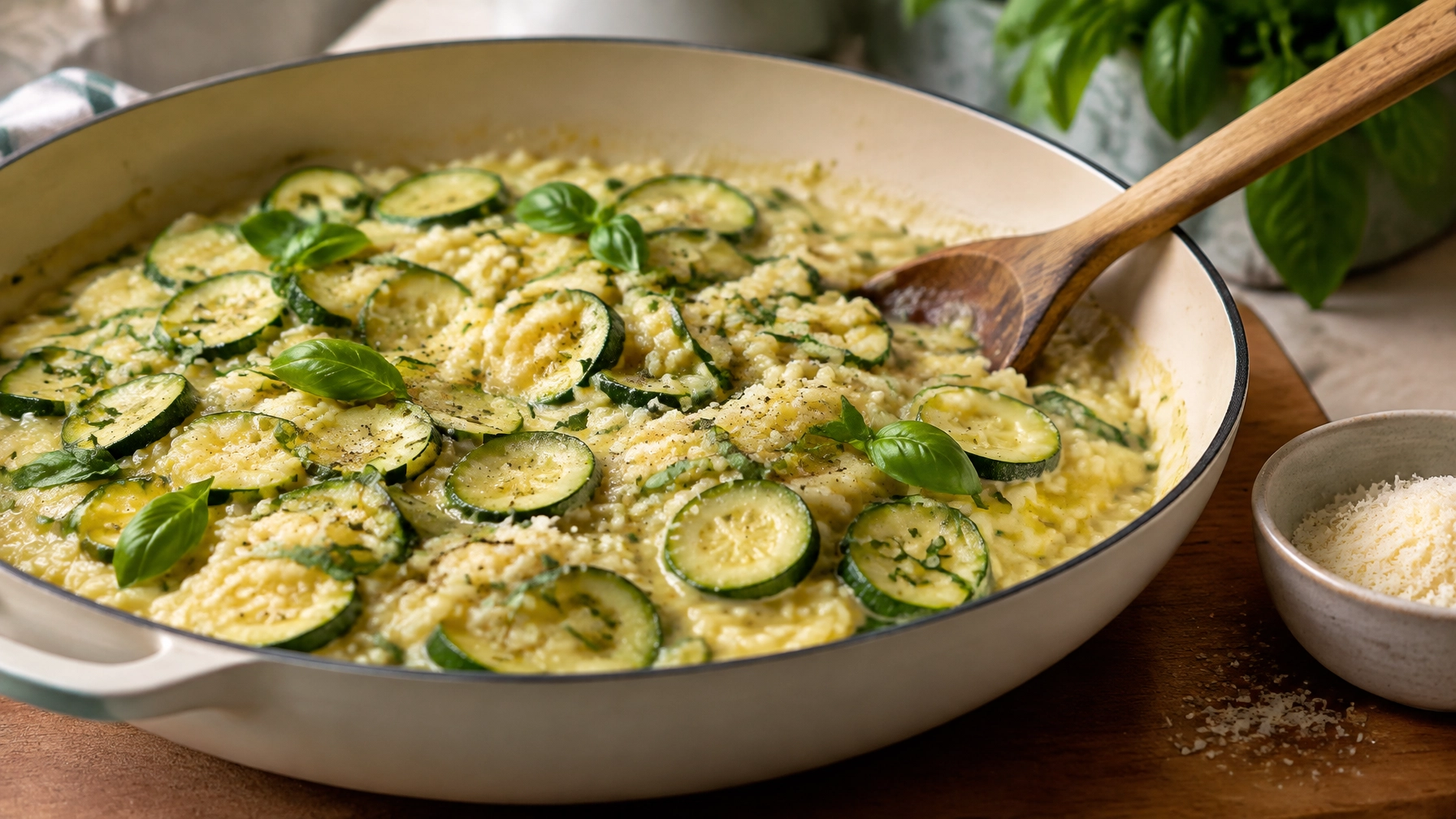
This risotto cooks in one pan, with courgette added as the rice softens and basil stirred in at the end. For more single-pan dinners, browse the One-Pot Wonders collection.
Recipe
Servings
4
Prep time
10 minutes
Cook time
30 minutes
Total time
40 minutes
Tips
- Cut the courgette into small, similar-sized pieces so it softens evenly without disappearing into the rice.
- Keep the stock hot. Cold stock lowers the temperature in the pan and slows the cooking.
- Add stock gradually rather than pouring it all in at once. The rice should stay moist, but not swim in liquid.
- Stir frequently, especially towards the end. This helps release starch and gives the risotto its creamy consistency.
- The finished rice should be tender with a little bite. Risotto continues to thicken as it stands, so serve it while it is still loose and spoonable.
- Taste before seasoning. Stock and hard cheese both contribute salt.
- White wine is optional. Replace it with the same volume of extra vegetable stock for an alcohol-free version.
Variations
- Add peas: Stir in a handful of peas during the final few minutes of cooking.
- Make it lemony: Add a little finely grated lemon zest just before serving.
- Add mozzarella: Tear a ball of mozzarella into pieces and fold it through the hot risotto with the basil.
- Use another herb: Replace some of the basil with chopped parsley, while keeping basil as the main flavour.
- Make it richer: Stir in a little extra butter along with the cheese. Taste before adding more salt.
FAQ
Can I make this without wine?
Yes. Skip the wine and continue with the hot stock. The risotto will still cook properly and have a savoury flavour.
Can I use a different type of rice?
Arborio is a short-grain rice that releases starch as it cooks, helping create the familiar creamy texture. A risotto rice such as Carnaroli can also be used. Long-grain rice is not a direct substitute and will give a different result.
Why is my risotto too thick?
It may have absorbed more liquid than expected or stood for too long. Stir in a small splash of hot water or stock until it loosens. Add it gradually so the risotto does not become watery.
Can I prepare it ahead?
Risotto is best served as soon as it is cooked because it thickens as it stands. For the best texture, prepare the ingredients in advance, then cook the rice shortly before serving.
How should I handle leftovers?
Cool leftovers promptly, transfer them to a covered container and refrigerate. Reheat thoroughly until steaming hot, adding a little water to loosen the rice. Avoid reheating more than once.