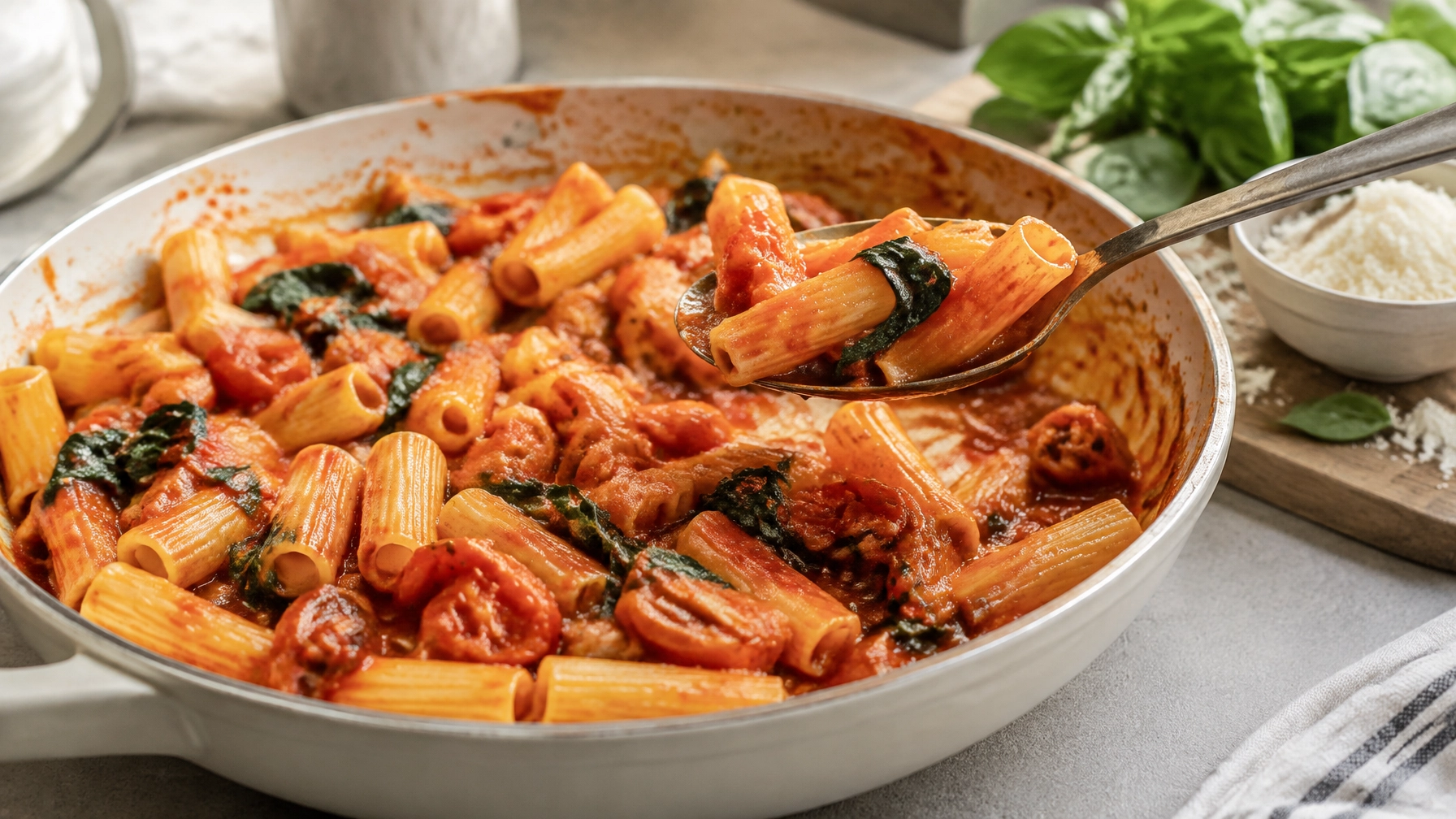
Recipe
Serves
4 1×
Serves 4Prep 10 minCook 18 minTotal 28 min
Ingredients
Method
- Prepare the pot. Place a 5- to 6-quart Dutch oven or wide, deep skillet over medium heat. Add the olive oil and chopped onion. Cook for 3 to 4 minutes, stirring occasionally, until the onion begins to soften.
- Add the aromatics. Stir in the garlic, dried oregano, and red pepper flakes if used. Cook for 30 seconds. Do not brown the garlic. Burnt garlic will introduce a bitter flavour that cannot be corrected by additional liquid.
- Add the liquid ingredients. Pour in the diced tomatoes with their juices, halved cherry tomatoes, and vegetable broth. Add the dry pasta, salt, and black pepper. Press the pasta down so it is mostly covered by the liquid.
- Bring to a controlled boil. Increase the heat to medium-high. Once the liquid reaches a boil, use tongs to separate the noodles and distribute the tomatoes and onion.
- Simmer until tender. Reduce the heat to medium or medium-low. Cook uncovered for 10 to 13 minutes, stirring every one to two minutes. Continue until the pasta is al dente and most of the liquid has formed a sauce.
- Correct the consistency. If the pasta is still firm and the pot is dry, add hot broth or water 60 ml at a time. If the mixture is too loose, simmer for another one to two minutes while stirring.
- Finish off the heat. Remove the pot from the burner. Stir in the torn basil and grated Parmesan. Taste and adjust the salt and pepper.
- Rest and serve. Allow the pasta to stand for 3 minutes. Serve with additional basil and Parmesan.
One-Pot Tomato Basil Pasta (Easy Weeknight)
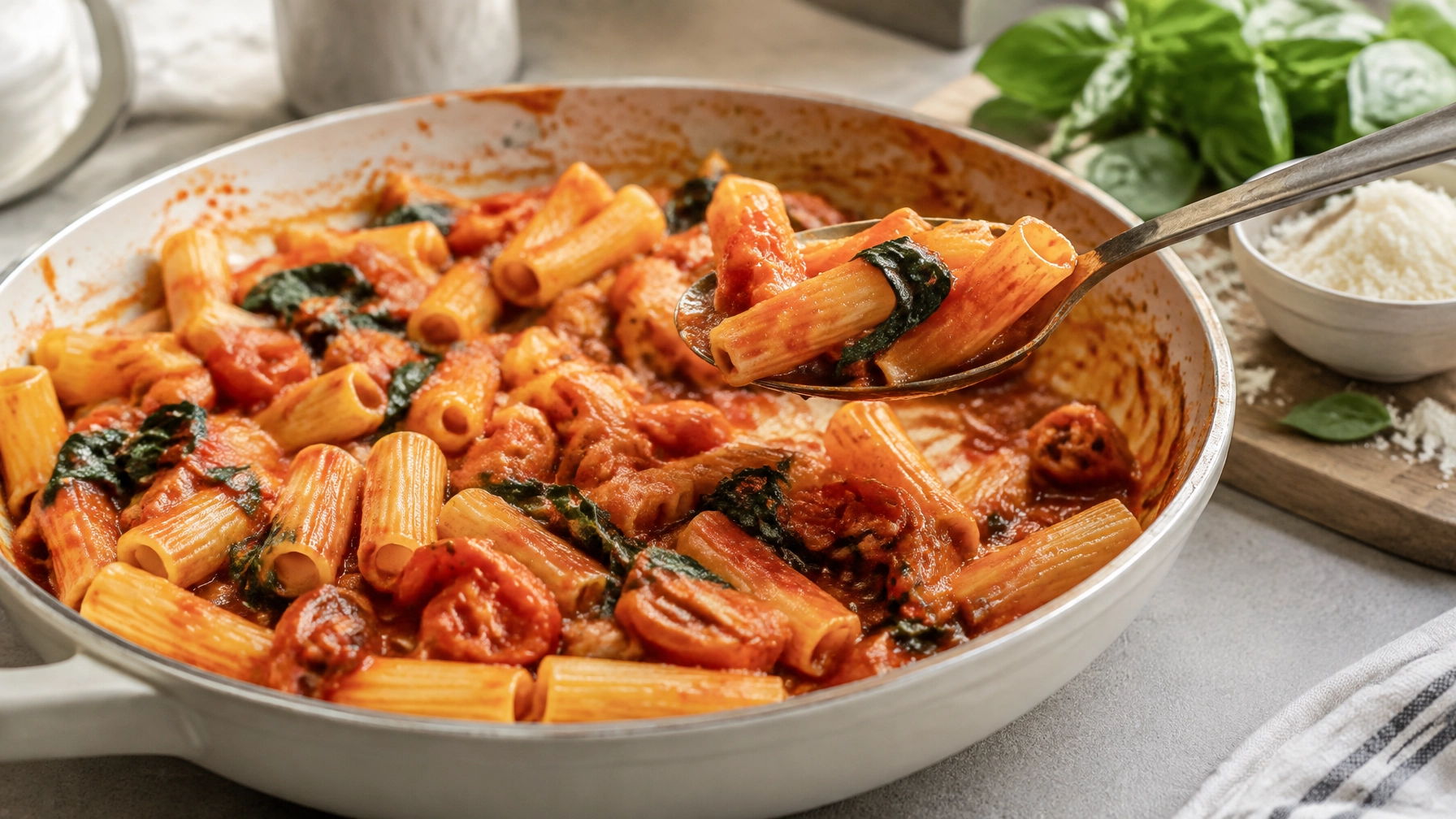
A complete meal is produced in one cooking vessel. Dry pasta simmers directly in tomato broth with aromatics and herbs. The starch released during cooking thickens the liquid into a cohesive sauce. No separate saucepan is required.
This recipe is suitable for a weeknight dinner, a meatless main course, or a controlled-use-of-dishes event. Use a wide 5- to 6-quart pot so the pasta can remain mostly submerged and cook evenly.
Definition
one-pot pasta (noun): A pasta preparation in which uncooked noodles, liquid, vegetables, seasonings, and other ingredients are cooked together in one vessel.
al dente (adjective): Cooked until tender while retaining a slight resistance at the centre.
reduction (noun): A decrease in liquid volume caused by simmering, resulting in a more concentrated sauce.
Result
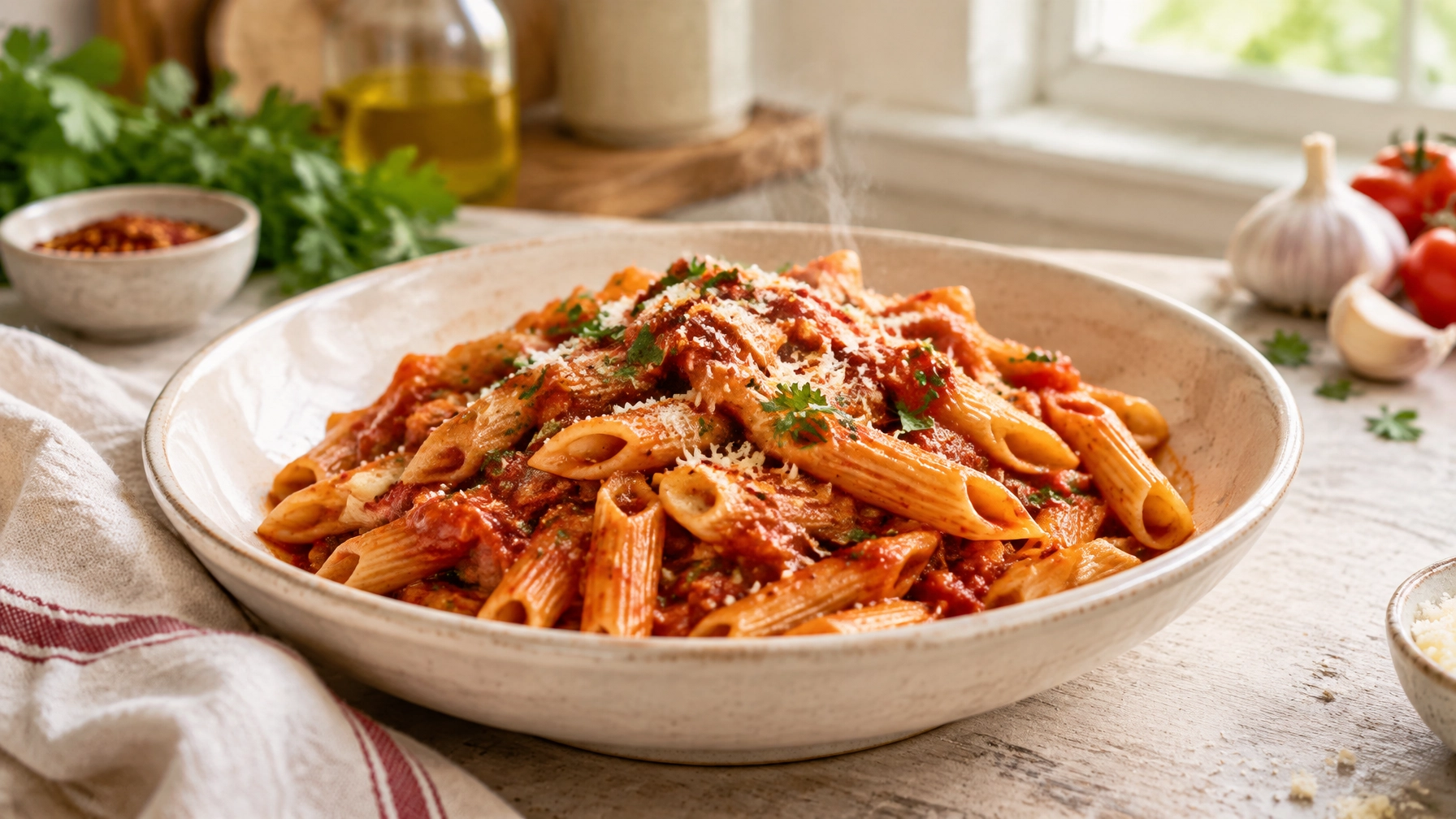
The finished pasta should be tender, glossy, and lightly coated with tomato sauce. The basil is added near the end to preserve its colour and aroma. Parmesan provides salt and savoury depth.
The direct-simmer method used here is consistent with established one-pot pasta techniques, including the methods documented by Contadina and Mel's Kitchen Cafe.
Control
Use medium heat after the initial boil. High heat can cause the liquid to evaporate before the pasta is cooked. Stir every one to two minutes, with additional attention during the final five minutes.
If the pot becomes dry while the pasta remains firm, add 60 ml of hot water or broth. If excess liquid remains after the noodles are tender, continue cooking for one to two minutes. A short resting period will also allow the sauce to thicken.
Recipe
One-Pot Tomato Basil Pasta
- Servings: 4
- Prep time: 10 minutes
- Cook time: 18 minutes
- Total time: 28 minutes
- Category: Main course
- Cuisine: Italian-inspired
- Method: Stovetop
Timing
The stated 28-minute total includes preparation and cooking. Pasta shape, pot width, burner strength, and tomato moisture can alter the result. Begin checking the noodles two minutes before the expected package cooking time.
Long pasta should be stirred more frequently than short pasta because it is more likely to clump while it softens. If using penne, rigatoni, or rotini, allow an additional one to three minutes if required.
The resting period is operational rather than decorative. The starch-thickened sauce continues to absorb into the pasta after the heat is removed.
Tips
- Use a wide pot. A narrow pot may leave the noodles above the liquid during the first few minutes.
- Break spaghetti in half only if necessary to fit the vessel.
- Stir from the bottom to prevent starch from adhering to the pot.
- Use low-sodium broth so the final salt level remains adjustable.
- Add basil at the end. Extended boiling will darken the leaves and reduce their fresh flavour.
- Grate Parmesan finely so it incorporates into the sauce instead of forming clumps.
- Serve immediately for the loosest sauce. The pasta will thicken as it cools.
- Do not rinse the pasta. Surface starch is required for sauce adhesion.
Variations
Creamy tomato basil pasta: Stir in 60 ml of double cream after removing the pot from the heat. Reduce the Parmesan slightly if necessary.
Vegetable version: Add 150 g sliced mushrooms with the onion. Add 60 g baby spinach during the final minute.
Spicy version: Increase the red pepper flakes to 1/2 teaspoon, or add 1 tablespoon of Calabrian chilli paste with the tomatoes.
Whole-wheat pasta: Use whole-wheat spaghetti and add 120 ml extra broth. Check the noodles early and extend cooking as required.
Dairy-free version: Omit the Parmesan and finish with nutritional yeast or a small amount of extra-virgin olive oil.
Protein addition: Stir in cooked white beans during the final three minutes. Alternatively, add cooked shredded chicken after the pasta is tender.
Storage
Transfer cooled leftovers to a sealed container within two hours. Refrigerate for up to 3 days.
Reheat in a saucepan or microwave with 1 to 2 tablespoons of water or broth per serving. Stir halfway through heating. The sauce will continue to absorb during storage, so additional liquid is normally required.
Freezing is not recommended for the best texture. The pasta can become soft and the tomato sauce may separate after thawing.
FAQ
Can dry pasta cook directly in tomato sauce?
Yes. The pasta must have sufficient liquid and must be stirred regularly. Broth, tomato juices, and water provide the moisture needed for the noodles to hydrate.
Why is my one-pot pasta sticky?
The heat may be too high, the liquid may have evaporated too quickly, or the pasta may not have been stirred often enough. Reduce the burner setting and add a small amount of hot water if the noodles are still firm.
Can I use canned tomatoes instead of fresh tomatoes?
Yes. Replace the cherry tomatoes with an additional 14.5-ounce can of diced tomatoes. Keep the vegetable broth amount unchanged, then adjust the consistency during cooking.
Can I use penne instead of spaghetti?
Yes. Penne, rotini, and linguine are suitable substitutes. Short pasta may require slightly longer cooking than spaghetti, depending on the package instructions.
Can I make this recipe vegan?
Yes. Use vegetable broth and omit the Parmesan. Nutritional yeast, a spoonful of vegan Parmesan, or additional olive oil can be used for added savoury flavour.
Why add basil after cooking?
Fresh basil contains volatile aromatic compounds that are reduced by prolonged heat. Adding it after cooking retains a brighter flavour and colour.
Can I prepare this recipe in advance?
The dish is best served immediately. If preparation in advance is required, reserve extra broth for reheating and add fresh basil after the pasta has been warmed.
How do I make the sauce thicker?
Let the cooked pasta rest for 3 to 5 minutes. If further thickening is required, simmer briefly while stirring. Parmesan will also increase the sauce's body.