Recipe
Serves
4 1×
Serves 4Prep 10 minCook 12 minTotal 22 min
Ingredients
Method
- Pat the sea bass fillets dry, especially the skin. Check for pin bones and remove any you find. Season the flesh side with the salt and pepper.
- Heat a large frying pan over medium-high heat. Add the oil. When it shimmers, place the fillets in the pan skin-side down, leaving space between them. Cook in batches if necessary.
- Press each fillet gently with a spatula for the first 10 to 15 seconds to keep the skin flat. Cook without moving for about 4 minutes, until the skin is crisp and golden and the fish releases easily.
- Turn the fillets carefully and cook the flesh side for 1 to 2 minutes. Check the thickest part with a food thermometer. Continue cooking as needed until it reaches 63°C (145°F). Transfer the fish to warm plates, skin-side up.
- Reduce the heat to low. If the pan has burnt residue, carefully wipe it out. Add the butter and let it melt, swirling the pan. Remove the pan from the heat and stir in the lemon juice, parsley if using, and a pinch of salt and pepper.
- Spoon the lemon butter over the fish and serve immediately.
Pan-Fried Sea Bass with Lemon Butter Sauce
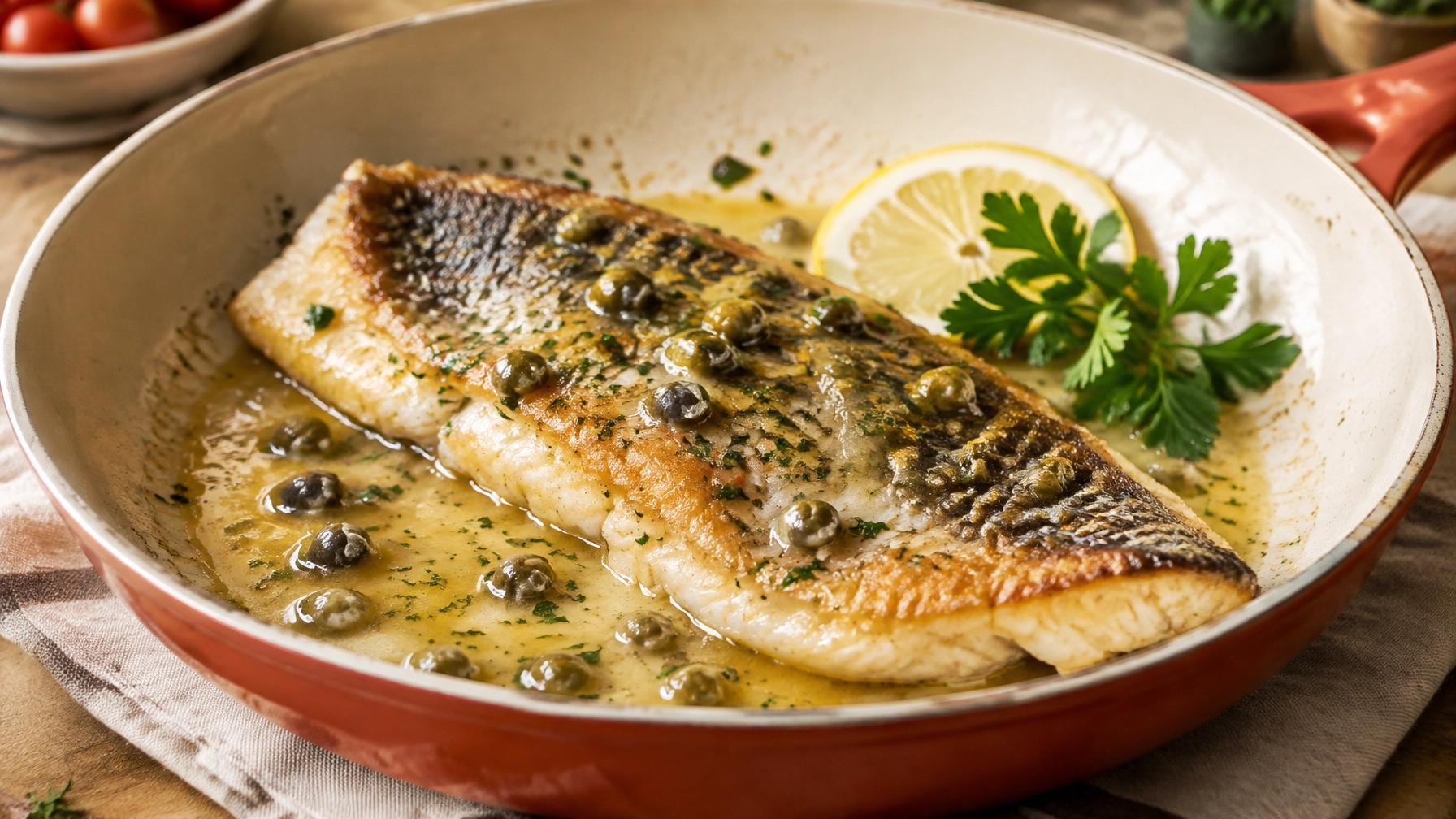
Pan-fried sea bass with crisp skin and a simple lemon butter sauce, ready in about 22 minutes.
Sea bass cooks quickly in a hot pan. Drying the skin before cooking helps it turn crisp, while finishing the fillets with lemon butter adds a sharp, savoury sauce without masking the fish. This recipe serves four and uses a short ingredient list.
Preparation
Choose skin-on sea bass fillets of similar size so they cook at a similar rate. Fillets around 150 g each and about 2 cm thick work well. If the fish is frozen, thaw it in the refrigerator before cooking and pat it dry once thawed.
Check each fillet for pin bones by running a clean fingertip along the flesh. Remove any bones with clean tweezers. Dry the skin thoroughly with kitchen paper. Moisture left on the surface can cause the fish to steam rather than brown.
Bring the fish out of the refrigerator while preparing the other ingredients, but do not leave raw seafood at room temperature for more than two hours. Keep raw fish and its utensils separate from ready-to-eat foods, and wash hands and surfaces after handling it.
Cooking
Heat the pan before adding the fish. The oil should be hot enough to shimmer, but it should not smoke. Place the fish skin-side down and press gently for the first few seconds if the edges curl. This helps the skin make even contact with the pan.
Avoid moving the fillets while the skin cooks. When the fish is ready to turn, the skin should be golden and the fillet should release from the pan without force. If it sticks, give it more time rather than pulling it free.
Cooking time depends on the thickness of the fillets and the heat of the pan. Use a food thermometer in the thickest part of the fish: fin fish should reach 63°C (145°F). The flesh should also be opaque and separate easily with a fork.
Sauce
Make the sauce after removing the fish from the pan. If the pan contains dark, burnt residue, wipe it out before adding the butter; burnt bits can make the sauce bitter. Melt the butter over low heat, then stir in the lemon juice, salt and pepper. Do not let the butter brown unless that is intentional.
Add chopped parsley at the end for a mild herbal note. Spoon the sauce over the fish just before serving. Lemon butter is best made shortly before eating, as it can separate if left to stand or reheated at high heat.
Recipe
Tips
Dry the skin. Moisture is the main obstacle to crisp skin. Blot it just before seasoning and cooking.
Use a suitable pan. A heavy frying pan holds heat steadily. Do not crowd the fillets; cook them in batches if they do not fit in one layer.
Turn once. Moving the fish repeatedly can damage the skin and make it harder to judge when it is ready to release.
Check temperature. Fillet thickness varies, so cooking time is a guide. Check the centre of the thickest portion with a food thermometer and cook to 63°C (145°F).
Serve promptly. The skin softens as it sits, and the butter sauce is at its best when freshly made.
Variations
Add capers. Stir one teaspoon of drained capers into the sauce with the lemon juice for a briny, savoury flavour.
Use browned butter. For a nuttier sauce, cook the butter over medium-low heat until the milk solids turn golden, then remove it from the heat before adding the lemon juice. Watch closely; butter can go from golden to burnt quickly.
Add garlic. Stir half a finely grated garlic clove into the melted butter for about 20 seconds before adding the lemon juice. Keep the heat low to prevent the garlic from browning.
Change the herbs. Chopped chives or dill can replace the parsley. Add herbs at the end to preserve their fresh flavour.
Storage
Refrigerate leftover fish promptly in a covered container. For safe handling, do not leave cooked seafood at room temperature for more than two hours, or more than one hour when the surrounding temperature is above 32°C (90°F). Use refrigerated leftovers within three to four days.
Reheat fish gently until hot throughout. High heat can dry out the flesh. Reheat the sauce separately over low heat, stirring; if it separates, whisk in a small amount of warm water.
FAQ
Can I use sea bass without skin?
Yes. Cook skinless fillets in the same way, but reduce the initial cooking time and turn them carefully. Without skin, the fish may be more delicate and will not develop a crisp skin layer.
Why is the skin not crisp?
The skin may have been damp, the pan may not have been hot enough, or the fish may have been moved before it released. Pat the skin dry, preheat the pan and let the fillet cook undisturbed until it releases readily.
Can I use salted butter?
Yes. Reduce or omit the added salt in the sauce, then taste and adjust before serving.
Can I prepare the sauce in advance?
It is preferable to make the sauce just before serving. If prepared ahead, reheat it slowly and stir. Do not boil it, as the butter may separate.
How do I know when sea bass is cooked?
Check the thickest part with a food thermometer. The recommended safe temperature for fin fish is 63°C (145°F). The flesh should also appear opaque and separate easily with a fork.