Pan-Seared Scallops with Lemon Butter (10 Min)
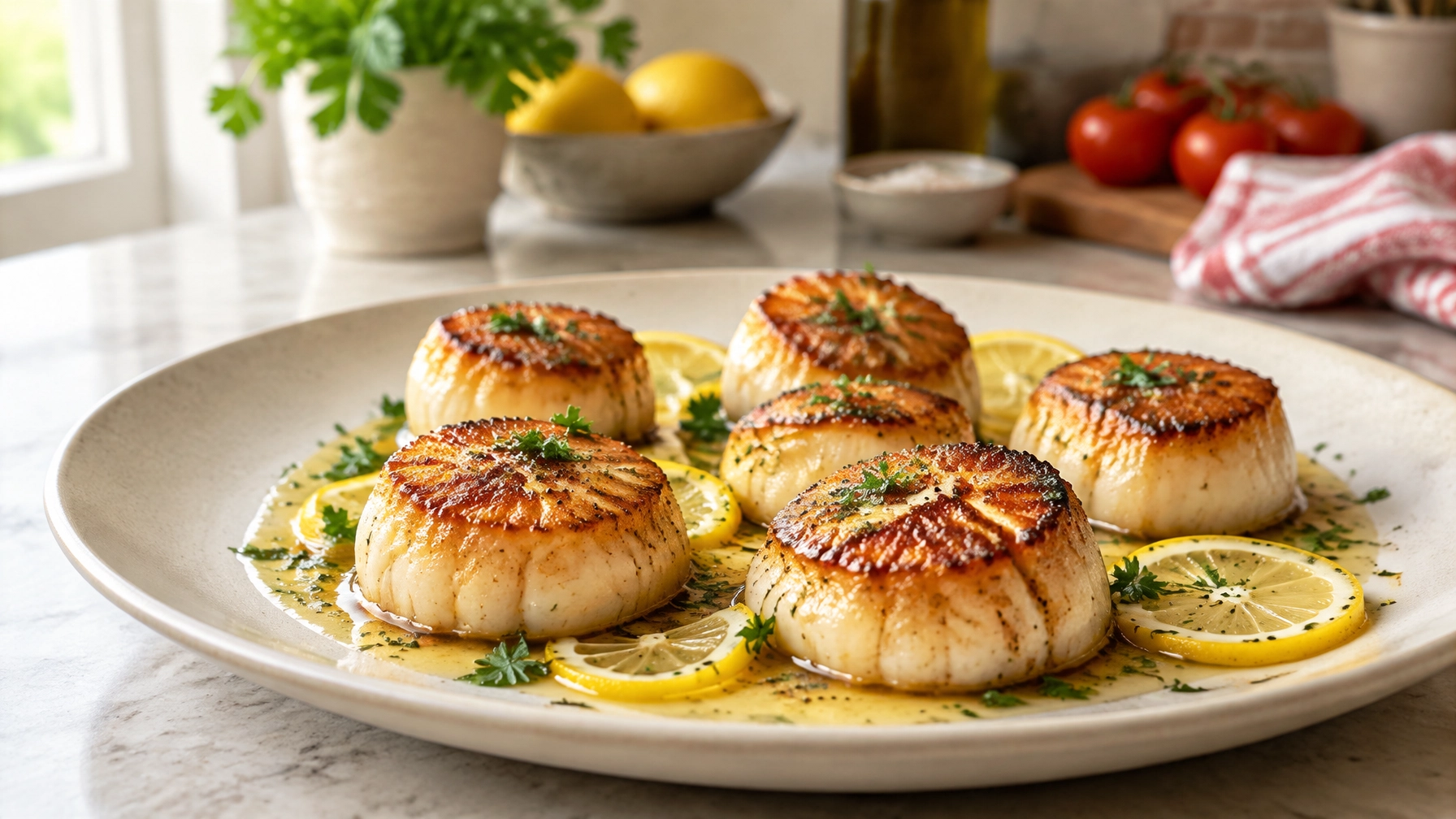
This pan-seared scallops recipe produces a golden crust, a tender centre, and a simple lemon butter sauce in approximately 10 minutes.
Scallops require limited preparation. The primary controls are surface moisture, pan temperature, spacing, and cooking time. Dry scallops brown more effectively than wet scallops because excess water causes steaming. A hot pan establishes the crust before the centre becomes overcooked.
scallop (noun): A small edible shellfish with a mild flavour and firm, delicate texture.
sear (verb): To cook food briefly at high heat until a browned surface forms.
The method below uses a neutral cooking oil for the initial sear. Butter is added later, after the heat is reduced, so it can flavour the sauce without burning.
# PREPARE
Use large sea scallops if available. Smaller bay scallops cook faster and are less suitable for this timing.
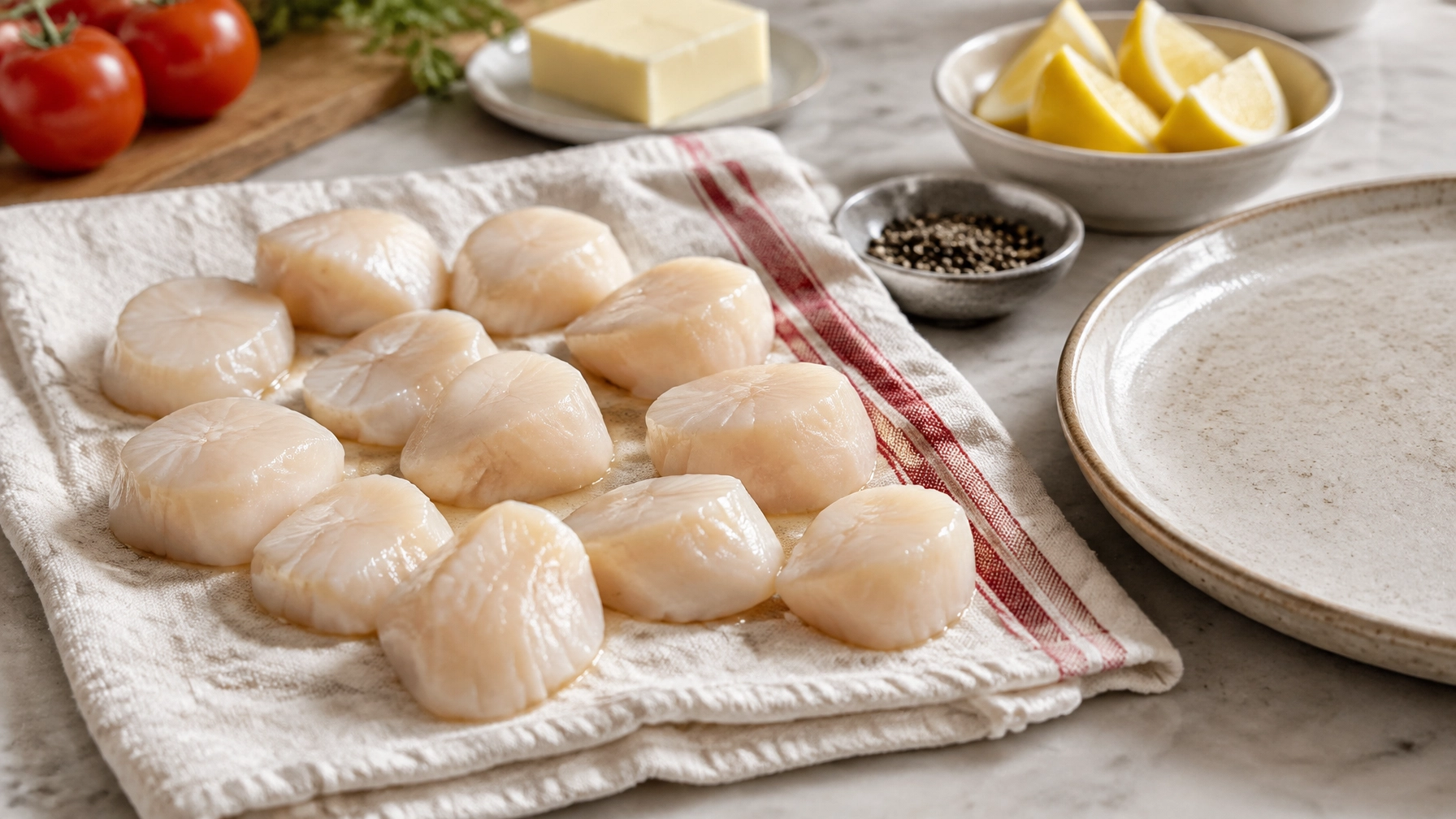
Remove the small side muscle from each scallop. It is a short, tough tab attached to the side of the flesh. Pat the scallops thoroughly dry with kitchen paper. This is not an optional presentation step. It directly affects browning.
Season immediately before cooking. Salt draws moisture toward the surface if left on the scallops for an extended period.
# SEAR
Use a heavy frying pan or stainless-steel skillet large enough to hold the scallops in one layer. Crowding lowers the pan temperature and increases the amount of liquid released during cooking. If necessary, cook in two batches.
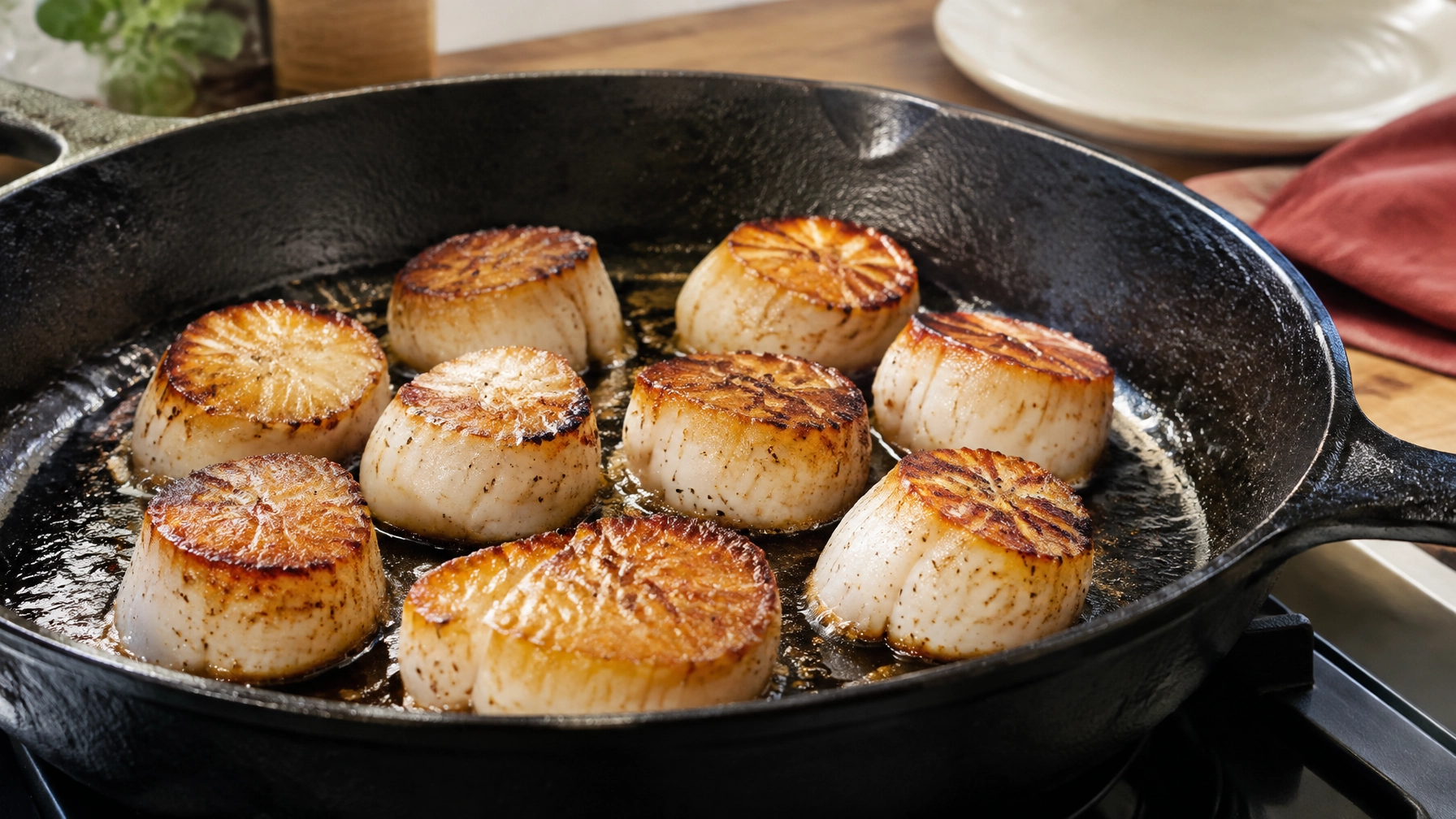
Heat the pan before adding the oil. The oil should become thin and visibly fluid, but it should not smoke heavily. Place the scallops in the pan with space between them. Do not move them for approximately three minutes.
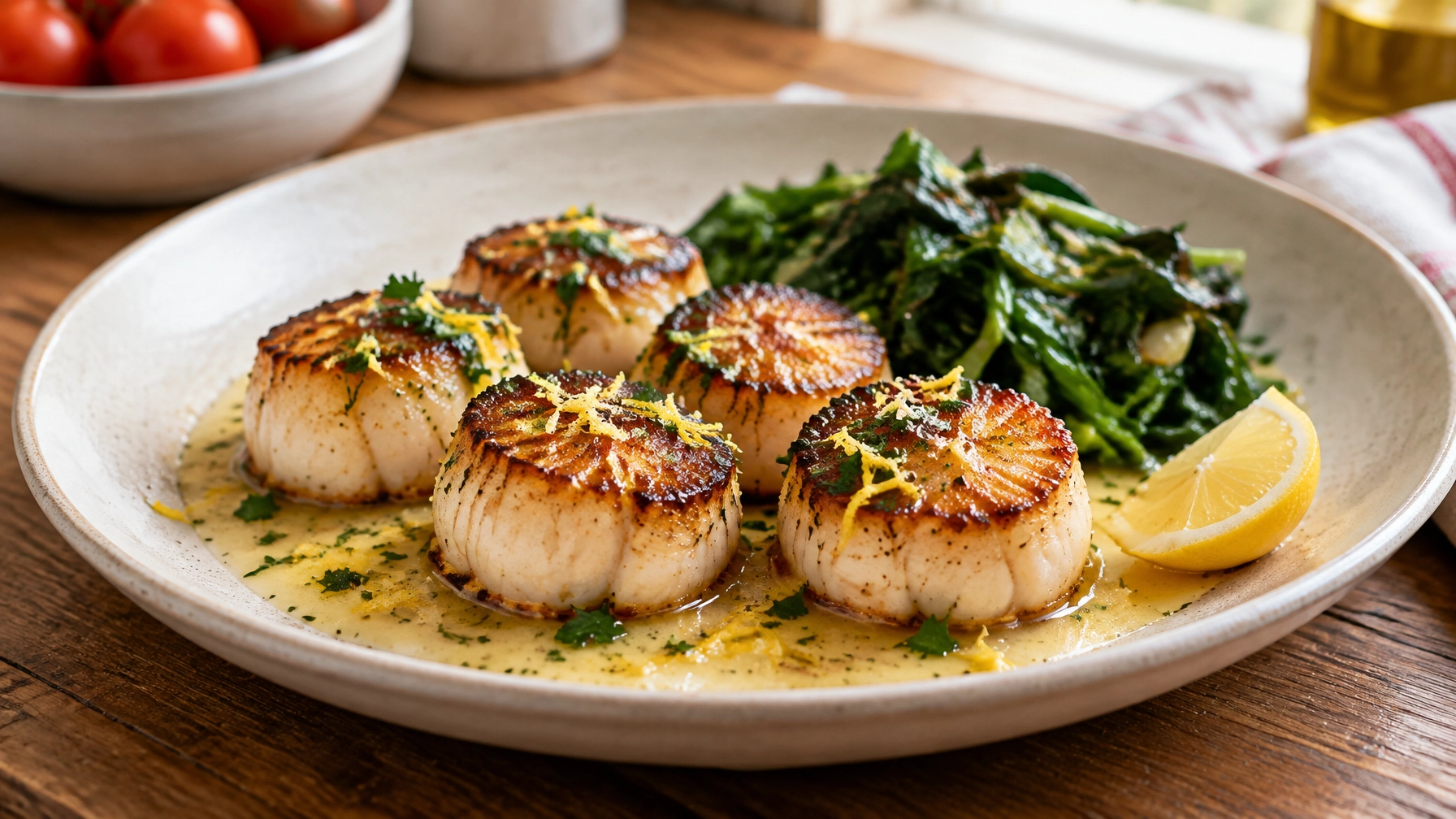
The first side should develop a firm, golden-brown crust. Turn the scallops once. Cook the second side for one to two minutes, depending on thickness.
Transfer the scallops to a plate before making the sauce. Reduce the heat or remove the pan from the hob. Add cold butter and lemon juice, then scrape the browned residue from the base of the pan. This produces the lemon butter sauce.
Return the scallops briefly to the pan and baste with the sauce. Serve immediately.
# SAFETY
Seafood should be handled promptly and kept chilled until preparation. Use separate utensils and surfaces for raw seafood and ready-to-eat ingredients.
The Food Standards Agency provides general guidance on cooking food to reduce the risk of food poisoning. The official cooking guidance from the Food Standards Agency should be followed where additional food safety information is required.
For a measurable endpoint, cook scallops to 63°C or 145°F. The FDA seafood safety guidance also recommends checking seafood quality before cooking. The centre should be opaque and the flesh should feel firm. Time alone is not a complete safety control because scallop size, starting temperature, and pan performance vary.
A translucent centre may indicate that the scallop is not fully cooked. Do not serve undercooked seafood to people who are pregnant, elderly, immunocompromised, or otherwise at increased risk from foodborne illness.
# SERVE
Serve the scallops as soon as the sauce has been added. Suitable accompaniments include:
- Steamed green beans
- Wilted spinach
- Peas with lemon zest
- Crusty bread
- Plain rice
- Mashed potatoes
- A simple leaf salad
Keep the supporting ingredients restrained. The sauce contains butter and lemon, so a plain vegetable or starch provides balance without competing with the scallops.
For a more complete plate, place the scallops over mashed potatoes and spoon the lemon butter around the edge. For a lighter serving, use wilted greens and finish with a small amount of lemon zest.
# TROUBLESHOOT
The scallops released liquid.
The scallops were probably too wet, the pan was not hot enough, or the pan was overcrowded. Pat them dry again before cooking and use a larger pan or separate batches.
The crust is pale.
Allow the pan and oil to heat fully. Do not turn the scallops early. A browned crust requires uninterrupted contact with the hot surface.
The scallops are rubbery.
They were likely cooked for too long. Scallops continue to firm slightly after removal from the pan, so transfer them as soon as the centre is opaque and the measured temperature is appropriate.
The butter turned brown.
The pan was too hot when the butter was added. Remove the pan from direct heat before adding butter. Light browning is acceptable, but black particles or a burnt smell indicate that the sauce should be discarded and remade.
The sauce is too sharp.
Add a small amount of additional butter. Lemon intensity varies, so add the juice gradually rather than using the entire amount at once.
# VARIATIONS
Garlic lemon butter
Add one finely minced garlic clove to the pan after reducing the heat. Cook for approximately 30 seconds before adding the butter.
Herb butter
Add chopped parsley, chives, or dill after the sauce has formed. Fresh herbs should be added at the end to preserve their flavour.
Chilli lemon butter
Add a pinch of red pepper flakes with the butter. Use a controlled amount because the scallops have a mild flavour.
Caper butter
Add one tablespoon of drained capers to the finished sauce. Their saltiness reduces the need for additional seasoning.
Orange butter
Replace part of the lemon juice with orange juice and add a small amount of orange zest. The resulting sauce is milder and slightly sweeter.
# FAQ
Can frozen scallops be used?
Yes. Thaw them in the refrigerator, then drain and pat them thoroughly dry before cooking. Do not place frozen scallops directly into the hot pan because the released water will interfere with browning.
Should scallops be rinsed?
Rinsing is not required if the scallops are clean and properly packaged. If they are rinsed, dry them thoroughly. Surface water is the main problem during searing.
How do I know when scallops are done?
The exterior should be golden and firm. The centre should be opaque and the flesh should resist gentle pressure. When possible, verify a thick scallop with a food thermometer and cook to 63°C or 145°F.
Can this recipe be doubled?
Yes, but do not double the number of scallops in the same pan unless the pan is large enough to maintain spacing. Cook in batches, then make the sauce after the final batch.
Can the sauce be made without dairy?
Use olive oil with lemon juice, garlic, and herbs instead of butter. The result will be lighter and less creamy. Add the lemon juice after removing the pan from the heat.
Why do scallops stick to the pan?
They may be turned before a crust has formed, or the pan may not be sufficiently hot. Allow the scallops to sear without moving. Once the crust is established, they should release more easily.
# RECIPE
Pan-Seared Scallops with Lemon Butter
Servings: 2
Prep time: 3 minutes
Cook time: 7 minutes
Total time: 10 minutes
#### Ingredients
- meticulously dried large sea scallops
- 1 tablespoon neutral cooking oil
- 2 tablespoons unsalted butter
- 1 tablespoon fresh lemon juice
- 1 teaspoon finely grated lemon zest
- 1 tablespoon finely chopped parsley
- 1/2 teaspoon fine salt, plus more as required
- 1/4 teaspoon freshly ground black pepper
#### Method
- Remove the small side muscle from the scallops. Pat each scallop completely dry with kitchen paper. Season both sides with salt and black pepper.
- Place a heavy skillet over medium-high heat. Add the oil and heat until it is fluid and shimmering.
- Arrange the scallops in a single layer with space between them. Cook without moving for approximately 3 minutes, until the underside is deeply golden.
- Turn the scallops and cook for 1 to 2 minutes more. Check that the centre is opaque and firm. When possible, confirm a temperature of 63°C or 145°F.
- Transfer the scallops to a clean plate. Reduce the heat to low or remove the skillet from the hob.
- Add the butter, lemon juice, and lemon zest. Scrape the browned residue from the base of the skillet and stir until the butter forms a glossy sauce.
- Return the scallops to the pan for approximately 30 seconds. Spoon the sauce over them, scatter with parsley, and serve immediately.