Recipe
Ingredients
Method
- Cut the aubergines into 1 to 2 centimetre cubes. Place them in a colander, sprinkle with 1 teaspoon of salt, and leave for 10 minutes. Pat dry with kitchen paper.
- Heat 2 tablespoons of extra-virgin olive oil in a wide saucepan over medium heat. Add the garlic and cook for 30 to 60 seconds, until softened but not browned.
- Add the chopped tomatoes, optional sugar, optional chilli flakes, and a small amount of black pepper. Stir and bring to a steady simmer.
- Cook the tomato sauce for 12 to 15 minutes. Stir occasionally. The sauce should reduce slightly while remaining loose enough to coat the pasta.
- While the sauce cooks, heat the frying oil in a separate wide pan over medium-high heat. Add a single layer of aubergine cubes. Cook in batches for 8 to 10 minutes, turning regularly, until golden and tender.
- Transfer the cooked aubergine to a plate. Season lightly. Continue until all the aubergine has been fried.
- Bring a large saucepan of water to the boil. Salt the water adequately, then add the pasta. Cook according to the packet instructions until al dente.
- Reserve approximately 150 ml of pasta water. Drain the pasta.
- Add the fried aubergine to the tomato sauce. Cook for 1 to 2 minutes, allowing the flavours to combine.
- Add the drained pasta to the sauce. Toss thoroughly. Add reserved pasta water, one tablespoon at a time, until the sauce coats the pasta without becoming watery.
- Remove the pan from the heat. Tear the basil leaves and fold them through the pasta.
- Divide between four bowls. Finish with ricotta salata and a small drizzle of extra-virgin olive oil. Serve immediately.
Pasta alla Norma (Sicilian Aubergine, 35 Minutes)
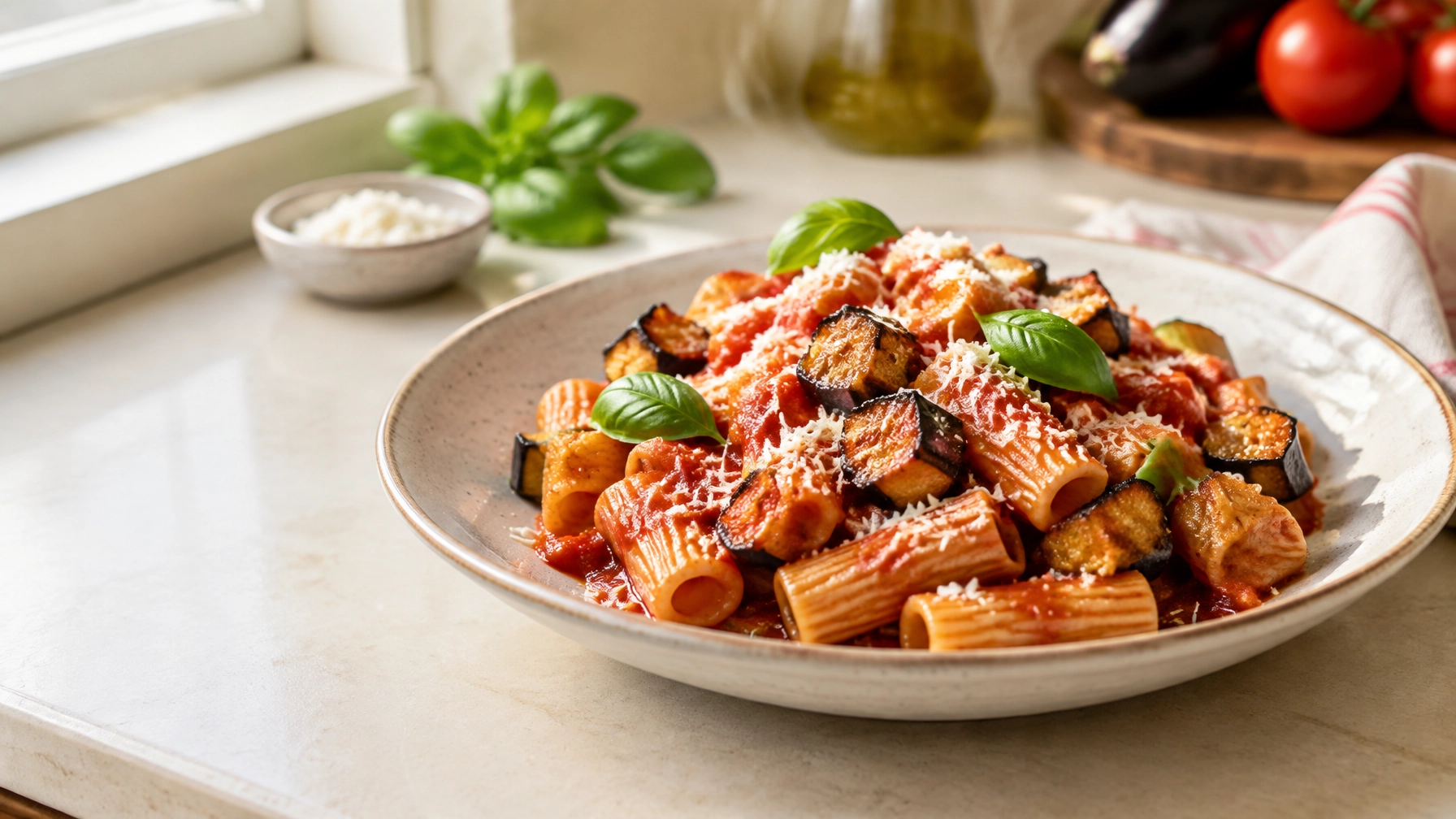
Pasta alla Norma is a Sicilian aubergine pasta made with tomato sauce, fried aubergine, basil and ricotta salata. This version serves four and is ready in approximately 35 minutes.
Context
Pasta alla Norma depends on four primary components:
- Pasta that remains firm after cooking
- Aubergine with browned edges and a soft centre
- Tomato sauce with controlled acidity
- Salty ricotta salata added at the point of serving
The aubergine is the determining component. It should be cut into compact cubes, dried before frying, and cooked in batches. Crowding the pan causes the aubergine to steam rather than brown.
Ricotta salata is salted, pressed ricotta. It is firmer and drier than fresh ricotta. It provides the required salty finish without creating a heavy sauce. If it is unavailable, use a firm salty cheese. The result will not be identical, but the function remains similar.
Preparation
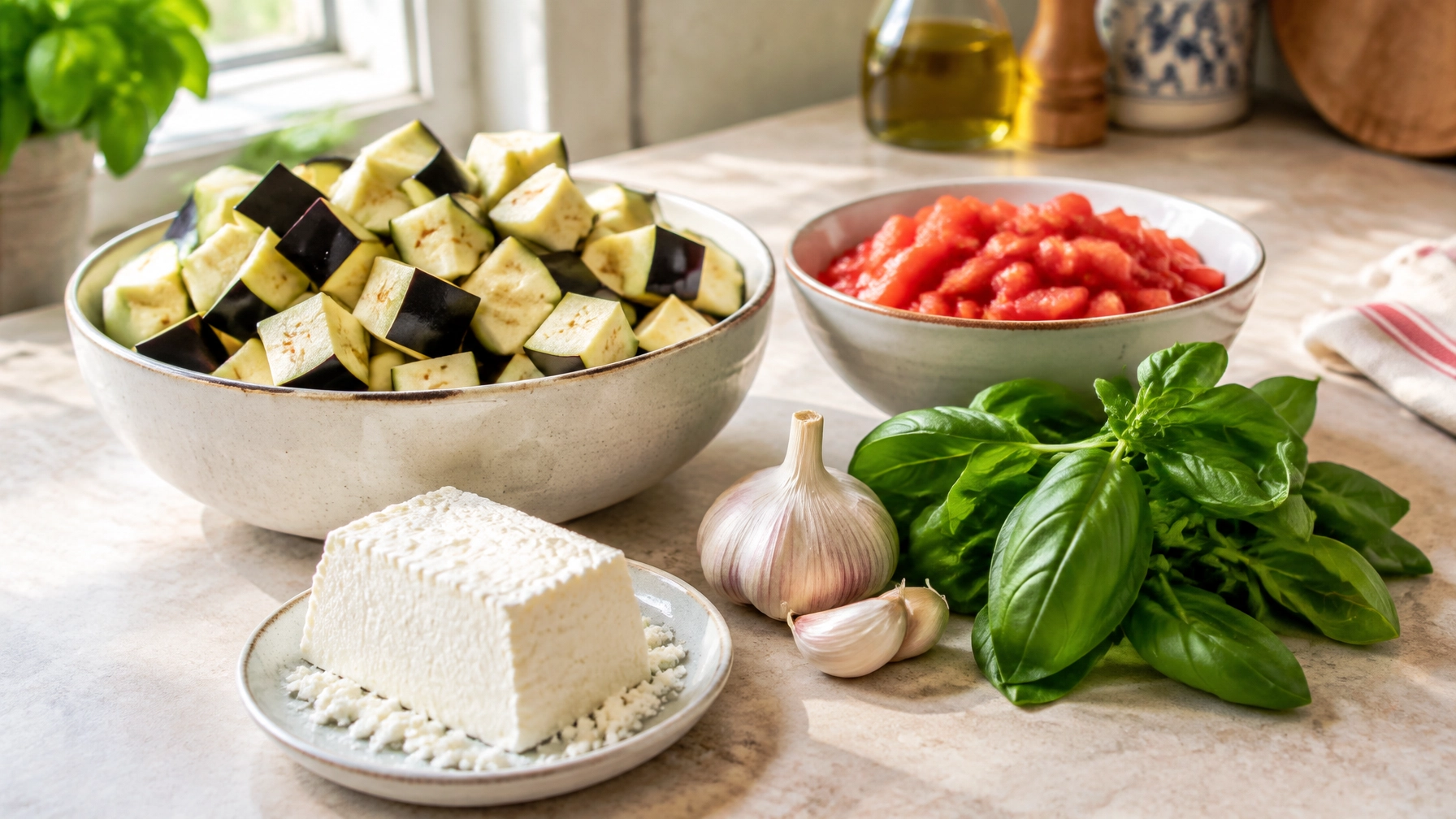
Cut the aubergines into cubes measuring approximately 1 to 2 centimetres. Sprinkle them with salt and leave them in a colander for 10 minutes. This process seasons the aubergine and helps remove excess surface moisture.
Pat the cubes thoroughly dry before frying. Moisture reduces browning and can cause hot oil to spit.
Start the tomato sauce while the aubergine rests. This allows the two components to finish at approximately the same time. Use a wide pan so the sauce reduces evenly and has enough space for the pasta later.
Frying
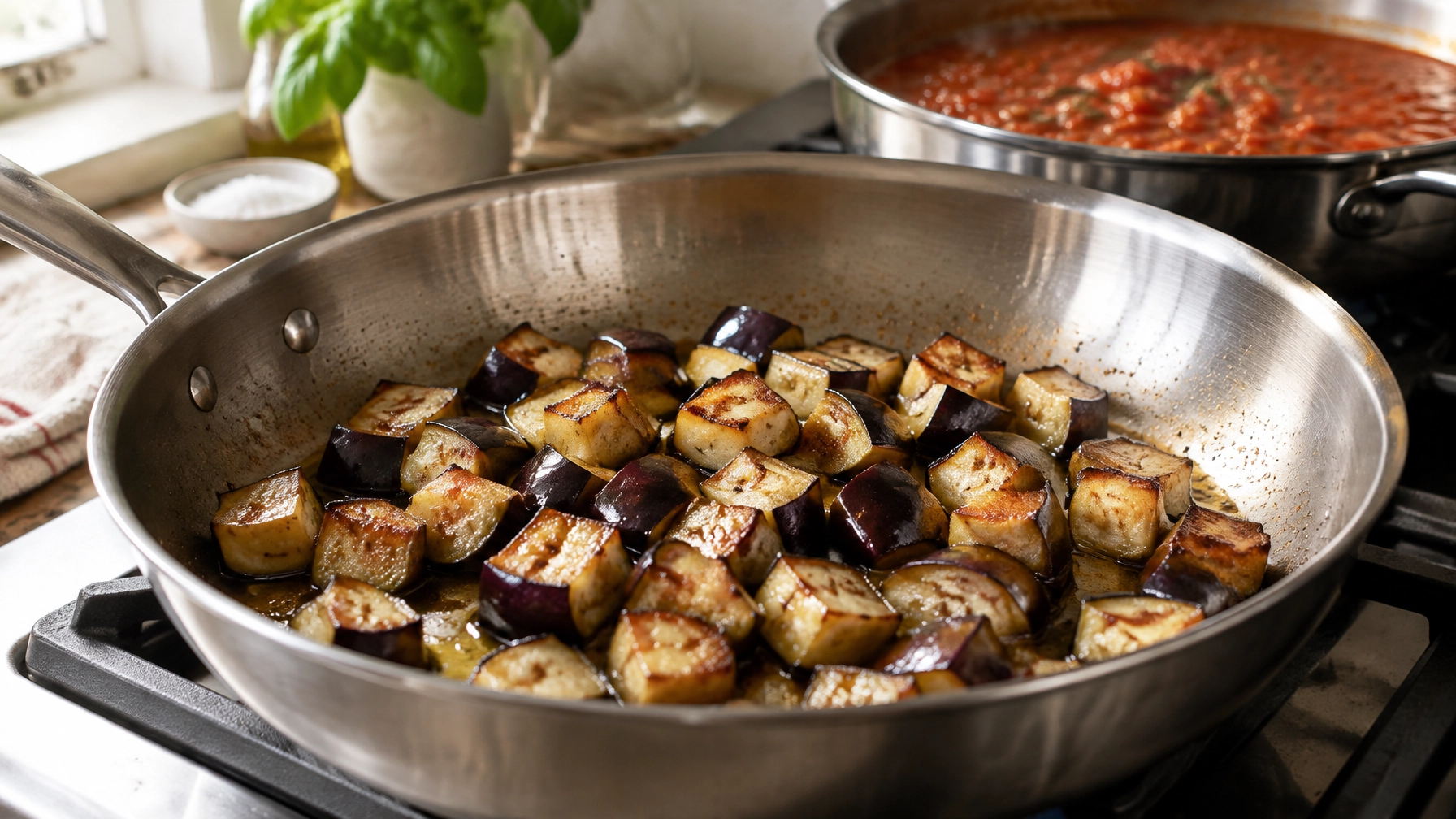
Use a wide frying pan with enough olive oil to cover the base. Heat the oil over medium-high heat. Add the aubergine in batches. Turn the pieces regularly until they are golden on several sides and soft in the centre.
Transfer each batch to a plate. Season lightly while hot. Do not stack the aubergine in a deep bowl, as trapped steam can soften the browned surface.
Aubergine absorbs oil quickly. This is expected. The quantity of oil required depends on the size of the pan and the aubergine. Add a small amount between batches only if the pan becomes dry.
Sauce
The tomato sauce should be concentrated but not thick. Garlic should soften in olive oil without becoming dark. Burnt garlic introduces bitterness that cannot be corrected by additional tomato.
A small pinch of sugar is optional. It can moderate an acidic tomato sauce, but it should not make the sauce sweet. Fresh basil should be added near the end so that its aroma remains clear.
The pasta water is reserved because it contains starch. A small splash can loosen the sauce and help it adhere to the pasta. Add it gradually. Excess water will dilute the tomato flavour.
Recipe
Timing
- Preparation: 10 minutes
- Cooking: 25 minutes
- Total: 35 minutes
- Serves: 4
The stated timing assumes that the sauce is started while the aubergine is salted and that the pasta water is heated during the frying stage.
Tips
Dry the aubergine thoroughly. Wet aubergine will not brown efficiently and can make the oil spit.
Use batches. A crowded pan lowers the temperature and produces soft, pale pieces.
Do not over-reduce the sauce. The pasta will absorb liquid during mixing. A sauce that appears slightly loose in the pan will usually reach the correct consistency after the pasta is added.
Reserve pasta water before draining. Once discarded, the starchy water cannot be recovered.
Add basil off the heat. Prolonged cooking darkens the leaves and reduces their aroma.
Grate the ricotta salata at the table. This distributes the cheese more evenly and prevents it from sinking into the sauce.
Variations
Roasted aubergine
For a lower-oil preparation, toss the cubed aubergine with 2 tablespoons of olive oil. Roast at 220°C for 25 to 30 minutes, turning once. The edges will be browned, but the flavour will be less fried and more concentrated.
Long pasta
Spaghetti or linguine can be used. Short pasta is more effective at holding the aubergine pieces, but long pasta remains suitable if it is mixed thoroughly with the sauce.
Additional heat
Add dried chilli flakes to the garlic oil or finish with fresh chilli. Keep the quantity controlled so that the chilli does not obscure the aubergine and tomato.
Fresh tomatoes
Use ripe tomatoes when available. Peel if necessary, remove excess seeds, and chop finely. Simmer until softened and reduced. Tinned tomatoes provide more consistent results throughout the year.
Dairy-free
Omit the ricotta salata and finish with toasted breadcrumbs, chopped herbs, and extra-virgin olive oil. The dish will remain suitable for a dairy-free diet, subject to checking the pasta label.
Questions
Can Pasta alla Norma be made ahead?
The tomato sauce and fried aubergine can be prepared several hours in advance and refrigerated separately. Reheat both before cooking the pasta. Cooked pasta is best served immediately because it continues to absorb sauce during storage.
Should aubergine be peeled?
No. The skin provides colour, structure, and flavour. Peel only if the aubergine has unusually tough skin.
Is Pasta alla Norma vegetarian?
The standard combination of pasta, aubergine, tomato, basil and ricotta salata is vegetarian. Check the pasta and cheese labels if strict dietary compliance is required.
Can I use fresh ricotta?
Fresh ricotta is not a direct substitute for ricotta salata. It contains more moisture and less salt. It can be used if necessary, but add it sparingly and adjust the seasoning.
Why is my aubergine oily?
Aubergine absorbs oil when the pan is too cool or overcrowded. Heat the oil properly, dry the aubergine, and fry in small batches. A brief drain on a plate also removes excess surface oil.
What pasta shape is best?
Rigatoni and penne are reliable choices. Their ridges and hollow centres retain tomato sauce and small pieces of aubergine.
Can this aubergine pasta be frozen?
The sauce and aubergine can be frozen for up to three months in an airtight container. Cook fresh pasta when serving. Texture may soften slightly after freezing and reheating.