Recipe
Ingredients
Method
- Bring a large pot of water to a boil. Salt the water generously.
- Add the pasta and cook according to the packet directions. Cook it for approximately one minute less than the stated time so it can finish in the sauce.
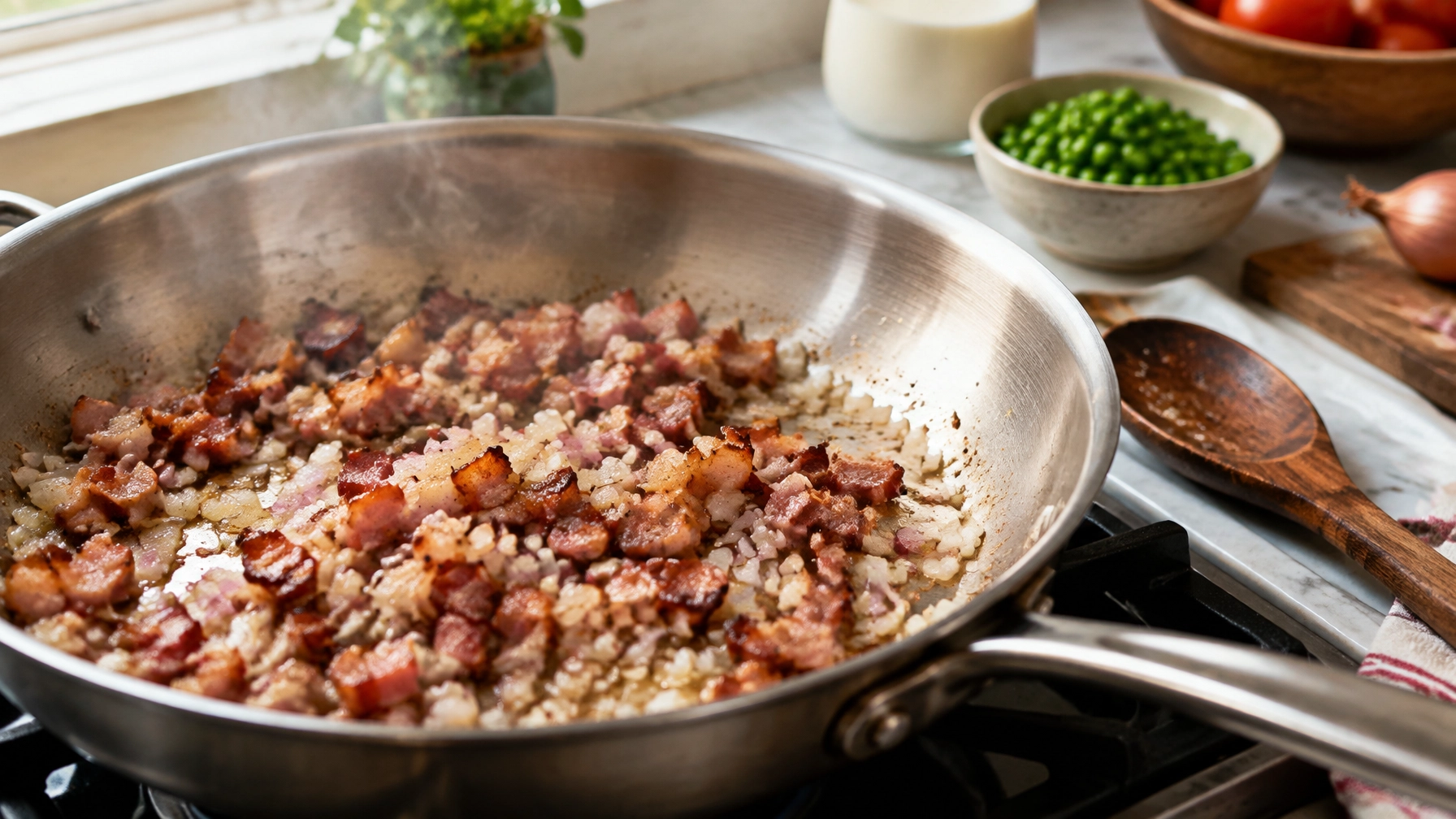
- While the pasta cooks, place a large skillet over medium heat. Add the pancetta. Cook for 5 to 8 minutes, stirring periodically, until the pancetta is browned and crisp.
- If the skillet contains an excessive amount of fat, remove part of it. Leave enough to coat the pan and flavor the sauce.
- Add the chopped shallot. Cook for 3 to 4 minutes until softened.
- Add the garlic and cook for approximately 30 seconds.
- Pour in the white wine, if using. Allow it to bubble for 1 to 2 minutes.
- Add the frozen peas and stock. Simmer for 3 to 5 minutes, until the peas are hot and the liquid has reduced slightly.
- Before draining the pasta, reserve at least 240 ml of the cooking water.
- Drain the pasta and add it to the skillet.
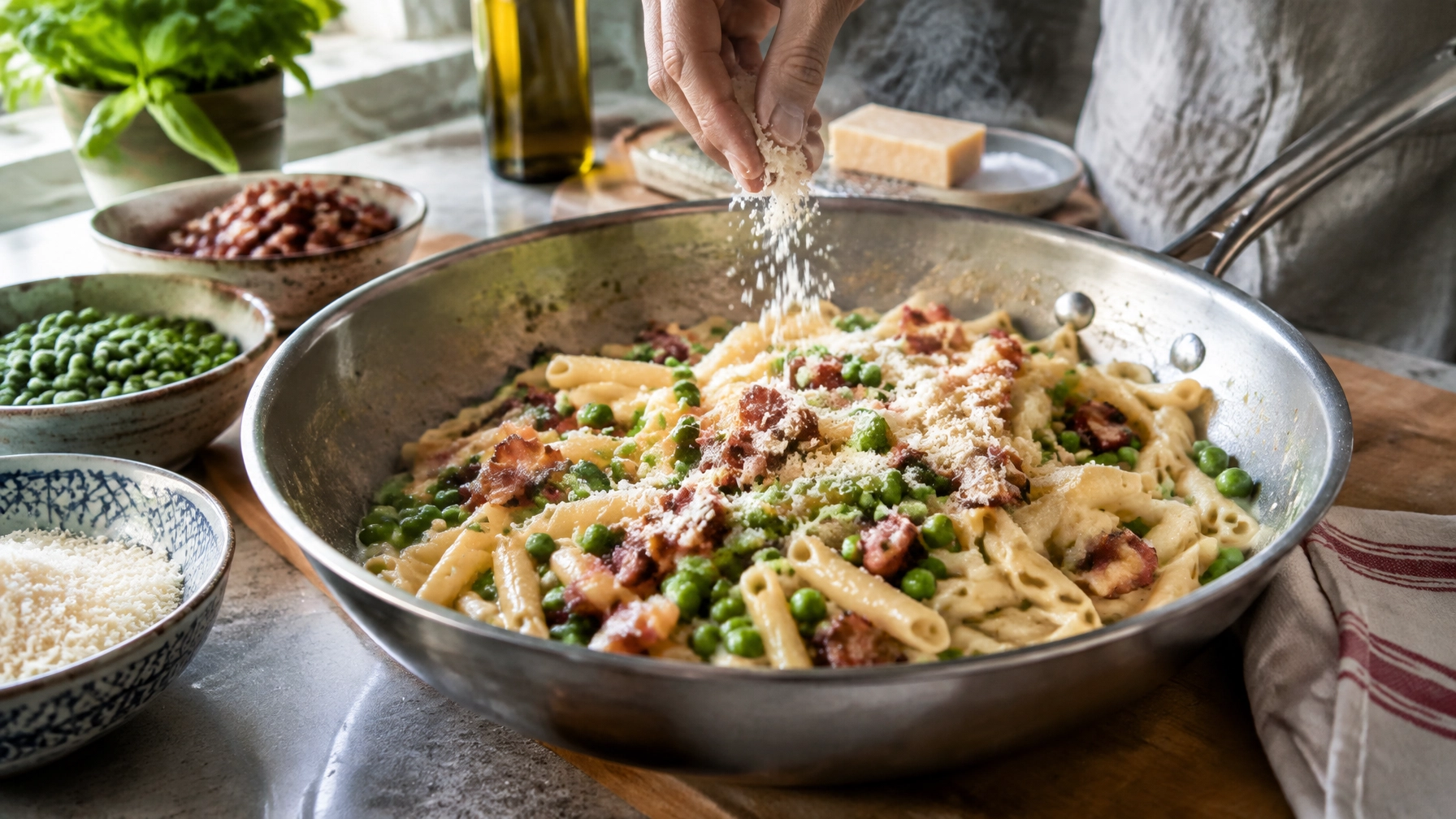
- Add the Parmesan and approximately 60 ml of reserved pasta water. Toss over medium-low heat for 1 to 2 minutes.
- Add more pasta water in small amounts until the sauce is glossy and coats the pasta.
- Remove the skillet from the heat. Add the butter, if using, followed by the lemon zest, lemon juice, and herbs.
- Taste. Adjust the salt and black pepper. Serve immediately with additional Parmesan.
Pasta with Peas and Pancetta (25-Minute)
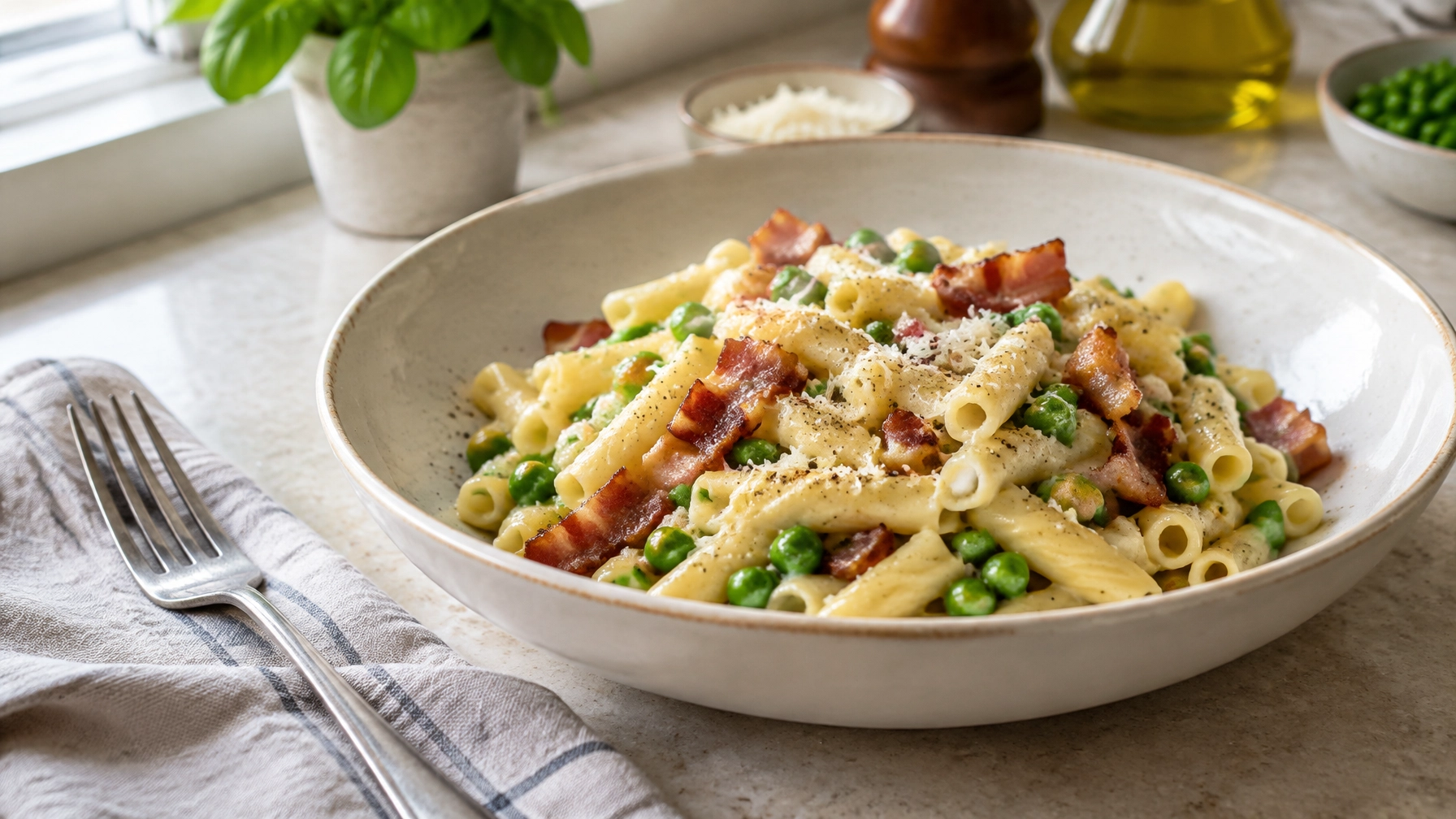
This pasta with peas and pancetta is a 25-minute meal made with short pasta, frozen peas, crisp pancetta, Parmesan, and a light sauce finished with reserved pasta water.
Overview
Pasta with peas and pancetta is a practical weeknight dish. The ingredients are widely available, the preparation uses one skillet and one pasta pot, and the sauce is built without heavy cream.
The main cooking requirement is coordination. Start the pasta water first. Cook the pancetta while the pasta boils. Prepare the pea mixture in the rendered pancetta fat, then combine everything in the skillet. Reserved pasta water supplies starch, which helps the Parmesan, stock, and pancetta fat form a smooth coating.
Frozen peas are suitable for this recipe. They require no thawing and can be added directly to the sauce or to the pasta pot during the final minutes of cooking.
A short pasta shape such as penne, fusilli, rigatoni, or farfalle works well because the sauce collects inside the curves and ridges.
Why the method works
Pancetta contains enough fat to create the foundation of the sauce. Cooking it over moderate heat allows the fat to render while the meat becomes crisp. The shallot then softens in the same pan, taking on the savory flavor left behind by the pancetta.
A small amount of stock loosens the mixture. Peas add sweetness and color. Parmesan provides salt and body. Pasta water supplies starch and helps bind the ingredients together.
Do not add the Parmesan over high heat. Excessive heat can cause the cheese to clump instead of melting into the sauce. Add it after the pasta has entered the skillet, then toss gently while adding pasta water as required.
For a related pasta and pea preparation, see this pasta with peas and pancetta technique.
Recipe
Preparation
- Bring a large pot of water to a boil. Salt the water generously.
- Add the pasta and cook according to the packet directions. Cook it for approximately one minute less than the stated time so it can finish in the sauce.
- While the pasta cooks, place a large skillet over medium heat. Add the pancetta. Cook for 5 to 8 minutes, stirring periodically, until the pancetta is browned and crisp.
- If the skillet contains an excessive amount of fat, remove part of it. Leave enough to coat the pan and flavor the sauce.
- Add the chopped shallot. Cook for 3 to 4 minutes until softened.
- Add the garlic and cook for approximately 30 seconds.
- Pour in the white wine, if using. Allow it to bubble for 1 to 2 minutes.
- Add the frozen peas and stock. Simmer for 3 to 5 minutes, until the peas are hot and the liquid has reduced slightly.
- Before draining the pasta, reserve at least 240 ml of the cooking water.
- Drain the pasta and add it to the skillet.
- Add the Parmesan and approximately 60 ml of reserved pasta water. Toss over medium-low heat for 1 to 2 minutes.
- Add more pasta water in small amounts until the sauce is glossy and coats the pasta.
- Remove the skillet from the heat. Add the butter, if using, followed by the lemon zest, lemon juice, and herbs.
- Taste. Adjust the salt and black pepper. Serve immediately with additional Parmesan.
Tips
- Reserve more pasta water than you expect to use. The sauce can tighten quickly as the pasta absorbs liquid.
- Use moderate heat for the pancetta. High heat can brown the exterior before the fat has rendered.
- Season carefully. Pancetta, Parmesan, and salted pasta water all contribute salt.
- Grate Parmesan finely. Fine shreds melt more evenly than large pieces.
- Finish the pasta in the skillet. This allows the sauce to cling to the pasta rather than remain at the bottom of the pan.
- Serve immediately. The sauce becomes thicker as it cools.
Variations
#### Creamier pasta
Add 60 ml of heavy cream with the stock. Reduce the amount of pasta water used during finishing. The resulting sauce will be richer and thicker.
#### Vegetarian version
Omit the pancetta. Start with 2 tablespoons of olive oil or butter. Add a pinch of smoked paprika or additional black pepper for depth.
#### Lemon pea pasta
Omit the pancetta and add extra lemon zest, lemon juice, and parsley. This version is lighter and suitable when a fresh flavor profile is required.
#### Add greens
Stir in a large handful of baby spinach during the final minute of cooking. The residual heat will wilt the leaves.
#### Use another pasta shape
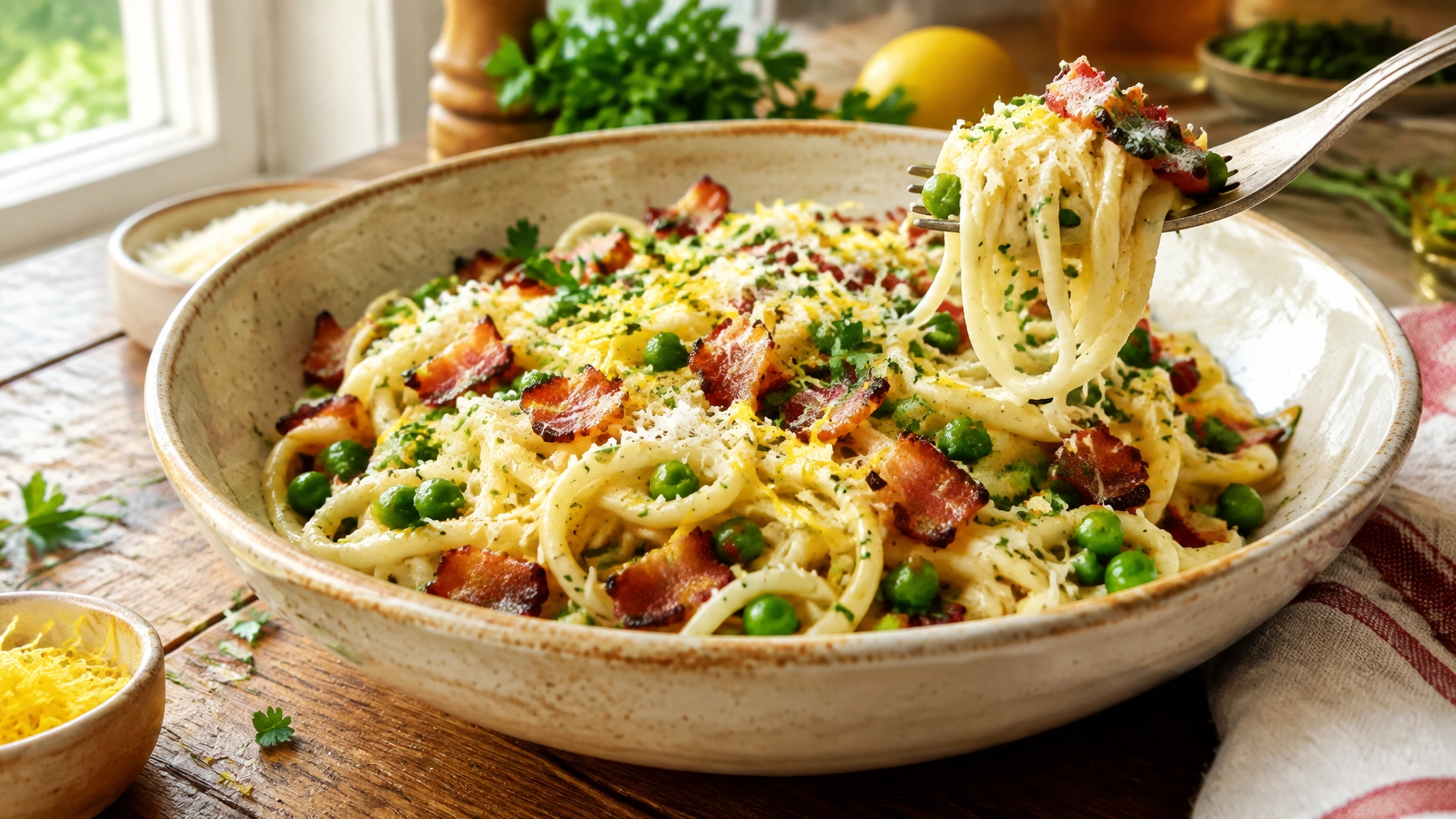
Spaghetti, bucatini, and tagliatelle can be used, although short pasta holds the peas and pancetta more effectively.
FAQ
Can frozen peas be used without thawing?
Yes. Add them directly to the skillet with the stock. They will heat through in approximately 3 to 5 minutes.
Can fresh peas be used?
Yes. Fresh peas may require slightly longer cooking, depending on their size and maturity. Simmer them until tender before adding the pasta.
Can bacon replace pancetta?
Yes. Use an equal weight of diced bacon. Bacon is usually smokier and may release more fat, so remove excess fat before adding the shallot.
What is the best pasta shape for this recipe?
Penne, fusilli, rigatoni, and farfalle are suitable choices. Their ridges, folds, and hollow centres help retain the sauce.
Can the dish be made without wine?
Yes. Replace the wine with an additional 60 ml of stock. The flavor will remain balanced, although the sauce will have less acidity.
Why did the Parmesan clump?
The skillet was likely too hot, or the cheese was added without enough liquid. Remove the pan from high heat, add a small amount of warm pasta water, and toss continuously.
How should leftovers be stored?
Place cooled pasta in a sealed container and refrigerate for up to three days. Reheat gently in a skillet with one or two tablespoons of water or stock.
Can this pasta be frozen?
Freezing is not recommended. The peas and pasta may become soft, and the Parmesan-based sauce can separate during reheating.
Serving instructions
Serve the pasta as soon as the sauce has coated the noodles. Add Parmesan, black pepper, and a small amount of lemon zest at the table. A green salad or steamed vegetables can be served alongside it if additional volume is required.
The finished dish should be moist but not watery. If the sauce appears dry, add reserved pasta water one tablespoon at a time. If it appears too loose, continue tossing over low heat for an additional minute.