Recipe
Serves
8 1×
Serves 8Prep 25 minCook 1HTotal 1H25 min
Ingredients
Method
- Cut a circle of baking paper slightly larger than the base of a 20cm round springform or loose-based cake tin. Grease the sides of the tin with butter. Place the paper in the base and press it gently against the bottom and sides so it can help contain the caramel.
- Put the tin aside and preheat the oven to 160°C fan or 180°C conventional. Set a baking tray on a lower shelf to catch any caramel that escapes from the tin.
- Put the pear sugar in a small, deep saucepan over a low heat. Let it melt until golden, stirring only after most of the sugar has melted. Take care: hot caramel can bubble vigorously and cause burns.
- Add the diced butter and stir carefully with a long-handled spoon until melted. Remove the pan from the heat. Stir in the dark rum and ginger syrup until the caramel is smooth. Leave it to cool for 15–20 minutes, stirring occasionally, until it is thick enough to coat the back of a spoon.
- Peel the pears, quarter them lengthways and remove the cores. Cut each quarter into three or four long slices. Add the slices to the caramel and turn them gently to coat. Arrange them in a fan pattern across the base of the prepared tin.
- Put the eggs, softened butter, caster sugar, flour, baking powder, ground ginger and allspice into a large bowl. Beat until the mixture is smooth. A food processor can also be used. Scrape the sides of the bowl once if needed so the ingredients combine evenly.
- Spoon the cake mixture over the pears and smooth the surface. Place the tin on the baking tray and bake for 35–40 minutes, until the cake is well risen and firm to the touch. A skewer inserted into the centre should come out clean. If the top colours before the centre is ready, continue baking and check again after a few minutes.
- Remove the cake from the oven and, while it is still warm, carefully loosen and remove the sides of the tin. Place a serving plate over the cake and turn the tin over. Lift away the base and peel off the baking paper. Serve warm.
Pear and Ginger Upside-Down Cake
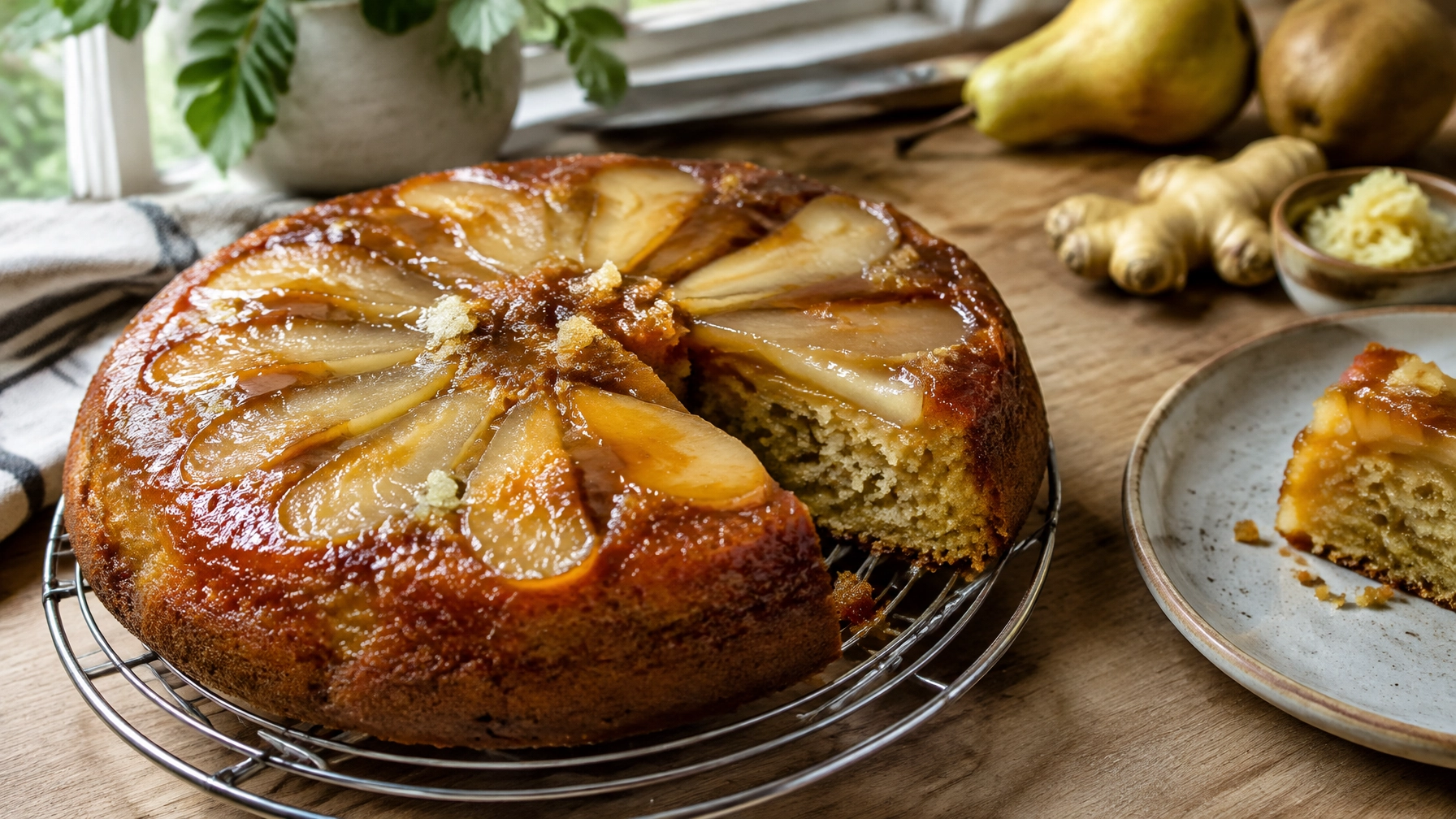
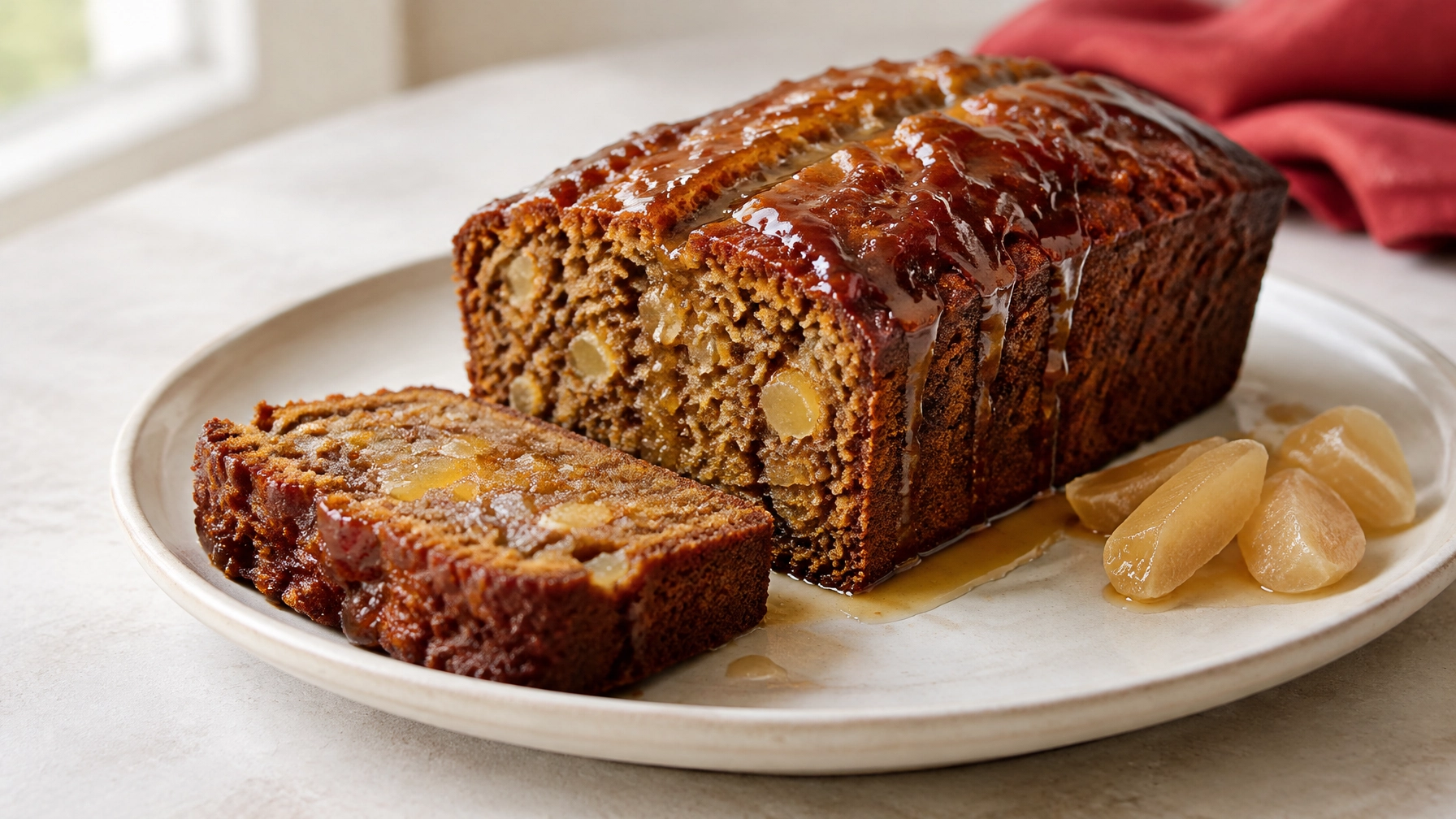
This pear and ginger upside-down cake pairs tender fruit with a light, softly spiced sponge. Once turned out, the pear slices form the top of the cake, coated in a buttery caramel made with ginger syrup and dark rum.
Choose pears that are ripe but still firm enough to slice neatly. The cake is easiest to turn out while warm, before the caramel has time to set firmly in the tin.
Recipe
Servings: 8
Prep time: 25 minutes
Cook time: 1 hour
Total time: 1 hour 25 minutes
Tips
- Use firm pears. They should be ripe enough to eat but not so soft that they collapse when peeled, sliced and coated in caramel.
- Choose a deep saucepan. Sugar and butter can bubble as they heat, and the rum and ginger syrup may make the caramel bubble again when added.
- Keep the caramel under control. Melt the sugar over a low heat and watch its colour closely. Remove it from the heat when golden; it will continue to darken slightly from the pan's residual heat.
- Turn the cake out while warm. The caramel is easier to release before it cools and firms around the fruit and tin.
Variations
- Adjust the spice. For a milder ginger flavour, reduce the ground ginger slightly. For a more pronounced spice note, retain the full amount and let it come through in the sponge.
- Use another warm spice. A small change to the allspice will alter the flavour without changing the cake's structure. Keep the total dry ingredients as listed.
- Change the fruit arrangement. Lay the pear slices in overlapping rows instead of a fan. Arrange them closely so the base is covered before adding the batter.
- Serve simply. The cake can be sliced warm and served on its own, allowing the pears, caramel and ginger sponge to remain the focus.
FAQ
Can I use pears that are very ripe?
Firm pears are preferable. Very soft fruit can be harder to peel and slice neatly, and may lose its shape while being coated in caramel and baked.
How can I tell when the cake is baked?
The cake should be risen and firm to the touch. Insert a skewer into the centre; it should come out clean. If the skewer shows wet mixture, bake for a little longer and test again.
Why should I turn the cake out while it is warm?
The caramel can harden as it cools. Turning out the cake while warm makes it easier to release the fruit and caramel from the tin.