Recipe
Servings
Servings 1×
Ingredients
- Chickpeas
- Bread
- Broccoli
- Avocado
- Lemon
- Lime
- Tahini
- Sesame
- Salt
Method
- Spread the chickpeas out rather than piling them together.
- Give hot air room to move around each one, and shake the pan during roasting so several sides get direct heat.
- Use a wide tray, leave breathing room, and roast dense vegetables separately when their cooking times differ significantly.
- Cut vegetables into reasonably similar pieces.
- Add dry spices before roasting so the heat can bloom their aromatic compounds and help them cling to the chickpeas.
- Add fresh citrus or delicate herbs after cooking.
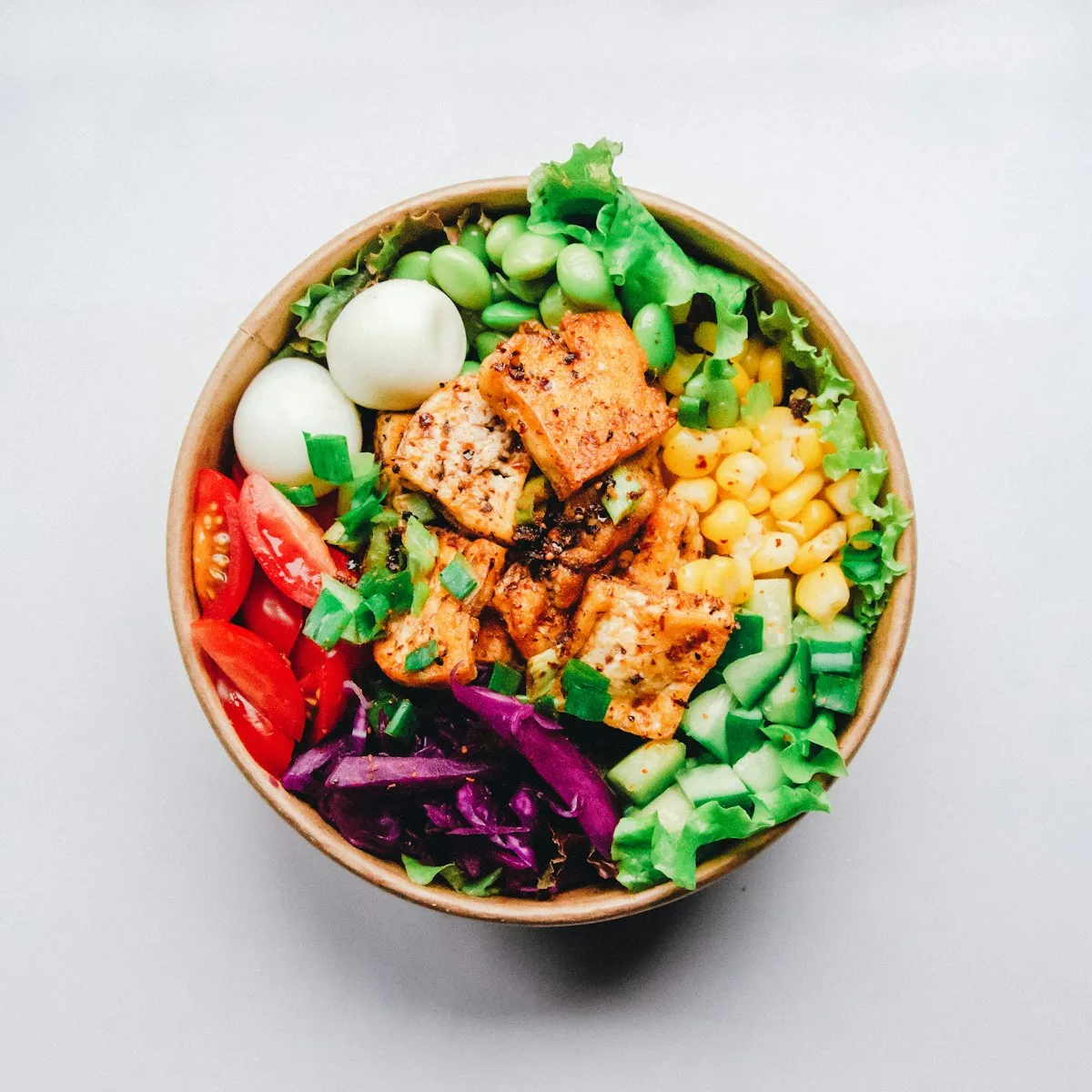
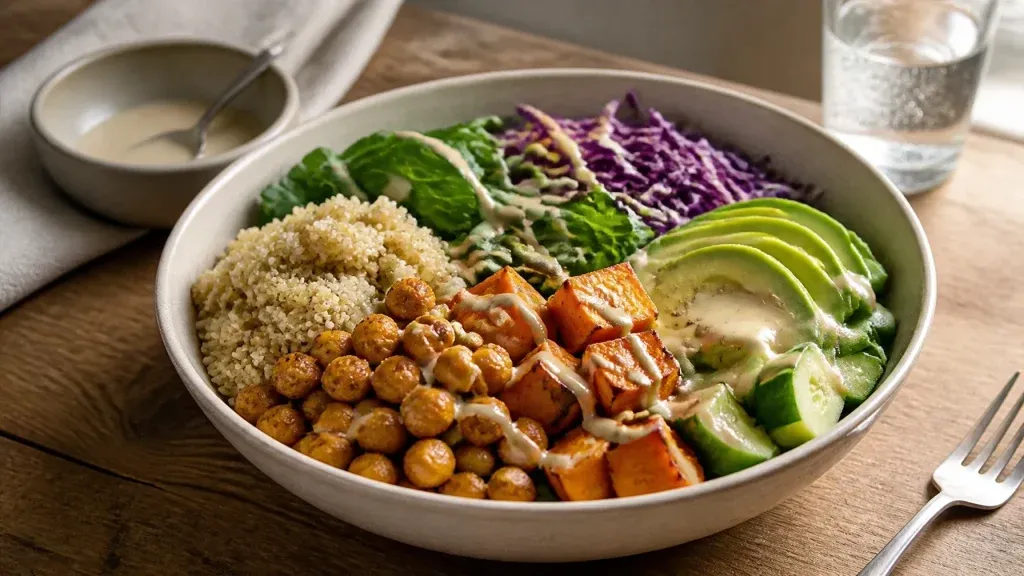
A Buddha bowl should make dinner feel easier, not like a test you forgot to study for. This roasted chickpea and avocado version brings together crisp, golden chickpeas, creamy avocado, tender grains, fresh vegetables, and a sharp tahini dressing. You get contrast in every bite: crunchy, soft, warm, cool, rich, and bright. It is one of my favorite healthy dinner ideas because it feels generous and satisfying while staying completely plant-based.
Tips & Technique: Build the Bowl Around Contrast
The first non-negotiable is texture. Do not make every part of the bowl soft. A bowl with warm grains, steamed vegetables, and creamy avocado can taste pleasant, but it quickly becomes a beige, mushy meeting. Roasted chickpeas fix that problem by bringing a crisp, nutty bite.
Dry the chickpeas thoroughly before roasting. Water sitting on the surface must evaporate before the chickpeas can brown, so damp chickpeas tend to steam instead of crisp. Once the surface dries and becomes hot enough, the Maillard reaction begins. This set of reactions happens between amino acids and sugars, creating deeper color and toasted, savory flavors. It is the same reason browned bread tastes more interesting than pale bread.
Spread the chickpeas out rather than piling them together. Give hot air room to move around each one, and shake the pan during roasting so several sides get direct heat. Expect a few chickpeas to split or brown more than their neighbors. That unevenness is a good thing; real roasting rarely produces identical little golden spheres.
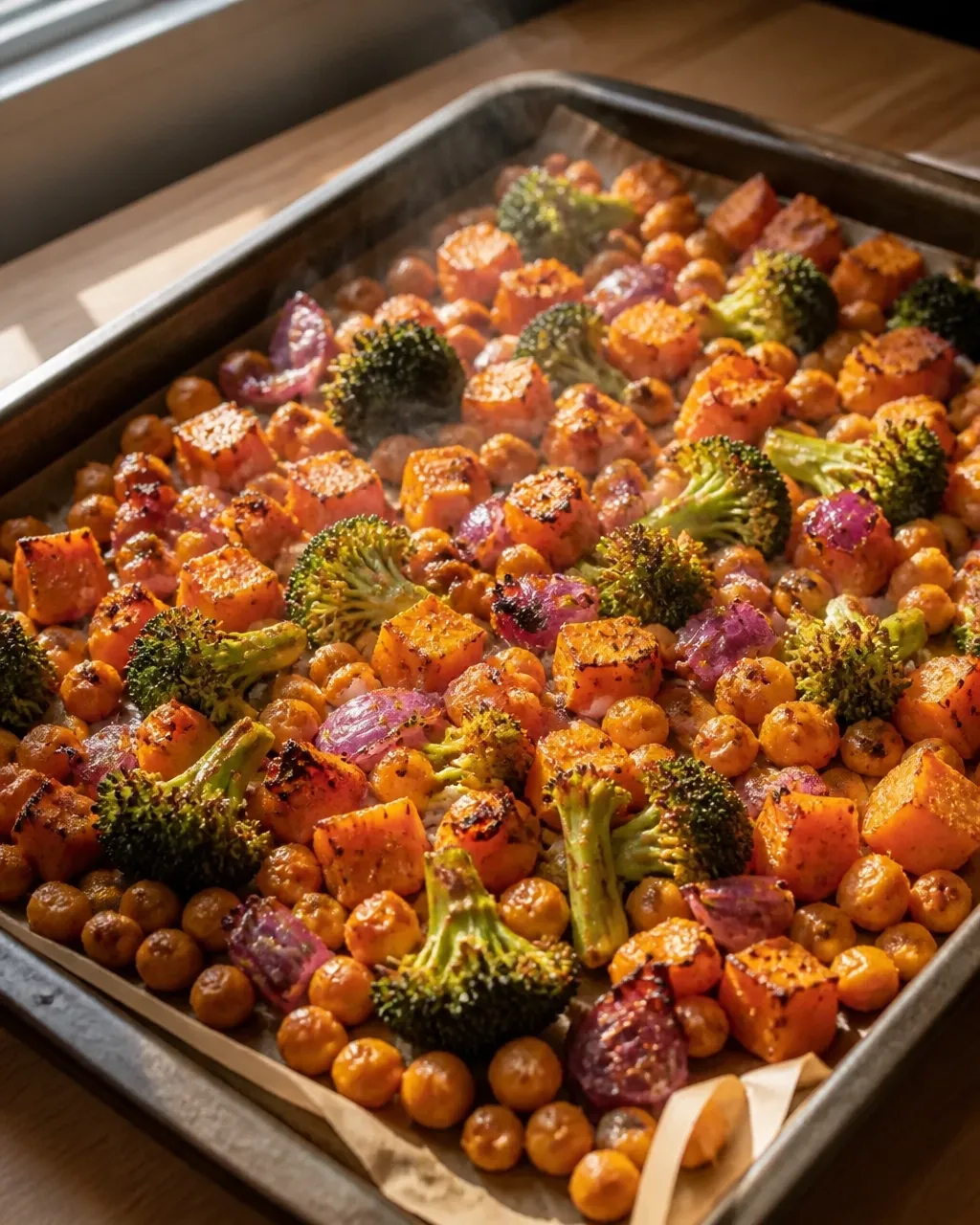
Control moisture in the vegetables, too. High-moisture vegetables release steam as they cook. If the pan is crowded, that steam lingers and softens the food instead of allowing the edges to caramelize. Use a wide tray, leave breathing room, and roast dense vegetables separately when their cooking times differ significantly.
Cut vegetables into reasonably similar pieces. You do not need laboratory precision, but avoid pairing tiny broccoli florets with enormous sweet potato chunks. The small pieces will darken before the larger ones become tender. Aim for pieces that can finish in roughly the same window, then check with your eyes and a fork rather than worshipping the timer.
Use seasoning in layers. Add dry spices before roasting so the heat can bloom their aromatic compounds and help them cling to the chickpeas. Add fresh citrus or delicate herbs after cooking. Acidic ingredients lose some of their lively aroma under prolonged heat, while a final squeeze of lemon or lime wakes up the entire bowl.
Treat avocado as a finishing ingredient. Its creamy texture is valuable precisely because the other components are roasted and crisp. Slice it close to serving time, and coat it lightly with citrus if it needs to wait. Cut avocado browns when polyphenol oxidase reacts with oxygen. Lowering the surface pH with lemon or lime slows that reaction, helping the flesh stay greener for longer.
The dressing needs balance, not just creaminess. Tahini contains natural oils and has a rich, nutty flavor with a slight bitterness. Citrus provides acidity, salt sharpens the edges, and a tiny touch of sweetness can round out the bitterness. Add water gradually while whisking. Tahini may thicken dramatically at first because the sesame particles absorb moisture, but continued whisking and more liquid will turn it smooth and pourable.
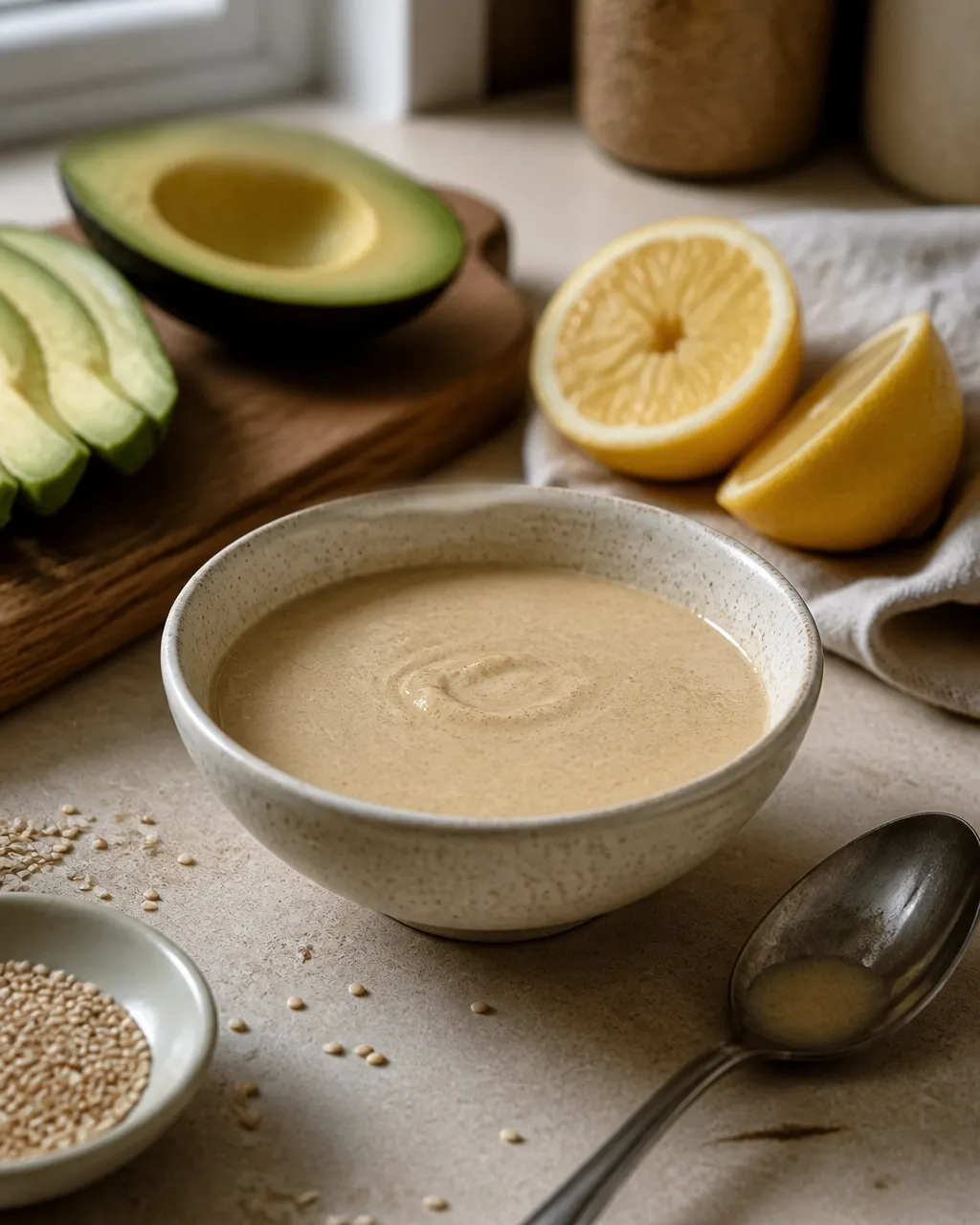
Keep the dressing off the chickpeas until serving. Liquid softens a crisp surface, and nobody wants to work hard for crunchy chickpeas only to drown them immediately. Drizzle the sauce over the assembled bowl or serve it on the side. That small decision protects the texture and makes leftovers much more enjoyable.
Finally, assemble with intention. Start with the grain and greens, add the roasted vegetables and chickpeas, then place the avocado where it stays visible and intact. Finish with dressing and a crunchy topping. Think of the bowl as a set of contrasts rather than a pile of ingredients. Warm against cool, crisp against creamy, and earthy against acidic: that is the whole game.
For another example of how roasting creates flavor quickly, see Cookpedia’s air fryer roasted vegetables. The same principles apply: avoid crowding, encourage airflow, and finish with brightness.
Variations: Change the Mood, Keep the Balance
Use quinoa when you want a light, slightly nutty base with extra protein. Choose brown rice for a chewier, more substantial bowl, or use another cooked whole grain already waiting in your refrigerator. The best base is often the one that saves you from ordering takeout.
Take the bowl in a Mediterranean direction with cucumber, tomatoes, olives, herbs, and a lemon-forward dressing. The juicy vegetables and salty olives balance the creamy avocado and sesame sauce.
Build a smoky version with roasted corn, cabbage, lime, and a pinch of smoked paprika. Add a little chili if you like heat. Keep the lime generous enough to cut through the avocado and tahini.
For more protein, add edamame, lentils, or extra chickpeas. For a lower-grain bowl, increase the greens and roasted vegetables while keeping enough chickpeas and avocado to make the meal satisfying. If you are feeding different appetites, serve each component separately and let everyone assemble their own. That strategy belongs in the great hall of quick family meals.
You can also swap the dressing. Try a cilantro-lime sauce, a garlic-herb vinaigrette, or a thin hummus dressing. Keep the same rule: pair rich components with acid, and pair soft textures with something crisp.
Browse Cookpedia’s vegetarian dinner recipes when you want more plant-based combinations that work for ordinary weeknights.
Side Dish Pairings: Add Freshness Without Adding Fuss
This bowl is filling enough to stand alone, so choose sides that add contrast rather than more heaviness. A quick cucumber salad works beautifully because its water content and acidity refresh the palate after creamy avocado and tahini.
Serve lightly dressed greens if you want more volume. Keep the dressing sharp and simple; a rich side salad would compete with the bowl’s main sauce.
Warm flatbread makes the meal feel especially generous and gives you something useful for scooping up stray chickpeas and dressing. Choose a crisp, toasted piece if the bowl is soft, or a pillowy one if you have made the chickpeas exceptionally crunchy.
For a larger spread, add pickled onions, shredded carrots, or a small portion of fresh fruit. Pickled vegetables bring acidity and crunch, while fruit adds a clean, sweet finish. Avoid adding several rich dips at once. The avocado and tahini already have that department covered.
FAQ: What If the Bowl Does Not Turn Out as Planned?
What if my chickpeas stay soft?
Check the surface moisture first. Chickpeas that went into the oven damp will spend too much time steaming. Dry them more thoroughly next time, use a less crowded pan, and let them roast until their surfaces look dry and browned. They may soften again after you add dressing, so sauce them only at the table.
What if the chickpeas burn before they become crisp?
Reduce the heat slightly and check the pan earlier. Spice powders can darken before the chickpeas fully dehydrate, especially if your oven runs hot. Use a lighter coating of oil and move the chickpeas around halfway through cooking. Crispness comes from moisture loss, not from simply turning up the heat until everything becomes charcoal.
What if my vegetables release too much water?
You probably crowded the pan or used vegetables with different moisture levels together. Spread everything into a looser layer, roast in batches, or separate dense vegetables from watery ones. Dry vegetables well after washing, and avoid covering the pan. Steam needs an exit route.
What if my avocado turns brown?
Cut it closer to serving time and add lemon or lime juice to the exposed flesh. Citrus lowers the surface pH and slows the enzyme activity responsible for browning. A little discoloration does not mean the avocado is unsafe, but bright green slices certainly look more inviting.
What if my tahini dressing becomes thick and grainy?
Do not panic. Tahini often seizes when liquid is first added because sesame particles absorb moisture and tighten the mixture. Whisk steadily while adding water a little at a time. The sauce should eventually loosen and become creamy. If it tastes heavy, add more citrus and a pinch of salt rather than simply thinning it with more water.
What if the dressing tastes bitter?
Tahini naturally has some bitterness, and older sesame paste can taste more intense. Add acidity first, then a very small amount of sweetness if needed. Salt can also make the flavor feel rounder. Avoid burying the bitterness under lots of oil; that usually makes the bowl feel heavier without fixing the balance.
Can I prepare the bowl ahead of time?
Prepare the grains, roasted vegetables, and chickpeas ahead, then cool and store them separately. Keep the dressing in a jar and slice the avocado just before eating. Reheat the grains and vegetables while leaving the greens and avocado cold. This protects the temperature and texture contrast that makes the bowl so satisfying.
How should I store leftovers?
Store the components separately whenever possible. Refrigeration adds moisture, so roasted chickpeas will soften if sealed beside dressing or juicy vegetables. Re-crisp them briefly in an oven or air fryer, and add fresh dressing after reheating. Keep avocado covered and use it within a day for the best color and texture.
Is this bowl high in protein?
It provides meaningful plant protein from chickpeas, grains, tahini, and any optional legumes you add. For a more substantial protein target, increase the chickpeas or include edamame or lentils. Balance matters more than chasing one ingredient as a miracle solution: combine legumes, whole grains, vegetables, and satisfying fats.
Can I make this bowl nut-free?
Yes. Tahini is made from sesame, not tree nuts, but check labels if allergies are a concern. Use toasted pumpkin or sunflower seeds for crunch, and choose a seed-based dressing. Keep the same flavor logic by adding citrus or vinegar to prevent the sauce from tasting too rich.
Does this work for meal prep?
Absolutely, with one important rule: protect the crisp parts. Pack grains, greens, vegetables, chickpeas, avocado, and dressing in separate sections or containers. Assemble when you are ready to eat. That little bit of organization turns this bowl into one of the most dependable healthy dinner ideas for busy days.
What is the biggest mistake to avoid?
Do not skip contrast. Avoid a crowded roasting pan, a dressing with no acidity, and an assembly where every component is soft. Dry the chickpeas, roast with space, finish with citrus, and add crunch. Those are the non-negotiables that turn a collection of wholesome foods into a dinner you genuinely want to eat.