Recipe
Servings
4 servings 1×
Serves 4Prep 15 minCook 40 minTotal 55 min
Ingredients
- 1 tablespoon olive oil, or vegetable stock for an oil-free version
- 1 medium onion, diced
- 1 bell pepper, diced
- 3 garlic cloves, finely chopped
- 2 medium sweet potatoes, peeled and cut into 2–3 cm cubes
- 2 teaspoons chili powder
- 1 teaspoon ground cumin
- 1 teaspoon smoked paprika
- ½ teaspoon dried oregano
- 1 tablespoon tomato paste
- 1 can, approximately 400 g, diced tomatoes with their juices
- 500 ml vegetable stock, plus extra if required
- 2 cans, approximately 400 g each, black beans, drained and rinsed
- ½ teaspoon salt, or to taste
- Black pepper, to taste
- Juice of ½ lime
- 1 chopped jalapeño
- 1 teaspoon unsweetened cocoa powder
- A pinch of ground cinnamon
- 100 g cooked quinoa
- 1 teaspoon maple syrup, if additional sweetness is required
Method
- Heat the olive oil in a large saucepan or Dutch oven over medium heat. For an oil-free version, use 3 tablespoons of vegetable stock or water and add more if the pan becomes dry.
- Add the onion and bell pepper. Cook for 5–7 minutes, stirring occasionally, until softened.
- Add the garlic and cook for 30 seconds. Do not allow it to brown heavily.
- Add the diced sweet potatoes, chili powder, cumin, smoked paprika, oregano, salt, and black pepper. Stir continuously for 1–2 minutes to coat the vegetables and release the aroma of the spices.
- Stir in the tomato paste. Cook for a further minute.
- Add the diced tomatoes and vegetable stock. Stir to combine and bring the mixture to a gentle boil.
- Reduce the heat to low. Simmer uncovered for 25–35 minutes, stirring occasionally, until the sweet potatoes are fork-tender.
- Add the drained black beans during the final 5–10 minutes. Continue cooking until they are heated through.
- Check the consistency. For a thicker chili, mash some of the sweet potatoes and beans with a spoon or potato masher. For a thinner chili, add vegetable stock a little at a time.
- Remove the pan from the heat. Stir in the lime juice and check the seasoning. Add more salt, chili powder, or lime juice if required.
- Serve immediately with the selected toppings and sides.
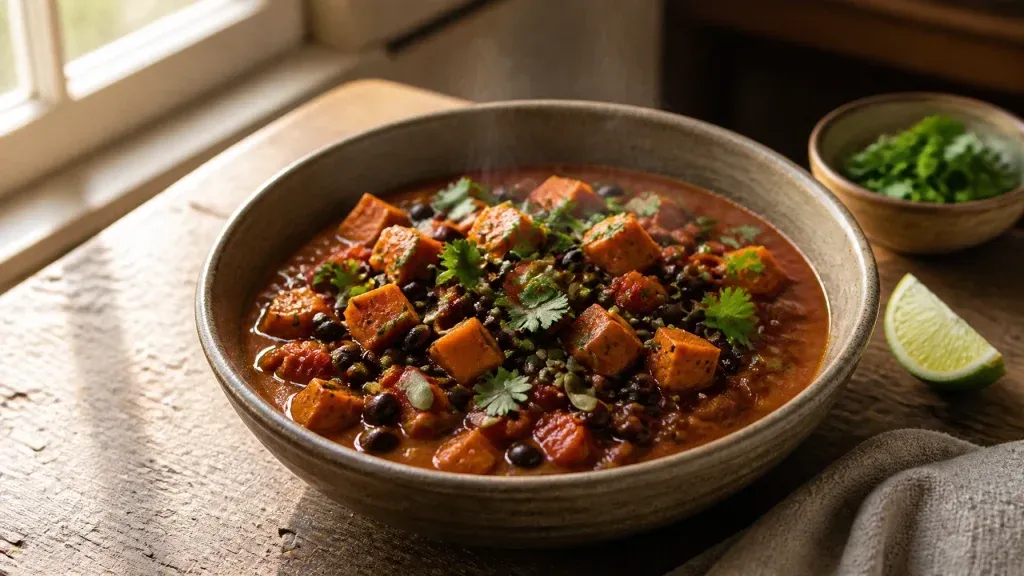
Sweet potato black bean chili is the kind of dinner that makes a chilly evening feel immediately more organized. It is hearty without being heavy, naturally plant-based, and full of sweet, smoky, earthy flavor. The best part is how much texture and richness you can create from simple pantry ingredients. Follow a few non-negotiable cooking principles, and this becomes one of those healthy dinner ideas you will happily make on repeat.
Tips & Technique: Let Starch, Heat, and Acidity Build the Chili
Cut the sweet potatoes for control
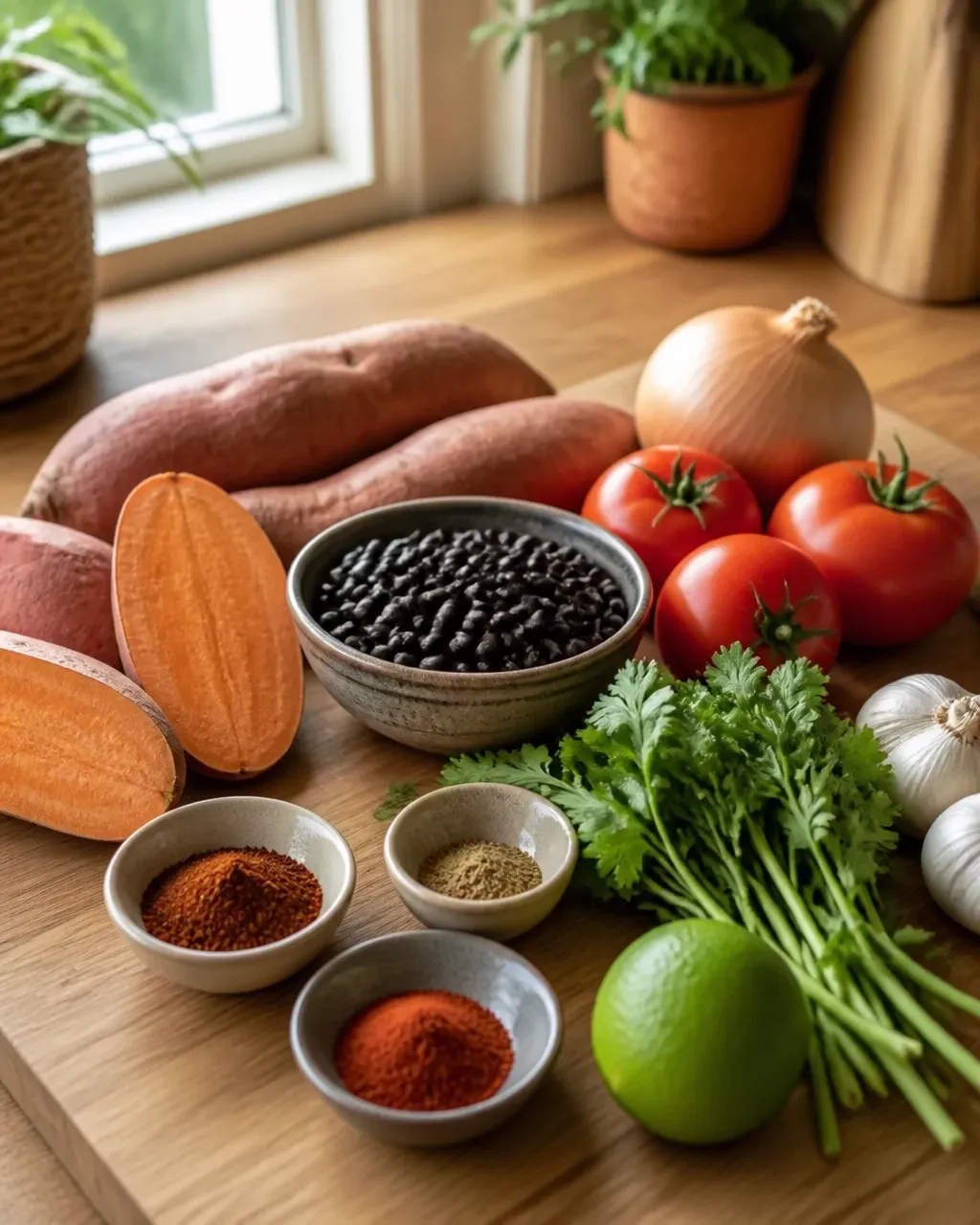
Cut the sweet potatoes into pieces that are similar in size, but do not make them tiny. Small cubes cook quickly and can collapse before the chili develops its full flavor. Larger pieces hold their shape better and give you those soft, satisfying bites that make the dish feel substantial.
Sweet potatoes contain starch and pectin. As they heat, their starch granules absorb liquid and swell, while the pectin in their cell walls softens. That is useful chemistry: the potatoes become tender and naturally thicken the chili. Cook them too long, though, and the cubes lose their structure and dissolve into the sauce.
Aim for tender centers with edges that still look like sweet potatoes. A little unevenness is perfectly acceptable. This is dinner, not a geometry exam.
Soften aromatics before adding liquid
Give the onion time to soften before building the rest of the chili. Gentle heat draws out its moisture and allows its natural sugars to become sweeter and more rounded. Add garlic only after the onion has begun to soften, because finely chopped garlic can burn quickly.
This early stage creates the flavor foundation. If you rush it, the chili may still be edible, but it will taste flatter and more one-dimensional. Let the aromatics become fragrant and soft rather than chasing deep brown color.
Bloom the spices in fat
Add the dry spices while the aromatics are warm and lightly coated with oil. Briefly cooking them helps release fat-soluble aromatic compounds, spreading their flavor through the base instead of leaving them suspended in the liquid.
Cumin becomes warmer and nuttier. Smoked paprika develops a fuller aroma. Chili powder tastes more integrated. The difference is small but important. Spices added directly to broth can taste dusty or sharp, while bloomed spices taste rounded and deliberate.
Keep the heat moderate. Spices can scorch surprisingly fast when the pan is dry, and burnt paprika brings bitterness that no amount of lime can fully negotiate.
Add the beans at the right moment
Use canned black beans or another fully cooked variety, and add them after the sweet potatoes have had time to soften. Cooked beans already contain hydrated starch and tender skins, so they do not need a long simmer.
A short cooking period lets the beans absorb the smoky tomato base without turning them into paste. Prolonged bubbling can split their skins and release too much starch, creating a grainy texture. Some broken beans are helpful for body; every bean surrendering at once is not.
Rinse canned beans if you want a cleaner flavor and more control over salt. Drain them well so you do not accidentally thin the chili with extra liquid.
Use tomatoes for balance, not just moisture
Tomatoes bring acidity, umami, and liquid. Their acidity cuts through the natural sweetness of the sweet potatoes and keeps the black beans from tasting too earthy or heavy.
The timing matters less with canned beans because they are already cooked, but the flavor still benefits from a simmer. Let the tomato base reduce enough to taste concentrated, then adjust the final balance with a small amount of lime juice or vinegar.
Add the finishing acid near the end. Fresh acidity tastes brighter when it has not spent the entire cooking time evaporating. It will not remove chili heat, but it can make the overall flavor feel cleaner and less aggressive.
Thicken naturally before reaching for a slurry
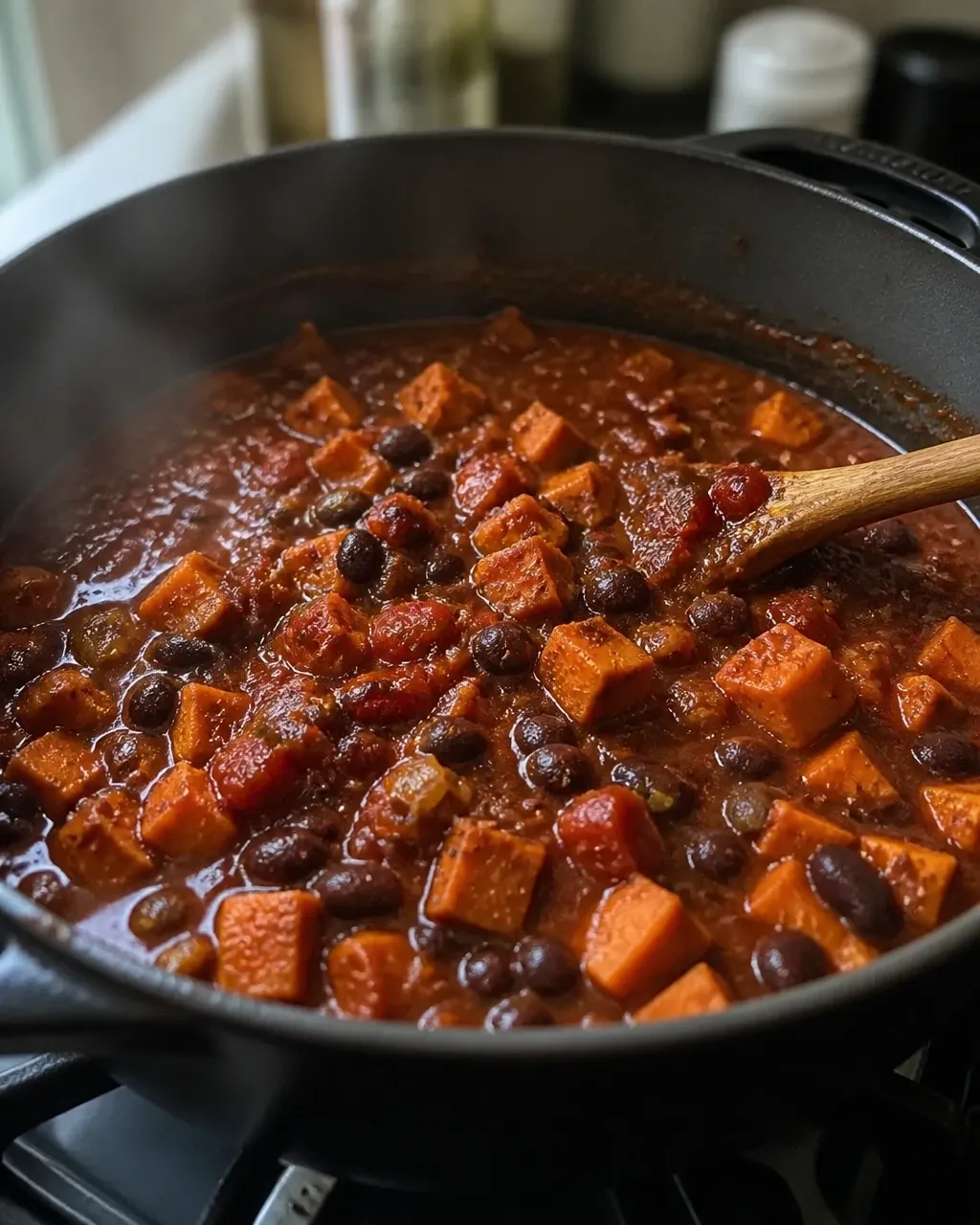
You should not need flour or dairy to make this chili thick and satisfying. Uncovered simmering allows excess water to evaporate, concentrating the tomatoes, spices, and vegetable stock.
Sweet potato starch also contributes body as it gelatinizes. Black beans release a little starch and soluble fiber as they cook. Together, these create a spoon-coating texture without making the chili feel artificially thick.
If the chili is still loose, mash a small portion of the sweet potatoes and beans against the side of the pot. This breaks their cell walls and releases more starch into the liquid. Keep some pieces whole so the finished bowl still has contrast.
For more plant-based weeknight inspiration, explore Cookpedia’s vegetarian dinner recipes and one-pot meals. The same principles apply across both: build flavor early, manage moisture, and finish with brightness.
Variations: Change the Mood, Keep the Balance
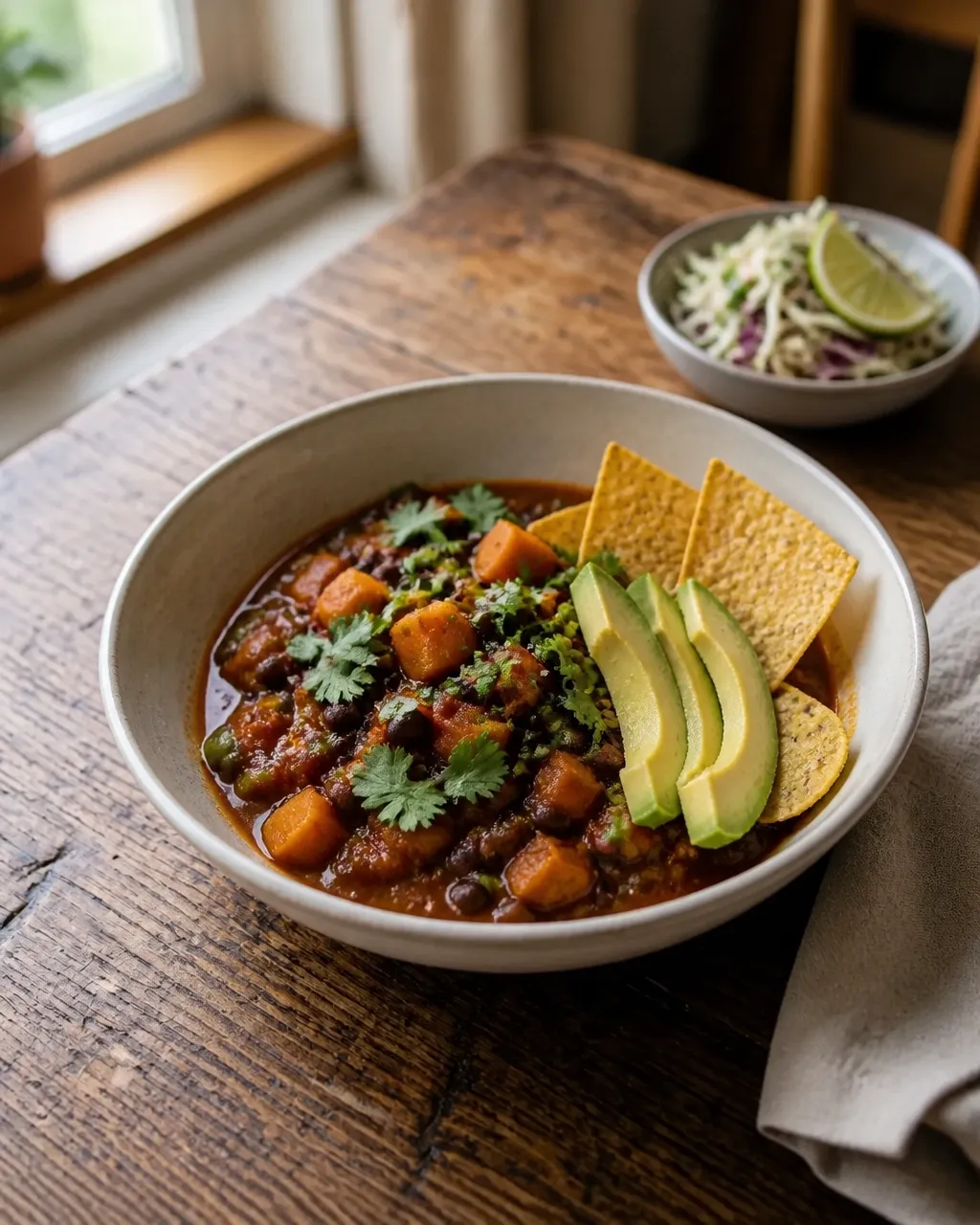
Make the chili smoky by adding chipotle or extra smoked paprika. Keep enough acidity in the finished dish to stop the smoke from becoming heavy. A little lime works beautifully here.
For a milder family version, reduce the hot spices and let cumin, garlic, and sweet potato provide the main personality. Serve hot sauce separately so everyone can choose their own level of bravery. That is a very practical strategy for quick family meals, especially when one person considers black pepper an extreme sport.
Add extra vegetables when you want more color and volume. Bell peppers, corn, zucchini, spinach, or chopped kale can all work. Add watery vegetables with care, since they can thin the chili. Cook them until their excess moisture has reduced rather than simply tipping everything into the pot and hoping for the best.
Use pinto beans or kidney beans instead of black beans if that is what you have. The flavor will shift slightly, but the cooking logic stays the same. You can also stir in cooked quinoa for a thicker, more filling texture. Let the chili remain the star; avoid adding so many extras that it becomes vegetable inventory management.
Side Dish Pairings: Add Freshness and Crunch
Sweet potato black bean chili is filling enough to stand alone, so choose sides that bring contrast rather than more heaviness.
Serve it with a crisp cabbage slaw dressed with lime or vinegar. The crunch and acidity cut through the soft, rich chili beautifully. A simple cucumber salad works for the same reason: its cool, watery texture refreshes your palate.
Warm cornbread or toasted tortillas make the meal feel more generous and give you something useful for scooping. Keep the bread lightly seasoned so it does not compete with the smoky spices.
For a lighter plate, add a green salad with a sharp citrus dressing. For a heartier spread, serve the chili over brown rice or quinoa. If you are collecting air fryer recipes dinner ideas, crisp tortilla strips or roasted vegetables make easy companions, provided they bring texture rather than another soft component.
FAQ: What If the Chili Goes Wrong?
What if my sweet potatoes turn mushy?
They cooked too long, were cut too small, or were stirred too aggressively. Sweet potato pectin softens as heat continues, so the cubes eventually lose their structure.
Mash the softened pieces into the chili and treat the result as a thicker, more stew-like version. Next time, cut larger cubes and add the beans later so the pot spends less time bubbling after the potatoes are tender.
What if the chili is too thin?
Simmer it uncovered over moderate heat so water can evaporate. Stir occasionally to prevent the bottom from catching, but avoid constant stirring because it can break apart the sweet potatoes.
If you need a faster fix, mash some sweet potato and black beans directly into the pot. Their starch and fiber will add body without changing the flavor. Let the chili rest for a few minutes before judging the final texture; it thickens as it cools.
What if the chili is too thick?
Add warm vegetable stock or water a little at a time. Stir after each addition and wait briefly before adding more. The starches need a moment to loosen.
Avoid dumping in a large amount of cold liquid. It can cool the pot, interrupt the simmer, and make it harder to tell whether you have reached the right consistency.
What if the chili tastes too sweet?
Sweet potatoes naturally bring sweetness, and some canned tomatoes are sweet as well. Add lime juice or a small splash of vinegar first. Acidity gives the flavor sharper edges and prevents the chili from tasting like a savory dessert.
You can also add more cumin, smoked paprika, or chili powder for depth. Adjust gradually. A heavy hand with extra spice can create a new problem instead of solving the first one.
What if the chili is too spicy?
Add more unsalted tomatoes, beans, or sweet potato to dilute the heat. A small amount of coconut milk can soften the perception of spice and add creaminess, although it will change the character of the dish.
Acidic toppings such as lime can make the chili taste more balanced, but they do not remove capsaicin. Serve cooling toppings separately and let each person adjust their bowl.
Why do my beans taste tough?
If you are using canned beans, tough skins may come from overcooking them in a concentrated tomato mixture. Add them later and simmer only until heated through.
If you cooked the beans from dry, acidity can slow softening. Cook them until tender before adding a strongly tomato-based sauce. Older beans may also take longer because their skins become less receptive to water during storage.
Can I make this chili ahead?
Yes. The flavor often improves after resting because the spices, tomatoes, beans, and sweet potatoes have more time to mingle. Cool it promptly, refrigerate it in a sealed container, and reheat gently with a splash of water or stock.
Expect the chili to thicken in the refrigerator. Loosen it gradually when reheating, and finish with fresh lime to restore brightness.
How should I store leftovers?
Store the cooled chili in an airtight container in the refrigerator and use it within three to four days. Reheat only the portion you plan to eat. If the chili smells sour, looks unusual, or has been left at room temperature for too long, discard it. No bowl of leftovers is worth a heroic food-safety experiment.
Is this chili suitable for meal prep?
Absolutely. Portion it into containers and keep toppings separate so they stay fresh. Reheat the chili, then add lime, cilantro, avocado, pumpkin seeds, or tortilla chips just before eating.
It also freezes well. Leave room in each container for expansion, thaw it in the refrigerator when possible, and refresh the texture with a little stock while reheating. Simple planning turns this into one of the most reliable healthy dinner ideas for a busy week.
Sweet potato black bean chili works because every element has a job: sweet potatoes bring starch and gentle sweetness, beans bring substance, tomatoes bring acidity, spices bring warmth, and lime keeps the whole pot lively. Respect the cooking order, control the simmer, and finish with brightness. That is all you need for a soulful plant-based dinner that tastes like far more effort went into it than actually did.