Recipe
Servings
Servings 1×
Ingredients
- Chickpeas
- Quinoa
- Pearled barley
- Rice
- Cucumber
- Tomatoes
- Onion
- Garlic
- Lemon
- Feta
- Cooking oil
- Salt
- Black pepper
Method
- Keep the textures separate, balance the flavors boldly, and you’ll have one of those healthy dinner ideas that feels satisfying rather than worthy.
- Start with a grain that has enough structure to stay pleasantly chewy.
- Let cooked grains steam off before assembling.
- Spread warm grains briefly so steam can escape, or cool them until they are just warm.
- Pat them dry before roasting or pan-browning.
- Give them room, use enough heat, and leave them alone long enough for color to develop.
A Bright Bowl That Works on a Busy Night
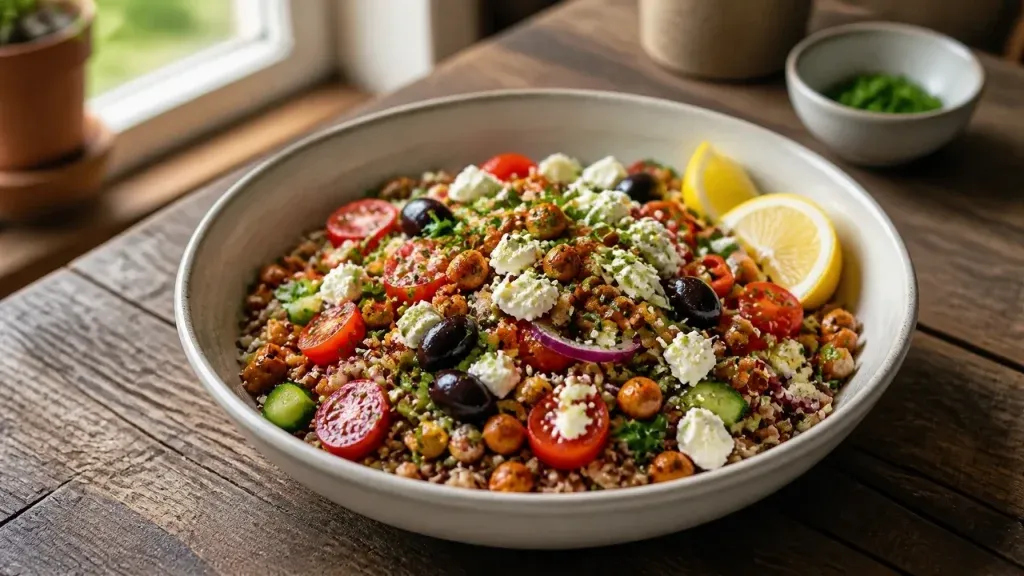
This Greek chickpea and feta grain bowl is exactly what I want from a weeknight dinner: fresh, filling, colorful, and not fussy. It brings together hearty grains, creamy feta, chickpeas, crunchy vegetables, herbs, and a sharp lemony dressing without asking you to perform any kitchen gymnastics.
Think of it as a Greek salad that went to college, learned about fiber, and came home with excellent meal-prep habits. Keep the textures separate, balance the flavors boldly, and you’ll have one of those healthy dinner ideas that feels satisfying rather than worthy.
Tips & Technique: Build Flavor Through Contrast
Choose a Grain That Can Carry the Bowl
Start with a grain that has enough structure to stay pleasantly chewy. Farro gives you a nutty bite, quinoa stays light and fluffy, and brown rice brings a softer, more familiar texture. Barley works beautifully too, especially if you enjoy a little chew.
The science is simple: grains contain starch granules that absorb water and swell as they cook. If you cook them too far, those granules become overly soft and release more starch, leaving you with a sticky bowl rather than distinct, spoon-friendly grains. Stop cooking when the grain is tender but still has a little resistance.
Let cooked grains steam off before assembling. Excess surface moisture dilutes the dressing and turns crisp vegetables limp. Spread warm grains briefly so steam can escape, or cool them until they are just warm. You want them to absorb flavor without becoming a sponge with a culinary identity crisis.
Dry the Chickpeas for Better Texture
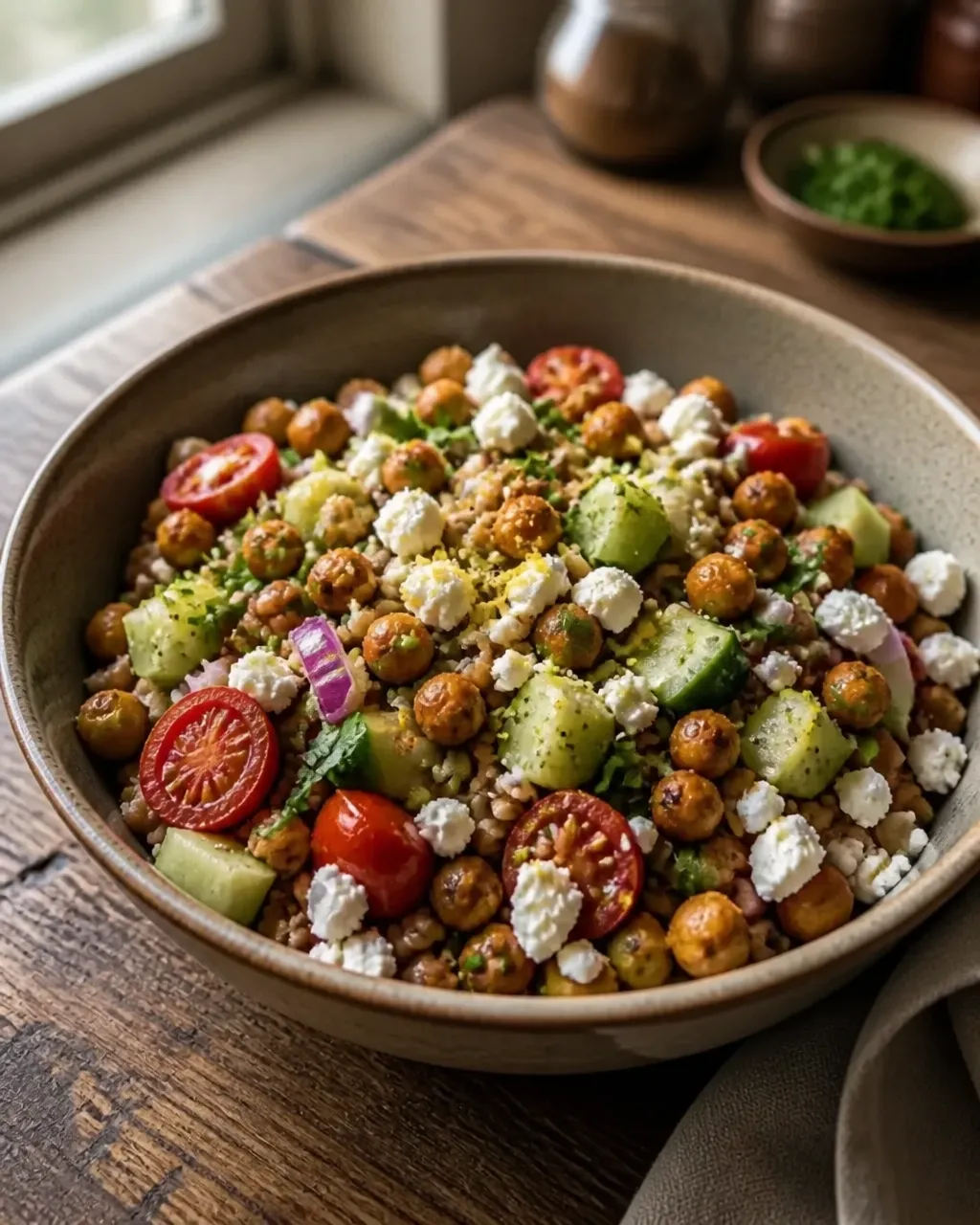
Chickpeas can be creamy inside and crisp outside, but only if you manage their moisture. Pat them dry before roasting or pan-browning. Water on the surface must evaporate before the chickpeas can brown, so damp chickpeas tend to soften and steam instead.
Once the surface dries, heat encourages browning reactions that deepen the chickpeas’ nutty flavor. You don’t need an aggressive crust on every chickpea. A few browned edges and a little variation in texture are enough to make the bowl much more interesting.
Avoid crowding the pan. Too many chickpeas packed together trap steam, and steam is useful for softening food but not for creating crisp edges. Give them room, use enough heat, and leave them alone long enough for color to develop. Constant stirring is not diligence; sometimes it is simply interrupting dinner.
Use Acidity to Wake Up the Whole Bowl
Lemon juice does more than make the dressing taste fresh. Its acidity changes how your palate experiences richness, salt, and fat. Feta and olive oil are flavorful but concentrated, while lemon creates a sharper contrast that keeps each bite lively.
Add the dressing gradually and taste as you go. Acid is powerful, and the right amount should make the grains taste more fragrant and the vegetables taste sweeter. Too little, and the bowl feels flat. Too much, and every component starts shouting over the others.
Use lemon zest when you want extra citrus aroma without adding more acidity. The zest contains fragrant oils that provide brightness on the nose, while the juice supplies the tang on the tongue. Together, they make a modest dressing feel much more generous.
Emulsify the Dressing Instead of Letting It Sulk
Oil and lemon juice naturally separate because they have different chemical structures. Oil is hydrophobic, meaning it resists water-based liquids. That’s why a dressing can look like a tiny science experiment after sitting for five minutes.
Shake or whisk the dressing well to break the oil into smaller droplets. An emulsion won’t stay perfectly blended forever, but smaller droplets coat the grains and vegetables more evenly. You get flavor in every bite instead of one oily corner and one aggressively lemony cucumber.
Add a little water if the dressing feels too intense. This increases volume and softens the concentration without requiring much more oil. It also helps the dressing spread across the bowl, which is useful when you’re feeding several people.
Keep the Feta in Its Supporting Role
Feta is salty, tangy, crumbly, and wonderfully dramatic. It does not need to cover the entire bowl to make its point. Use it as a finishing accent so its sharpness balances the mild grains and earthy chickpeas.
Taste before adding extra salt. Canned chickpeas, olives, and feta can all bring sodium, and those salty components become more noticeable as the bowl sits. Rinse chickpeas well, choose your olives thoughtfully, and let lemon, herbs, garlic, and black pepper do some of the seasoning work.
Add feta near the end. Mixing it too aggressively can cause it to disappear into the dressing and make the bowl feel heavier. Leave a few larger crumbles intact for creamy, salty bursts.
Protect the Crunch
Keep cucumber, tomatoes, onion, and greens as dry as possible before assembly. Vegetables release water when cut, especially when salted. That moisture is welcome in a fresh salad but less welcome when it turns the grains soggy.
For meal prep, store the dressing separately and add it just before eating. Keep delicate greens away from juicy tomatoes, and reserve feta and toasted toppings until serving. This small bit of organization is the difference between a fresh grain bowl and a container of damp vegetables.
Variations: Keep the Balance, Change the Mood
Make the bowl warmer by serving the grains and chickpeas slightly heated while keeping the vegetables cool. The temperature contrast makes the meal feel more substantial without adding extra work.
Swap the grain based on what you have. Use quinoa for a lighter texture, farro for chew, barley for nuttiness, or brown rice for a dependable pantry option. Keep the grain-to-vegetable balance generous so the bowl stays fresh rather than dense.
Add roasted red peppers for sweetness, artichoke hearts for a briny edge, or shredded cabbage for extra crunch. If you want more protein, increase the chickpeas or add lentils. Grilled chicken or tofu also works, although the bowl is already satisfying in its plant-forward form.
For a creamy variation, add a spoonful of Greek yogurt to the lemon dressing. The yogurt softens the acidity and creates a thicker coating. For a dairy-free version, replace feta with seasoned white beans, chopped toasted almonds, or a plant-based feta alternative.
Keep the central rule intact: pair hearty ingredients with crisp produce, rich elements with acidity, and salty toppings with fresh herbs. That formula is more important than any single ingredient.
Side Dish Pairings That Keep Things Fresh
This bowl can stand alone, but a simple side can make it feel more complete. Choose something that adds contrast rather than repeating the same grains and chickpeas.
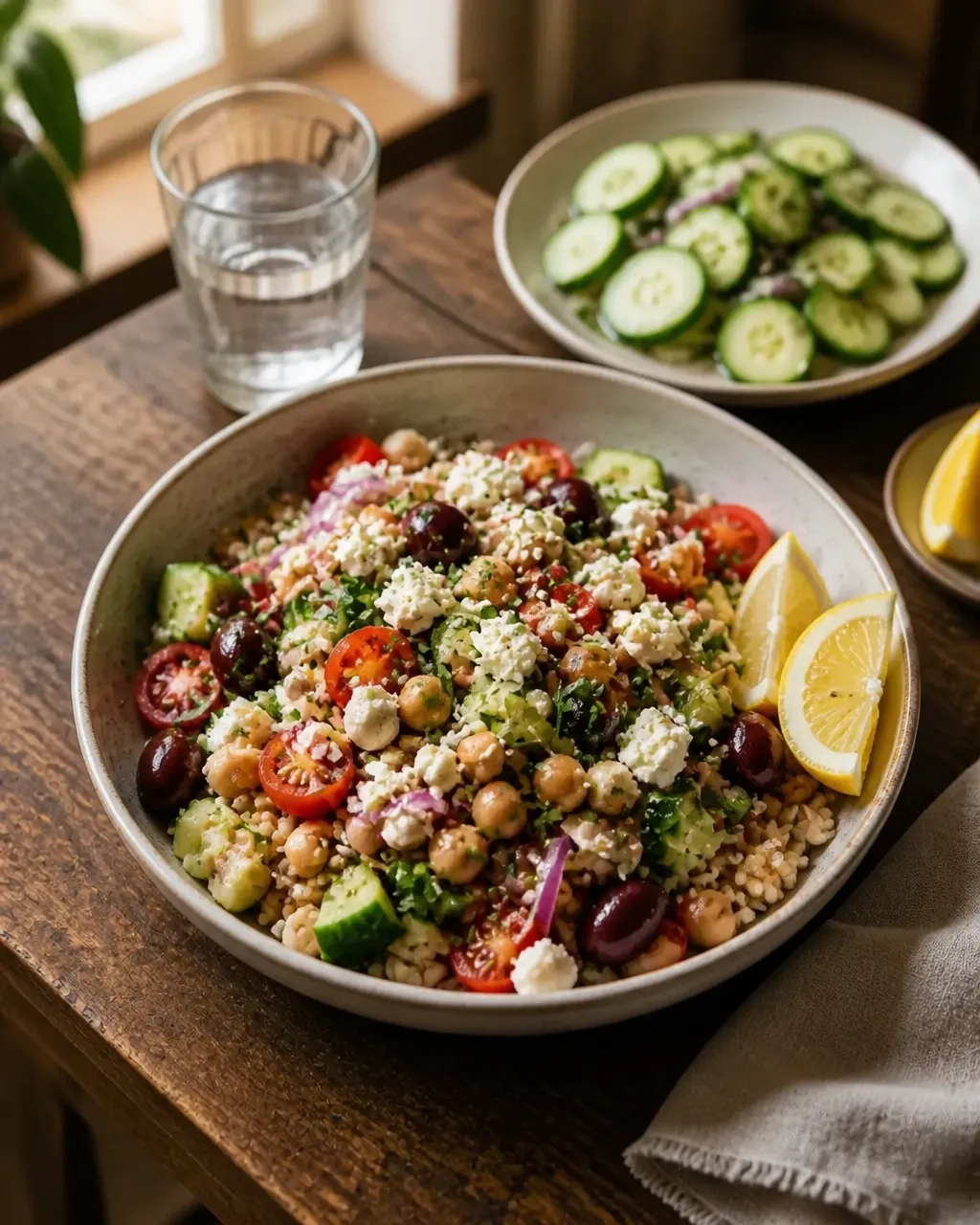
Serve it with a cucumber and mint salad for extra coolness and crunch. The watery freshness of cucumber cuts through the olive oil and feta, while mint adds a clean herbal lift.
Add warm pita if you want a more generous meal. Use it to scoop up chickpeas and dressing, or toast it lightly for a crisp element. A small bowl of hummus works too, but keep the portion modest so the meal doesn’t become soft-on-soft.
For a family table, offer lemon wedges, fresh herbs, and a mild yogurt sauce on the side. Let everyone adjust the acidity and creaminess to taste. This is one reason grain bowls are so useful for quick family meals: one base can support several preferences without producing several separate dinners.
FAQ
Can I make this bowl ahead of time?
Yes. Prepare the grains and chickpeas in advance, then cool them promptly and refrigerate them in airtight containers. Store vegetables, feta, and dressing separately when possible. Assemble within three to four days for the best texture and freshness.
Keep cooked food refrigerated rather than leaving it on the counter for extended periods. Reheat only the grains and chickpeas if you prefer a warm bowl, and add the fresh vegetables afterward.
Why does my grain bowl taste bland?
Usually, the problem is not a lack of ingredients. It is a lack of contrast. Grains and chickpeas are mild, so they need enough acidity, salt, herbs, and aromatic ingredients to come alive.
Add lemon gradually, taste the dressing on its own, and remember that cold food often tastes less seasoned than warm food. Check the bowl again just before serving. A final squeeze of lemon or pinch of herbs can make the whole dish taste brighter.
How can I stop the bowl from becoming soggy?
Cool the grains before storing them, drain vegetables well, and keep the dressing separate until serving. Avoid salting cucumbers and tomatoes too early because salt draws water from their cells through osmosis.
Use a wide container rather than packing everything into a deep, crowded one. More surface area helps moisture escape and keeps the components distinct.
Can I use canned chickpeas?
Absolutely. Canned chickpeas are ideal for quick cooking. Rinse them thoroughly to remove excess liquid and some surface starch, then dry them well before browning.
If you use chickpeas straight from the can without drying them, they will still taste good, but they are less likely to develop crisp, browned edges. Texture is the reward for taking that extra minute.
Is this bowl high in protein?
It provides plant protein from the chickpeas and some additional protein from the grain and feta. The exact amount depends on your portions and grain choice, but a typical bowl offers a moderate protein serving alongside plenty of fiber.
Increase the chickpeas for a more substantial plant-based meal, or add tofu, chicken, or lentils if you need more protein. Keep the vegetables and dressing in balance so the bowl does not become overly heavy.
Can I make it dairy-free?
Yes. Omit the feta and replace its salty, tangy role with a dairy-free feta, chopped olives, toasted seeds, or a spoonful of hummus. Add a little extra lemon and herbs to keep the bowl lively.
Do not simply remove the feta without adjusting the seasoning. It contributes salt and acidity, so the finished bowl may need more lemon, pepper, or briny elements.
How do I make this suitable for different diets?
Use quinoa, brown rice, or another gluten-free grain if you are avoiding gluten. Choose certified gluten-free ingredients where needed, especially packaged dressings and seasonings.
For a fully plant-based bowl, skip feta or use a dairy-free alternative. For lower sodium, rinse canned chickpeas, reduce olives and feta, and rely more on lemon, garlic, oregano, and fresh herbs.
Final Thoughts
Build this bowl around contrast: chewy grains, creamy chickpeas, crisp vegetables, salty feta, and bright lemon. Dry the chickpeas, protect the crunch, and season in layers rather than trying to rescue everything at the end.
For more simple options, browse Cookpedia’s healthy recipes, explore the 15-minute meals collection, or try the roasted chickpea and avocado Buddha bowl. This Greek bowl belongs right alongside them: practical, colorful, and full of real-food flavor.