Recipe
Serves
2 1×
Serves 2Prep 5 minCook 15 minTotal 20 min
Ingredients
Method
- Bring a large pot of salted water to a boil. Add the pasta and cook according to the packet instructions until just al dente.
- Add the frozen peas during the final two minutes of cooking.
- Before draining, reserve at least 200 ml of pasta water. Drain the pasta and peas.
- While the pasta cooks, heat the olive oil in a large frying pan over medium heat. Add the garlic and cook for 30 seconds without browning.
- Reduce the heat to low. Add the mascarpone, lemon zest, black pepper, and 60 ml of reserved pasta water. Stir until smooth.
- Add the drained pasta and peas. Toss continuously, adding more pasta water a little at a time until the sauce is glossy and coats the pasta.
- Remove the pan from the heat. Add the lemon juice and Parmesan. Toss until combined.
- Taste and adjust the seasoning. Add basil, extra Parmesan, lemon zest, or black pepper. Serve immediately.
Mascarpone and Pea Pasta (20-Minute Creamy)
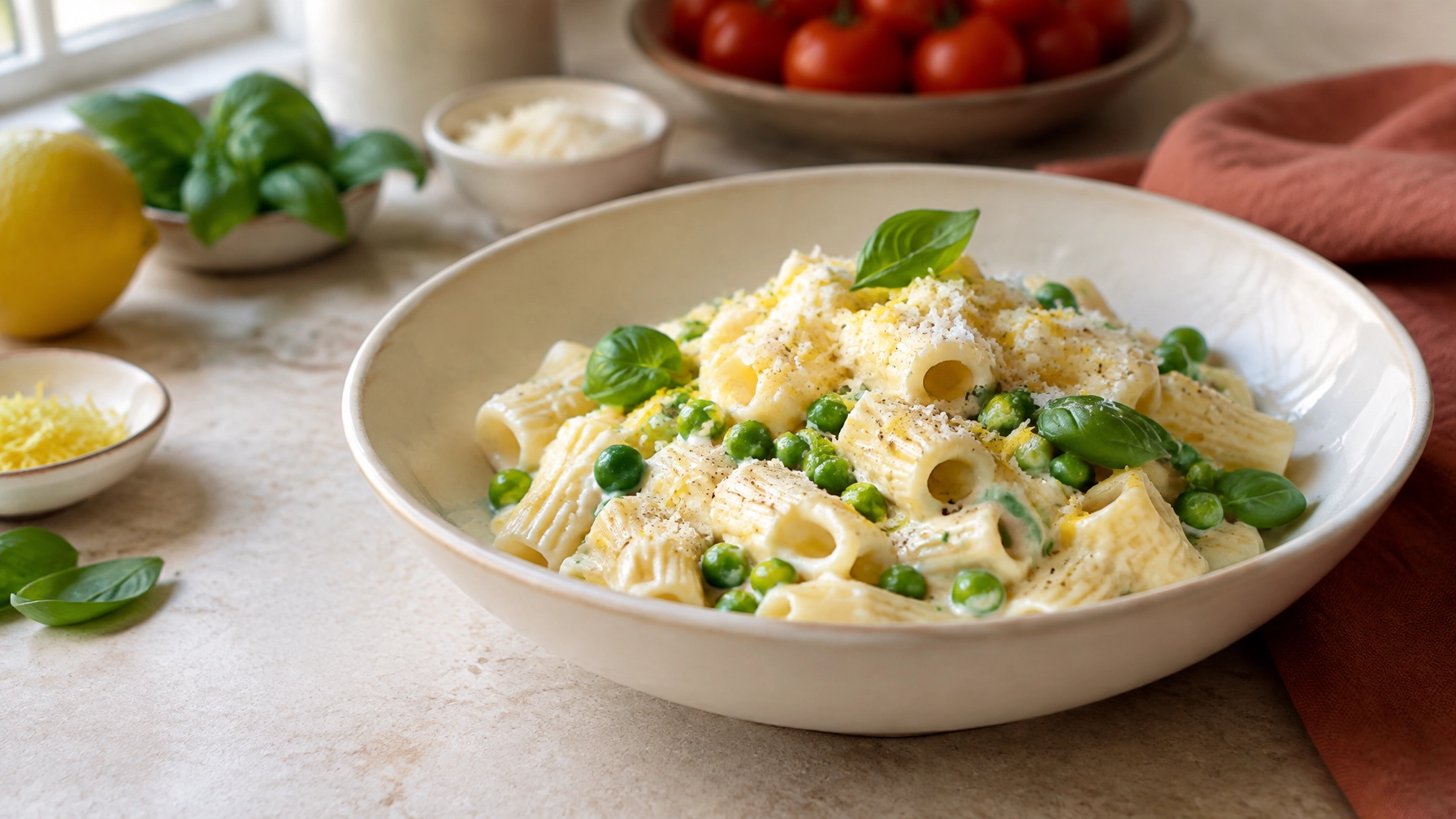
Mascarpone (noun): a soft, mild Italian cheese used here to create a smooth pasta sauce without a long cooking process.
Pea (noun): a small green legume providing sweetness, colour, and texture.
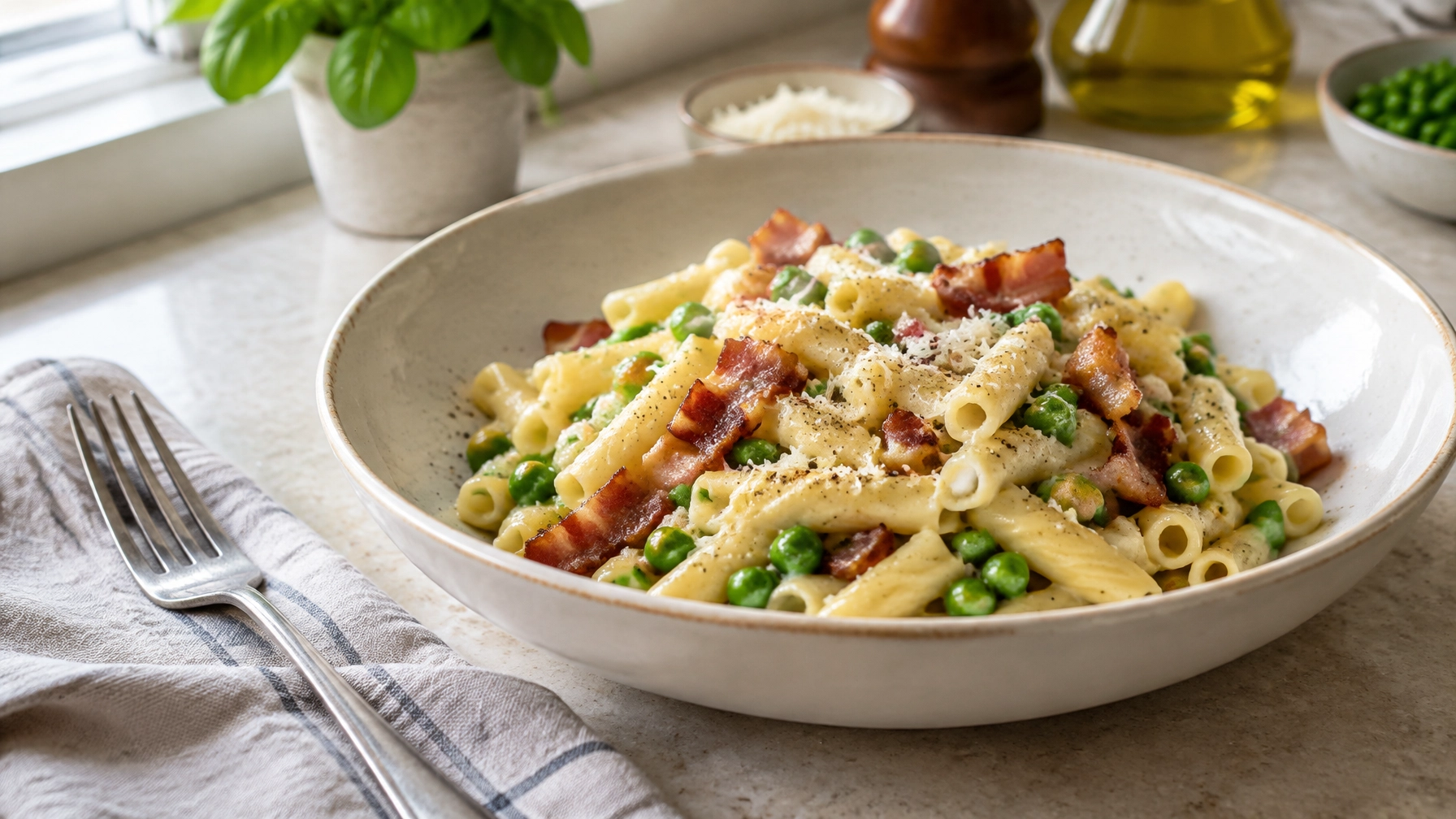
This mascarpone and pea pasta is a quick pasta dinner designed for a 20-minute cooking window. The sauce uses mascarpone, pasta water, lemon, garlic, and Parmesan. No heavy cream is required. Frozen peas can be added directly to the pasta pot during the final minutes of cooking.
The method depends on controlled heat and reserved pasta water. Mascarpone should be warmed gently rather than boiled. The starchy cooking water loosens the cheese and helps it coat the pasta evenly.
Result
The finished pasta is creamy without being excessively heavy. Mascarpone supplies richness. Lemon provides acidity. Peas add sweetness and a soft contrast to the pasta. Parmesan contributes salt and savoury depth.
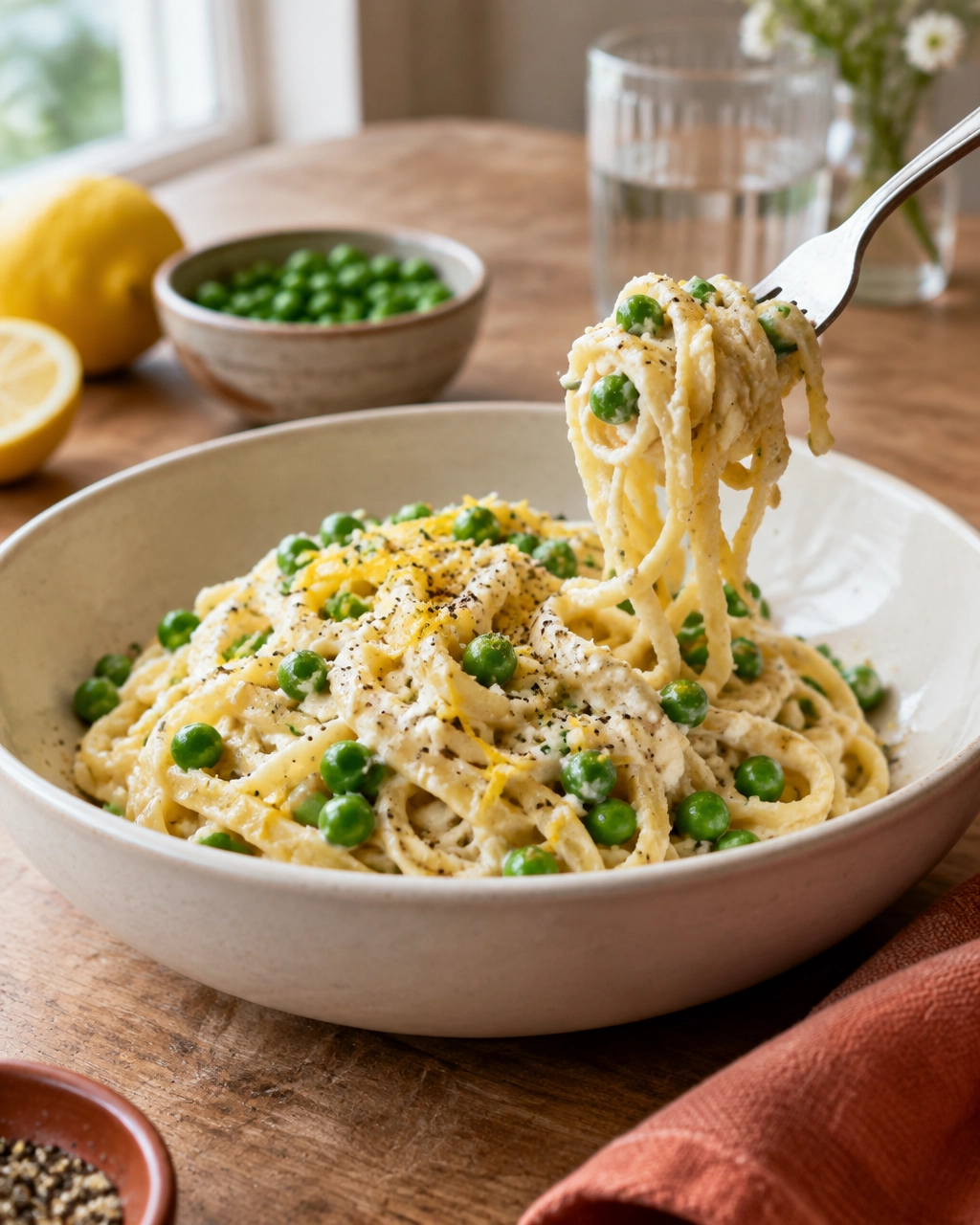
Use fusilli, penne, rigatoni, or spaghetti. Short pasta shapes hold the sauce particularly well, while long pasta creates a smoother, more continuous coating.
The recipe serves two as a main course. It can be doubled, but use a wide pan so the pasta can be tossed without compressing the sauce.
Preparation
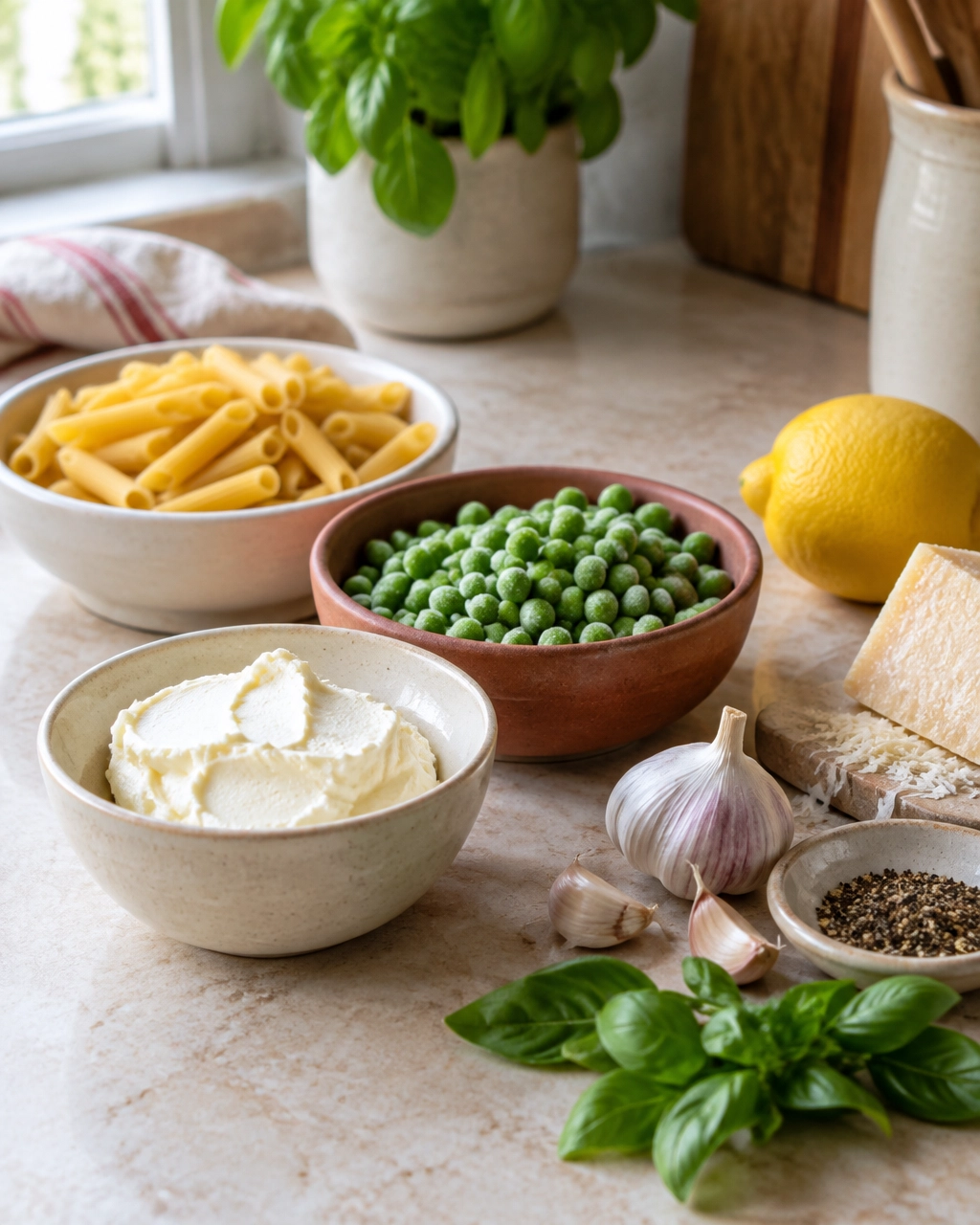
Measure the ingredients before the water reaches a boil. The sauce comes together quickly once the pasta is cooking.
Place a large pot of well-salted water over high heat. The water should taste lightly seasoned. This is the primary opportunity to season the pasta itself.
Prepare the garlic, grate the Parmesan, and zest the lemon. Keep the mascarpone at room temperature if possible. It will combine more readily with the warm pasta water.
The peas do not need to be thawed. Frozen peas can go directly into the pasta water during the final two minutes. This avoids a separate pan and preserves their colour.
Control
The following controls determine the final texture.
Heat: Keep the mascarpone below a hard simmer. Excessive heat can make the sauce appear grainy or oily.
Water: Add pasta water gradually. Too little produces a thick coating. Too much creates a loose sauce.
Acid: Add lemon juice after the heat is reduced. This retains its fresh flavour and prevents the sauce from becoming dull.
Timing: Add frozen peas during the last two minutes of pasta cooking. Earlier addition can make them soft and muted.
Serving: Serve as soon as the pasta is coated. The sauce thickens as it stands.
Variations
For a sharper version, increase the lemon zest and use Pecorino instead of Parmesan. Pecorino is saltier, so reduce additional seasoning.
For additional vegetables, add tender spinach with the peas. Stir it into the sauce after the pasta has been added and allow it to wilt.
For a more substantial meal, add cooked chicken, crisp pancetta, or flaked smoked salmon. These additions should be prepared separately and folded through at the end.
For a vegetarian version, use a vegetarian hard cheese if the Parmesan is not suitable.
For a lighter result, reduce the mascarpone by 25 g and increase the pasta water slightly. The final sauce will remain creamy but less dense.
For a stronger herb flavour, use basil, mint, or flat-leaf parsley. Add delicate herbs after cooking rather than exposing them to prolonged heat.
Storage
Transfer leftovers to a sealed container and refrigerate for up to two days. The sauce will thicken when cold.
Reheat in a frying pan over low heat. Add one or two tablespoons of water and stir until the sauce loosens. Avoid high heat, which can separate the mascarpone.
Freezing is not recommended. The dairy-based sauce may split after thawing, producing an uneven texture.
FAQ
Can frozen peas be used?
Yes. Add them directly to the pasta water during the final two minutes of cooking. There is no requirement to thaw them first.
Can mascarpone replace cream in pasta?
Yes. Mascarpone creates a rich sauce with a dense, smooth texture. It requires pasta water to reach a coating consistency.
Why is the sauce too thick?
The pasta may have absorbed more liquid than expected. Add reserved pasta water one tablespoon at a time while tossing. Continue until the sauce moves smoothly around the pasta.
Why has the sauce separated?
The pan was probably too hot, or the sauce contained insufficient pasta water. Remove it from the heat and add a small amount of warm pasta water while stirring.
Can this recipe be made without Parmesan?
Yes. The Parmesan adds salt and savoury depth, but the dish remains functional without it. Adjust the salt and add extra black pepper or lemon zest.
Which pasta shape is most suitable?
Fusilli, penne, rigatoni, and shells hold the sauce effectively. Spaghetti and linguine also work but require more active tossing to distribute the sauce.
Can this be made ahead?
The ingredients can be prepared ahead, but the pasta should be cooked immediately before serving. The sauce is most stable when freshly emulsified with hot pasta water.
Recipe
Servings
2
Prep time
5 minutes
Cook time
15 minutes
Total time
20 minutes
Tips
- Reserve more pasta water than required. It is easier to thin the sauce than to correct a sauce that has become dry.
- Keep the mascarpone on low heat.
- Add lemon juice at the end.
- Do not overcook the peas.
- Serve immediately for the smoothest texture.