Recipe
Serves
36 1×
Serves 36 bitesPrep 15 minCook 20 minTotal 8H35 min
Ingredients
Method
- Line a 20cm square tin with baking parchment.
- Combine the brown sugar, cream, butter, and golden syrup in a heavy-based saucepan.
- Heat gently until the butter melts and the sugar dissolves.
- Bring the mixture to a boil and cook until it reaches 116°C, the soft-ball stage .
- Remove from the heat and cool for 5 minutes, to approximately 110°C.
- Stir in the vanilla and fine sea salt.
- Beat with a wooden spoon until the mixture reaches approximately 60°C, thickens, and loses its shine.
- Pour into the lined tin and smooth the surface.
- Swirl the salted caramel sauce through the top and add the flaky sea salt.
- Leave to set at room temperature for at least 8 hours.
- Lift from the tin and cut into 36 bites.
Salted Caramel Fudge (Easy No-Bake Bites)
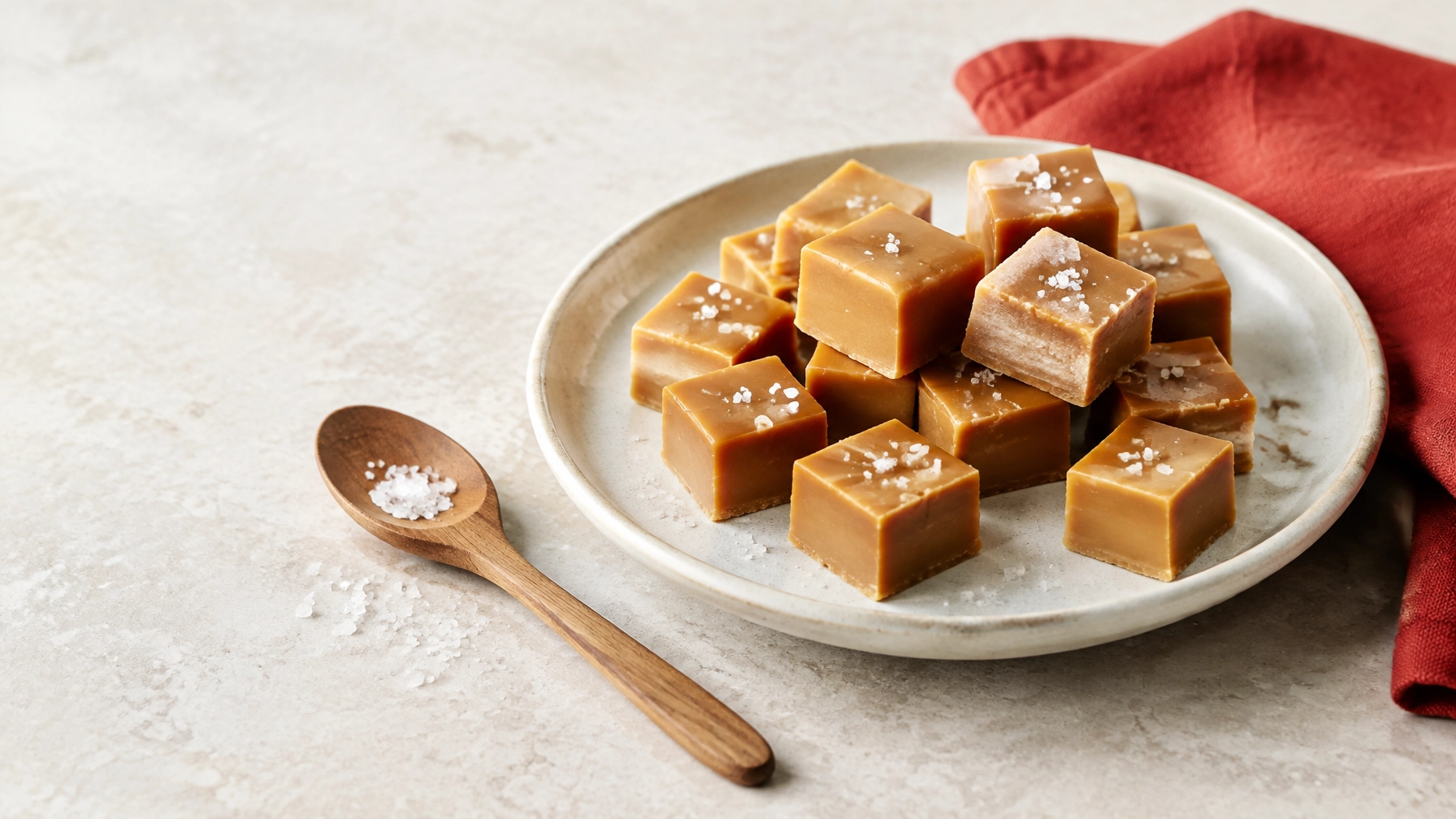
These salted caramel fudge bites are made on the stovetop, cooked to the soft-ball stage, and left to set before cutting into small pieces.
Overview
This recipe produces a firm, creamy fudge with a caramel flavour, a fine salt balance, and a clean bite. It does not require an oven. The mixture is cooked in one saucepan, beaten with a wooden spoon, transferred to a lined tin, and left to set.
The critical control point is the sugar temperature. Cook the mixture to 116°C, also known as the soft-ball stage. At this temperature, the syrup has enough concentration to set while retaining a soft texture.
The fudge requires approximately 8 hours to set at room temperature. This inactive time is included in the total time below. Do not seal the fudge while warm, as trapped steam can affect the texture.
Control
Temperature management determines the final texture.
- Below 116°C: the fudge may remain soft or fail to set properly.
- At 116°C: the mixture reaches the soft-ball stage and should produce a firm, creamy texture.
- Above 116°C: the finished fudge may become dry, crumbly, or hard.
- Around 110°C: add the vanilla and fine salt after the initial cooling period.
- Around 60°C: beat the mixture until it becomes thick and matte.
Use a heavy-based saucepan to reduce the risk of hot spots. Keep the thermometer bulb fully submerged without allowing it to touch the base of the pan.
Hot sugar syrup can cause serious burns. Keep children and pets away from the work area. Use heat-resistant equipment and do not taste the mixture while it is hot.
Storage
Allow the fudge to cool and set completely before packaging. Place the pieces in an airtight container, separating layers with baking parchment.
Store the container in a cool, dry place and use the fudge within approximately 7 days for best quality. If the kitchen is warm, or if the fudge contains more perishable additions, refrigerate it in a sealed container.
Refrigerated fudge may become firmer and slightly sticky on the surface. Allow it to stand at room temperature for a short period before serving.
Discard the fudge if it develops mould, an unusual odour, or a wet, slimy texture. For general information about sugar intake, refer to the NHS guidance on sugar.
Variations
Chocolate: Add 100g chopped dark chocolate after the mixture has cooled to about 110°C. Stir until fully melted before beating.
Espresso: Add 1 teaspoon instant espresso powder with the fine sea salt. This gives the caramel a deeper flavour without producing a coffee-forward result.
Nut: Fold 75g toasted and chopped pecans into the mixture immediately before transferring it to the tin. Confirm that all consumers can eat nuts before serving.
Orange: Add 1 teaspoon finely grated orange zest with the vanilla. Avoid adding orange juice, as additional liquid can affect the set.
Plain caramel: Omit the salted caramel sauce and finish only with flaky sea salt.
Troubleshooting
The fudge is too soft.
The mixture may not have reached 116°C, or it may not have been beaten sufficiently. Return the mixture to the saucepan with 2 tablespoons of cream and repeat the cooking process. Use a clean thermometer reading.
The fudge is grainy.
The sugar may not have dissolved fully before the mixture boiled, or the mixture may have been stirred excessively while cooling. Heat gently at the beginning and ensure no sugar crystals remain on the sides of the pan.
The fudge is crumbly.
The mixture was likely cooked above the target temperature or beaten for too long. Measure the temperature carefully and remove the pan from the heat at 116°C.
The fudge is sticky.
It may need additional setting time. Leave it covered loosely at room temperature overnight. If the kitchen is hot, refrigerate the sealed container after the fudge has cooled fully.
FAQ
Can I make this fudge without a sugar thermometer?
Yes. Use the cold-water test. Drop a small amount of syrup into very cold water. At the soft-ball stage, it should form a soft ball that can be pressed and reshaped. A thermometer is more precise and is recommended.
Is this fudge baked?
No. It is a no-bake recipe because the mixture is cooked on the stovetop and sets in the tin. The sugar mixture still reaches a high temperature and requires careful handling.
Can I set the fudge in the refrigerator?
The preferred method is to leave it at room temperature for at least 8 hours. Refrigeration can make some fudge mixtures sticky or overly firm. If the room is unusually warm, refrigerate the fully cooled fudge in an airtight container.
Why does the recipe use both fine salt and flaky salt?
Fine salt seasons the mixture evenly. Flaky salt is added at the end for surface texture and a more defined salt contrast.
How large should the bites be?
A 20cm square tin produces approximately 36 pieces when cut into a six-by-six grid. Smaller portions can be used for serving at parties or with coffee.
Can I freeze salted caramel fudge?
Yes. Wrap the set pieces individually or separate layers with parchment, then place them in an airtight freezer-safe container. Defrost while covered to reduce condensation on the surface.