Recipe
Prep 10 min
Ingredients
Method
- Roast the sheet pan for 10 minutes at 425°F (220°C).
- Check the asparagus. If the spears are thin and already tender, remove them from the pan and cover them loosely with foil.
- Continue roasting the salmon until the thickest part reaches 145°F (63°C) on an instant-read thermometer. Depending on thickness, this usually requires 2 to 6 additional minutes.
- Remove the pan from the oven. Allow the salmon to rest for 3 to 5 minutes.
- Squeeze fresh lemon juice over the salmon and asparagus. Add lemon wedges and chopped parsley or dill before serving.
- Preheat the oven to 425°F (220°C). Line a rimmed sheet pan with parchment paper if desired.
- Pat the salmon dry and place it skin-side down on one side of the pan.
- Trim and dry the asparagus. Arrange it beside the salmon in a single layer.
- Mix the olive oil, garlic, salt, pepper, and optional paprika and dill.
- Brush the mixture over the salmon. Toss the asparagus with the remaining mixture.
- Roast for 10 minutes.
- Check the asparagus and remove it if tender. Continue roasting the salmon until the thickest part reaches 145°F (63°C), usually 2 to 6 minutes longer.
- Rest the salmon for 3 to 5 minutes.
- Finish with lemon juice and fresh herbs. Serve immediately.
Sheet Pan Salmon and Asparagus (One Tray)
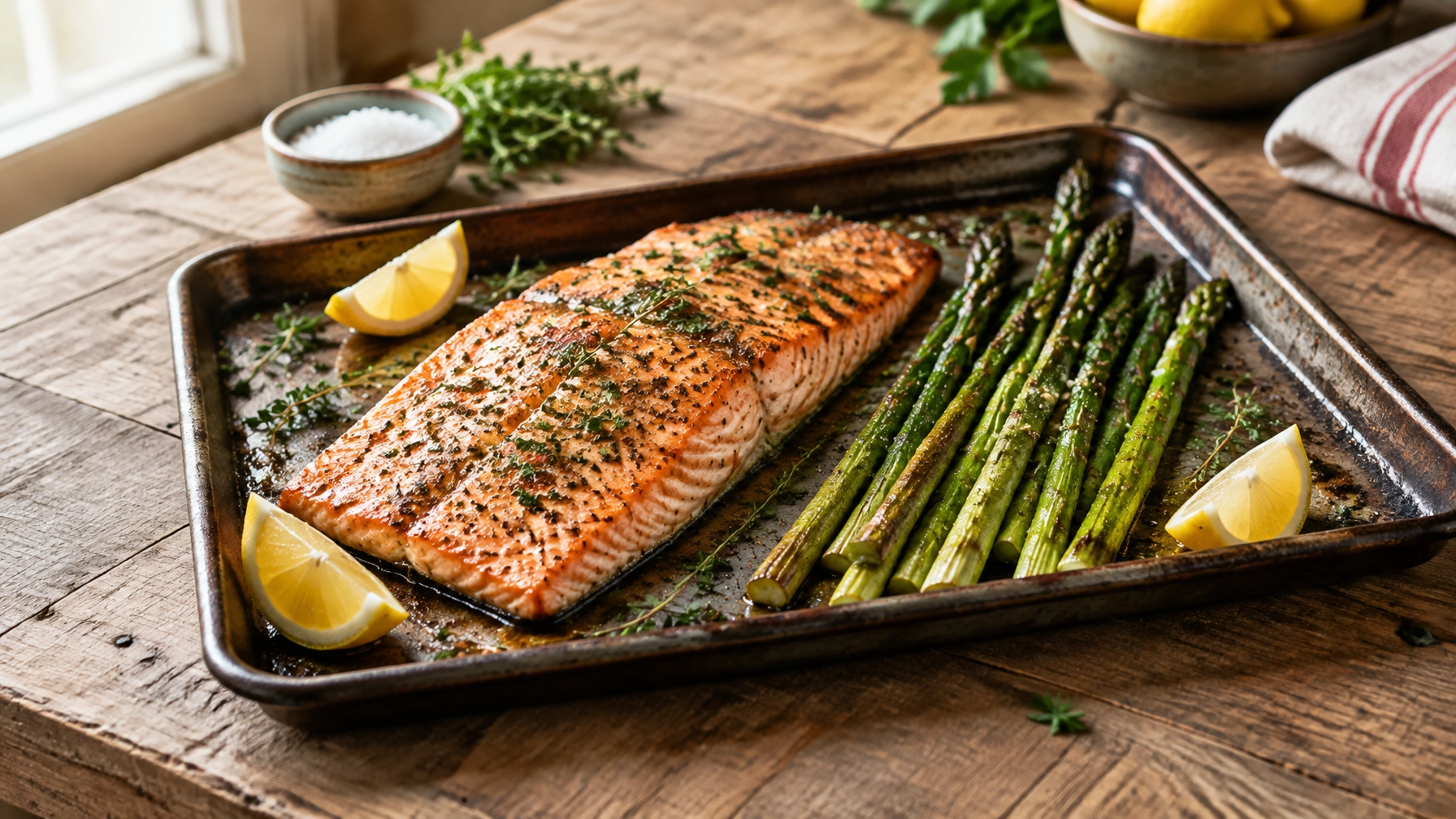
This sheet pan salmon and asparagus recipe produces a complete four-serving dinner with one tray, a short preparation period, and approximately 15 minutes of roasting time.
Overview
Sheet pan salmon and asparagus is a direct cooking method for a balanced meal. The salmon provides the main protein. The asparagus roasts alongside it and develops lightly browned tips. Lemon, garlic, olive oil, salt, and black pepper provide the seasoning.
The method is suitable for weeknight cooking because it limits preparation, equipment, and washing-up. The key control points are salmon thickness, asparagus size, oven temperature, and internal temperature.
Use a rimmed sheet pan. A rimmed pan reduces the risk of oil or cooking juices reaching the oven surface.
Preparation
Position an oven rack in the centre of the oven. Heat the oven to 425°F (220°C).
Line a rimmed sheet pan with parchment paper if preferred. This is optional. It reduces sticking and simplifies cleaning.
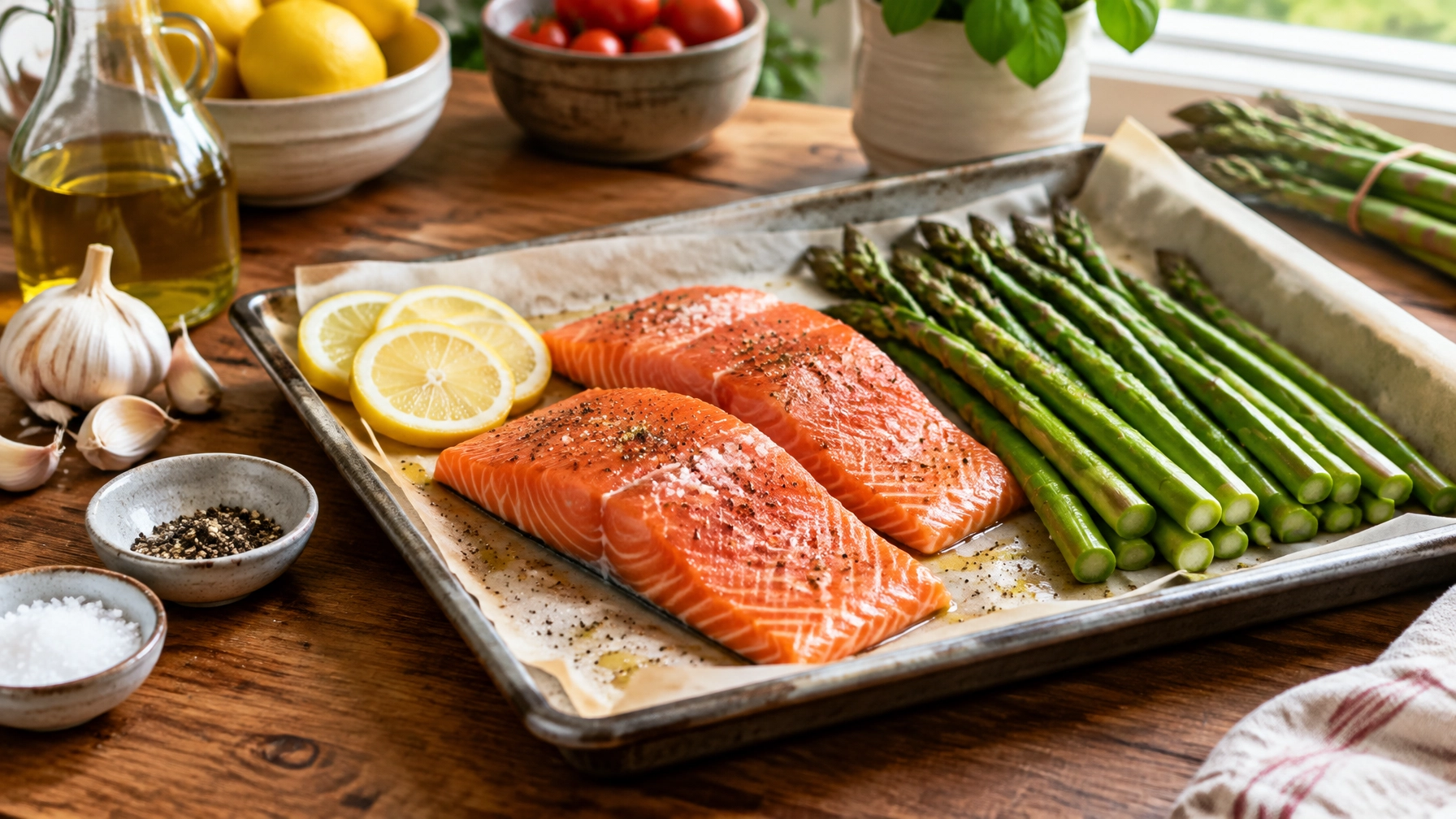
Pat the salmon dry with paper towels. Moisture on the surface can delay browning. Place the fillets skin-side down on one side of the sheet pan.
Rinse the asparagus and dry it thoroughly. Trim approximately 1 inch from the base of each spear, or bend each spear until the tough end breaks naturally. Place the asparagus beside the salmon.
Combine the olive oil, garlic, salt, pepper, and optional paprika in a small bowl. Brush or spoon the mixture over the salmon. Toss the asparagus with the remaining oil mixture. Keep the ingredients in a single layer.
Timing
The stated timing applies to salmon fillets approximately 1 inch thick. Thicker fillets may require additional roasting. Very thin fillets may finish before the asparagus.
If the asparagus is particularly thick, place it in the oven for 5 minutes before adding the salmon. This gives the vegetables a head start and reduces the likelihood of undercooked stems.
If the salmon is substantially thicker than the asparagus, begin with the salmon and add the asparagus after 5 minutes. The objective is to have both components reach the required texture at approximately the same time.
A short broil is optional. If additional browning is required, switch the oven to broil for 1 to 2 minutes. Monitor the tray continuously. Garlic and oil can burn quickly under direct heat.
For an independent timing comparison, review this sheet pan salmon and asparagus recipe from The New York Times.
Tips
Dry the ingredients. Wet asparagus can steam rather than roast. Patting the asparagus dry improves browning.
Avoid overcrowding. Leave space between the salmon and asparagus. Crowding increases moisture and reduces surface browning.
Use a thermometer. Salmon colour is not a reliable measure of safety. A thermometer provides a more consistent result.
Keep raw fish separate. Use a clean board and utensils for serving. Wash hands, work surfaces, and equipment after handling raw salmon.
Rest before serving. A short rest allows the cooking juices to settle and makes the salmon easier to portion.
Add lemon after roasting. Fresh lemon juice added at the end retains a sharper flavour than lemon juice exposed to high heat for the entire cooking period.
Variations
Lemon butter salmon: Replace 1 tablespoon of the olive oil with melted unsalted butter. Add lemon zest to the seasoning mixture.
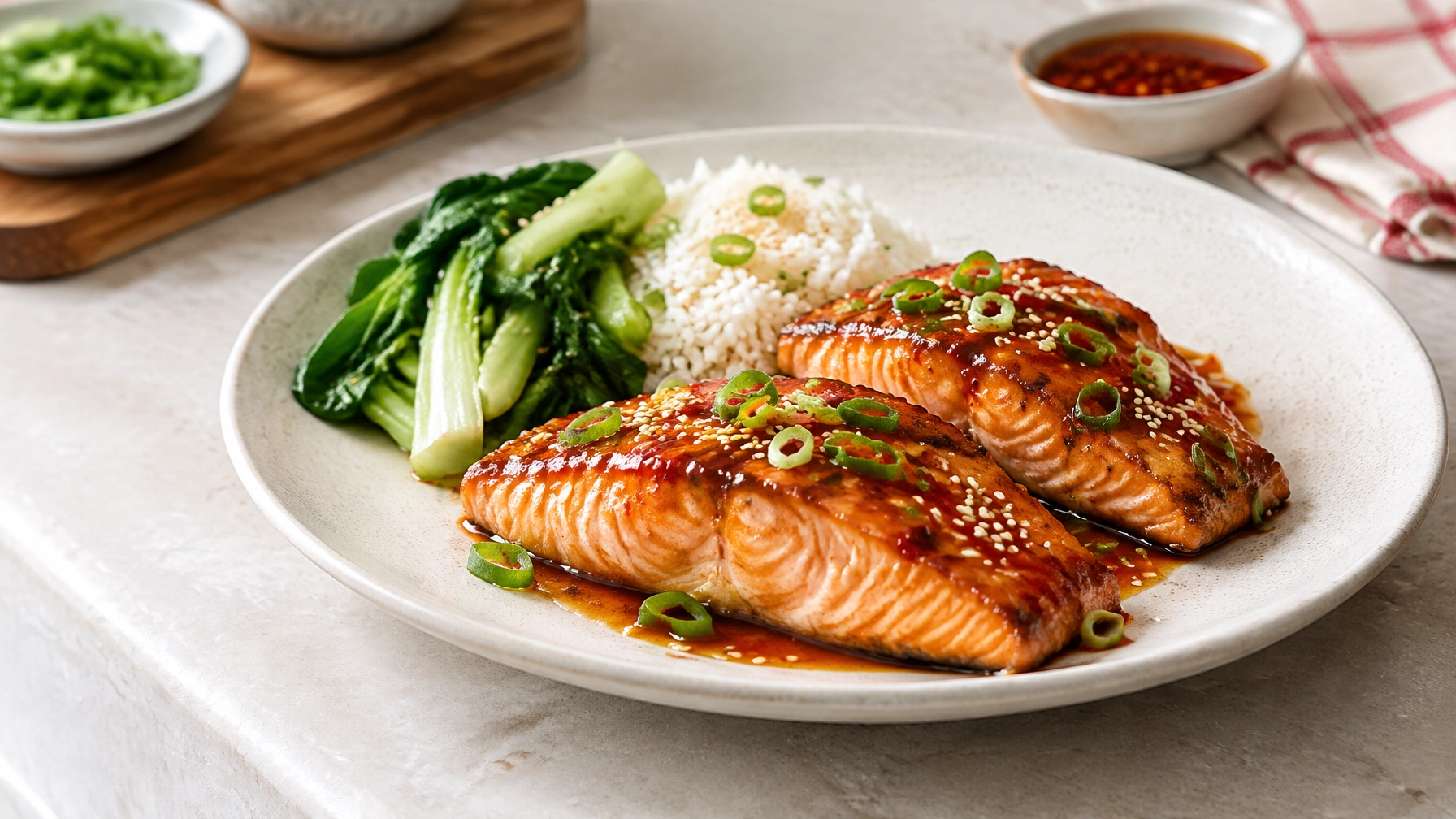
Honey garlic salmon: Combine 1 tablespoon honey, 1 tablespoon olive oil, the minced garlic, salt, and pepper. Brush the glaze over the salmon during the final 5 minutes of roasting.
Chilli version: Add 1/4 teaspoon crushed red pepper flakes or a small amount of chilli powder to the oil mixture.
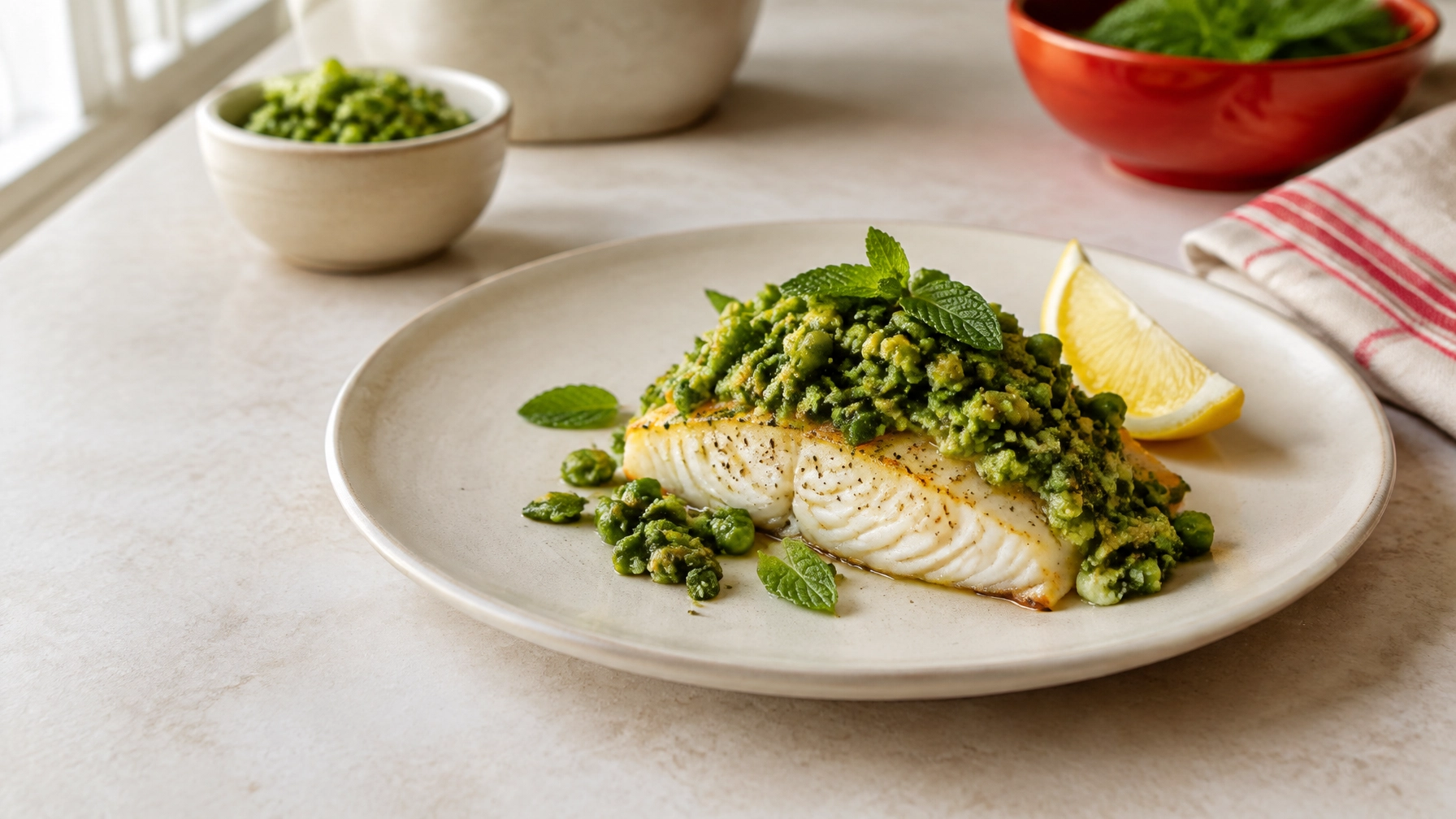
Pesto finish: Roast the salmon and asparagus with olive oil, salt, and pepper. Add a small spoonful of pesto to each fillet after cooking.
Potato addition: Use thinly sliced baby potatoes as an additional tray ingredient. Roast the potatoes for approximately 15 minutes before adding the salmon and asparagus. Do not use thick potato pieces unless they are parboiled first.
Vegetable substitution: Broccoli florets, green beans, or courgette can replace the asparagus. Adjust the timing according to the size and water content of the vegetable.
Serving
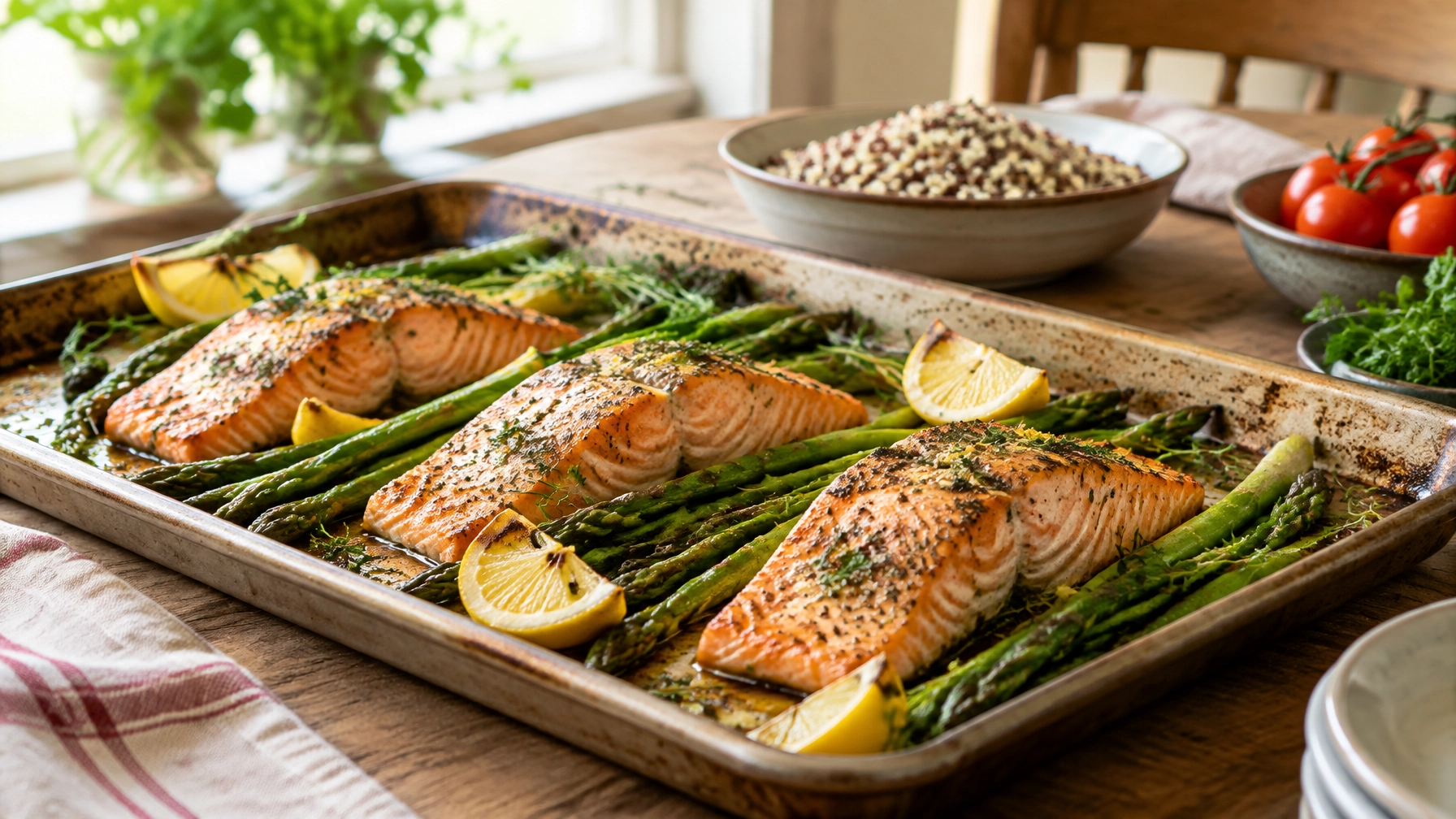
Serve the salmon and asparagus directly from the tray, or transfer each portion to a plate. Suitable accompaniments include:
- Cooked rice
- Quinoa
- Crusty bread
- Boiled new potatoes
- Couscous
- A simple green salad
- Plain yoghurt with lemon and herbs
The tray juices can be spooned over the salmon. If additional sauce is required, combine plain yoghurt, lemon juice, chopped dill, and a small pinch of salt.
Storage
Refrigerate leftovers in a sealed container within 2 hours of cooking. Use within 3 to 4 days.
Reheat the salmon gently in a covered ovenproof dish at 300°F (150°C) until warmed through. The microwave can be used, but it may produce a firmer texture. Asparagus can be reheated in a skillet or eaten cold in a grain salad.
Do not leave cooked salmon at room temperature for extended periods. Discard leftovers if they have been stored improperly or show an unusual odour, appearance, or texture.
FAQ
Can salmon and asparagus cook together on one tray?
Yes. At 425°F (220°C), salmon and asparagus commonly finish within the same 10 to 15 minute period. Adjust the sequence when using very thick asparagus or unevenly sized salmon fillets.
Should salmon be covered while roasting?
No. Covering the salmon traps steam and limits browning. Leave it uncovered unless the surface is browning too rapidly. In that case, place foil loosely over the fillets for the remaining cooking time.
Can frozen salmon be used?
Yes, but thawing is preferable for even cooking. If using frozen salmon, remove visible ice, pat the fillets dry, and expect the cooking time to increase. Confirm doneness with an instant-read thermometer.
Why is the asparagus still hard?
The spears may be unusually thick, the oven may be below the stated temperature, or the tray may be overcrowded. Continue roasting the asparagus separately until the thickest part is tender.
Can the recipe be doubled?
Yes. Use two sheet pans rather than overcrowding one pan. Place the pans on separate oven racks and rotate them halfway through cooking if the oven does not distribute heat evenly.
What temperature should salmon reach?
For the USDA-recommended level of doneness, salmon should reach 145°F (63°C) in the thickest part. The thermometer should not touch the pan or bone.
Recipe
Sheet Pan Salmon and Asparagus
Servings: 4
Prep time: 10 minutes
Cook time: 12 to 16 minutes
Total time: 22 to 26 minutes
#### Ingredients
- 4 salmon fillets, approximately 5 to 6 ounces each
- 1 pound fresh asparagus, trimmed
- 2 tablespoons olive oil
- 2 garlic cloves, minced
- 1 teaspoon kosher salt
- 1/2 teaspoon black pepper
- 1/2 teaspoon paprika, optional
- 1/2 teaspoon dried dill, optional
- 1 lemon, cut into wedges
- Fresh parsley or dill, for serving
#### Instructions
- Preheat the oven to 425°F (220°C). Line a rimmed sheet pan with parchment paper if desired.
- Pat the salmon dry and place it skin-side down on one side of the pan.
- Trim and dry the asparagus. Arrange it beside the salmon in a single layer.
- Mix the olive oil, garlic, salt, pepper, and optional paprika and dill.
- Brush the mixture over the salmon. Toss the asparagus with the remaining mixture.
- Roast for 10 minutes.
- Check the asparagus and remove it if tender. Continue roasting the salmon until the thickest part reaches 145°F (63°C), usually 2 to 6 minutes longer.
- Rest the salmon for 3 to 5 minutes.
- Finish with lemon juice and fresh herbs. Serve immediately.