Recipe
Servings
Servings 1×
Ingredients
- Chicken
- Penne
- Pasta
- Mushrooms
- Spinach
- Garlic
- Lemon
- Cream
- Hard cheese
- Salt
- Black pepper
Method
- Brown the mushrooms properly, protect the pasta starch, and finish the sauce gently.
- Heat your pan properly before the mushrooms go in, and give them room.
- Let the slices sit long enough to develop golden edges before stirring constantly.
- Heat transforms proteins and sugars into new flavor compounds, creating the roasted, nutty depth that makes a creamy sauce taste substantial rather than merely creamy.
- Season lightly while the mushrooms cook, then taste again at the end.
- Use restraint until the mushrooms have taken on color.
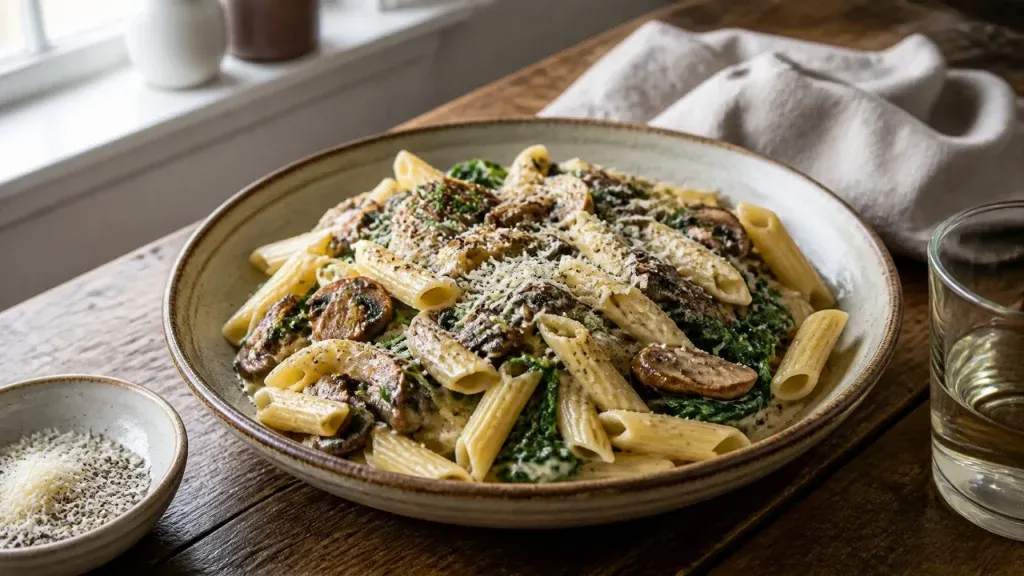
Creamy pasta has a reputation for being fussy, heavy, and somehow capable of dirtying every pan in the kitchen. This mushroom spinach penne disagrees. It is cozy, quick, and built from simple ingredients that know how to pull their weight. Brown the mushrooms properly, protect the pasta starch, and finish the sauce gently. Do that, and you get a silky bowl of penne with deep savory flavor, fresh greens, and no culinary drama.
Let the Mushrooms Do More Than Sweat
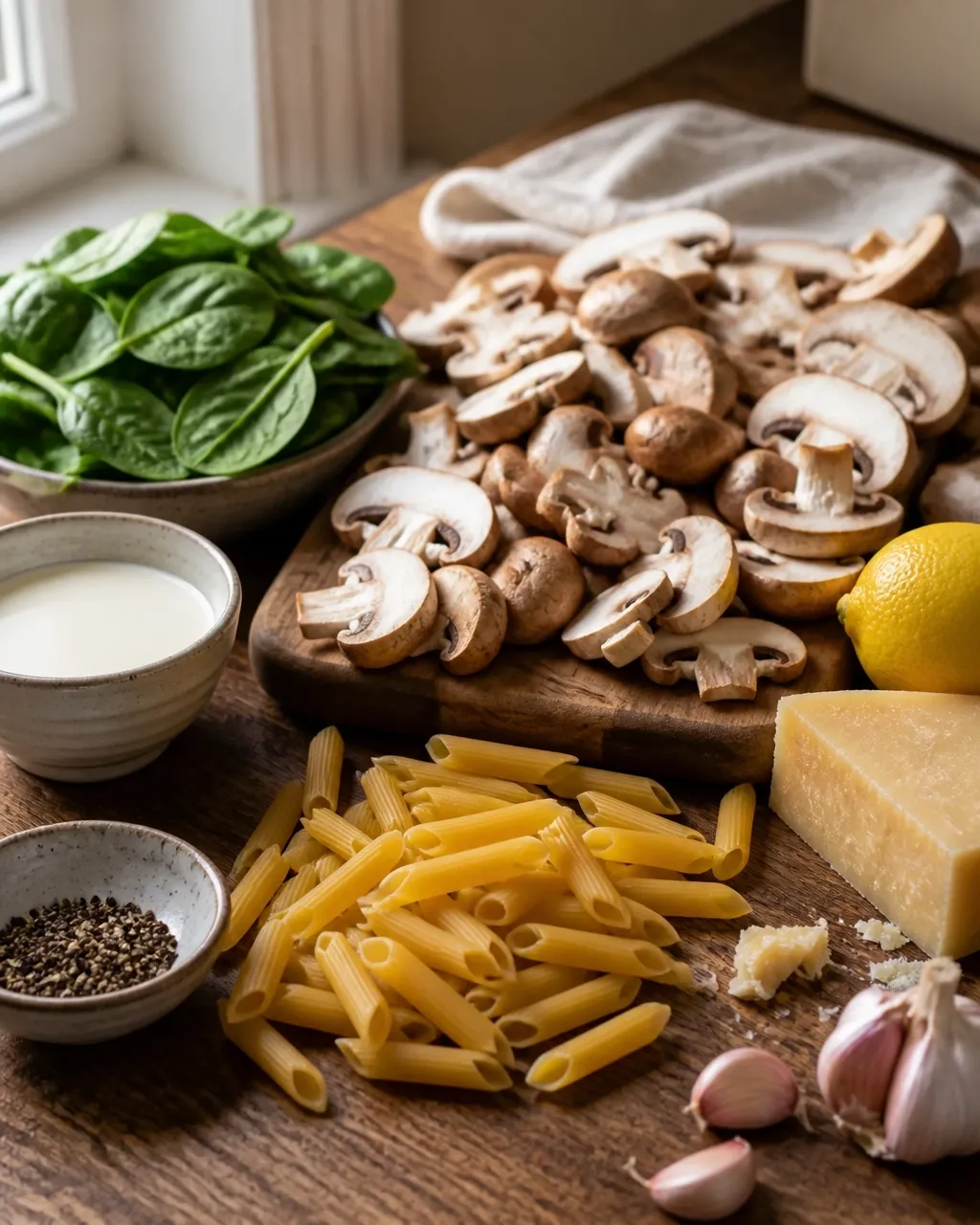
Mushrooms contain a surprising amount of water, which is both their charm and their biggest kitchen trap. Put too many into a lukewarm pan, and they release that moisture faster than it can evaporate. Instead of browning, they quietly simmer in their own juices. Delicious? Not especially. They become pale, soft, and a little bit sad.
Heat your pan properly before the mushrooms go in, and give them room. A crowded pan lowers the temperature, so work in batches if necessary. Let the slices sit long enough to develop golden edges before stirring constantly. You are looking for evaporation first and browning second.
This is where the flavor comes from. As the mushroom surface dries, the Maillard reaction begins. Heat transforms proteins and sugars into new flavor compounds, creating the roasted, nutty depth that makes a creamy sauce taste substantial rather than merely creamy. Do not rush this stage. A few extra minutes here can do more for the finished dish than adding six extra seasonings.
Season lightly while the mushrooms cook, then taste again at the end. Salt draws out moisture, so adding too much too early can make the pan wetter before browning has a chance to happen. Use restraint until the mushrooms have taken on color.
Build Flavor in Layers
Add your aromatics after the mushrooms have browned, or move the mushrooms to a plate while you soften them. Garlic burns quickly, and burnt garlic brings bitterness to a sauce that should taste warm and rounded. Keep the heat moderate and cook it only until fragrant.
Deglaze the pan with a small splash of stock, wine, or pasta water if browned bits have collected on the bottom. Scrape them up. Those dark specks are concentrated flavor, not pan debris. Think of them as the mushroom’s little edible thank-you note.
Pasta Water Is Your Sauce Insurance
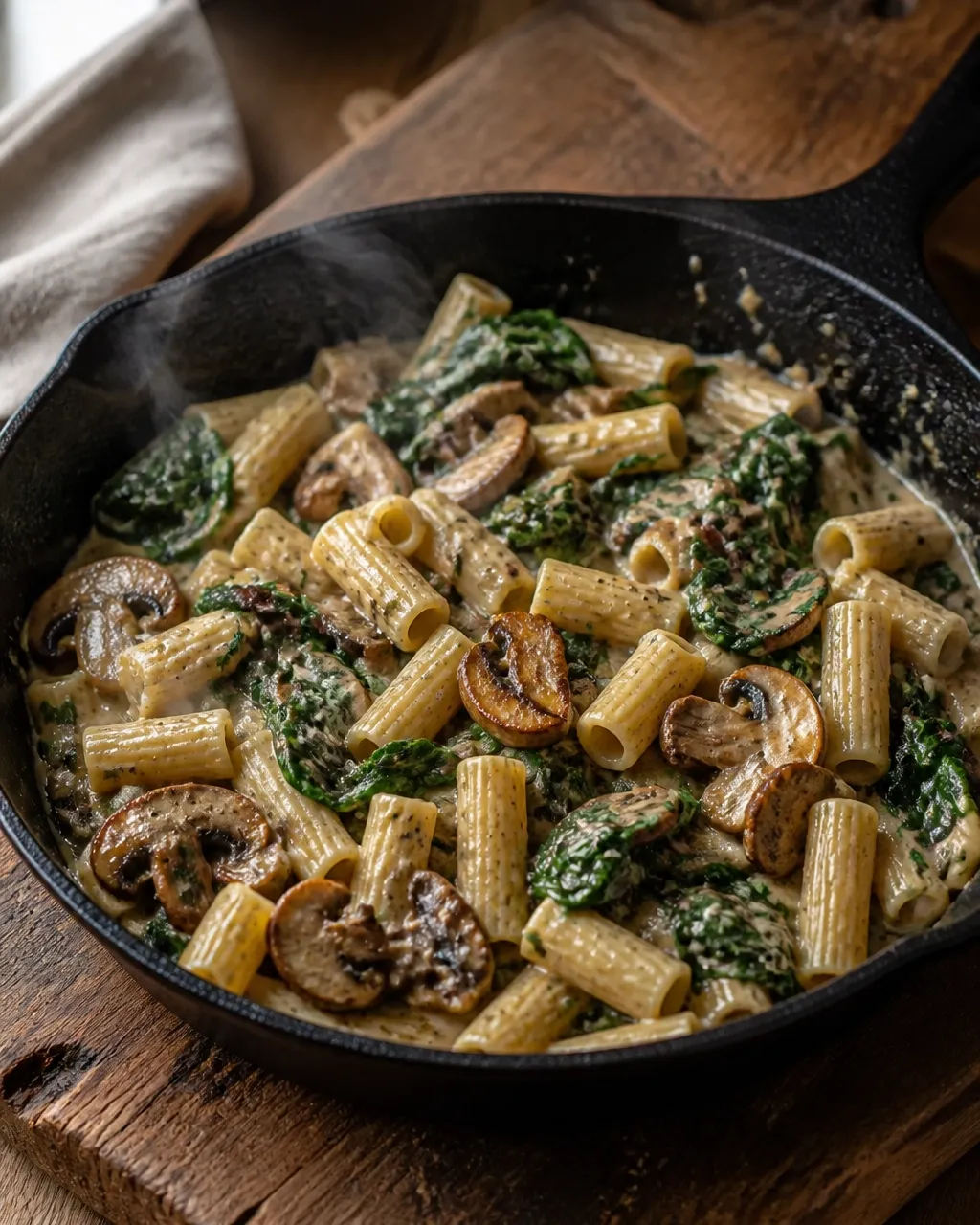
Reserve some pasta water before draining. This is non-negotiable. The cloudy water contains starch released from the penne as it cooks, and that starch helps water and fat stay blended.
A creamy sauce is essentially an emulsion: tiny droplets of fat suspended through a water-based liquid. Without enough structure, the fat can separate, leaving you with a greasy film and a watery bottom. Pasta starch helps stabilize the mixture and gives the sauce enough body to cling to the ridges of penne.
Cook the pasta just shy of al dente, then finish it in the sauce. The pasta continues cooking while it absorbs flavor, and its surface releases a little more starch into the pan. Toss everything over low heat, adding pasta water gradually. Start with a small splash, mix, and check the texture before adding more.
Avoid pouring in a large amount at once. You can always loosen a thick sauce, but rescuing a pasta lake takes more effort. Aim for sauce that flows slowly when you tilt the pan and coats the pasta instead of pooling around it.
Keep Cream and Cheese Calm
Cream thickens as water evaporates, concentrating its fat and milk solids. Use a gentle simmer rather than aggressive boiling. High heat can make the sauce reduce too quickly and may encourage dairy to separate, especially when cheese enters the picture.
Stir grated Parmesan in after lowering the heat, or take the pan off the burner first. Cheese melts more smoothly when it is not being attacked by fierce heat. Add it gradually and keep tossing so it dissolves into the sauce instead of forming clumps.
Finish with black pepper and a little acidity. Lemon zest or a small squeeze of lemon brightens the richness without making the pasta taste lemony. Creamy dishes need contrast; otherwise, every bite starts to taste like the same soft beige note.
Wilt Spinach at the End
Spinach needs very little cooking. Add it near the finish and let the residual heat collapse the leaves. This preserves its color, keeps the texture tender, and prevents a flood of extra moisture from thinning your sauce.
If your spinach is particularly wet, pat it dry first. Fresh leaves bring some water of their own, and frozen spinach brings even more. The goal is tender green flecks throughout the penne, not a spinach-flavored swimming pool.
For more useful one-pot technique, browse Cookpedia’s guide to one-pot chicken and spinach pasta with Parmesan. The same principles: starch, heat control, and timing: make a big difference here too.
Variations That Keep the Balance
Make this dish your own, but change one element at a time so the sauce stays balanced.
- Go dairy-free: Use an unsweetened plant cream and finish with nutritional yeast or a small spoonful of white miso. Both add savory depth, but taste before adding extra salt.
- Add protein: Fold in shredded rotisserie chicken, crisp chickpeas, or white beans. Add them near the end so they warm through without stealing moisture from the sauce.
- Make it spicy: Bloom red pepper flakes in the cooking fat with the garlic. Infusing the heat into fat spreads it evenly through the sauce instead of leaving random fiery pockets.
- Use a different green: Kale works well, but remove tough stems and give it more time than spinach. Arugula wilts quickly and adds peppery bite.
- Try a lighter finish: Replace part of the cream with milk or unsalted stock, then rely on pasta water and Parmesan for body. Reduce gently, because a thinner dairy base is more likely to split under aggressive heat.
- Add brightness: Stir through lemon zest, chopped parsley, or a few chopped sun-dried tomatoes. Choose one or two accents rather than turning the pan into a vegetable conference.
For more plant-forward inspiration, explore Cookpedia’s vegetarian dinner recipes.
Side Dishes That Cut Through the Creaminess
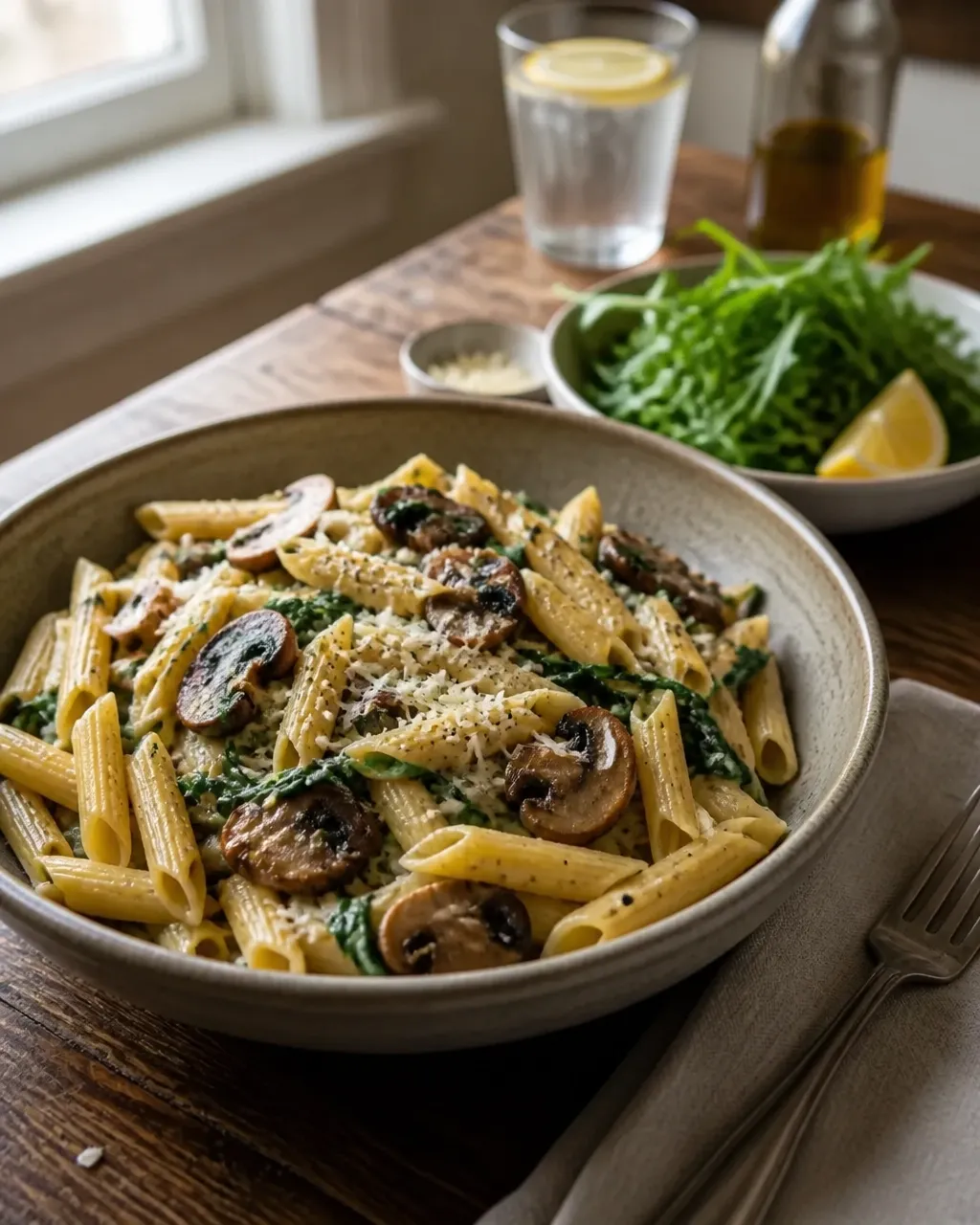
Pair this penne with something crisp, acidic, or lightly bitter. A simple arugula salad dressed with lemon cuts through the richness and gives your palate a fresh reset. Keep the dressing sharp but not sugary; sweetness can make the cream taste heavier.
Roasted broccoli or asparagus adds char and texture. An air fryer recipes dinner side is especially useful when you want the vegetables crisp while the pasta stays soft and saucy.
Serve crusty bread if you enjoy mopping up the last spoonful of sauce. It is not subtle, but it is highly effective. For a complete lighter plate, add a tomato and cucumber salad with vinegar, olive oil, and plenty of herbs.
Frequently Asked Questions
Can I make the sauce without heavy cream?
Yes. Use milk, evaporated milk, crème fraîche, or an unsweetened plant-based cream. The less fat your liquid contains, the less naturally thick and stable the sauce will be. Compensate by reducing gently, adding Parmesan gradually, and using starchy pasta water for body.
Do not boil a milk-based sauce hard. High heat causes milk proteins to tighten and can create a grainy texture. Keep the pan at a gentle simmer and remove it from the heat before adding cheese.
Why are my mushrooms watery?
The usual causes are a crowded pan, low heat, or too much salt too early. Mushrooms release water when heated, so they need enough surface area and heat for that liquid to evaporate. Spread them out and wait for the moisture to cook away before expecting browning.
If the pan is already watery, keep cooking uncovered. Do not add cream until the mushrooms have developed color, or you will dilute the sauce and bury the flavor.
What if my sauce splits?
Take the pan off the heat immediately. Add a small splash of warm pasta water and toss firmly. The extra water and agitation can help bring the emulsion back together.
Prevent splitting by avoiding a hard boil, adding cheese away from intense heat, and introducing pasta water gradually. A sauce that looks slightly too loose in the pan is often better than one that looks perfect before serving; it will tighten as the pasta rests.
Can I use frozen spinach?
You can, but thaw it fully and squeeze out excess water before adding it. Frozen spinach is convenient, though it carries more moisture and usually has a softer texture than fresh leaves.
Add it at the end, just long enough to heat through. If you add it earlier, its liquid may loosen the sauce and its color can become dull.
How do I reheat leftovers?
Creamy pasta thickens in the refrigerator because the penne continues absorbing sauce. Reheat it gently in a skillet rather than blasting it in the microwave. Add a splash of water, milk, or stock and stir until glossy.
Use low to medium heat and stop as soon as the pasta is hot. Prolonged heating can cause the dairy and cheese to separate. The texture may not be quite as silky as it was fresh, but careful reheating keeps it comfortably saucy.
Can I prepare this for a family?
Absolutely. Double the recipe, but do not automatically double the cooking time. Use a wide pan so the mushrooms can brown instead of steam, and reserve extra pasta water for adjusting the larger batch.
Keep the seasoning flexible at the table. Children may prefer the pasta without chili or lemon, while adults can add black pepper, red pepper flakes, or extra Parmesan. That adaptability is why this belongs in your collection of quick family meals, alongside other practical healthy dinner ideas.
Is penne the best pasta shape?
Penne is an excellent choice because its ridges and hollow centers catch creamy sauce and small pieces of mushroom. Rigatoni, fusilli, shells, and farfalle work well too.
Choose a shape with texture rather than a completely smooth noodle. The more surface area it offers, the better it holds the sauce. Cook any substitute just under al dente and finish it in the pan for the same silky result.
{“@graph”:[{“@type”:”BlogPosting”,”image”:[“https://cdn.marblism.com/mk4EQZoJcsp.webp”,”https://cdn.marblism.com/CdalfjO5r7A.webp”,”https://cdn.marblism.com/Wy1WTD-2rLB.webp”,”https://cdn.marblism.com/ANhQS3ilCiX.webp”],”author”:{“name”:”Penny”,”@type”:”Person”,”jobTitle”:”AI Blog Writer”,”affiliation”:{“name”:”Cookpedia”,”@type”:”Organization”}},”headline”:”Simple Pasta Recipes: Creamy Mushroom Spinach Penne”,”publisher”:{“url”:”https://cookpedia.com”,”name”:”Cookpedia”,”@type”:”Organization”},”mainEntity”:{“@type”:”FAQPage”,”mainEntity”:[{“name”:”Can I make the sauce without heavy cream?”,”@type”:”Question”,”acceptedAnswer”:{“text”:”Yes. Use milk, evaporated milk, crème fraîche, or unsweetened plant-based cream. Reduce gently, add Parmesan gradually, and use starchy pasta water for body.”,”@type”:”Answer”}},{“name”:”Why are my mushrooms watery?”,”@type”:”Question”,”acceptedAnswer”:{“text”:”A crowded pan, low heat, or too much salt early in cooking can prevent mushroom moisture from evaporating. Give the mushrooms space and cook uncovered until the liquid disappears and the edges brown.”,”@type”:”Answer”}},{“name”:”What if my sauce splits?”,”@type”:”Question”,”acceptedAnswer”:{“text”:”Remove the pan from the heat, add a small splash of warm pasta water, and toss firmly. Prevent splitting by avoiding a hard boil and adding cheese away from intense heat.”,”@type”:”Answer”}},{“name”:”Can I use frozen spinach?”,”@type”:”Question”,”acceptedAnswer”:{“text”:”Yes. Thaw it fully, squeeze out excess water, and add it at the end just long enough to heat through.”,”@type”:”Answer”}},{“name”:”How do I reheat leftovers?”,”@type”:”Question”,”acceptedAnswer”:{“text”:”Reheat leftovers gently in a skillet with a splash of water, milk, or stock. Use low to medium heat and stop as soon as the pasta is hot to help prevent the sauce from separating.”,”@type”:”Answer”}}]},”description”:”Learn how to make creamy mushroom spinach penne with properly browned mushrooms, silky pasta-water emulsification, gentle cream reduction, and bright wilted spinach.”,”datePublished”:”2026-08-19T14:00:00.000Z”,”articleSection”:”Simple Pasta Recipes”}],”@context”:”https://schema.org”}