Recipe
Ingredients
Method
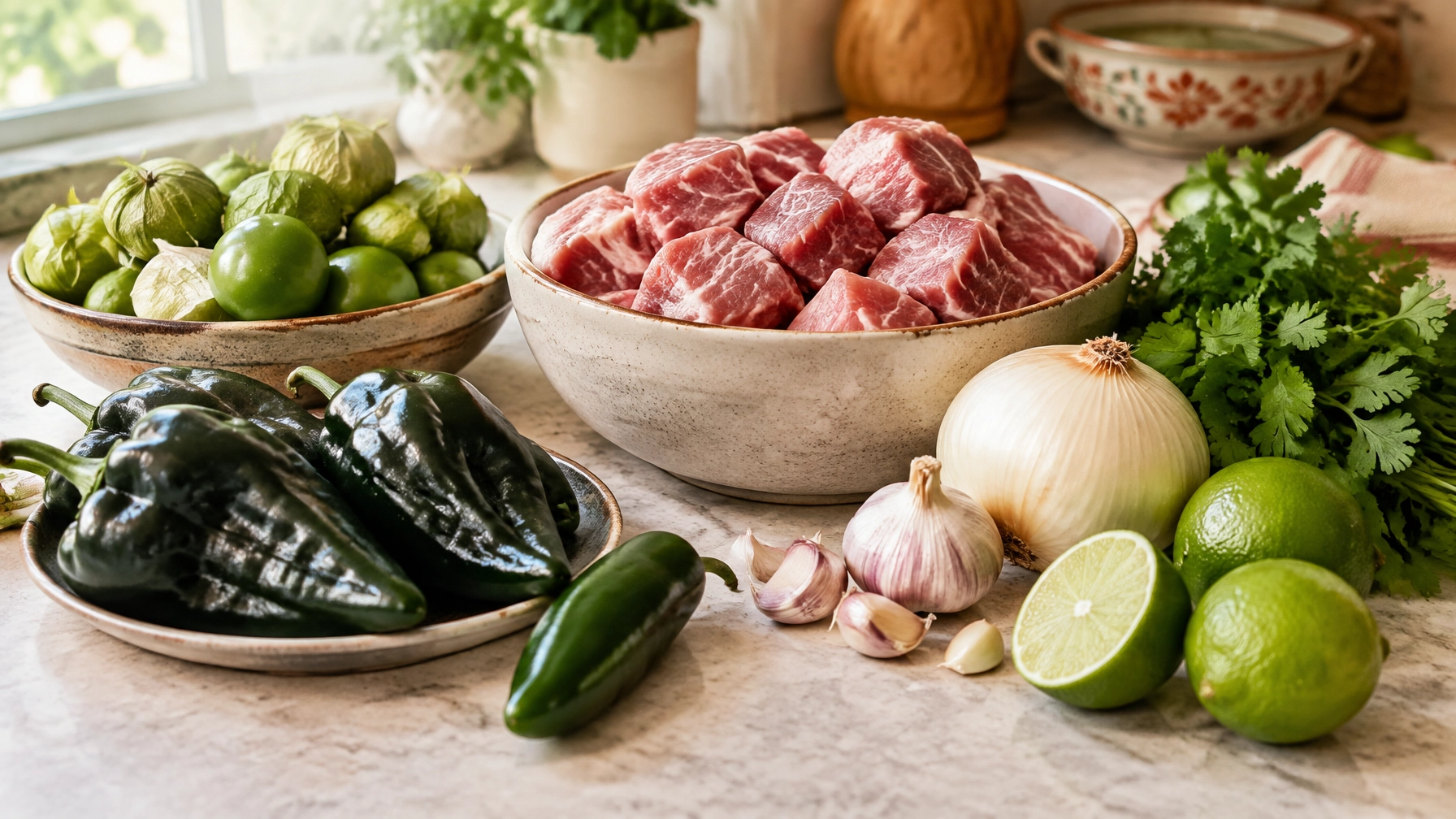
- Prepare the vegetables. Heat the broiler to high. Arrange the tomatillos, poblano peppers, jalapeno peppers, onion, and garlic on a foil-lined baking sheet. Place the peppers cut side down.
- Broil the vegetables. Broil for 8 to 12 minutes, turning the onion and garlic once, until the tomatillos are softened and the vegetables have dark blistered spots. Remove the garlic after 5 to 7 minutes if it begins to brown too quickly.
- Blend the salsa. Let the roasted vegetables cool for 5 minutes. Peel the garlic, then transfer everything to a blender. Add the cilantro, 2 tablespoons of lime juice, cumin, oregano, and chicken broth. Blend until mostly smooth. Small pieces of roasted vegetable are acceptable.
- Season the pork. Pat the pork cubes dry with paper towels. Season with 1 teaspoon of the salt and all of the black pepper.
- Brown the pork. Heat the oil in a large skillet over medium-high heat. Brown the pork in 2 or 3 batches for 3 to 4 minutes per side. Transfer each batch to the slow cooker. Do not overcrowd the skillet.
- Deglaze the skillet. Pour a few tablespoons of water or chicken broth into the skillet. Scrape up the browned pieces from the bottom, then pour the liquid into the slow cooker.
- Assemble the stew. Pour the blended salsa verde over the pork. Stir briefly so the pork is coated evenly.
- Slow cook. Cover and cook on LOW for 8 hours, or until the pork is fork-tender and separates easily. For the HIGH setting, cook for 4 to 5 hours. Keep the lid closed as much as possible during cooking.
- Adjust the sauce. Stir in the remaining 1 tablespoon of lime juice and the chopped cilantro. Taste and add the remaining 1/2 teaspoon of salt if needed.
- Rest and serve. Let the chile verde rest uncovered for 10 minutes. Spoon away excess fat from the surface if necessary, then serve with tortillas, rice, beans, avocado, or additional lime.
Slow Cooker Pork Chile Verde
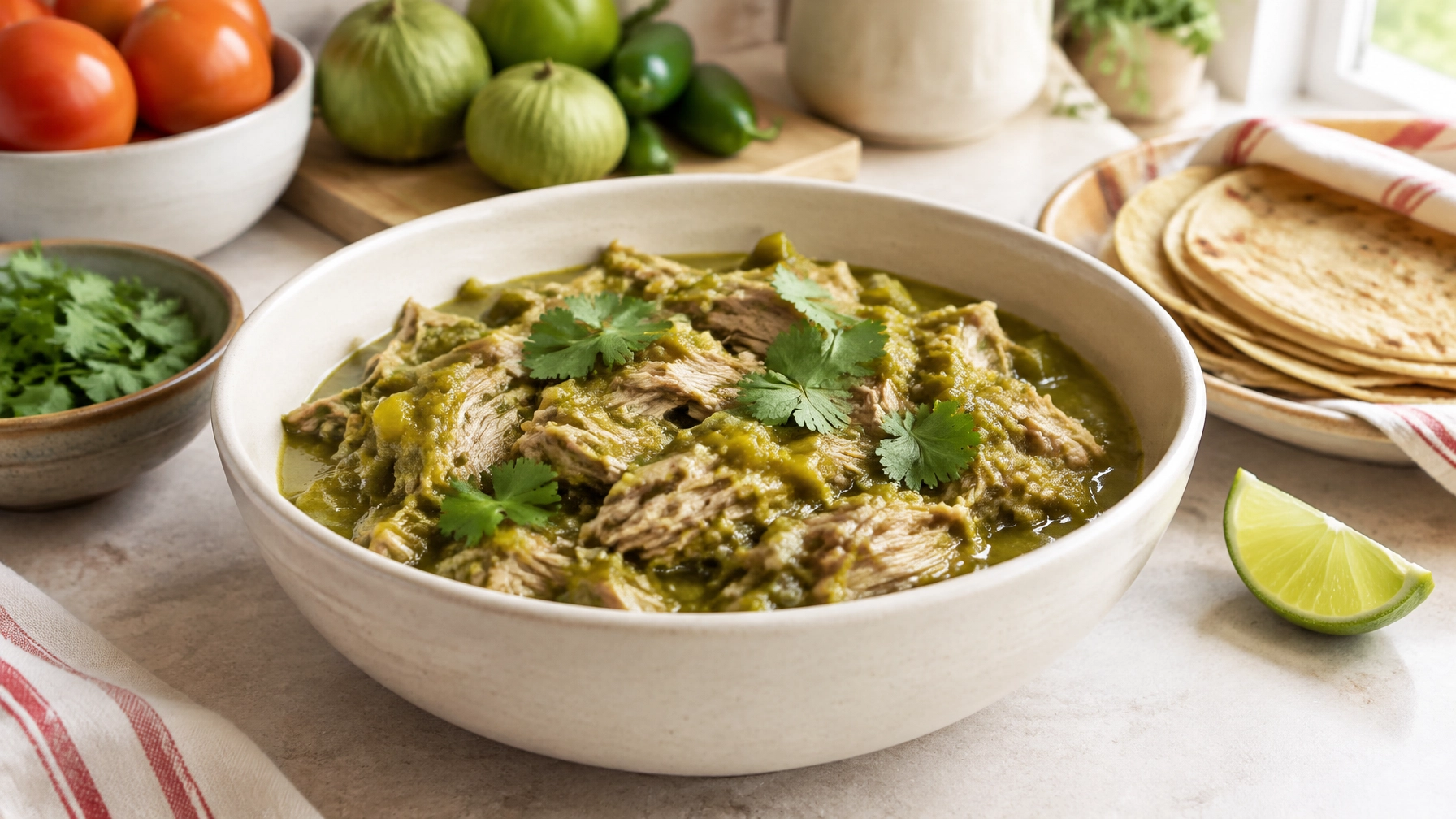
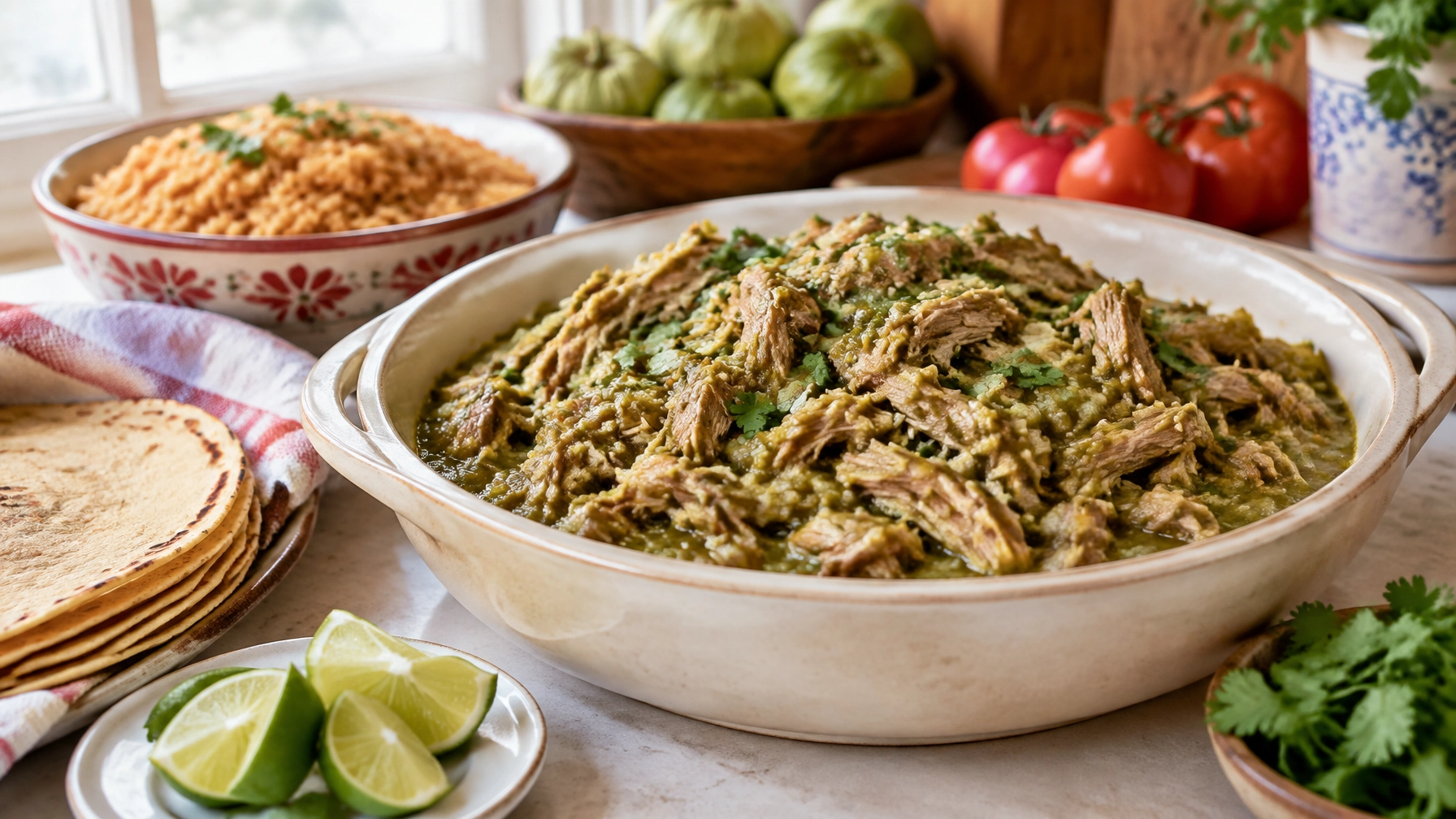
This slow cooker pork chile verde uses browned pork shoulder, roasted tomatillos, green chiles, garlic, and lime to produce a tender, richly seasoned stew with minimal hands-on work.
Overview
Pork chile verde is a Mexican-inspired stew built around a green tomatillo sauce. The sauce has a fresh acidity from tomatillos and lime, moderate heat from poblano peppers and jalapenos, and depth from roasted vegetables and browned pork.
The slow cooker is useful here because pork shoulder benefits from extended, gentle cooking. After 8 hours on LOW, the pork should separate easily with a fork and the sauce should be full-bodied. Serve it in bowls with warm tortillas, rice, beans, or use the pork as a filling for tacos and enchiladas.
The broil-and-blend approach used for the salsa follows the general method described in this chile verde guide from Savoring the Good. Browning the pork before slow cooking is optional, but it adds a deeper savoury flavour.
Recipe
Tips
- Use pork shoulder. Pork loin is leaner and can become dry during a long cooking period. Pork shoulder contains enough connective tissue and fat to remain tender.
- Do not skip drying the meat. Surface moisture prevents proper browning and can cause the pork to steam rather than sear.
- Brown in batches. Crowding the pan lowers its temperature. Work in batches so the pork develops a browned exterior.
- Control the heat. Remove the jalapeno seeds and membranes for a milder sauce. Keep some or all of them for more heat.
- Do not add excess liquid. The tomatillos release water as they cook. The 1 cup of broth is sufficient for the slow cooker and helps the sauce remain concentrated.
- Check texture, not only temperature. Pork shoulder is safe at a lower internal temperature, but chile verde is best when the meat is tender enough to shred.
- Thicken if necessary. If the sauce is thinner than preferred, transfer 1 cup of sauce to a saucepan and simmer it for 10 to 15 minutes. Stir it back into the slow cooker before serving.
Variations
Milder chile verde
Use 1 poblano pepper and 1 jalapeno pepper. Replace the second jalapeno with an additional poblano. Remove all seeds and membranes before broiling.
More heat
Add 1 serrano pepper to the baking sheet or leave the jalapeno seeds in the salsa. Add the extra pepper gradually because heat levels vary between chiles.
No-browning version
For a simpler preparation, place the seasoned pork directly in the slow cooker and continue with the recipe. The finished dish will still be tender, but it will have less roasted flavour.
Chunky sauce
Blend only half of the roasted vegetables. Finely chop the remaining vegetables and stir them into the slow cooker. This produces a sauce with more visible texture.
Serving variation
Shred the cooked pork and spoon it into warm corn tortillas. Add chopped onion, cilantro, avocado, and lime. The chile verde can also be served over rice or used as an enchilada filling.
FAQ
Can pork chile verde be made without browning the meat?
Yes. Browning is a flavour step rather than a requirement for safe slow cooking. Add the seasoned pork directly to the slow cooker, then pour the salsa verde over it. The sauce will still be effective, but the final flavour will be less deeply roasted.
Can I use jarred salsa verde?
Yes. Use approximately 3 cups of salsa verde in place of the roasted tomatillo mixture. Check the salt level before adding the full amount of salt in the recipe. A fresh salsa made with roasted tomatillos will generally provide better control over heat and acidity.
Why is my chile verde watery?
Tomatillos release liquid during cooking, and slow cookers retain most of that moisture. Remove the lid for the final 20 to 30 minutes if the appliance instructions permit, or reduce some sauce in a saucepan. Avoid adding flour directly to the slow cooker because it can form lumps.
Can I make this recipe with pork loin?
You can, but pork loin is not the preferred cut. It has less fat and connective tissue than pork shoulder and may become dry during 8 hours of cooking. If using pork loin, begin checking it earlier and avoid cooking it beyond the point of tenderness.
How long does pork chile verde last in the refrigerator?
Cool the cooked dish promptly and place it in a sealed container within 2 hours. Refrigerate for up to 4 days. Reheat gently on the stovetop or in the microwave until hot throughout.
Storage
Store cooled pork chile verde in an airtight container in the refrigerator for up to 4 days. For longer storage, freeze it in portion-sized containers for up to 3 months. Leave space for expansion if using rigid containers.
Thaw frozen chile verde overnight in the refrigerator. Reheat it over medium-low heat, adding a small amount of broth or water if the sauce has thickened. Stir occasionally and avoid prolonged boiling, which can make the shredded pork stringy.
This storage range is consistent with guidance collected from slow cooker chile verde recipes including From Valerie's Kitchen and Isabel Eats.