Recipe
Serves
4 to 6 1×
Serves 4 to 6Prep 25 minCook 6HTotal 6H25 min
Ingredients
Method
- Pat the pork dry and season it with salt and black pepper. Heat the olive oil in a large frying pan over medium-high heat. Brown the pork in batches, then transfer it to the slow cooker.
- Reduce the heat to medium. Add the onion, carrots and celery to the frying pan. Cook for five minutes, stirring, until the vegetables begin to soften.
- Add the fennel seeds and garlic. Cook for one minute, taking care not to brown the garlic.
- Pour in the white wine. Scrape the base of the pan and simmer for two to three minutes.
- Add the vegetables and wine to the slow cooker. Stir in the chopped tomatoes, chicken stock and rosemary.
- Cover and cook on LOW for six hours, or until the pork is tender enough to pull apart with two forks.
- Remove the rosemary. Shred the pork in the slow cooker and stir it through the sauce.
- Stir in the milk. Leave the lid ajar for 10 to 15 minutes if the sauce needs to thicken. Taste and adjust the seasoning.
- Cook the pappardelle in salted boiling water until al dente. Reserve some pasta water, then drain.
- Toss the pasta with several spoonfuls of ragu and a splash of pasta water. Serve with the remaining sauce, Parmesan and optional parsley or lemon zest.
Slow Cooker Pork Ragu with Pappardelle
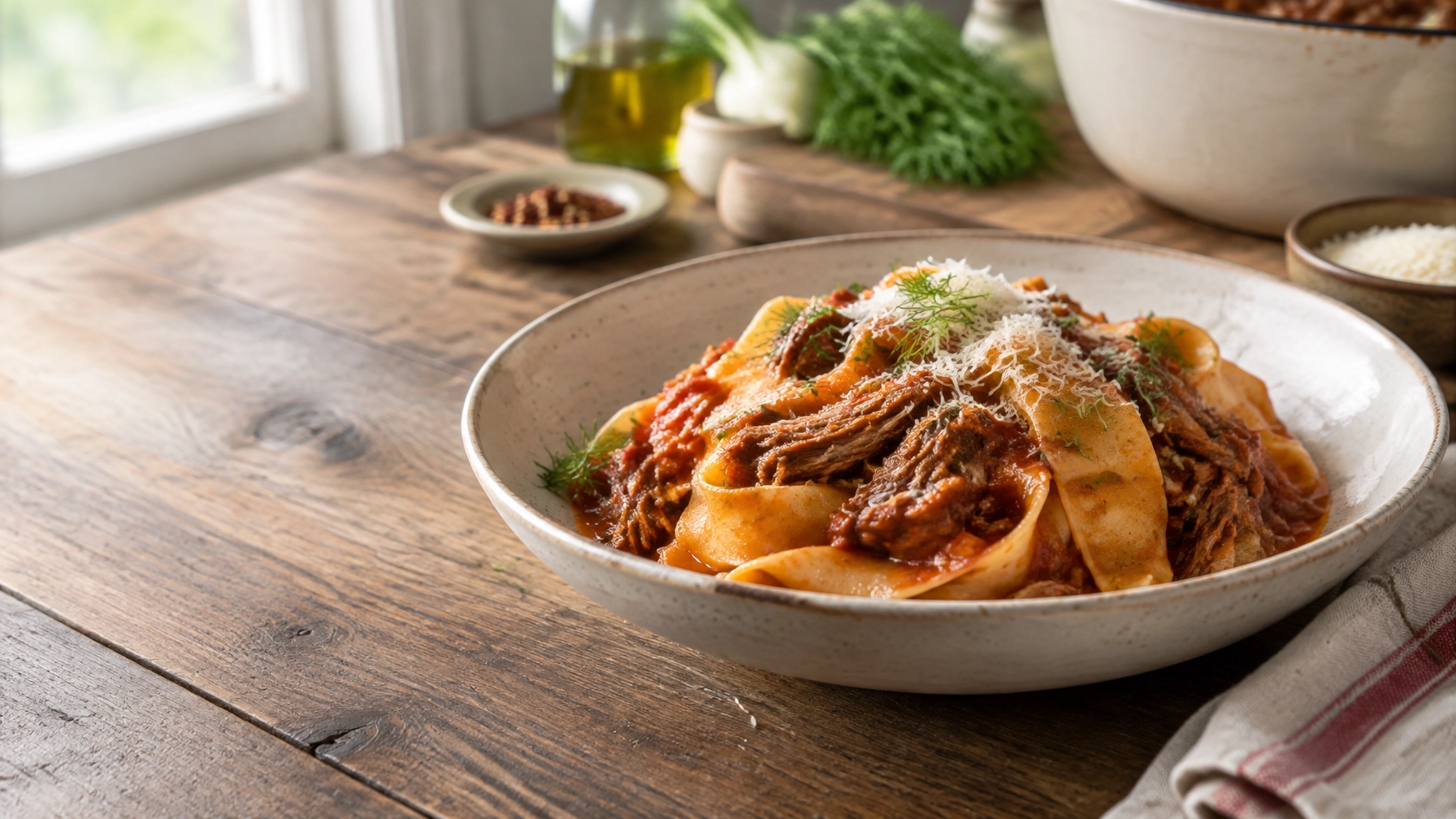
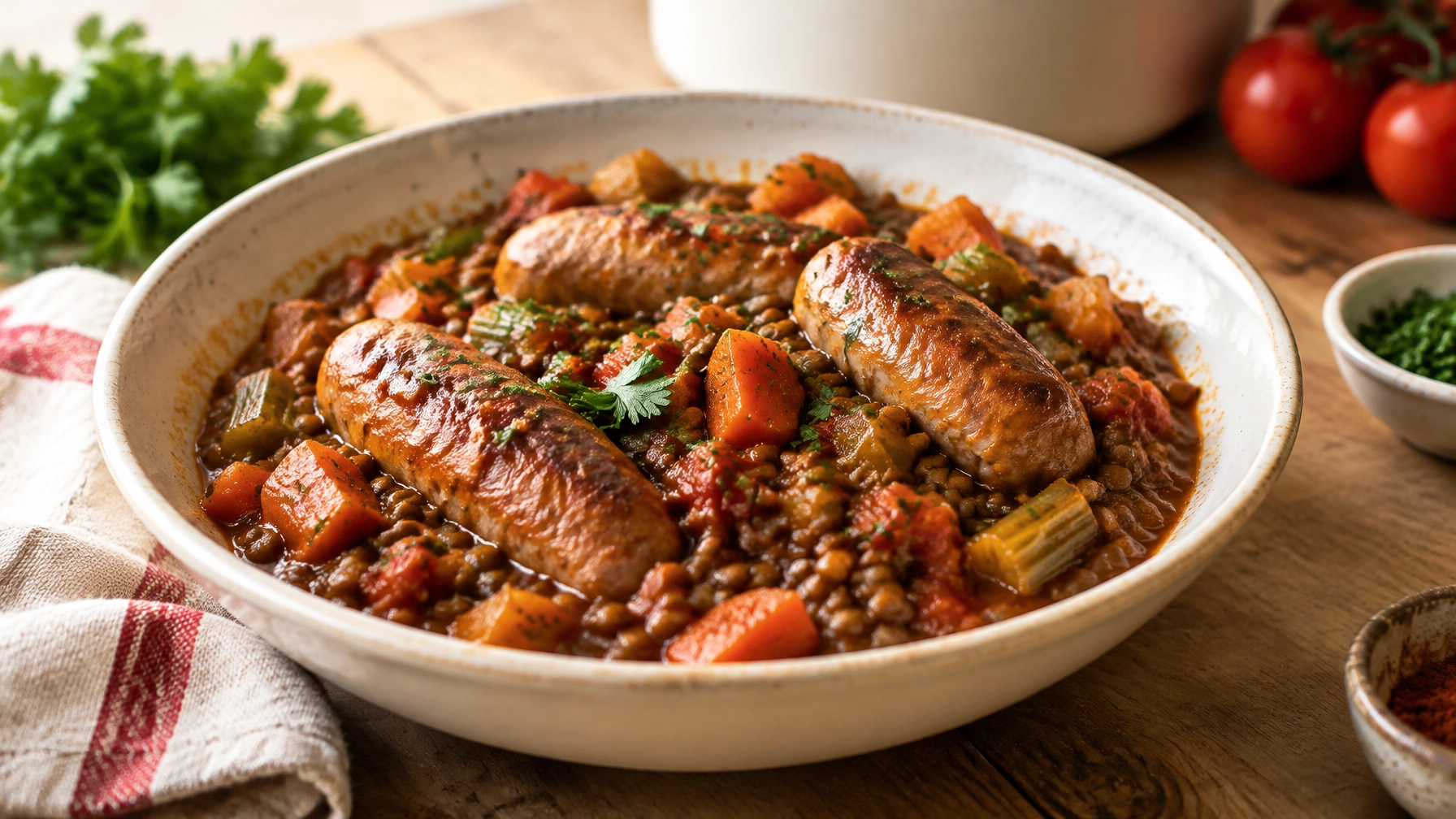
This slow cooker pork ragu uses diced pork shoulder, fennel seed, garlic, white wine, tomato and milk to make a rich hands-off pasta sauce in six hours on LOW.
Pork
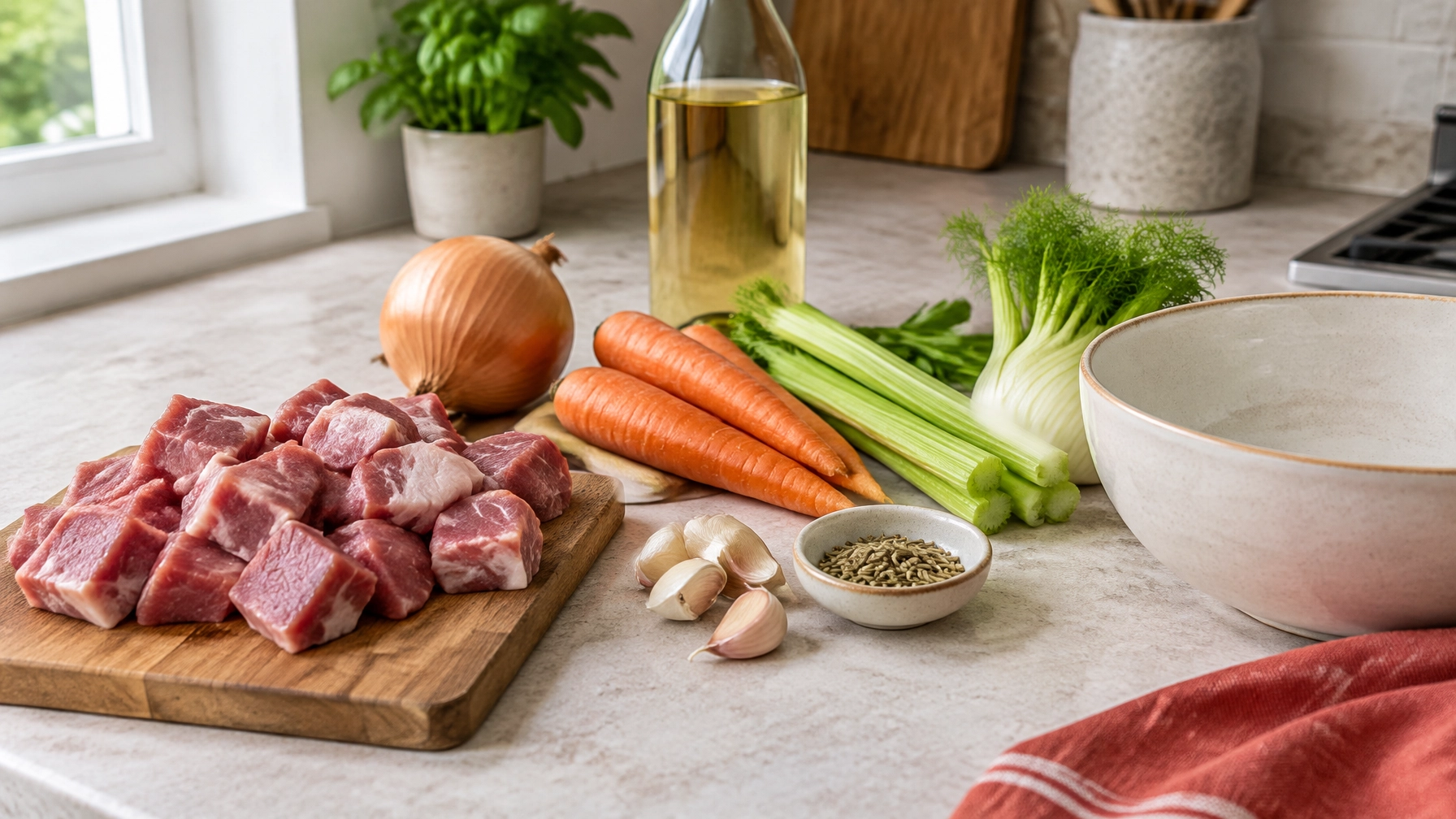
Pork shoulder is the correct cut for this recipe. It contains enough fat and connective tissue to withstand a long cooking time without becoming dry. Cut the meat into small, even pieces so that it breaks down into the sauce rather than remaining in large chunks.
This is not a variation of beef ragu. The flavour profile is deliberately different. Fennel seed gives the pork a lightly aniseed note, while garlic, rosemary and white wine provide savoury depth. The finished sauce is tomato-based, but the pork remains the primary ingredient.
Preparation
Pat the pork dry with kitchen paper before seasoning. Moisture on the surface prevents proper browning, so this step is functional rather than decorative.
Brown the pork in batches in a large frying pan. Do not crowd the pan. The meat should develop a deep golden surface before it is transferred to the slow cooker. Browning is not essential for tenderness, but it adds concentrated savoury flavour.
Use the same pan for the onion, carrot and celery. These vegetables form the base of the sauce and collect the browned pork residue from the pan. Add the fennel seeds and garlic only after the vegetables have softened. Garlic can burn quickly and become bitter.
Pour in the white wine and scrape the base of the pan. Allow the wine to simmer for two to three minutes. This reduces the sharpness of the alcohol and lifts the browned flavours into the cooking liquid.
Slow
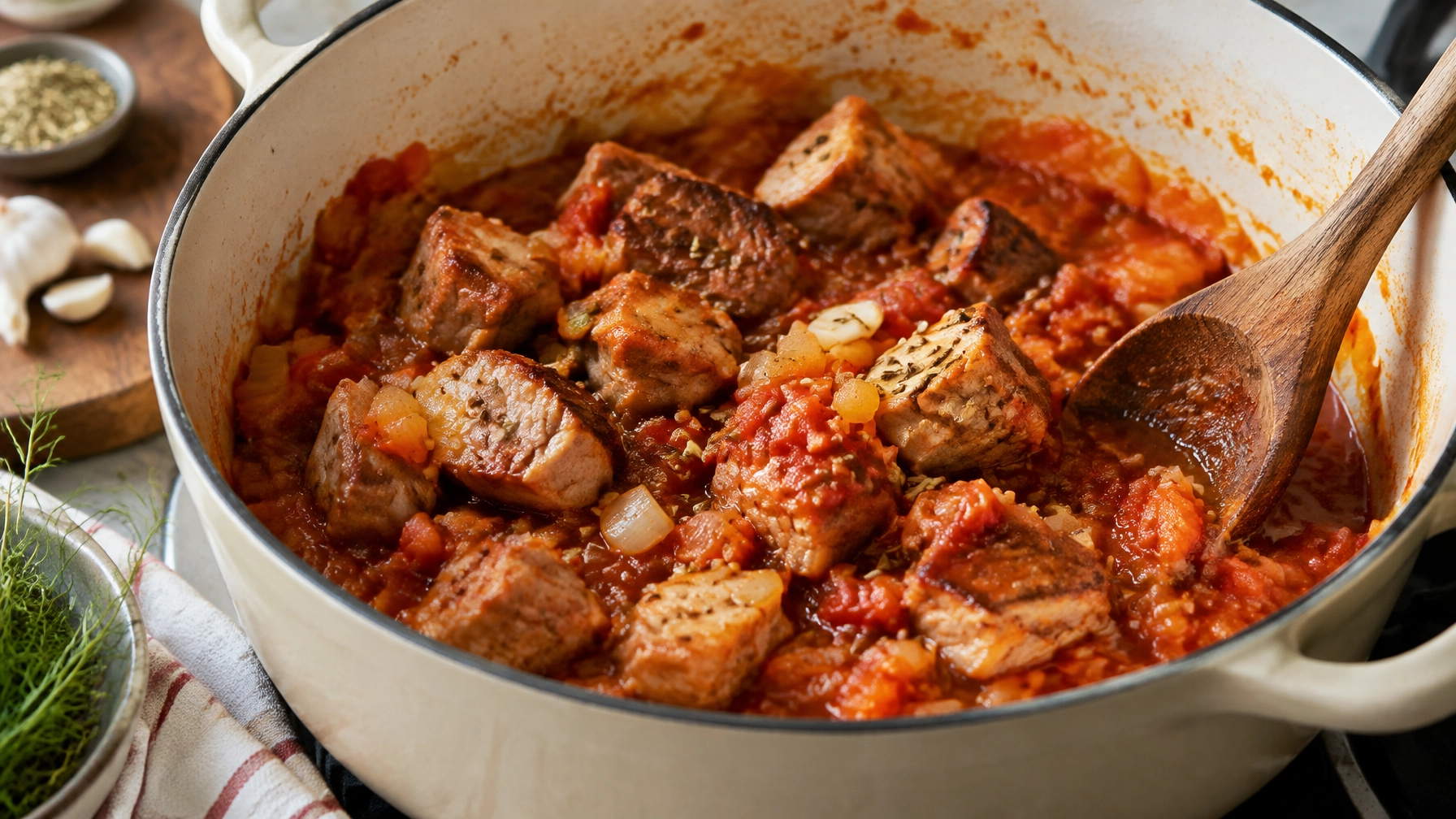
Transfer the pork, vegetables and reduced wine to the slow cooker. Add the chopped tomatoes, stock, rosemary, salt and black pepper. The liquid should sit around the meat rather than completely submerging it.
Cook on LOW for six hours. The pork should be very tender and easy to pull apart with two forks. If it remains firm, continue cooking until it reaches that texture. Slow cookers vary in temperature, so tenderness is the practical test.
The sauce may look loose when the lid is first removed. Shred the pork directly in the slow cooker, then leave the lid ajar for 10 to 15 minutes if further reduction is needed. Alternatively, transfer the sauce to a saucepan and reduce it gently on the hob.
Milk
The milk is added at the end. This is a traditional technique in long-cooked Italian meat sauces. It softens the acidity of the tomato, rounds out the wine and helps bring the pork fat and cooking liquid together into a smoother sauce.
Add the milk after shredding the pork, then stir thoroughly. It may look slightly split at first. This is not a fault. Gentle heat and stirring will produce a more cohesive sauce. Do not boil the sauce aggressively after adding the milk, as high heat can make the texture appear grainy.
Use whole milk for the best result. Lower-fat milk can be used, but it produces a less rounded finish. Cream is not required.
Pappardelle
Pappardelle is wide enough to carry the pieces of pork and the thick sauce. Cook it in a large pan of well-salted boiling water until al dente. Reserve a mugful of pasta water before draining.
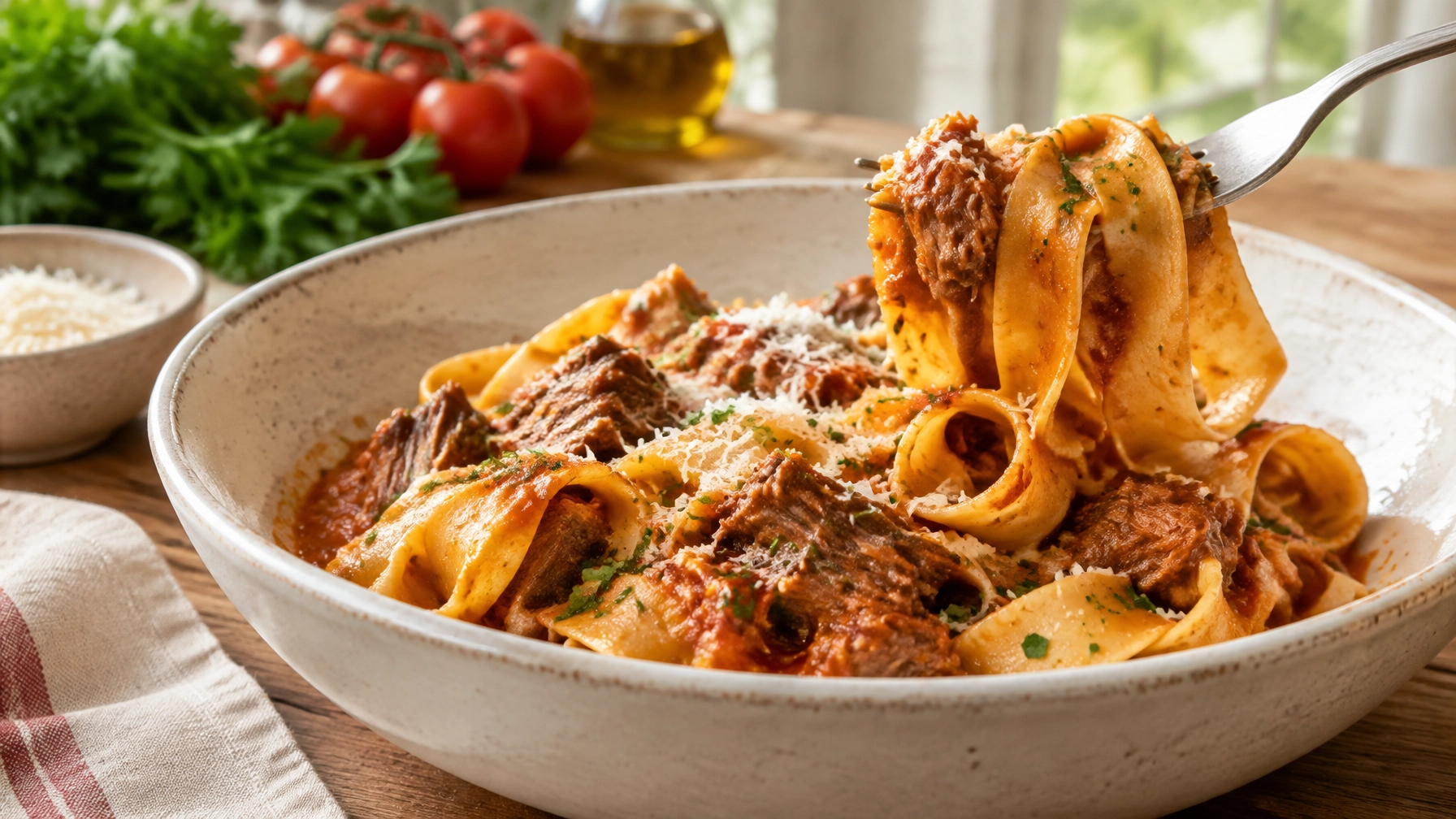
Toss the pasta with some of the ragu and a small splash of pasta water. The starch helps the sauce cling to the ribbons. Serve with the remaining pork ragu, grated Parmesan and a little chopped parsley or finely grated lemon zest.
For food safety, check the thickest piece of pork with a clean food thermometer. The Food Standards Agency advises cooking pork to a core temperature of 70°C for two minutes, or an equivalent combination such as 75°C for 30 seconds. See the Food Standards Agency cooking guidance. The NHS guidance on meat also advises that meat should be cooked thoroughly.
Cool leftovers promptly, refrigerate them within two hours and eat them within 48 hours. Reheat only once, until steaming hot throughout.