Recipe
Servings
8 1×
Serves 8Prep 15 minCook 8HTotal 8H15 min
Ingredients
- 3–4 lb pork shoulder or pork butt, bone-in or boneless
- 2 teaspoons fine salt
- 2 teaspoons smoked paprika
- 1 teaspoon garlic powder
- 1 teaspoon onion powder
- 1 teaspoon ground black pepper
- 1 teaspoon brown sugar
- 1 medium yellow onion, sliced
- ½ cup apple juice, low-sodium stock or water
- 1 cup barbecue sauce, plus more for serving
- 1 tablespoon apple cider vinegar
- 1 tablespoon Worcestershire sauce
- Toasted buns, for serving
- Coleslaw, pickles or sliced red onion, optional
Method
- A pork shoulder, also called pork butt or Boston butt, is the recommended cut.
- It contains sufficient fat and connective tissue for extended cooking.
- A boneless roast is easier to portion.
- A bone-in roast may provide additional flavour and can be shredded after the bone is removed.
- Do not trim all visible fat.
- Remove only excessive, hard pieces if required.
- The remaining fat helps maintain moisture during the cooking period.
- The slow cooker should remain covered during cooking.
- Repeatedly removing the lid allows heat to escape and can extend the cooking time.
Slow Cooker Pulled Pork (Easy 8-Hour Recipe)
Introduction
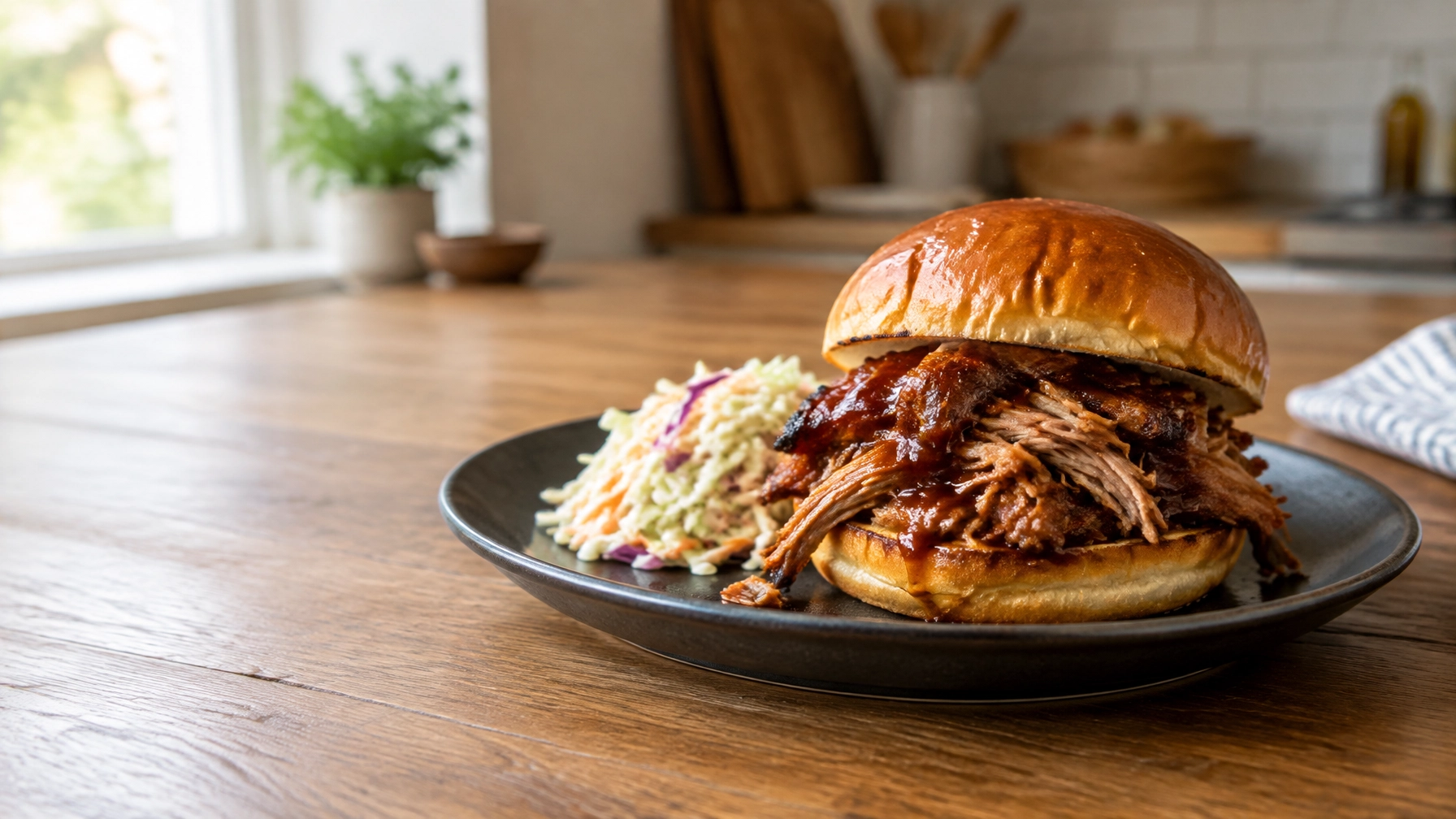
Pulled pork is a low-intervention meal produced by cooking pork shoulder slowly until its connective tissue softens and the meat separates easily. This recipe uses a slow cooker on LOW for approximately 8 hours.
The procedure is suitable for a daily batch meal. Preparation is limited to seasoning the pork, assembling the cooker and shredding the cooked meat. Barbecue sauce may be added before or after cooking according to the required result.
For food-safety purposes, use a meat thermometer. Whole cuts of pork are considered safe at 145°F (63°C) followed by a three-minute rest, according to USDA guidance. For pulled pork texture, the roast generally needs to reach approximately 195–205°F (90–96°C) and become fork-tender.
Definition
pulled pork (noun) : Pork shoulder cooked slowly until the meat can be separated into strands with forks.
The process is not complicated. It is prolonged. These are different administrative categories.
Preparation
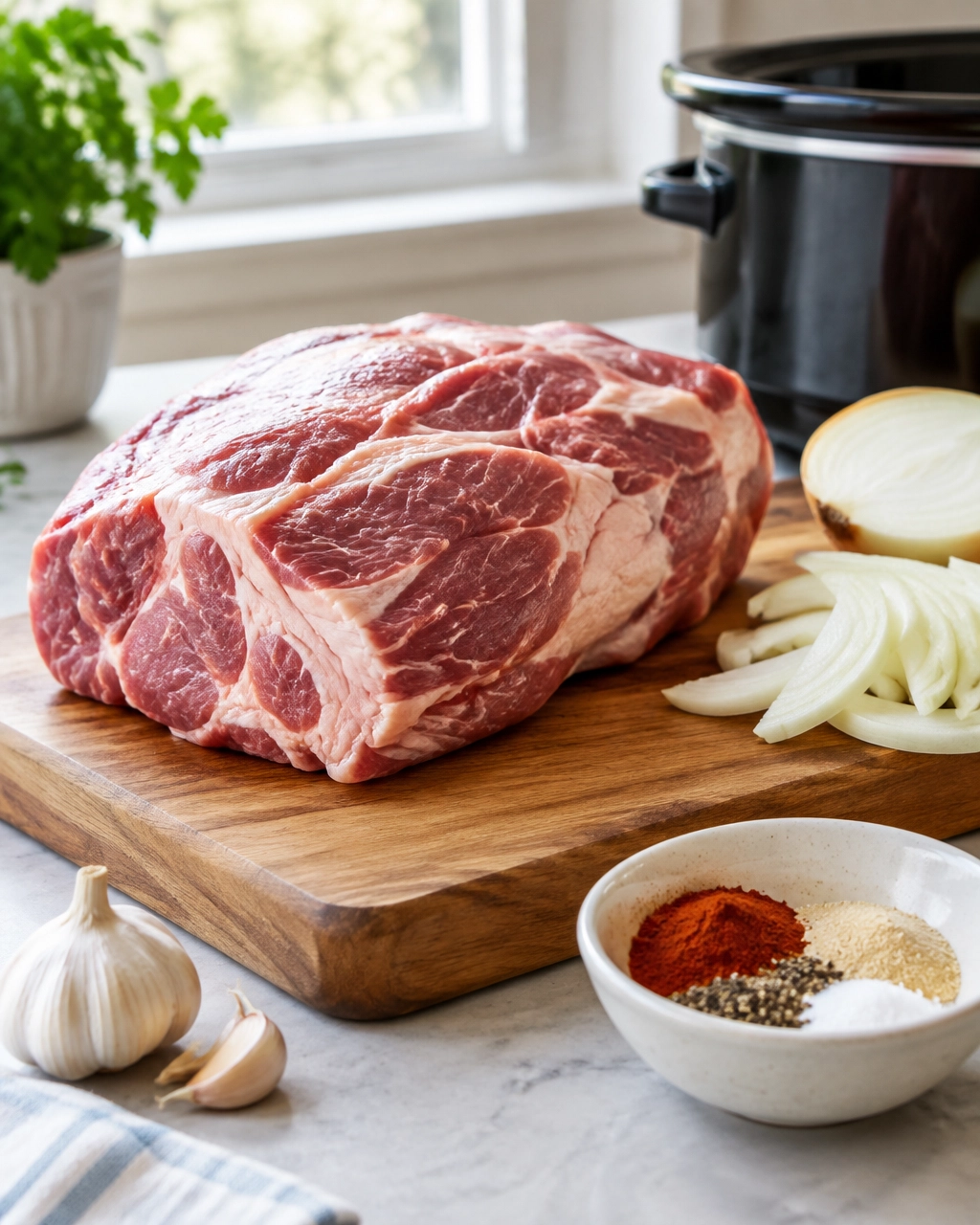
A pork shoulder, also called pork butt or Boston butt, is the recommended cut. It contains sufficient fat and connective tissue for extended cooking. A boneless roast is easier to portion. A bone-in roast may provide additional flavour and can be shredded after the bone is removed.
Do not trim all visible fat. Remove only excessive, hard pieces if required. The remaining fat helps maintain moisture during the cooking period.
The slow cooker should remain covered during cooking. Repeatedly removing the lid allows heat to escape and can extend the cooking time.
Recipe
Slow Cooker Pulled Pork
Servings: 8
Prep time: 15 minutes
Cook time: 8 hours
Total time: 8 hours 15 minutes
Ingredients
- 3–4 lb pork shoulder or pork butt, bone-in or boneless
- 2 teaspoons fine salt
- 2 teaspoons smoked paprika
- 1 teaspoon garlic powder
- 1 teaspoon onion powder
- 1 teaspoon ground black pepper
- 1 teaspoon brown sugar
- 1 medium yellow onion, sliced
- ½ cup apple juice, low-sodium stock or water
- 1 cup barbecue sauce, plus more for serving
- 1 tablespoon apple cider vinegar
- 1 tablespoon Worcestershire sauce
- Toasted buns, for serving
- Coleslaw, pickles or sliced red onion, optional
Method
Prepare the pork.
Pat the pork shoulder dry with paper towels. Combine the salt, smoked paprika, garlic powder, onion powder, black pepper and brown sugar in a small bowl.Apply the seasoning.
Rub the spice mixture over all sides of the pork. Distribution is not required to be mathematically uniform. Coverage is sufficient.Load the slow cooker.
Place the sliced onion in the bottom of the slow cooker. Set the seasoned pork on top.Add the cooking liquid.
Pour the apple juice, stock or water around the pork. Do not pour it directly over the seasoning unless necessary. Add the lid.Cook for 8 hours.
Cook on LOW for approximately 8 hours. Avoid opening the lid during this period. Cooking times vary between appliances and according to the size and shape of the roast.Check the temperature.
Insert a digital meat thermometer into the thickest part of the pork, avoiding the bone if the roast is bone-in. Confirm that it has reached at least 145°F (63°C) for food safety. For meat that pulls apart efficiently, continue cooking until it reaches approximately 195–205°F (90–96°C) and is fork-tender.Rest the pork.
Transfer the cooked pork to a large tray or cutting board. Allow it to rest for 10–15 minutes. This limits immediate heat loss and makes handling easier.Shred the meat.
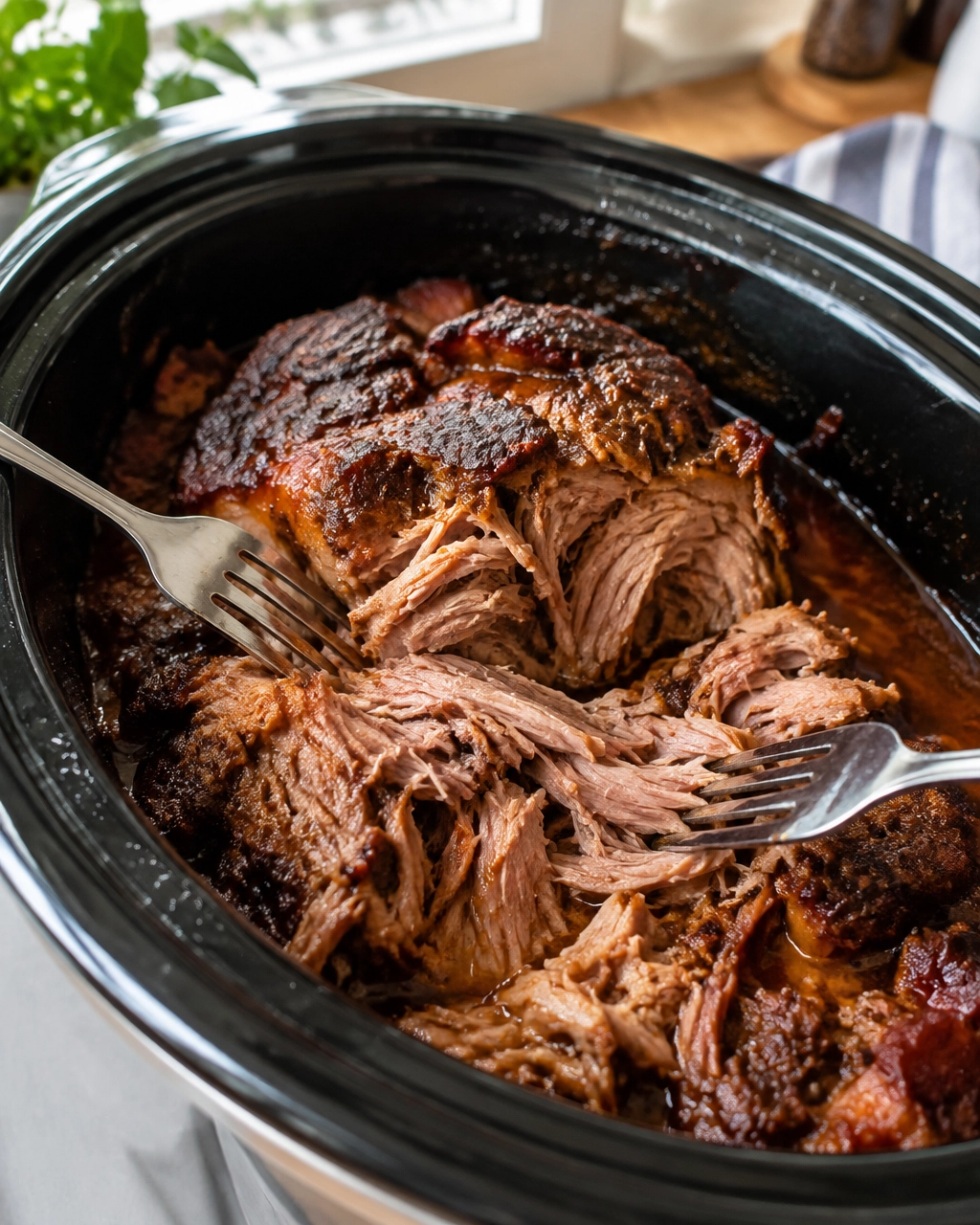
Use two forks to pull the pork into strands. Discard the bone, large pieces of fat and any unwanted connective tissue.Prepare the sauce.
Skim excess fat from the cooking liquid if required. Combine approximately 1 cup of barbecue sauce with the apple cider vinegar and Worcestershire sauce. Add some of the cooking liquid if a thinner consistency is needed.Combine and serve.
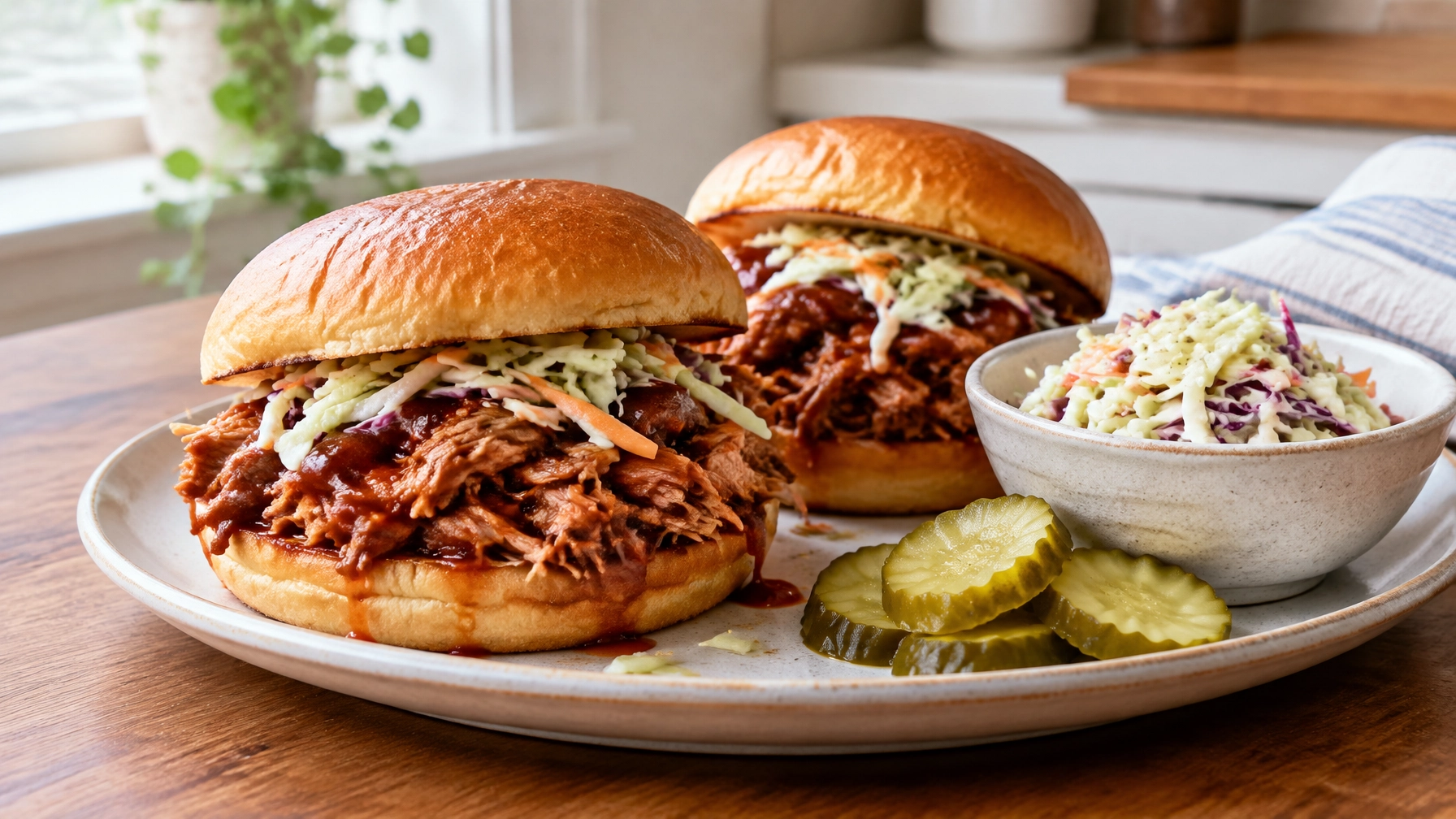
Return the shredded pork to the slow cooker or place it in a serving dish. Stir through the sauce. Serve in toasted buns with coleslaw, pickles or sliced red onion.
Temperature
Time alone does not establish doneness. A roast may be safe before it is tender enough to shred, or it may require additional cooking because of its size, shape or the performance of the appliance.
The relevant measurements are:
- 145°F (63°C): USDA minimum temperature for a whole cut of pork, followed by a three-minute rest.
- 195–205°F (90–96°C): common range for soft, shreddable pulled pork.
- 165°F (74°C): recommended reheating temperature for leftovers.
The FoodSafety.gov slow-cooker guidance recommends using a food thermometer and maintaining appropriate temperatures. If a power interruption leaves food sitting without heat for an extended period, follow official food-safety guidance rather than relying on appearance.
Tips
- Use LOW where possible. An 8-hour LOW cook produces the intended texture with minimal supervision.
- Do not add excessive liquid. Pork releases its own juices. The listed ½ cup is sufficient to support cooking without producing a diluted result.
- Keep the lid closed. Each opening reduces the internal temperature and may extend the cooking period.
- Check tenderness as well as temperature. A roast that has reached the safety minimum may still resist shredding.
- Sauce after cooking for greater control. Adding all the barbecue sauce at the beginning can produce a thinner, sweeter cooking liquid. Stirring most of it through the shredded pork preserves a stronger sauce flavour.
- Save the cooking liquid. Strain and refrigerate it separately if required. It can be used to moisten leftovers after excess fat has been removed.
- Cool leftovers promptly. Transfer pork to shallow containers and refrigerate. Reheat thoroughly before serving.
Variations
Smoky
Increase the smoked paprika to 2 teaspoons and add 1 teaspoon of chipotle powder. Use a smoky barbecue sauce. Omit the brown sugar if the sauce is already highly sweetened.
Tangy
Use apple cider vinegar in the cooking liquid and select a vinegar-forward barbecue sauce. Add sliced dill pickles immediately before serving.
Spicy
Add ½–1 teaspoon cayenne pepper or 1 finely chopped jalapeño to the slow cooker. For controlled heat, add hot sauce after shredding rather than during the eight-hour cook.
Sandwich-free
Serve the pork over baked potatoes, rice or cooked polenta. The operational requirements remain unchanged. Only the delivery system differs.
Batch cooking
Allow the cooked pork to cool, then refrigerate in sealed containers for up to three to four days. Portions may also be frozen. Defrost in the refrigerator and reheat until steaming hot throughout.
FAQ
Can I cook pulled pork on HIGH instead of LOW?
Yes. A 3–4 lb pork shoulder can often be cooked on HIGH for approximately 5–6 hours. However, the exact time depends on the slow cooker and the roast. Check the internal temperature and tenderness rather than treating the clock as definitive.
Can I use pork loin?
Pork loin is leaner than pork shoulder and is not the preferred cut for classic pulled pork. It can be cooked in a slow cooker, but it is more likely to become dry and sliceable rather than rich and shreddable.
Should I sear the pork first?
Searing is optional. It may add browned flavour, but it is not necessary for tender pulled pork. Omitting the step keeps preparation within the stated 15-minute period.
Can I put frozen pork in a slow cooker?
Use a fully thawed pork shoulder. USDA guidance advises against placing frozen meat directly into a slow cooker because it may spend too long in the temperature range where bacteria can multiply.
Why is my pulled pork tough?
The pork may require more time. If it has reached a safe temperature but does not separate easily, replace the lid and continue cooking on LOW for 30–60 minutes. Toughness can also result from using a lean cut or removing too much fat.
Can I make this recipe without barbecue sauce?
Yes. Cook the pork with the onion, spices and apple juice or stock. After shredding, use the cooking liquid, vinegar and Worcestershire sauce as a light finishing mixture, or serve the pork plain.
How do I prevent pulled pork from becoming dry?
Do not over-trim the shoulder, avoid prolonged cooking after it becomes tender, and mix some reserved cooking liquid into the shredded meat. Store leftovers with a small amount of sauce.
Compliance
This recipe provides general cooking information. Appliance performance varies. Verify the temperature of the pork with a reliable food thermometer and follow the current guidance from USDA Food Safety and Inspection Service for storage, reheating and power interruptions.