Recipe
Serves
2 1×
Serves 2Prep 15 minCook 10 minTotal 25 min
Ingredients
Method
- Pat the sole fillets dry on both sides with kitchen paper. Check for any bones and remove them with clean tweezers if needed.
- Mix the flour, salt and white pepper on a shallow plate. Coat each fillet lightly, then shake off the excess flour.
- Heat the clarified butter or oil in a wide frying pan over medium heat. When it is hot, add the fillets in a single layer. Cook in batches if the pan is crowded.
- Fry each fillet for about 1 to 2 minutes per side, depending on its thickness. Turn it carefully with a wide spatula. Transfer the cooked fish to warmed plates.
- If the pan has dark or burnt flour residue, carefully wipe it out. Add the unsalted butter to the pan over medium heat.
- Let the butter melt and foam, swirling the pan as it cooks. When the foam begins to settle and the milk solids turn golden brown, remove the pan from the heat.
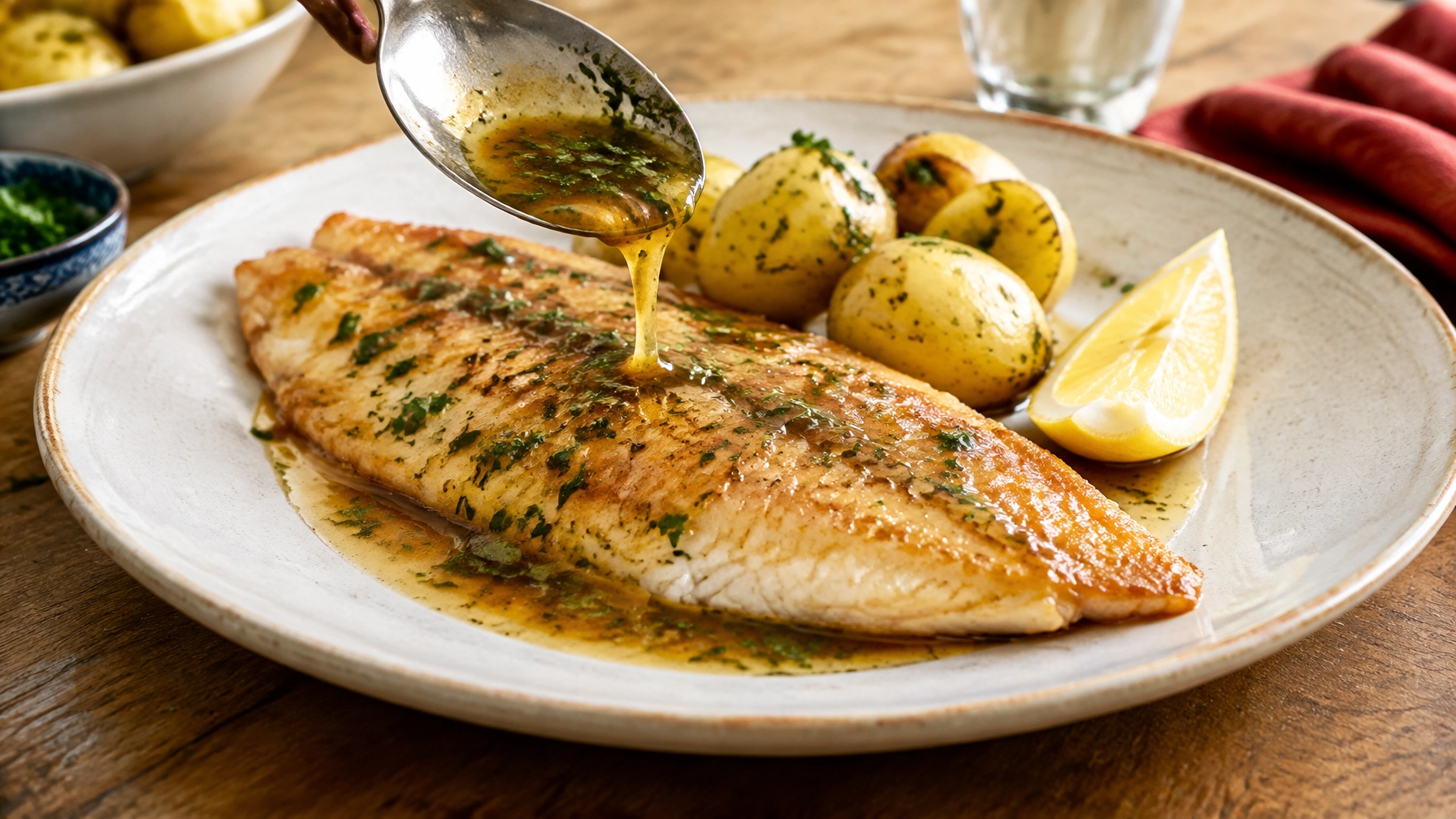
- Add the lemon juice carefully, then stir in the parsley. Spoon the brown butter over the fish and serve at once with lemon wedges.
Sole Meuniere with Brown Butter
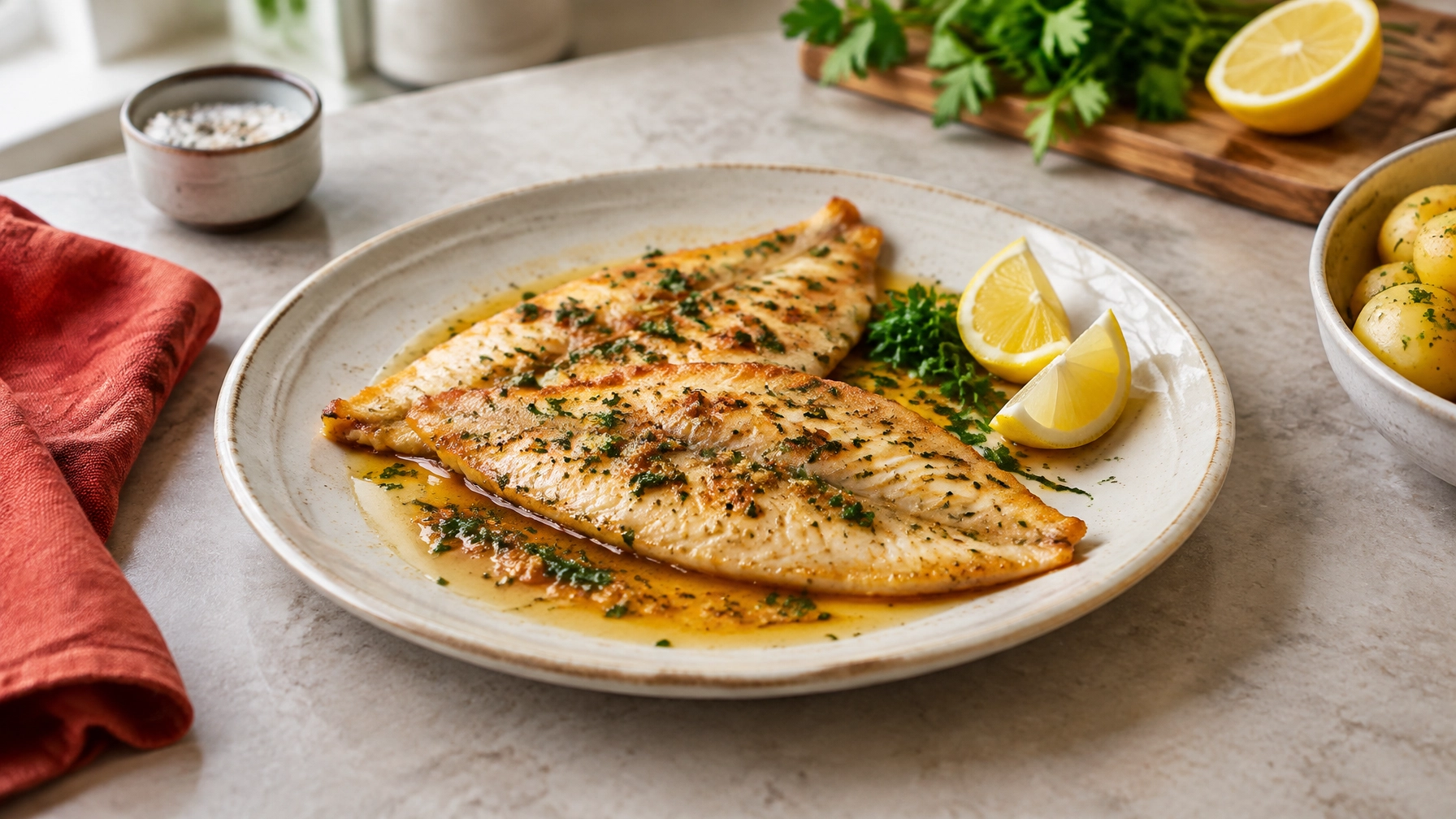
A simple method for making crisp, tender sole with a quick brown butter, lemon and parsley sauce.
Sole meuniere is a classic French fish dish: delicate fillets are lightly floured, pan-fried and finished with browned butter. This version separates the cooking butter from the sauce butter, helping you brown the fish without burning the milk solids in the final sauce.
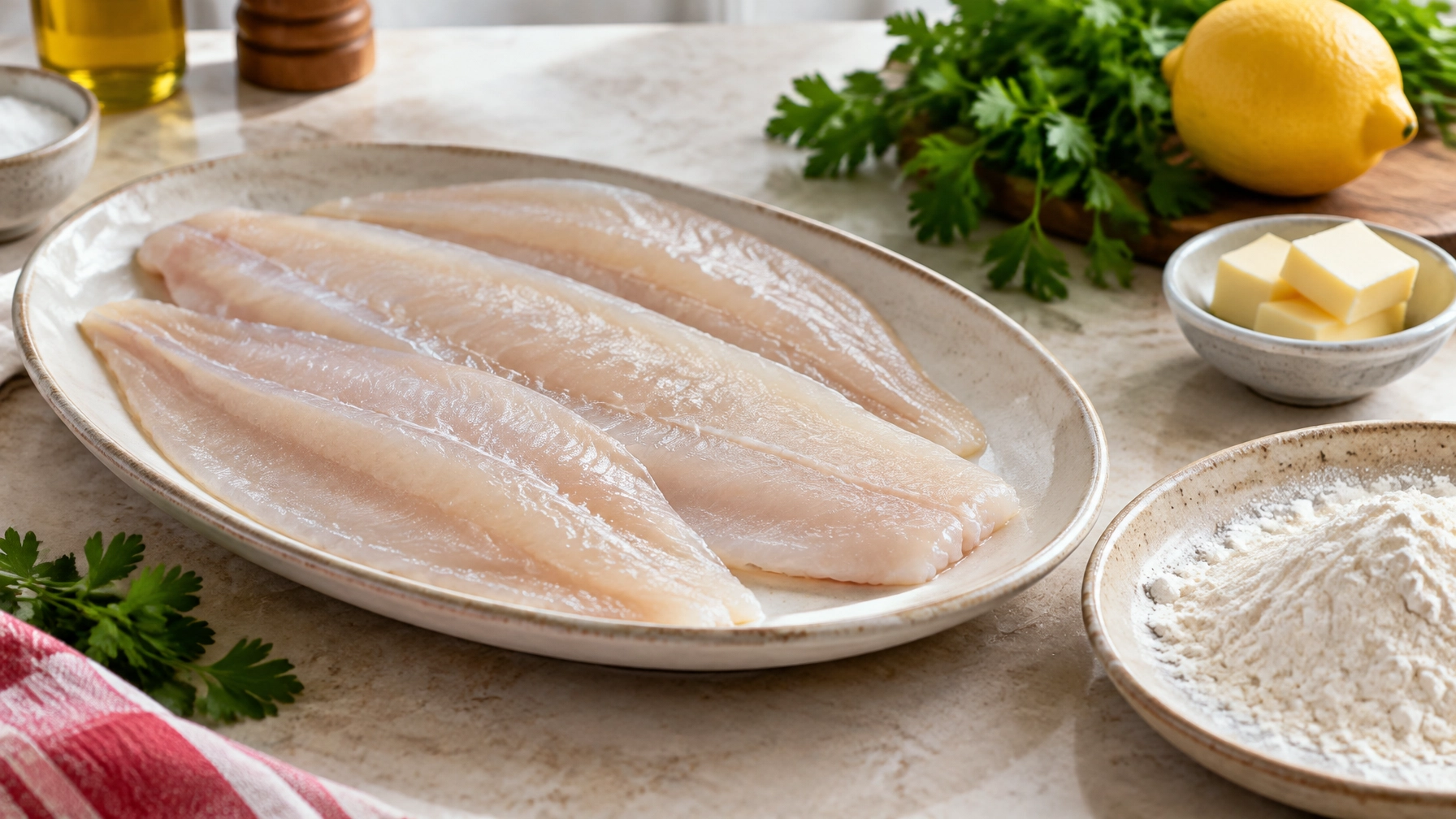
Prepare the fish
Sole fillets are thin and cook quickly, so have the plates, lemon and parsley ready before you start. Patting the fish dry is important: excess moisture can prevent the surface from browning and may cause the butter to splatter.
A fine, even coating of flour helps the fillets develop a light golden crust. Shake off any excess. A heavy coating can turn gummy in the pan and make the finished sauce taste floury.
Brown butter, not burnt butter
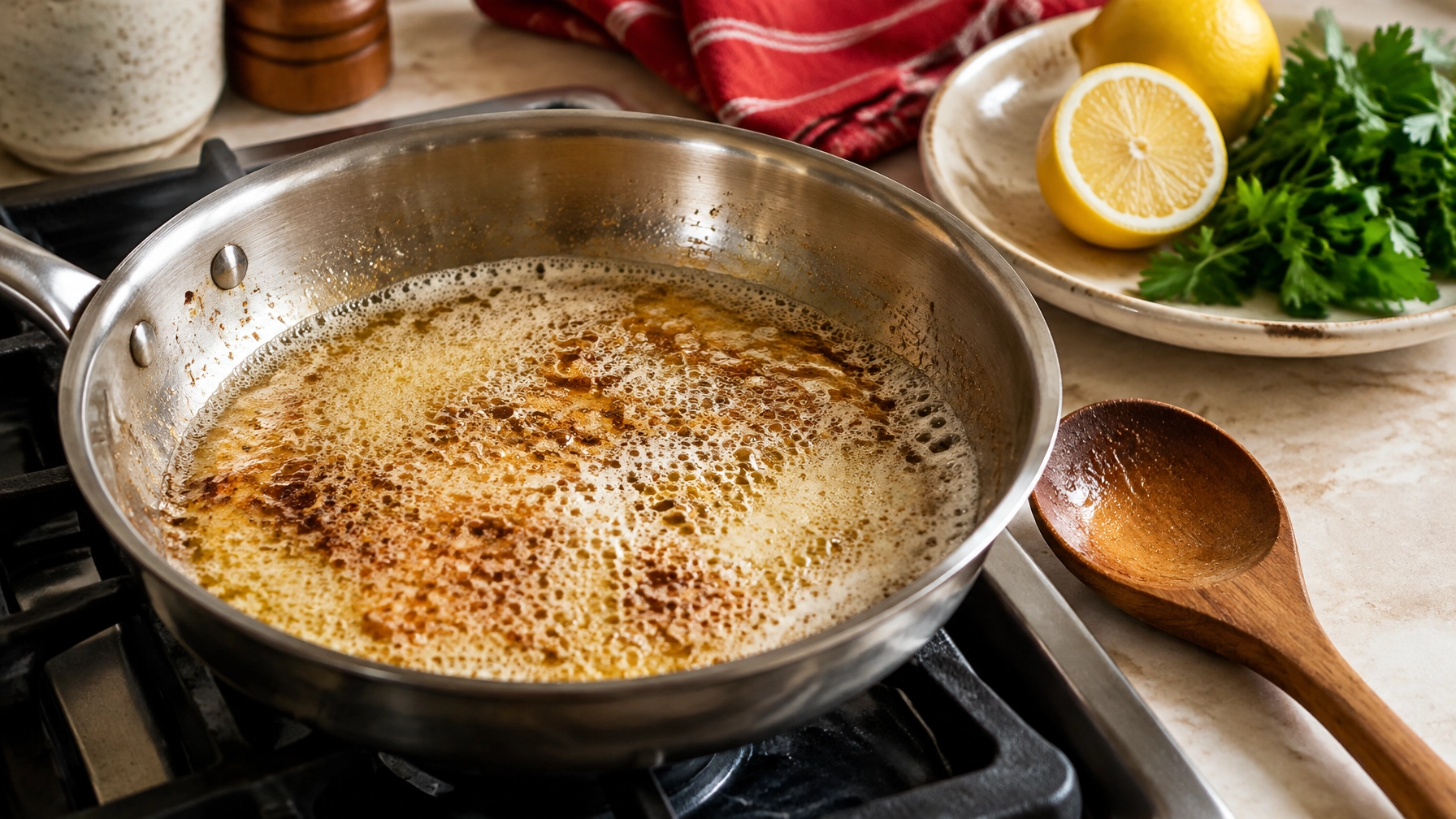
Brown butter, also called beurre noisette, is made by heating butter until its milk solids toast. The butter first melts and foams. As the foam settles, the milk solids change from pale to golden brown and develop a nutty aroma.
Watch the pan closely at this stage. Butter can move from browned to burnt quickly. Remove it from the heat as soon as the solids are hazelnut-brown. Adding lemon juice after taking the pan off the heat helps reduce splattering.
Cooking and serving
Use clarified butter or a neutral oil to cook the fillets, then make the sauce with fresh butter. If the cooking fat contains dark, burnt flour, wipe out the pan before adding the sauce butter. This keeps the sauce clean-tasting.
The fish is ready when the flesh is opaque and separates easily. For food safety, follow the Food Standards Agency's guidance on cooking food thoroughly, including its time and temperature advice: Cooking your food. Serve the fish immediately, while the coating is crisp and the butter sauce is warm.
Recipe
Servings
2 servings
Prep time
15 minutes
Cook time
10 minutes
Total time
25 minutes
Tips
- Dry the fillets well before flouring so they brown instead of steam.
- Use a wide pan and leave space between the fillets. Cook in batches where needed.
- Keep the heat moderate. If the butter smokes or the flour turns dark immediately, lower the heat.
- Watch the sauce closely. The butter can burn in moments once the foam settles.
- Add the lemon juice off the heat to reduce splattering.
- For a careful doneness check, use a clean food thermometer in the thickest part and follow current food safety guidance.
Variations
- Use sole or another delicate white fish: Thin plaice fillets can also work. Adjust the cooking time to the thickness of the fish.
- Add capers: Stir in 1 teaspoon of drained capers with the parsley for a salty, sharp note.
- Use lemon zest: Add a little finely grated zest to the finished sauce for extra citrus aroma.
- Make it dairy-free: Use a suitable plant-based butter alternative for the sauce and neutral oil for frying. The flavour and browning will differ from dairy butter.
FAQ
Can I use salted butter?
Yes. Reduce or omit the salt in the flour mixture, then season the fish to taste before serving.
How do I stop the fish from breaking?
Pat it dry, use a wide spatula and turn it only once. The fillets are delicate, so avoid moving them around while they cook.
Why did my brown butter taste bitter?
The milk solids likely browned too far. Start again with fresh butter, watching closely and taking the pan off the heat as soon as the solids turn golden brown.
Can I make the sauce ahead?
It is best made just before serving. Brown butter thickens as it cools and loses its fresh, warm aroma. If preparing ahead, rewarm gently and do not let it continue browning.
What can I serve with sole meuniere?
Serve with boiled or steamed potatoes and a simple green vegetable. Choose sides that are ready before frying, so the fish can be served as soon as it leaves the pan.