Recipe
Serves
2 1×
Serves 2Prep 10 minCook 10 minTotal 20 min
Ingredients
Method
- Boil the water. Bring a large pot of water to a full boil. Add enough salt to season the pasta as it cooks. The water should be well seasoned but not excessively salty.
- Cook the spaghetti. Add the spaghetti and cook according to the packet instructions, stopping approximately 1–2 minutes before the stated cooking time. The pasta should remain firm because it will finish cooking in the skillet.
- Reserve the water. Before draining, remove at least 150 ml of the cooking water. The water contains starch released by the pasta. Do not discard it.
- Start the garlic in cold oil. Place the olive oil and sliced garlic in a large skillet before turning on the heat. Set the pan over low to medium-low heat.
- Infuse the oil. Cook the garlic slowly, stirring occasionally, until it becomes fragrant and lightly golden. Add the red pepper flakes during the final 30 seconds. Do not allow the garlic to become dark brown. Burnt garlic produces a bitter flavour.
- Add pasta water. Add approximately 60 ml of reserved pasta water to the skillet. It may sputter when it contacts the hot oil. Stir or swirl the pan carefully.
- Transfer the pasta. Add the drained spaghetti directly to the skillet. Use tongs to coat the pasta with the garlic oil and water.
- Emulsify. Toss the spaghetti continuously over medium heat for 1–2 minutes. Add more pasta water, one tablespoon at a time, if the pan looks dry. The finished pasta should appear glossy, with no large pool of oil.
- Finish. Remove the skillet from the heat. Add the chopped parsley and black pepper, if using. Add lemon zest or cheese only if required by preference.
- Serve immediately. Divide the spaghetti between warm bowls. Add a small amount of olive oil or parsley as a finishing garnish if necessary.
Spaghetti Aglio e Olio (Garlic & Olive Oil)
Introduction
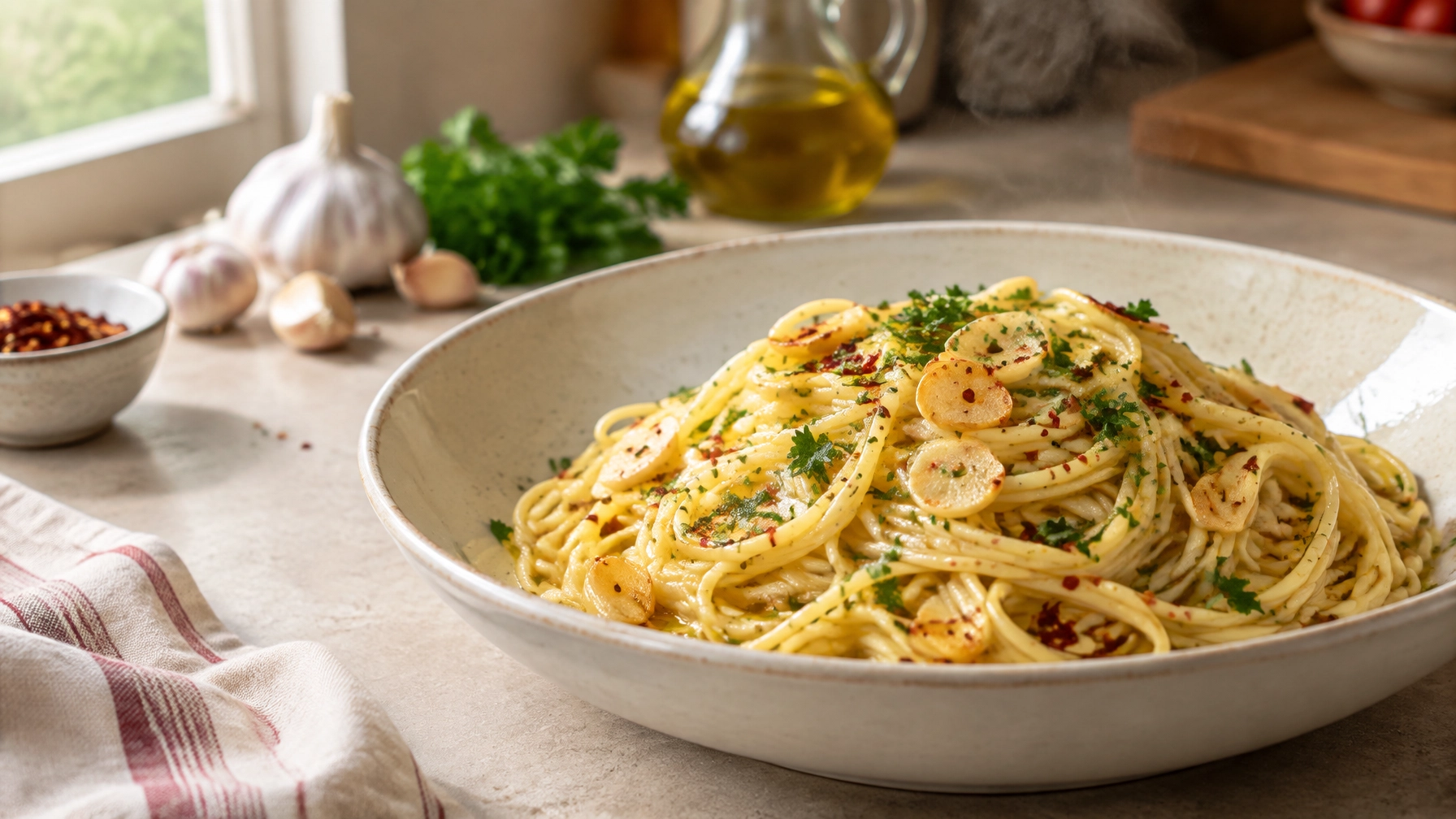
Spaghetti aglio e olio is a basic Italian pasta dish prepared with spaghetti, garlic, extra-virgin olive oil, chili, parsley, and salted pasta water. The ingredient list is short. The cooking method is not complicated, but timing matters.
The required result is a glossy coating that clings to the pasta. The oil should not collect at the bottom of the plate. The garlic should be lightly golden, not dark brown. Reserved pasta water provides starch that helps combine the oil and water into a loose emulsion.
In Italian, aglio means garlic and olio means oil. The dish is commonly associated with Naples and is often called spaghetti aglio, olio e peperoncino when chili is included.
For more background and technique, compare this method with the recipes from Eataly and Serious Eats.
Definition
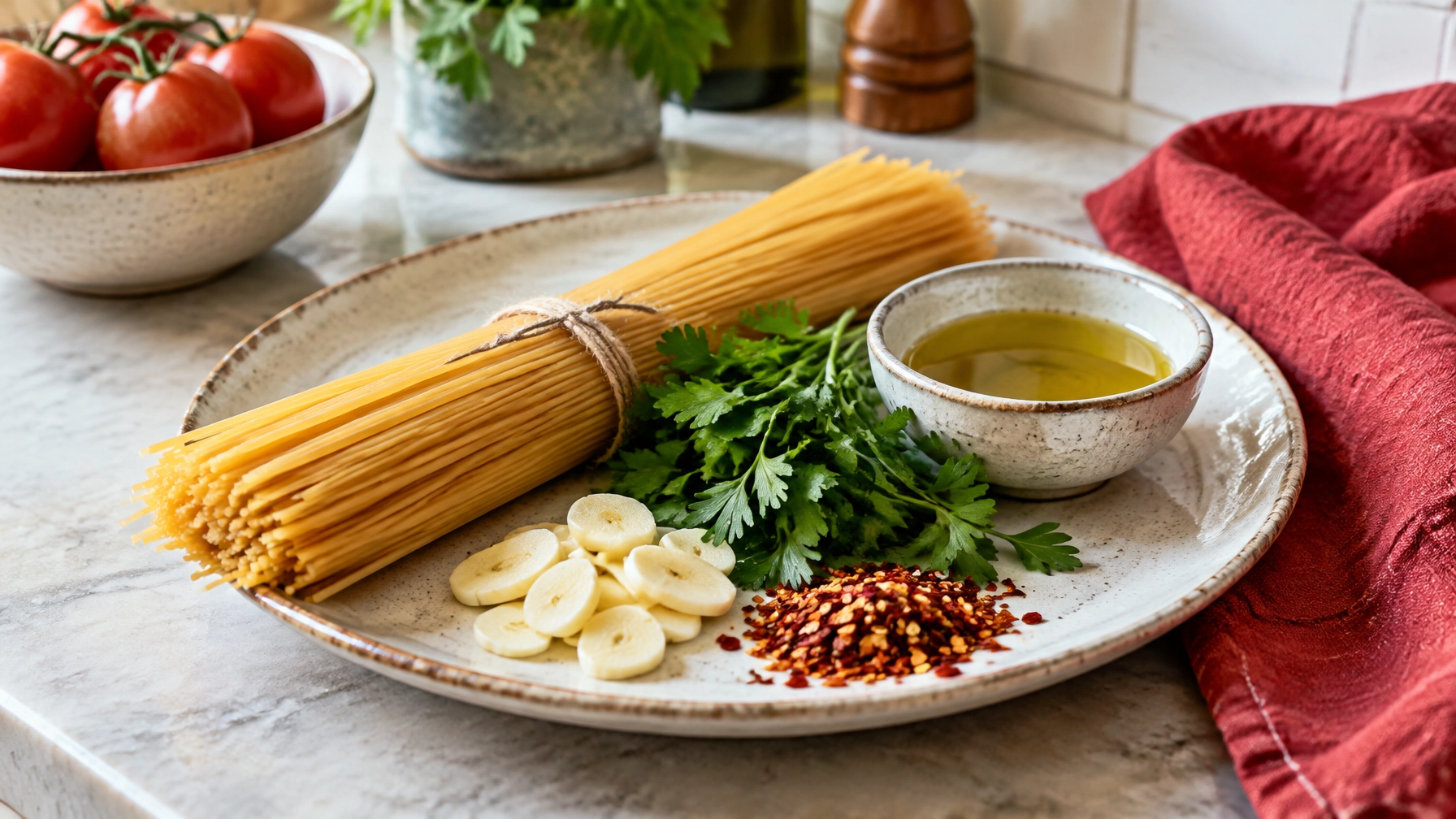
aglio e olio (noun): A pasta preparation made primarily with garlic and olive oil, usually finished with chili, parsley, and starchy pasta water.
emulsion (noun): A temporarily combined mixture of two liquids that do not normally blend, in this case olive oil and pasta water.
al dente (adjective): Pasta cooked until firm when bitten, without a hard or chalky centre.
The defining technical requirement is the emulsion. Simply draining pasta and pouring oil over it produces oily noodles. Adding hot pasta water and tossing the pasta in the pan produces a more even coating.
Overview
- Servings: 2
- Prep time: 10 minutes
- Cook time: 10 minutes
- Total time: 20 minutes
- Course: Main
- Cuisine: Italian
- Method: Stovetop
Tips
- Use a wide skillet. More surface area allows the pasta, oil, and water to combine efficiently.
- Slice the garlic evenly. Thin, uniform slices cook at the same rate. Uneven pieces may leave some garlic raw while others burn.
- Begin with cold oil. A cold start gives the garlic time to release flavour before the oil becomes too hot.
- Control the heat. Garlic should soften and become pale golden. If it browns quickly, lower the heat or remove the skillet temporarily.
- Reserve more water than needed. It is easier to correct a dry sauce than to recover from overcooked pasta.
- Toss with purpose. Agitation helps the starch disperse through the oil and water. Stirring once is insufficient.
- Serve without delay. The emulsion thickens as it cools. Pasta that is glossy in the skillet may become dry if left standing.
- Avoid excessive water. Add it gradually. Too much water can dilute the garlic and chili flavour.
Variations
Lemon: Add finely grated lemon zest at the end. A small squeeze of lemon juice can be used, but excessive juice may make the sauce sharp and watery.
Herb: Replace or supplement parsley with finely chopped basil. Add basil away from direct heat to retain its aroma.
Greens: Add baby spinach, rocket, or blanched broccoli during the final toss. These additions increase the volume and alter the traditional texture.
Anchovy: Melt one or two anchovy fillets into the olive oil with the garlic. This adds savoury depth and salt. Adjust the seasoning before serving.
Cheese: Parmesan or Pecorino may be added off the heat. Cheese is optional and is not necessary for the basic Neapolitan-style preparation.
Whole-grain: Use whole-wheat spaghetti for a firmer, more pronounced flavour. It may require a different cooking time from standard durum-wheat pasta.
FAQ
Can I use pre-minced garlic?
Yes, but sliced fresh garlic is preferable. Pre-minced garlic releases moisture and can cook unevenly. It may also produce a harsher flavour when heated in oil.
Why is my aglio e olio greasy?
The oil and pasta water have not formed a stable coating. Add a small amount of hot pasta water and toss the spaghetti vigorously over medium heat. The pasta should be transferred directly into the skillet rather than served separately.
How much olive oil should I use?
For 200 g of spaghetti, 60 ml is a practical starting quantity. Use slightly more if required, but the finished dish should not have a layer of oil in the bottom of the bowl.
Should I rinse the spaghetti?
No. Rinsing removes surface starch needed for the emulsion. Drain the pasta without rinsing and transfer it directly to the skillet.
Is Parmesan traditional in spaghetti aglio e olio?
Parmesan is commonly used in adaptations, but it is not required in the basic preparation. The classic combination relies on garlic, olive oil, chili, parsley, salt, and pasta water.
Can I make this recipe without chili?
Yes. Omit the red pepper flakes for a mild garlic and olive oil pasta. The cooking process remains unchanged.
Can I prepare aglio e olio in advance?
It is best served immediately. If reheating is necessary, warm the pasta gently in a skillet with a small splash of water. Do not microwave it without added moisture, as the oil may separate and the pasta may become dry.
Service
Spaghetti aglio e olio is a complete meal when served in a moderate portion. A green salad or lightly dressed vegetables can be added without competing with the garlic and olive oil. Bread is optional because the pasta should already carry the sauce.
The final standard is functional: the spaghetti must be hot, the garlic must not be burnt, the chili must be controlled, and the sauce must cling to the strands.
Sources
- Eataly: Spaghetti Aglio, Olio e Peperoncino
- Serious Eats: Spaghetti Aglio e Olio
- The Mediterranean Dish: Spaghetti Aglio e Olio