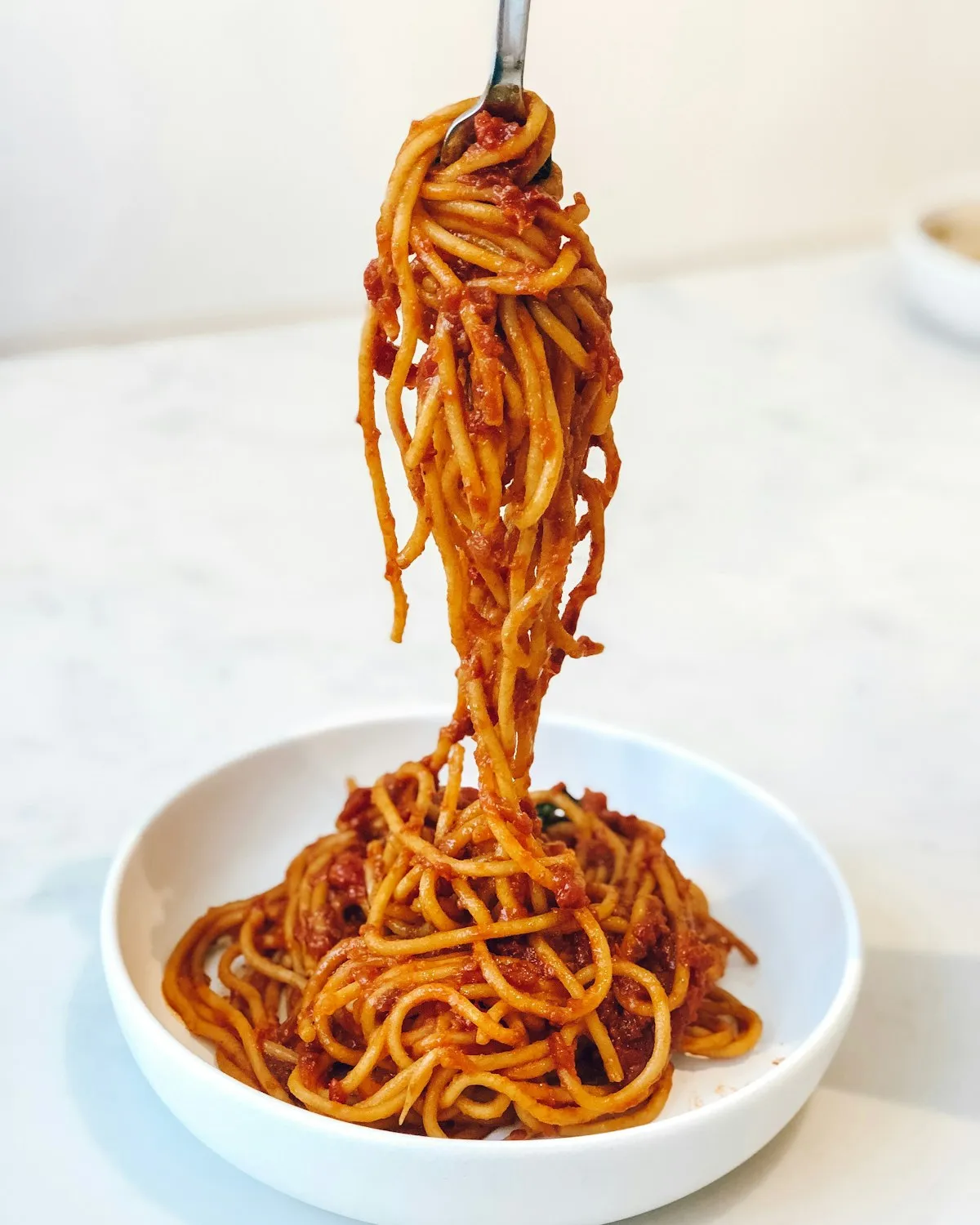
Spaghetti Bolognese (Rich Family Classic)
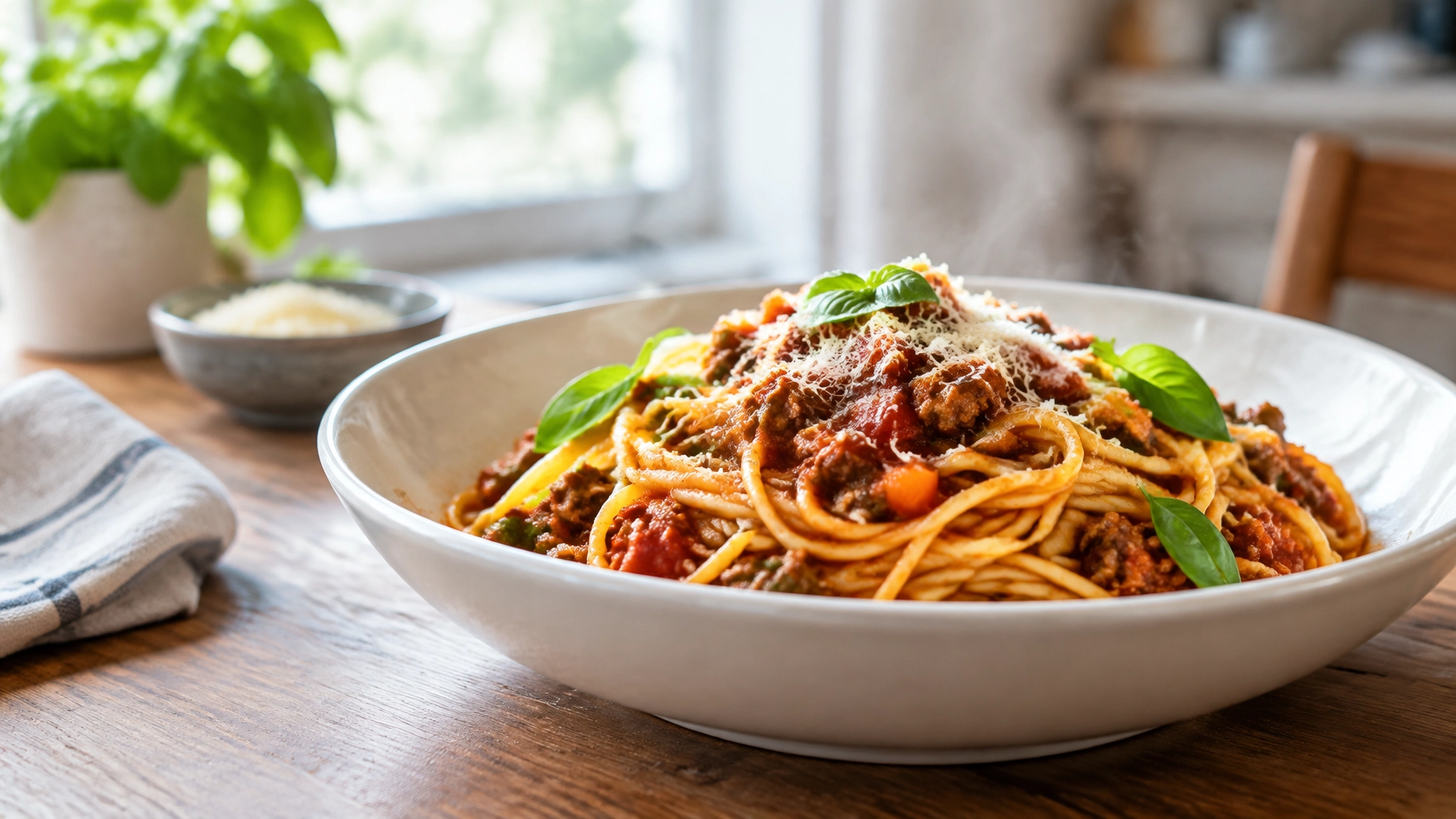
A substantial, slow-simmered spaghetti Bolognese made with beef, pork, pancetta, soffritto, tomatoes, wine and milk. This daily batch recipe serves six and is suitable for family dinners, meal preparation and planned leftovers.
The method is based on standard ragù principles: soften the vegetables properly, brown the meat, reduce the wine, then simmer the sauce until thick and concentrated. For background on the traditional approach, see this spaghetti Bolognese guide from BBC Good Food.
Recipe
Servings
6 portions
Preparation
20 minutes
Cooking
2 hours
Total
2 hours 20 minutes
Ingredients
Sauce
- 2 tablespoons olive oil
- 25 g butter
- 100 g pancetta or streaky bacon, finely diced
- 1 medium onion, finely diced
- 1 medium carrot, finely diced
- 2 celery sticks, finely diced
- 3 garlic cloves, finely chopped
- 500 g beef mince, preferably 15–20% fat
- 200 g pork mince
- 150 ml dry red or white wine
- 2 tablespoons tomato purée
- 800 g canned chopped tomatoes or passata
- 250 ml beef or chicken stock
- 1 bay leaf
- ½ teaspoon dried oregano
- ½ teaspoon dried thyme
- 150 ml whole milk
- 1 teaspoon fine salt, plus more to taste
- ½ teaspoon black pepper, plus more to taste
To serve
- 500 g dried spaghetti
- Finely grated Parmesan
- Fresh basil or flat-leaf parsley, optional
Method
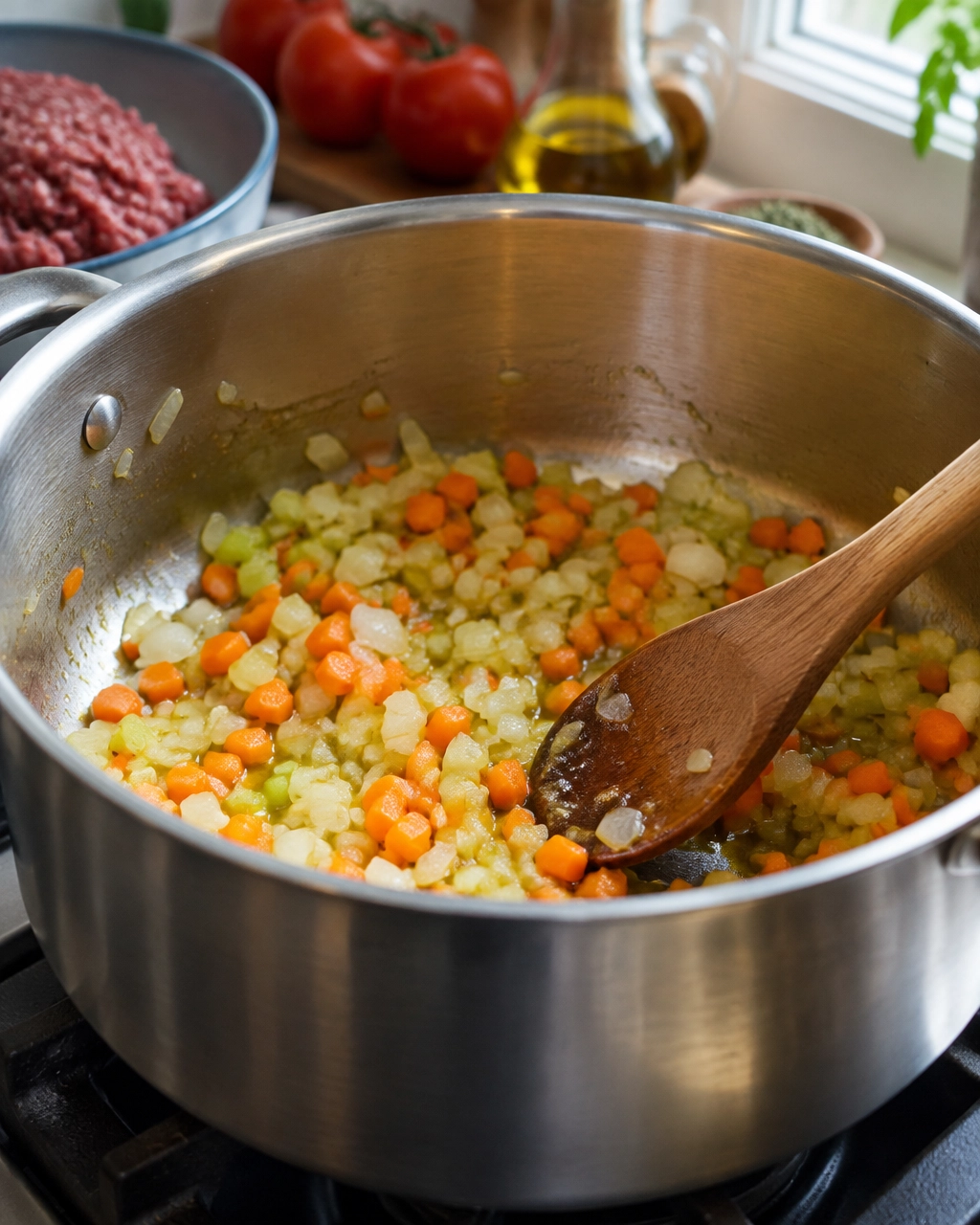
Prepare the soffritto. Heat the olive oil and butter in a large, heavy-based saucepan or casserole over medium heat. Add the onion, carrot and celery. Cook for 8–10 minutes, stirring regularly, until the vegetables are soft and lightly golden.
Cook the pancetta. Add the diced pancetta and cook for 3–4 minutes, until the fat has rendered and the meat is beginning to brown.
Add the garlic. Stir in the garlic and cook for 1 minute. Do not allow it to become dark brown, as this can create a bitter flavour.
Brown the meat. Increase the heat to medium-high. Add the beef mince and pork mince. Break the meat into small pieces with a wooden spoon. Cook until no raw colour remains and the mince has developed browned edges. If the pan is crowded, brown the meat in two batches.
Reduce the wine. Pour in the wine and scrape the base of the pan to release any browned pieces. Simmer for 3–5 minutes, or until the wine has reduced by approximately half.
Add the tomatoes. Stir in the tomato purée and cook for 1–2 minutes. Add the chopped tomatoes or passata, stock, bay leaf, oregano and thyme. Season with the salt and black pepper.
Simmer the sauce. Bring the sauce to a low simmer. Reduce the heat so that it bubbles gently. Cook uncovered or partially covered for 90 minutes to 2 hours. Stir every 20–30 minutes. Add a small amount of water or stock if the sauce becomes dry before the meat is tender.
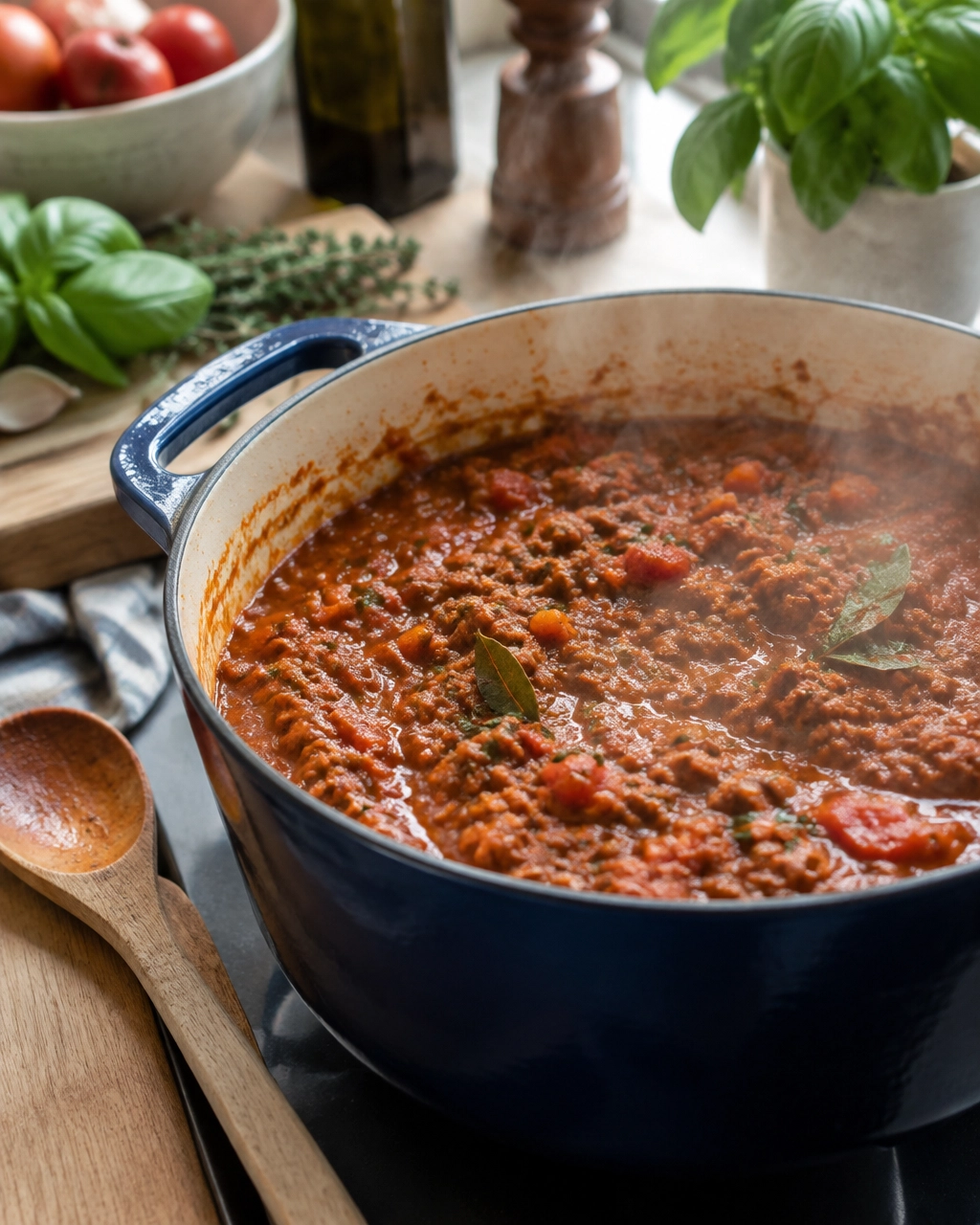
Add the milk. Stir in the milk during the final 15 minutes of cooking. Continue to simmer until the sauce is thick, glossy and meat-forward rather than watery.
Adjust the seasoning. Remove the bay leaf. Taste the sauce and adjust the salt and pepper. If the tomatoes remain noticeably sharp, add a small pinch of sugar. This is optional and should not make the sauce sweet.
Cook the spaghetti. Bring a large pan of well-salted water to the boil. Cook the spaghetti according to the packet instructions until al dente. Reserve approximately 250 ml of pasta water before draining.
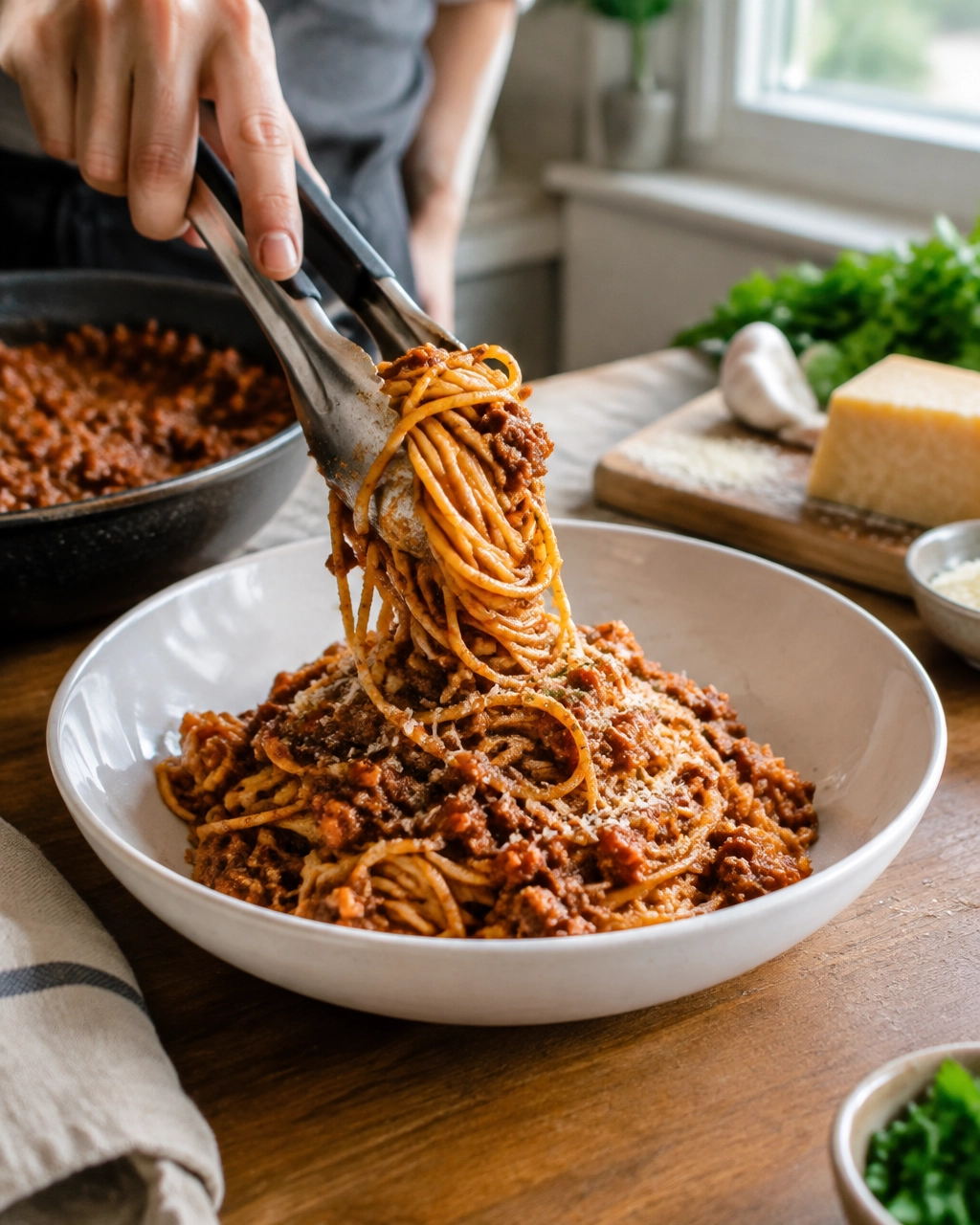
Combine the pasta and sauce. Return the drained spaghetti to the pan or place it in a large serving bowl. Add enough Bolognese sauce to coat the pasta. Toss with a splash of reserved pasta water if the sauce needs loosening.
Serve. Divide between warm bowls. Add grated Parmesan and fresh basil or parsley, if required. Serve immediately.
Tips
- Use moderately fatty mince. Very lean meat can produce a dry sauce. Beef with approximately 15–20% fat provides a more suitable texture.
- Do not rush the vegetables. The onion, carrot and celery form the flavour base. They should be soft before the meat is added.
- Brown the mince in stages if necessary. Meat that is steamed in an overcrowded pan will not develop the same depth of flavour.
- Keep the simmer gentle. A vigorous boil can reduce the liquid too quickly and leave the meat tough. The sauce should bubble slowly.
- Use less tomato than expected. This version is a meat sauce with tomato, rather than a tomato sauce containing meat.
- Add the milk near the end. Milk softens the acidity of the tomatoes and gives the sauce a smoother finish.
- Reserve pasta water. Its starch helps the sauce adhere to the spaghetti without requiring additional oil.
- Rest the sauce before serving. Ten minutes off the heat allows the flavours and texture to settle.
- Prepare it in advance where possible. The cooled sauce can be refrigerated overnight. Reheat it gently in a saucepan, adding a splash of water if required.
Variations
No Pork
Replace the pancetta and pork mince with an additional 200 g beef mince. Use beef mince with enough fat to prevent the sauce from becoming dry.
Vegetarian
Replace the meat with 500 g finely chopped mushrooms, 200 g green or brown lentils and 150 g finely diced walnuts. Use vegetable stock. The simmering time can be reduced to approximately 45 minutes.
Faster Batch
For a shorter version, simmer the sauce for 45–60 minutes. The result will be suitable for a weekday meal but will have less concentrated flavour than the full slow-cooked version.
Gluten-Free
Use certified gluten-free spaghetti. Check the labels on stock, pancetta and other processed ingredients, as formulations vary.
Different Pasta
Traditional ragù is commonly associated with tagliatelle rather than spaghetti. Tagliatelle, pappardelle or rigatoni can be used if a broader or more substantial pasta shape is preferred. The Great British Chefs Bolognese guide provides further background on pasta and sauce preparation.
Storage
Cool the sauce promptly and transfer it to a sealed container. Refrigerate for up to 3 days. Reheat thoroughly in a saucepan until piping hot throughout.
The sauce can also be frozen for up to 3 months. Defrost it in the refrigerator overnight, then reheat gently. Cook fresh spaghetti when serving, as cooked pasta can lose its texture during freezing and reheating.
FAQ
Can I make spaghetti Bolognese the day before?
Yes. The sauce can be prepared one day in advance and refrigerated once cooled. Reheat it slowly, adding a little water or stock if it has thickened excessively.
Should I use red wine or white wine?
Either is suitable for this family-style recipe. Red wine produces a deeper colour and fuller flavour. Dry white wine provides a lighter result and is used in some traditional versions.
Why add milk to Bolognese sauce?
Milk reduces the sharpness of the tomatoes and contributes a smoother texture. It should be added during the final stage rather than at the beginning.
Can I use only beef mince?
Yes. Replace the pork mince with an equal quantity of beef mince. The finished sauce may be slightly less rich, depending on the fat content of the beef.
How do I stop the sauce from becoming watery?
Simmer it uncovered or partially covered and allow excess liquid to reduce naturally. Avoid adding all the stock at once if the tomatoes are already very liquid. Tossing the pasta with the sauce also helps distribute the remaining moisture.
Is spaghetti Bolognese traditionally Italian?
Ragù alla Bolognese is associated with Bologna and is traditionally served with broad pasta such as tagliatelle. Spaghetti Bolognese is a widely established family-style dish outside Italy, using the same general principles of a slow-cooked meat ragù.
Can I freeze leftover Bolognese sauce?
Yes. Freeze the cooled sauce in labelled, portion-sized containers for up to 3 months. Defrost fully in the refrigerator before reheating.
How much sauce should I use per serving?
For six servings, approximately 200–250 g of finished sauce per person is suitable. Add more or less according to the pasta quantity and preferred consistency.