Recipe
Serves
4 1×
Serves 4Prep 10 minCook 15 minTotal 25 min
Ingredients
Method
- Bring a large pan of well-salted water to the boil. Add the spaghetti and cook according to the packet instructions until al dente. Before draining, scoop out a mugful of the starchy cooking water.
- While the pasta cooks, put the ricotta in a large bowl. Add the lemon zest and juice, parmesan, olive oil and plenty of black pepper. Beat with a spoon or whisk until smooth and spoonable.
- If using peas, stir them into the pasta pan for the final minute of cooking. They should be hot and tender but still hold their shape.
- Drain the spaghetti and peas, taking care not to rinse them. Keep the pan off the heat. Add the pasta to the bowl of ricotta mixture.
- Add a spoonful of hot pasta water and toss the spaghetti thoroughly. Continue adding the water a spoonful at a time until the sauce turns loose, glossy and able to coat the strands. You may not need all the reserved water.
- Toss through the torn basil. Taste and add more black pepper or a little extra lemon zest if needed. Keep the bowl away from direct heat; the residual warmth of the pasta is enough.
- Divide between warm bowls and finish with extra parmesan, lemon zest and black pepper. Serve straight away while the sauce is silky.
Spaghetti with Lemon and Ricotta
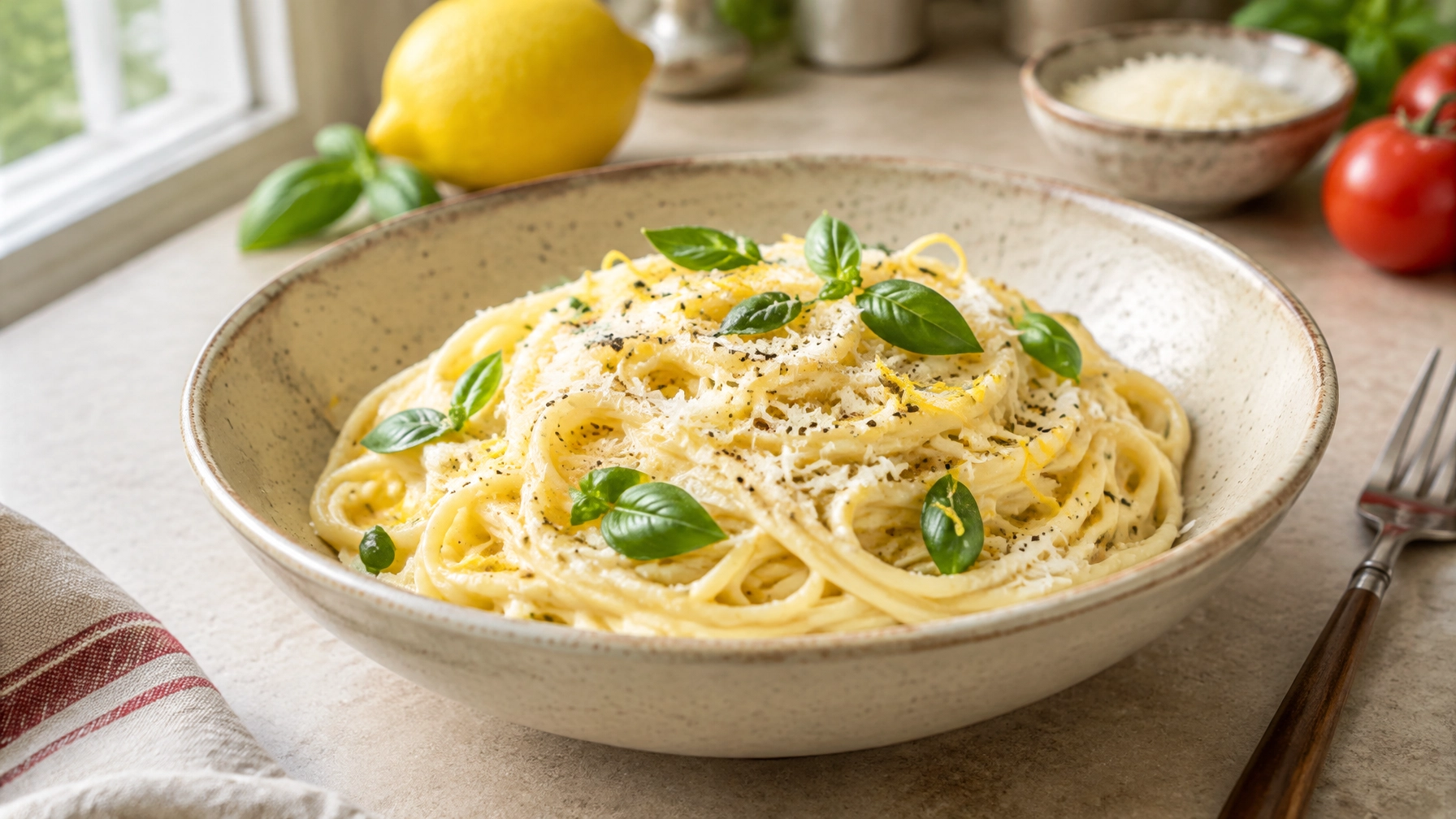
This spaghetti is made for evenings when you want a proper bowl of pasta without making a separate cooked sauce. The ricotta, lemon, parmesan and olive oil are stirred together while the pasta boils.
The key is to keep the sauce away from direct heat. A little hot pasta water loosens the ricotta so it clings to the spaghetti instead of sitting in thick clumps.
Recipe
Serves: 4
Prep time: 10 minutes
Cook time: 15 minutes
Total time: 25 minutes
Tips
Use a bowl large enough to toss the pasta comfortably. The sauce needs room to move around the strands, and a crowded bowl makes it harder to distribute the ricotta evenly. If your bowl is small, toss the sauce and pasta in batches, then combine them to serve.
Save the pasta water before draining. It contains starch from the spaghetti, which helps the ricotta mixture cling to the pasta. Plain water can thin the sauce, but it will not give it the same coating texture. Add the reserved water gradually: a spoonful can make a noticeable difference.
The sauce is meant to remain off the heat. Ricotta can become grainy or separate if it is heated directly in a pan. Instead, use the heat held by the freshly cooked spaghetti. If the sauce begins to look thick, add a little more hot pasta water and toss again rather than returning it to the hob.
Drain the spaghetti but do not rinse it. Rinsing removes surface starch and cools the pasta, both of which make it harder for the sauce to coat each strand. Work while the pasta is hot, and serve as soon as the sauce is smooth.
Taste before serving. Parmesan adds salt, and the pasta water is salted too, so the finished dish may not need extra salt. More lemon zest gives a fresh citrus aroma, while additional juice makes the flavour sharper. Add either in small amounts so the ricotta remains balanced.
If the pasta sits for a few minutes and the sauce thickens, loosen it with another spoonful of hot water and toss. This is best eaten soon after it is made, when the sauce is soft and glossy.
Variations
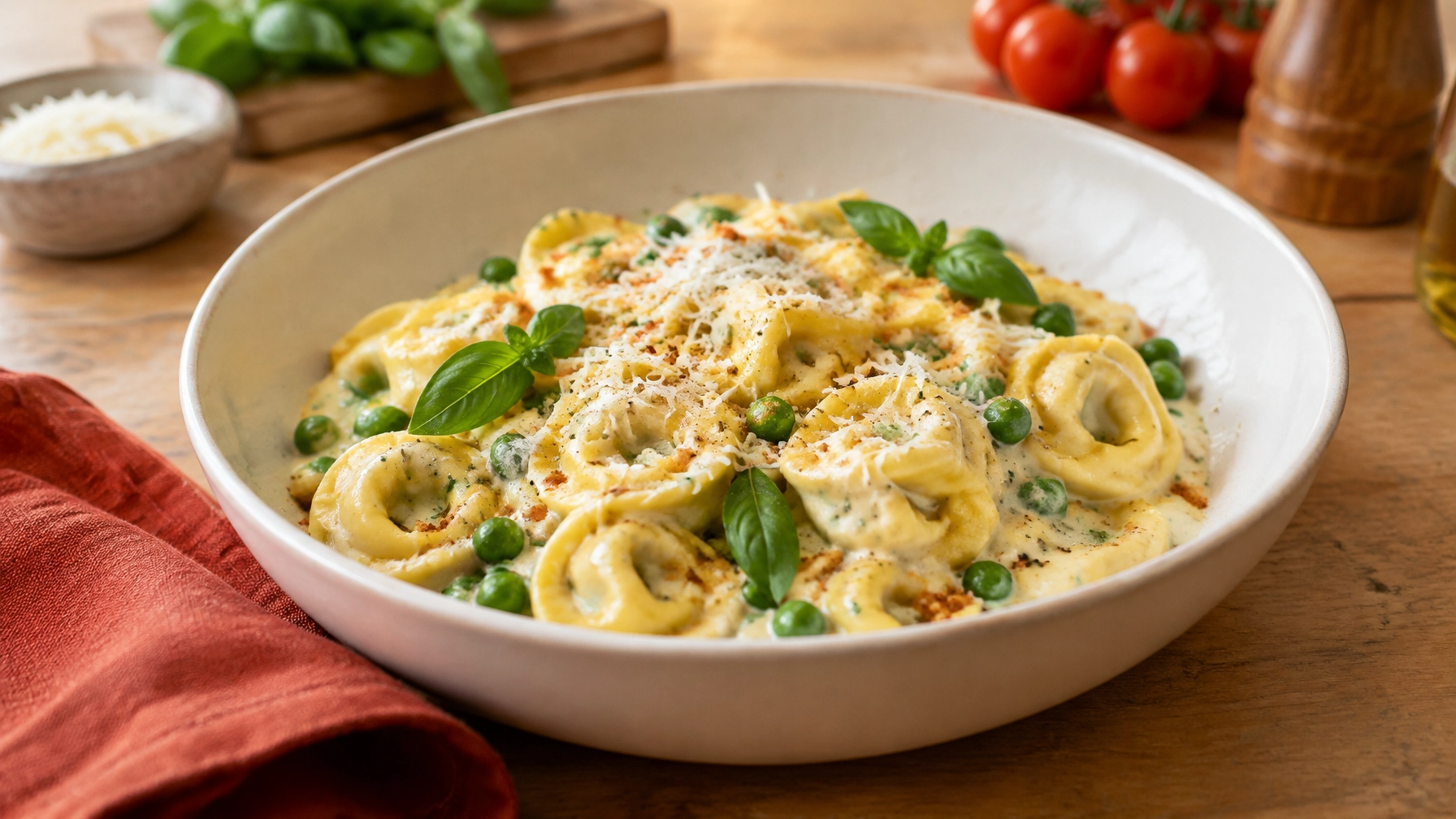
For a little extra green, stir a handful of defrosted peas into the pasta for its final minute of cooking. Drain them with the spaghetti, then toss everything with the ricotta mixture. The peas add a sweet contrast to the lemon and black pepper without needing another pan.
For a more pronounced citrus flavour, add extra finely grated lemon zest at the end. Zest gives fragrance without adding much liquid. If you want a sharper taste, add a small squeeze of lemon juice after tossing, then taste again before adding more.
To make the bowl more substantial, serve it with a simple side salad or cooked vegetables. Keep additions modest: the ricotta sauce is mild, so strongly flavoured extras can dominate the lemon and basil.
You can also change the herbs. Basil gives the dish a familiar fresh finish; a small amount of finely chopped parsley works if basil is not available. Add herbs at the end rather than cooking them, so their flavour stays fresh.
FAQ
Can I make the sauce ahead of time?
You can mix the ricotta, lemon, parmesan, olive oil and pepper shortly before cooking the pasta, then cover and chill it briefly if needed. For the smoothest result, bring it closer to room temperature before tossing. The finished pasta is best served immediately, as the sauce thickens as it cools.
What should I do if the sauce is too thick?
Add hot, starchy pasta water a spoonful at a time while tossing. Stop when the ricotta mixture loosens and coats the spaghetti. Adding too much at once can make the sauce watery, so give each addition a moment to combine before adding more.
Can I reheat leftovers?
This dish is best eaten freshly made because reheating can make the ricotta sauce grainy. If you have leftovers, warm them gently in a pan over low heat with a splash of water, tossing often. Do not let the sauce boil or heat it directly for long.