Recipe
Serves
2 1×
Serves 2Prep 10 minCook 25 minTotal 35 min
Ingredients
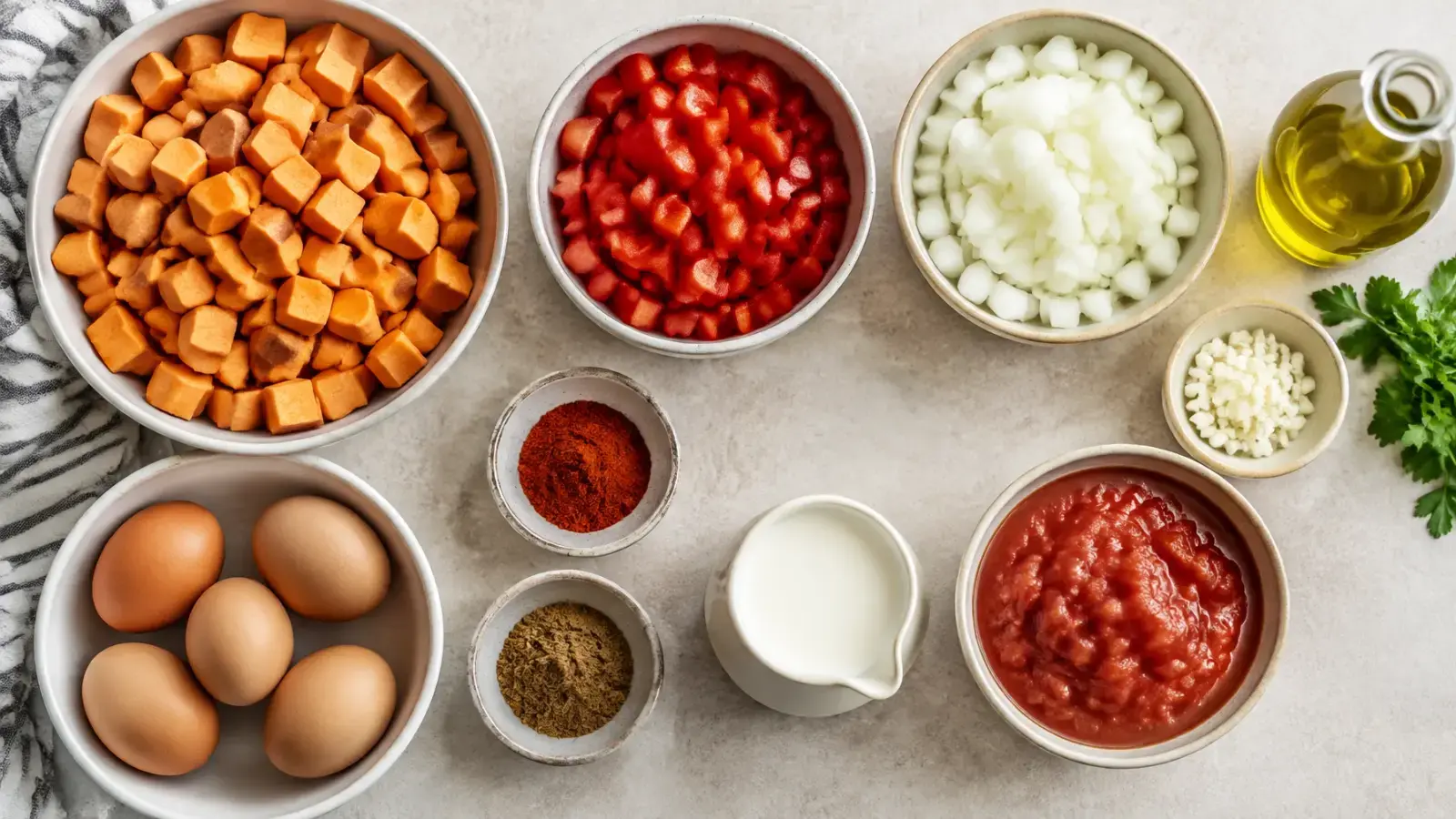
- 1 large sweet potato, about 300 g, peeled or scrubbed and cut into ½-inch cubes
- 1½ tablespoons olive oil
- ½ medium yellow or red onion, finely chopped
- 1 small red bell pepper, seeded and diced
- 2 garlic cloves, minced
- ½ teaspoon smoked paprika
- ½ teaspoon ground cumin
- ¼ teaspoon salt, plus more to taste
- ¼ teaspoon black pepper
- 2 large eggs
- 1 tablespoon water, optional
- 1 tablespoon chopped fresh parsley or green onion, for serving
- Hot sauce or red pepper flakes, optional
Method
- Use a large skillet with a lid.
- A 10- or 12-inch skillet provides enough space for the vegetables to brown instead of steam continuously.
- The sweet potatoes may be peeled or left unpeeled.
- If leaving the skin on, scrub them well and remove any damaged areas.
- The skin adds texture but can remain firmer than the interior.
- For soft yolks, cook the eggs for approximately 3 to 5 minutes after covering the pan.
- For fully firm yolks, cook for several additional minutes.
- Food safety guidance generally recommends fully cooked eggs for pregnant people, young children, older adults, and anyone with a weakened immune system.
Sweet Potato Hash & Eggs (One-Pan Breakfast)
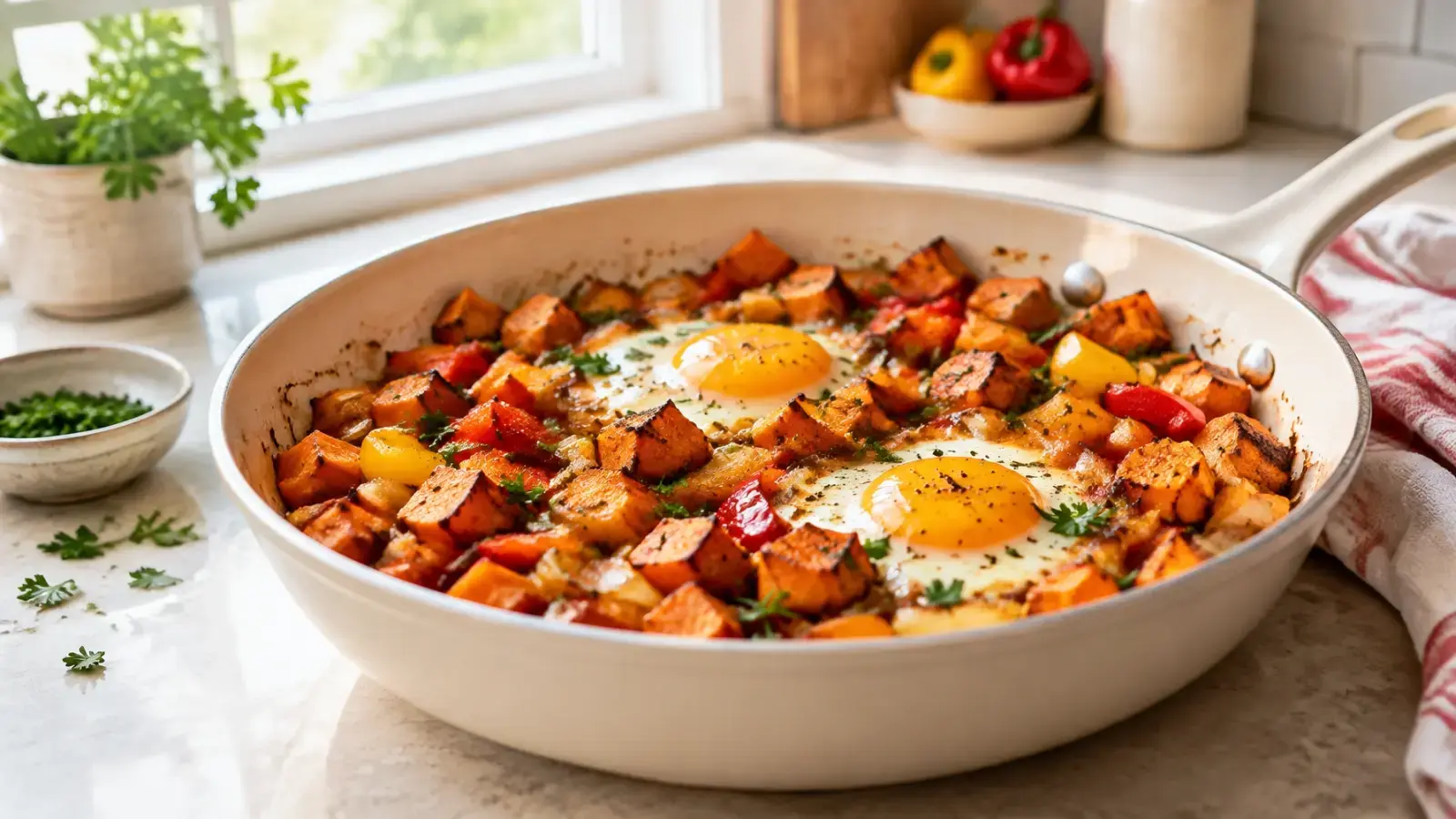
This sweet potato hash and eggs recipe is a practical one-pan breakfast made with tender sweet potatoes, peppers, onion, garlic, and baked-in eggs. The sweet potatoes become lightly browned on the outside and soft in the center, while the eggs cook directly in small wells made in the hash.
The recipe serves two and can be adjusted for one person or a larger group. It is vegetarian as written, naturally gluten-free, and easy to adapt with greens, cooked sausage, beans, or additional vegetables.
The main requirement is consistent dicing. Cut the sweet potatoes into small cubes so they cook at the same rate as the peppers and onion. A lid helps soften the potatoes before the final browning stage.
Why it works
A sweet potato hash can take longer than expected if the pieces are too large or the pan is crowded. This method uses a covered skillet first, which allows the sweet potatoes to steam and soften. The lid is then removed so excess moisture can evaporate and the edges can brown.
The eggs are added at the end. Making shallow wells in the vegetables keeps the eggs in place and allows the whites to set without overcooking the hash.
Similar versions of this dish use the same basic process: cook the vegetables until tender, create spaces for the eggs, then cover the pan until the whites are set. For further recipe comparisons, see this sweet potato hash with eggs recipe from Eggland’s Best and this sweet potato hash recipe from the American Heart Association.
Preparation notes
Use a large skillet with a lid. A 10- or 12-inch skillet provides enough space for the vegetables to brown instead of steam continuously.
The sweet potatoes may be peeled or left unpeeled. If leaving the skin on, scrub them well and remove any damaged areas. The skin adds texture but can remain firmer than the interior.
For soft yolks, cook the eggs for approximately 3 to 5 minutes after covering the pan. For fully firm yolks, cook for several additional minutes. Food safety guidance generally recommends fully cooked eggs for pregnant people, young children, older adults, and anyone with a weakened immune system.
Sweet Potato Hash & Eggs
Servings: 2
Prep time: 10 minutes
Cook time: 25 minutes
Total time: 35 minutes
Category: Breakfast
Method: Stovetop
Cuisine: American-inspired
Tips for reliable results
Dice the sweet potato evenly. Small, uniform cubes cook more quickly and prevent a mixture of undercooked centers and over-soft edges.
Do not add the eggs too soon. The hash should be tender before the eggs are added. If the vegetables need more time, the eggs may become overcooked while the sweet potato finishes.
Use medium-low heat for the eggs. High heat can brown the bottom of the hash too quickly while leaving the egg whites unset.
Keep the lid on during the final stage. Trapped heat cooks the top of the eggs without requiring them to be flipped.
Add salt gradually. The amount required can vary depending on whether you add sausage, bacon, cheese, or other salty ingredients.
Serve directly from the pan. The eggs continue cooking slightly from the residual heat, so remove the skillet as soon as they reach the required doneness.
Variations
Add leafy greens
Stir in two handfuls of baby spinach or finely chopped kale after the peppers soften. Cook until the greens wilt before adding the eggs.
Add beans
Add ½ cup of drained black beans or white beans with the spices. Beans increase the bulk and protein content of the dish without requiring another pan.
Add sausage
Cook 100 g of sliced or crumbled cooked sausage before adding the sweet potato. If the sausage releases a large amount of fat, remove some before continuing. Ensure meat is fully cooked before serving.
Add cheese
Sprinkle grated cheddar, Monterey Jack, or feta over the hash immediately before adding the eggs. Cover the pan and continue as directed.
Increase the heat
Add ¼ teaspoon of cayenne pepper, sliced jalapeño, or a spoonful of hot sauce. The sweet potato provides a mild contrast to stronger spices.
Make it dairy-free
The base recipe is dairy-free. Check any sausage, cheese substitute, or prepared topping before adding it.
Storage and reheating
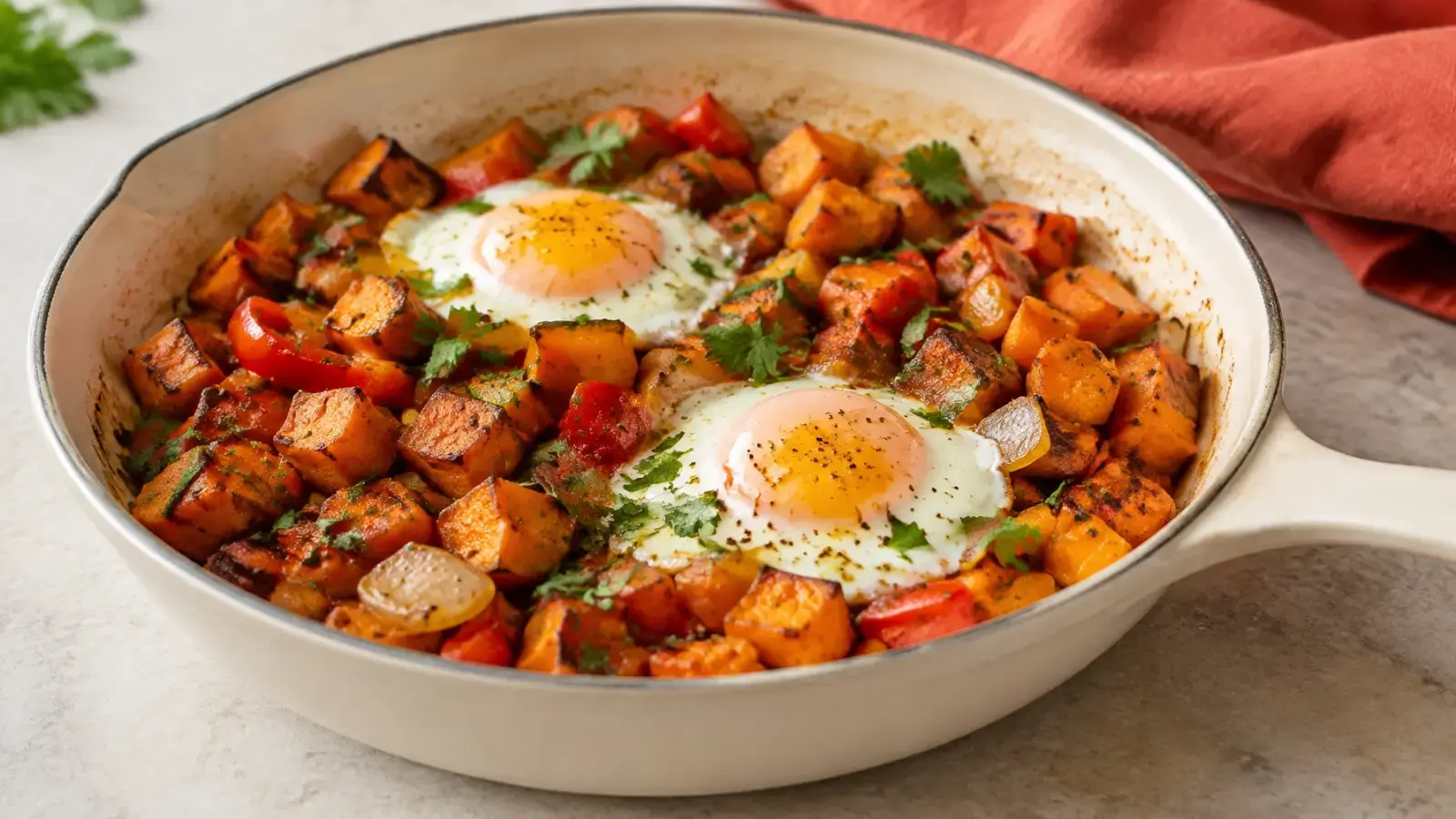
For best results, store the hash and eggs separately if possible. Transfer leftovers to a shallow airtight container and refrigerate within two hours.
The cooked hash keeps for up to three days in the refrigerator. Reheat it in a skillet over medium heat with a splash of water or a small amount of oil. Eggs are best eaten immediately, as reheating can make the whites firm and rubbery.
If preparing the hash in advance, cook the vegetables fully, cool them promptly, and refrigerate them. Reheat the hash in a skillet, then add fresh eggs just before serving.
FAQ
Can I make sweet potato hash without a lid?
Yes. Add a few tablespoons of water, cover the sweet potatoes with foil if necessary, and cook until tender. A lid is more efficient because it traps steam and reduces cooking time.
Can I use regular potatoes?
Yes. White or yellow potatoes can replace the sweet potato in equal quantities. They may require a few additional minutes of cooking, depending on the size of the cubes.
How do I prevent watery egg whites?
Make sure the hash is not overly wet before adding the eggs. Cook uncovered for a few minutes to evaporate excess moisture, then add the eggs and cover only for the final cooking stage.
Can I bake this recipe instead?
Yes. Transfer the cooked vegetable hash to an oven-safe skillet, make two wells, and crack in the eggs. Bake at 190°C / 375°F until the whites are set, approximately 7 to 10 minutes. Cooking time will vary according to the skillet and the desired yolk consistency.
How can I cook the eggs fully?
Keep the skillet covered over medium-low heat until both the whites and yolks are firm. You can also break the yolks after adding the eggs if fully set eggs are required quickly.
Is this recipe suitable for meal prep?
The vegetable hash is suitable for meal prep. Store it separately and add freshly cooked eggs when serving for the best texture.
Recipe summary
This one-pan sweet potato hash and eggs recipe uses basic ingredients and a controlled cooking sequence. Steam the sweet potatoes until tender, brown the vegetables, add the eggs, and cover until set. The result is a complete breakfast with limited washing-up and several practical options for adjustment.