Recipe
Serves
4 1×
Serves 4Prep 50 minTotal 1H2 min
Ingredients
Method
- Make the dough. Mix the flour and salt in a bowl. Stir in the oil and 125 ml warm water. Mix until a dough forms, adding the remaining water a little at a time if the dough feels dry.
- Knead and rest. Knead the dough for 3–4 minutes, until smooth and pliable. Cover and leave it to rest at room temperature for 30 minutes. Resting makes the dough easier to roll thinly.
- Prepare the toppings. Melt the butter in a frying pan over medium-low heat. Add the onion and cook for 5–7 minutes, stirring occasionally, until softened but not browned. Transfer to a plate.
- Cook the bacon. Add the bacon to the same pan and cook until it begins to release its fat and is lightly golden. Transfer it to a plate lined with kitchen paper. If using very small or thin pieces, watch closely so they do not become too crisp.
- Heat the oven and tray. Place a sturdy baking tray on the middle shelf. Heat the oven to 250°C, or to its highest setting if it does not reach that temperature. Allow the tray to heat fully.
- Mix the cream layer. Stir the crème fraîche and fromage blanc together. Season with black pepper and a small grating of nutmeg. Taste before adding salt, as the bacon may already provide enough.
- Roll the dough. Lightly flour the work surface and roll the dough into a thin oval or rectangle, about 1–2 mm thick. Keep the shape small enough to fit the hot tray. Transfer the dough to a sheet of baking paper.
- Add the toppings. Spread the cream mixture over the dough in a thin, even layer, leaving a narrow border. Scatter over the softened onion and bacon.
- Bake. Carefully slide the baking paper and tart onto the hot tray. Bake for 10–12 minutes, checking from 8 minutes onwards. It is ready when the edges are crisp and golden and the topping is bubbling lightly.
- Serve. Remove the tart from the oven, cut it into squares or strips and serve hot.
Tarte Flambee (Alsatian Bacon and Onion Tart)
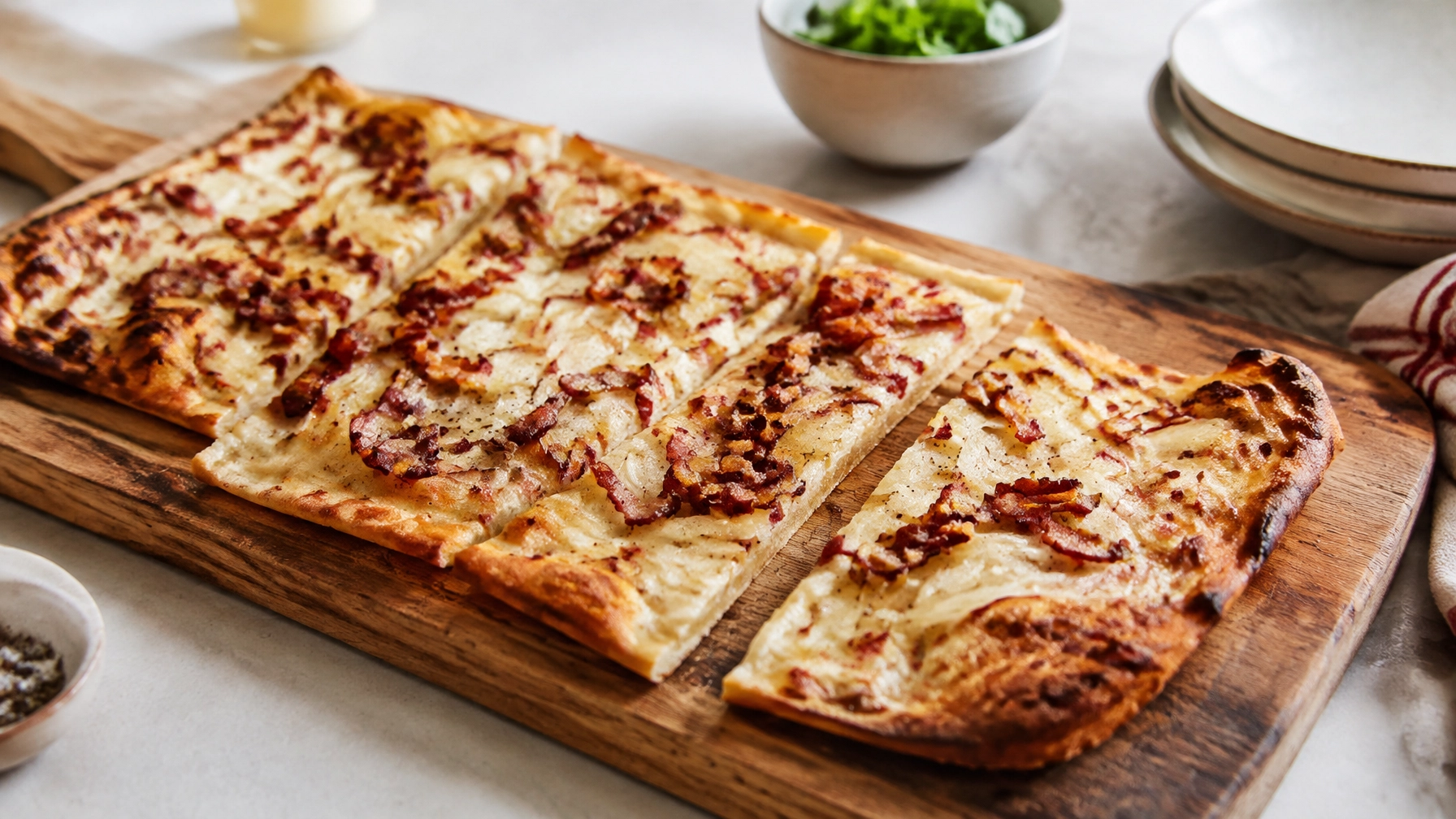
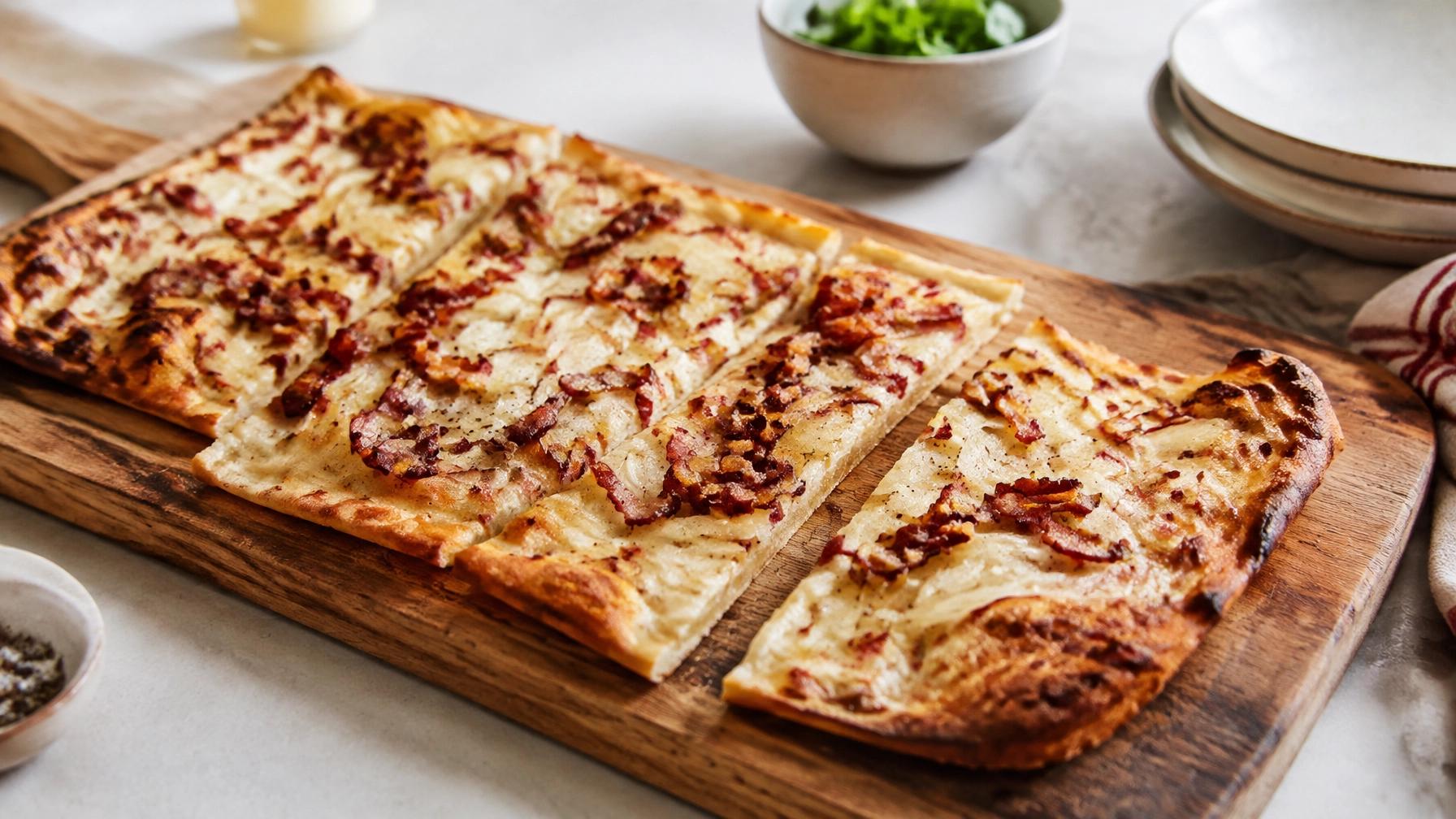
Tarte flambée is a crisp Alsatian flatbread topped with a thin layer of cream, soft onions and smoky bacon.
Definition
Tarte flambée (noun): a thin, quickly baked Alsatian tart traditionally topped with cream, onions and bacon.
Also called flammekueche or flammkuchen, it is associated with Alsace, a region on the French-German border. One commonly cited account links the dish to farm bakers who used a piece of dough to test the heat of a wood-fired bread oven before baking loaves. The tart cooks quickly at high heat, which helps produce its characteristic crisp base.
The name does not mean the tart is flambéed. No alcohol is needed. The classic topping is simple: a creamy dairy layer, thinly sliced onions and smoked pork. This home version uses an unleavened dough that can be rolled very thinly and baked on a preheated tray.
Texture
A good tart has a thin, crisp base and a light layer of topping. It should not resemble a thick-crust pizza. Rolling the dough evenly and heating the baking tray before baking both help the centre cook before the edges become too dark.
The cream mixture should spread easily but not run. Crème fraîche gives a rich, slightly tangy base. Fromage blanc is a traditional option; full-fat Greek yoghurt can be used when fromage blanc is not available. Stirring the dairy together before spreading makes it easier to cover the dough in a thin layer.
Onions are softened before baking so they are tender when the crust is ready. Bacon can be briefly cooked first to render some fat and deepen its flavour. Drain it before adding it to the tart.
Recipe
Servings: 4
Prep time: 50 minutes, including 30 minutes resting
Cook time: 10–12 minutes
Total time: 1 hour 2 minutes
Tips
- Roll it thinly. A thick base takes longer to bake and can become bread-like rather than crisp.
- Preheat the tray. A hot surface gives the dough a better start and helps the centre bake through.
- Use restrained toppings. A thick layer of cream or a large amount of onion can make the middle damp.
- Slice the onion finely. Thin slices soften quickly and spread evenly over the base.
- Adjust the oven time. Ovens vary. Begin checking early, especially if yours reaches a very high temperature.
- Bake one tart at a time. This keeps the oven temperature steady and makes it easier to transfer the dough safely.
Variations
- Gratinée: Add a modest amount of grated Emmental or Gruyère. This is a richer variation rather than the simplest classic version.
- Forestière: Replace the bacon with thinly sliced mushrooms, or use mushrooms alongside a smaller amount of bacon.
- Vegetarian: Omit the bacon and add mushrooms or finely sliced leeks. Cook watery vegetables first so they do not release excess moisture on the tart.
- Herbed: Add a small amount of fresh thyme to the cream mixture. Keep the seasoning light so it does not overpower the onion and bacon.
- Bread-dough version: Use a thin piece of bread dough instead of the unleavened base. The result will be slightly more bread-like.
FAQ
Is tarte flambée the same as pizza?
It is a baked flatbread with some similarities, but the traditional topping is based on cream rather than tomato sauce. The base is rolled very thin and is usually unleavened.
Does the name mean it contains alcohol?
No. The tart is not flambéed, and this recipe contains no alcohol.
Can I make the dough ahead?
Yes. Cover it and refrigerate it for up to one day. Let it sit at room temperature for about 20 minutes before rolling. Keep the cream mixture and toppings separate until you are ready to assemble and bake.
Can I assemble it in advance?
It is best assembled just before baking. Once the cream mixture is spread over the dough, moisture can soften the base if it sits for too long.
How should leftovers be stored and reheated?
Refrigerate leftovers in a covered container and use within two days. Reheat on a baking tray in a hot oven until warmed through and crisp. The base will soften if reheated in a microwave.