Recipe
Ingredients
Method
- Soften the onion.
- Bloom the spices with garlic and ginger.
- Build the tomato and coconut sauce.
- Simmer the chickpeas and finish with greens.
- Soften the onion.
- Add the aromatics.
- Build the tomato base.
- Add the chickpeas and coconut milk.
- Reduce the sauce.
- Add the greens and finish.
Vegan Coconut Chickpea Curry (Easy 30-Minute)
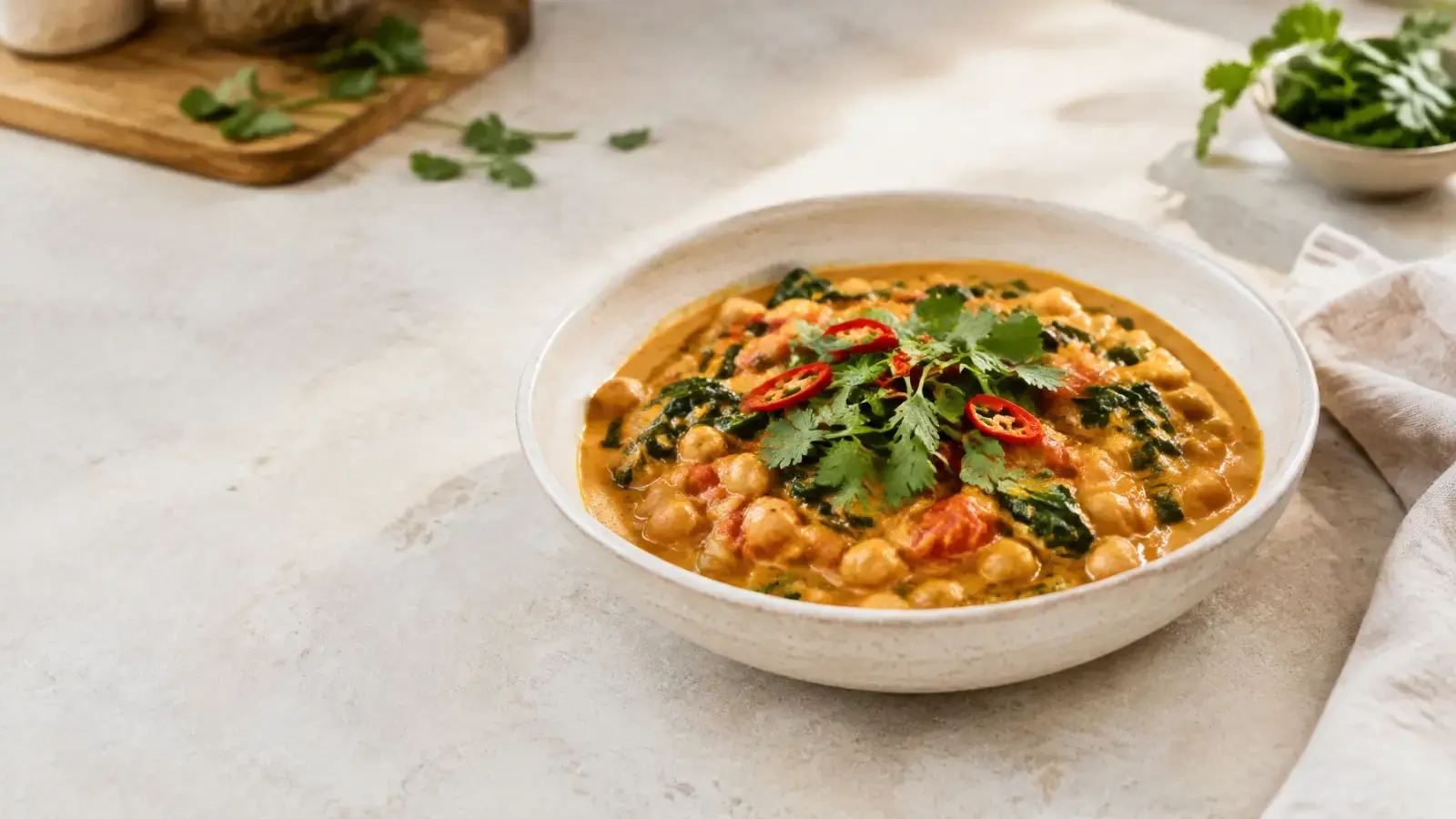
This vegan coconut chickpea curry is a one-pan meal with a short preparation time and standard pantry ingredients. Canned chickpeas provide the main protein source. Coconut milk creates a creamy sauce. Tomatoes, aromatics, and curry spices provide structure and flavour.
The recipe serves four and requires approximately 10 minutes of preparation and 20 minutes of cooking. Serve it with basmati rice, quinoa, or flatbread.
Definition
Curry (noun): A dish consisting of ingredients cooked in a seasoned sauce, commonly containing spices, aromatics, vegetables, legumes, or meat.
This version is vegan and contains no dairy. Check vegetable broth and serving accompaniments for additional dietary requirements.
Overview
The cooking process has four functional stages:
- Soften the onion.
- Bloom the spices with garlic and ginger.
- Build the tomato and coconut sauce.
- Simmer the chickpeas and finish with greens.
Canned chickpeas reduce the cooking time. If using dried chickpeas, cook them separately before starting this recipe.
Preparation
Drain and rinse the chickpeas under cold water. Dice the onion before heating the pan. Measure the spices, tomato purée, broth, and coconut milk. This prevents the aromatics from overheating while ingredients are prepared.
Full-fat coconut milk produces the thickest sauce. Light coconut milk can be used, but the finished curry will be less rich and may require a longer reduction time.
Serving
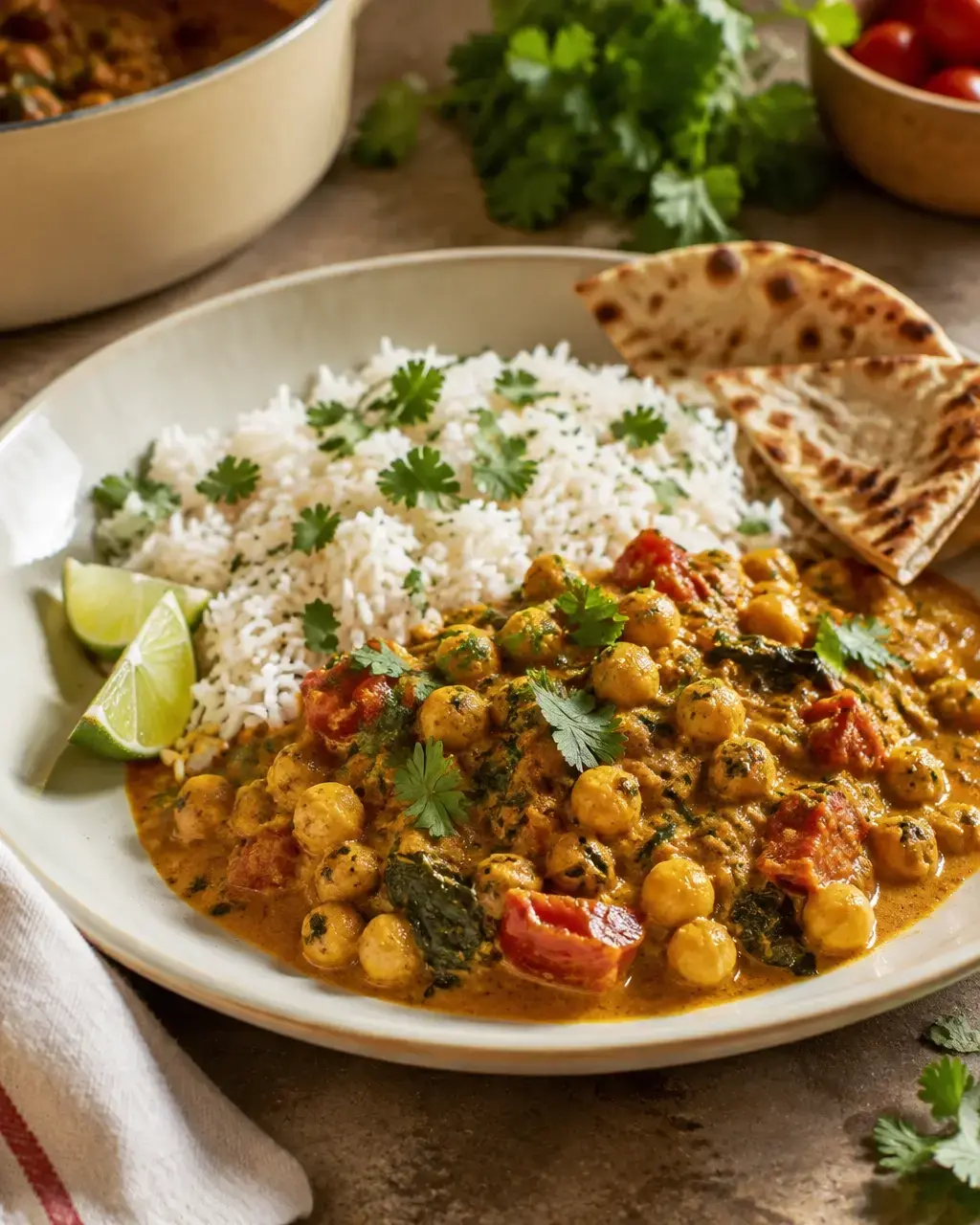
Serve the curry over cooked basmati rice, brown rice, quinoa, or cauliflower rice. Flatbread can be used to absorb the sauce.
Suitable garnishes include:
- Fresh coriander
- Lime wedges
- Sliced red chilli
- Toasted cashews
- Freshly sliced spring onion
- A spoonful of dairy-free yoghurt
The curry is complete as written. Rice and flatbread are serving additions, not required ingredients.
Tips
Use full-fat coconut milk.
It gives the sauce a more stable texture and reduces the need for additional thickening.
Rinse canned chickpeas.
Rinsing removes excess canning liquid and reduces the likelihood of a muddy or overly salty sauce.
Bloom the spices briefly.
Thirty seconds in hot oil is sufficient. Extended cooking can cause powdered spices to scorch.
Control the consistency.
For a thicker curry, simmer uncovered for several additional minutes. For a thinner curry, add vegetable broth or water one tablespoon at a time.
Adjust acidity at the end.
Lime juice is added after cooking so its flavour remains distinct. Lemon juice can be used as an alternative.
Do not overcook the spinach.
Add it only after the sauce has reduced. One to two minutes is sufficient.
Variations
Add vegetables
Add 1 diced red pepper with the onion. Courgette, green beans, mushrooms, or cauliflower can also be used. Dense vegetables may require additional cooking time.
Increase the protein
Add cubed tofu with the chickpeas. Pressed tofu will retain its texture more effectively than unpressed tofu.
Use a different legume
Butter beans or cooked lentils can replace the chickpeas. The sauce quantity remains suitable for one standard 400g can or equivalent cooked portion.
Make it hotter
Add fresh jalapeño with the onion or increase the chilli flakes. Use a measured quantity. Coconut milk will soften the heat but will not remove it.
Add peanut flavour
Stir 1–2 tablespoons of smooth peanut butter into the coconut sauce. Add a small amount of broth if the sauce becomes too thick.
Use frozen greens
Frozen spinach is suitable. Thaw it first and squeeze out excess water to avoid diluting the curry.
Storage
Cool leftovers promptly and transfer them to a clean, covered container. Refrigerate within two hours. Use the curry within 3–4 days.
For general leftover safety guidance, refer to the USDA information on leftovers and food safety.
To freeze, portion the cooled curry into airtight containers and freeze for up to three months for best quality. Defrost in the refrigerator overnight and reheat in a saucepan until hot throughout. Add a small amount of water if the sauce has thickened during storage.
Rice should be cooled and stored separately when practical. Reheat only the quantity required.
FAQ
Is this coconut chickpea curry spicy?
It is mildly spiced when made with ¼ teaspoon of chilli flakes and mild curry powder. Omit the chilli flakes for a non-spicy version. Add fresh chilli or cayenne for a hotter result.
Can I make this curry without tomatoes?
Yes. Replace the chopped tomatoes with an additional 100ml of vegetable broth and add 1 tablespoon of tomato purée for some acidity and colour. The flavour profile will be less tomato-forward.
Can I use dried chickpeas?
Yes, but dried chickpeas must be soaked and fully cooked before they are added. They cannot be added directly to this 30-minute method. Use approximately 240g cooked chickpeas for the equivalent of one 400g can.
Can I use light coconut milk?
Yes. The sauce will be thinner and less rich. Simmer it uncovered for several additional minutes, or add 1 teaspoon of cornflour mixed with 1 tablespoon of cold water if thickening is required.
Is this recipe gluten-free?
The core ingredients are naturally gluten-free. Confirm that the curry powder, vegetable broth, and any rice or flatbread served with the curry are certified gluten-free if required.
Can I make the curry ahead of time?
Yes. The flavour usually becomes more developed after resting. Refrigerate it promptly in a covered container and reheat until hot throughout. Add water or broth to restore the sauce consistency.
What can I use instead of spinach?
Use kale, Swiss chard, peas, or chopped green beans. Kale and chard require several minutes of cooking. Peas can be added during the final five minutes.
How do I stop coconut milk from splitting?
Use moderate heat and maintain a gentle simmer rather than a rapid boil. Stir periodically. A slight separation is not unsafe; stir the sauce before serving.
Sources
The ingredient structure and cooking sequence reflect common methods used in published coconut chickpea curry recipes, including Jessica in the Kitchen’s coconut chickpea curry and Dishing Out Health’s 30-minute vegan chickpea curry.