Recipe
Serves
3 1×
Serves 3Prep 20 minCook 20 minTotal 40 min
Ingredients
Method
- Put the dried mushrooms in a heatproof bowl and cover with hot water. Leave for 20 minutes, or until softened. Lift out the mushrooms and finely chop them. Strain the soaking liquid through a fine sieve and measure 250 ml for the sauce.
- Cut the tofu into roughly 2 cm cubes. If it is firm enough to handle, bring a saucepan of lightly salted water to a gentle simmer. Lower in the tofu and blanch for 1 minute. Lift it out carefully and drain. Skip blanching if the tofu is too fragile to move safely.
- Stir the cornflour and cold water together in a small bowl until smooth. Set aside. Keep a spoon nearby for gently moving the tofu and sauce.
- Heat the oil in a wok or wide frying pan over medium heat. Add the doubanjiang and cook for 1–2 minutes, stirring, until fragrant and the oil is red. Do not let the paste scorch.
- Add the chopped black beans, if using, along with the garlic, ginger and chilli flakes. Stir for about 30 seconds. Add the chopped mushrooms and cook for 4–5 minutes, stirring regularly, until hot and most of their moisture has evaporated.
- Pour in the mushroom soaking liquid or stock. Add the soy sauce if using and bring the sauce to a gentle simmer. Taste it before adding salt; the doubanjiang and black beans may already provide enough.
- Carefully slide the tofu into the pan. Spoon sauce over the cubes or gently push the pan to distribute them. Avoid vigorous stirring. Simmer gently for 4–5 minutes, until the tofu is heated through.
- Stir the cornflour mixture again. Add about one third to the simmering sauce and gently move the pan. Repeat in small additions until the sauce lightly coats the tofu. You may not need all of it.
- Turn off the heat. Scatter over the spring onions and ground Sichuan pepper. Taste and adjust the seasoning. Serve hot with rice.
Vegan Mapo Tofu (Sichuan Mushroom Mince)
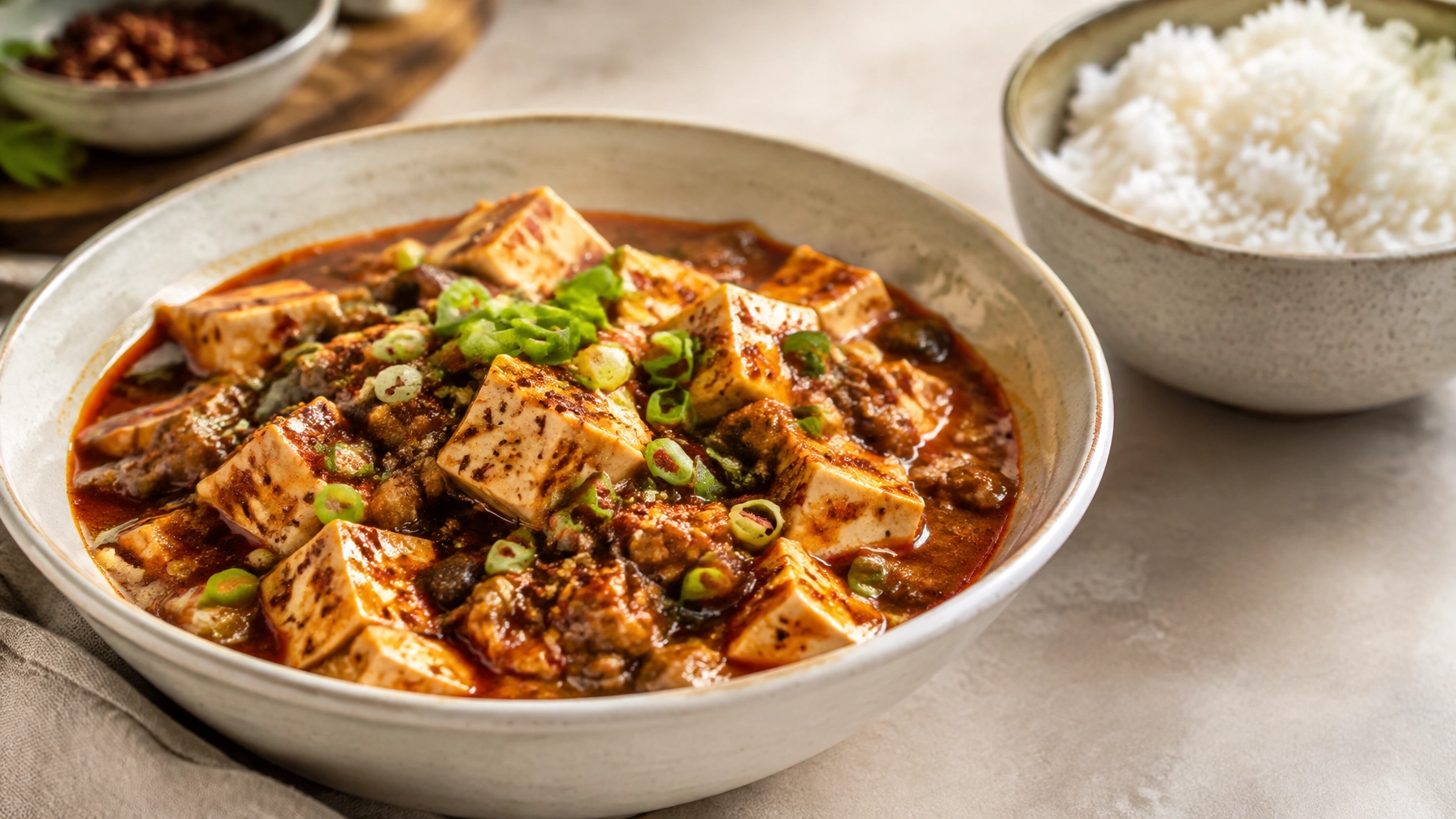
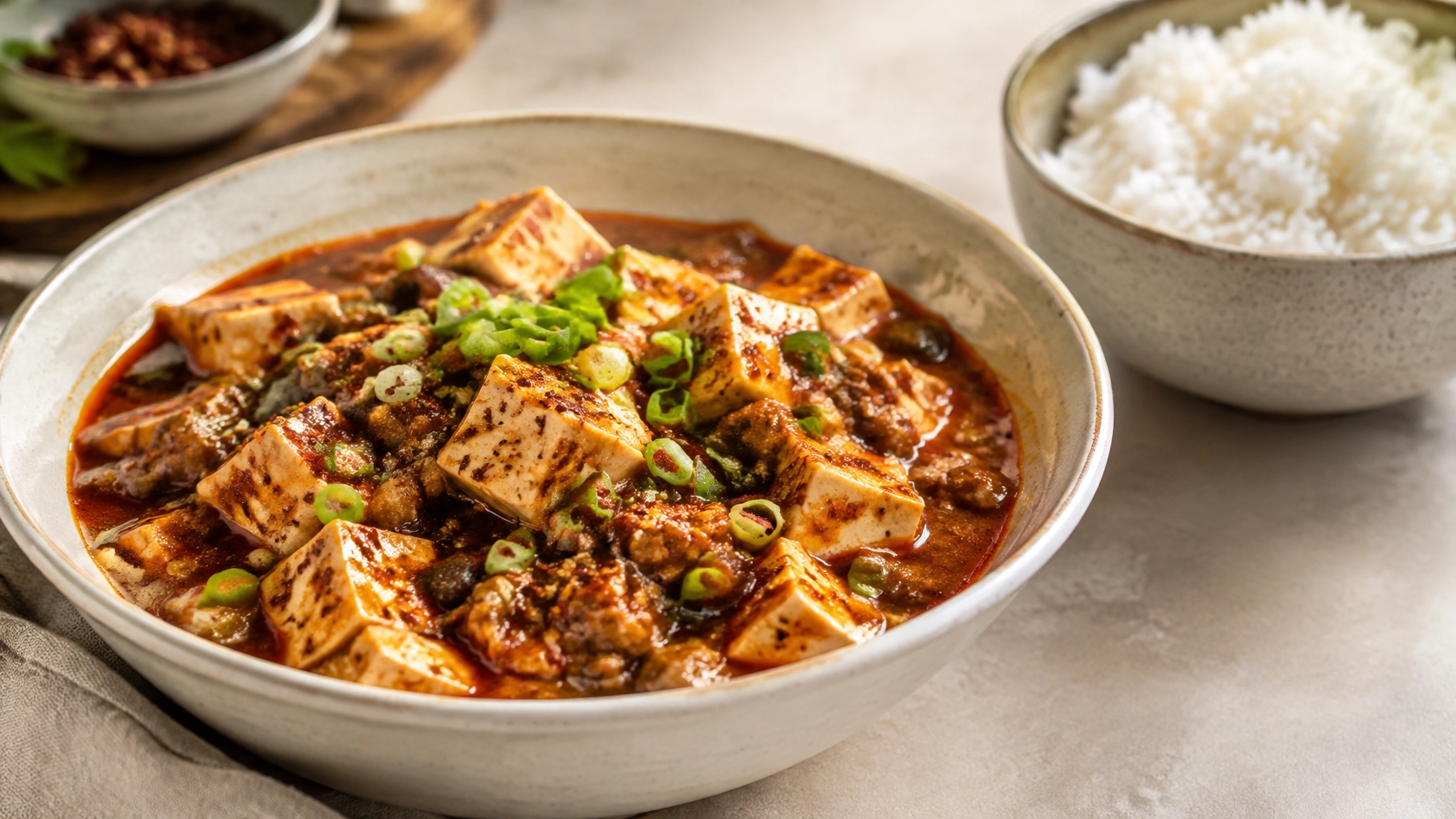
A plant-based mapo tofu made with soft tofu, finely chopped shiitake mushrooms, fermented bean paste and Sichuan pepper.
Mapo tofu is a Sichuan dish built around tofu in a savoury, spicy sauce. In this vegan version, finely chopped mushrooms take the place of minced meat. Their browned edges and concentrated flavour give the sauce substance, while soft tofu remains the main component.
The balance comes from a small set of ingredients with distinct roles. Doubanjiang contributes fermented, salty depth and red colour. Garlic and ginger provide aromatic flavour. Dried chilli adds heat, while Sichuan pepper gives the finished dish its characteristic fragrant, gently numbing quality. Since bean pastes vary in saltiness and heat, taste the sauce before adding extra soy sauce or salt.
Use soft tofu for a tender, custard-like texture. Handle it gently during cooking: vigorous stirring can break the cubes apart and make the sauce cloudy. A brief blanch before simmering helps warm and season the tofu, but it is not essential if the tofu is especially delicate.
Balance
This recipe uses dried shiitake mushrooms because they bring concentrated savoury flavour and produce a useful soaking liquid for the sauce. Fresh shiitake or another savoury mushroom can also be used, but the result may be milder. If using fresh mushrooms, replace the soaking liquid with vegetable stock or water.
The mushroom mince should be chopped finely, but not processed into a paste. Small pieces brown more evenly and give the sauce a texture that contrasts with the soft tofu. Cook the mushrooms until their released moisture has mostly evaporated before adding the liquid. This step concentrates their flavour rather than diluting it.
Doubanjiang is a fermented broad-bean and chilli paste commonly used in Sichuan cooking. Check the ingredient label to confirm that the product is vegan; recipes and manufacturing practices can differ. Douchi, fermented black beans, are optional. They add another savoury note, but the dish works without them.
Sichuan pepper is not the same as black pepper or chilli. Toasting whole peppercorns briefly and grinding them just before serving gives the most distinct aroma. Add it at the end so its fragrance remains evident.
Control
The recipe is moderately spicy when made with one teaspoon of chilli flakes and one and a half tablespoons of doubanjiang. For a milder result, reduce the chilli flakes and use a smaller quantity of doubanjiang. For more heat, increase the chilli gradually. Do not compensate for reduced chilli by adding more Sichuan pepper: it changes the flavour and sensation, not simply the heat level.
The sauce should coat the tofu without becoming a thick paste. Add the cornflour mixture in stages, stirring gently after each addition. The sauce will thicken further as it simmers. If it becomes too thick, add a small amount of water or stock.
Recipe
This recipe serves three as part of a meal, or two as a main dish with rice. Prepare the mushrooms and aromatics before heating the pan; once the bean paste is frying, the remaining steps move quickly.
Details
- Servings: 3
- Prep time: 20 minutes
- Cook time: 20 minutes
- Total time: 40 minutes
Tips
- Keep the tofu intact. Soft tofu is delicate. Use a wide pan and move the sauce around it rather than repeatedly stirring the cubes.
- Strain the soaking liquid. Dried mushrooms can leave grit behind. Fine-straining the liquid prevents it from entering the sauce.
- Fry the paste properly. A short fry releases aroma and colour. Keep the heat moderate so the fermented paste does not burn.
- Thicken gradually. Cornflour settles quickly, so mix the slurry again immediately before each addition. Stop when the sauce clings lightly.
- Season at the end. Doubanjiang and fermented black beans vary by brand. Taste before adding soy sauce or salt.
- Prepare ahead. Chop the mushrooms, garlic, ginger and spring onions before you start cooking. For the best texture, cook and serve the tofu shortly before eating.
Variations
- Fresh mushrooms: Use about 225 g fresh shiitake or cremini mushrooms, finely chopped. Cook until their moisture has mostly evaporated. Use vegetable stock or water in place of mushroom soaking liquid.
- More heat: Add chilli flakes in small increments, or serve with extra chilli on the side.
- Milder sauce: Start with one tablespoon of doubanjiang and omit the chilli flakes. Add more paste only after tasting.
- No fermented black beans: Leave them out. The doubanjiang supplies the principal fermented flavour.
- More substantial meal: Serve with steamed rice and a plainly cooked green vegetable. Keep additional seasoning in the tofu sauce to maintain its intended balance.
- Different tofu texture: Medium tofu is easier to handle than soft tofu and holds its shape more firmly. Very firm tofu can also be used, but the finished dish will be less tender.
FAQ
Can I make this without doubanjiang?
Yes, but the flavour will differ from mapo tofu made with doubanjiang. A small amount of red miso can provide some fermented depth, but it does not reproduce the flavour or heat of the Sichuan paste. Check labels for vegan status and adjust salt and chilli carefully.
Can I prepare it in advance?
The mushroom mixture and sauce base can be prepared ahead and refrigerated in a covered container. Reheat the base until hot, then add the tofu and finish the dish. Fully cooked tofu can also be reheated, although soft tofu may become more fragile.
What should I serve with vegan mapo tofu?
Steamed rice is a practical accompaniment because it absorbs the sauce. Plain noodles or simply cooked vegetables can also be served alongside it.
How should I store leftovers?
Transfer leftovers to a covered container and refrigerate promptly. Reheat until steaming hot throughout. Handle and store tofu according to the package instructions.