Recipe
Cook 35 min
Ingredients
Method
- Place the potatoes, carrots, cauliflower, and green beans in a large saucepan. Cover with water and add a small pinch of salt.
- Bring the water to a boil. Cook the vegetables for 8 to 10 minutes, until the potatoes are just tender when pierced with a knife. Do not cook them until soft.
- Drain the vegetables. Set them aside while the sauce is prepared.
- Drain the soaked cashews. Add them to a blender with the coconut milk. Blend until smooth. Add a small amount of water if needed.
- Heat the oil in a large saucepan or Dutch oven over medium heat.
- Add the chopped onion. Cook for approximately 5 minutes, stirring regularly, until soft and lightly golden.
- Add the garlic and ginger. Cook for 1 to 2 minutes, until fragrant.
- Add the tomato paste. Stir it into the onion mixture and cook for 1 minute.
- Add the curry powder, coriander, cumin, turmeric, garam masala, chilli powder, salt, and sugar if using. Stir continuously for 1 minute. The spices should become aromatic without darkening excessively.
- Pour in the cashew and coconut mixture. Add 1/2 cup water and stir until the sauce is even.
- Bring the sauce to a gentle simmer. Cook for 3 to 5 minutes, stirring occasionally. It should thicken slightly.
- Add the drained vegetables and frozen peas. Stir carefully to coat them in the sauce.
- Simmer for 5 to 7 minutes, until the vegetables are fully tender and the peas are hot. Add more water if the sauce becomes too thick.
- Stir in the lemon juice. Taste and adjust the salt, heat, or acidity as required.
- Remove the pan from the heat. Scatter over chopped fresh coriander and serve immediately.
Vegetable Korma (Creamy Coconut Curry, 35 Minutes)
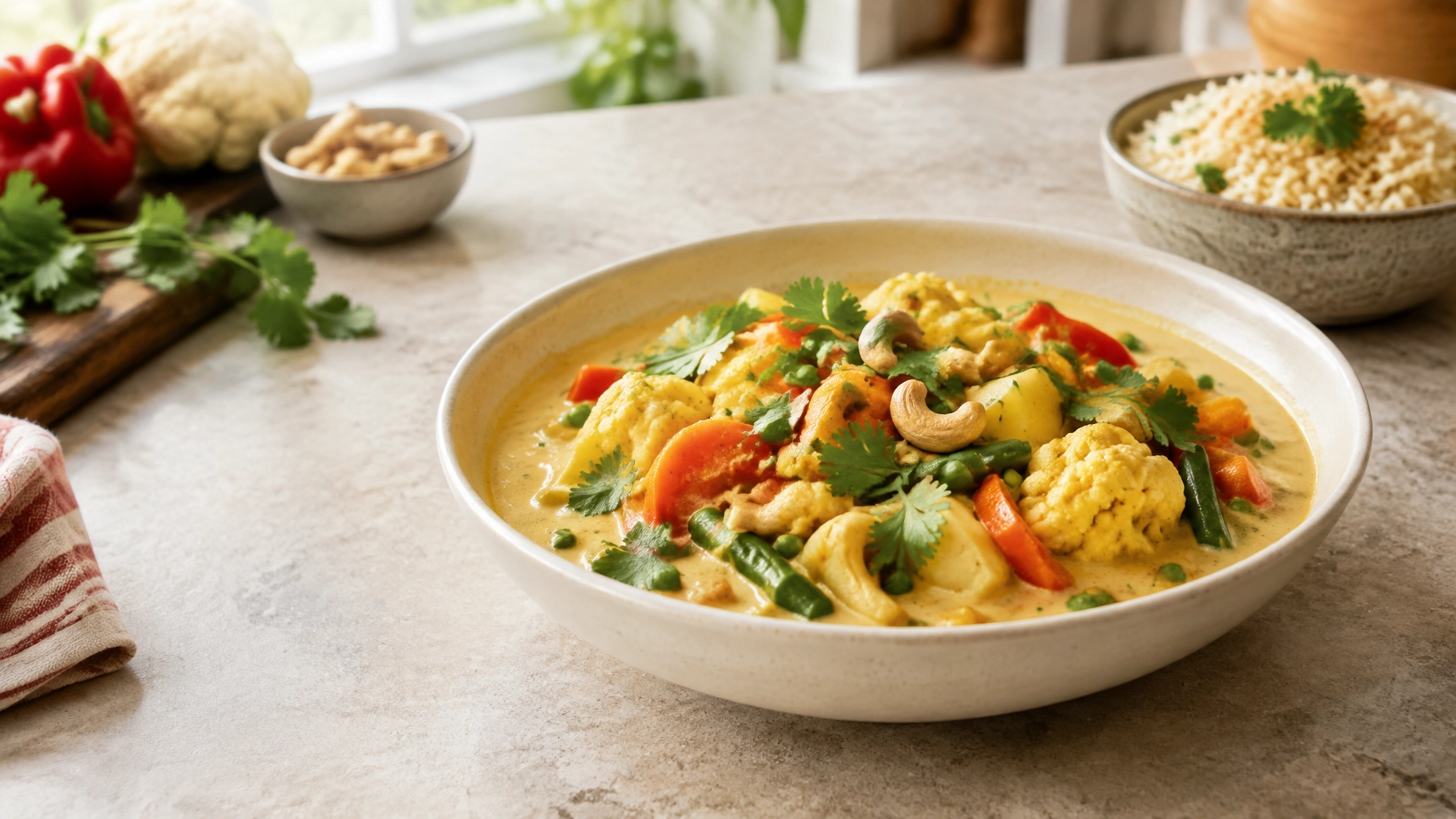
A mild, creamy vegetable korma made with coconut milk, cashews, aromatic spices, and mixed vegetables in 35 minutes.
Overview
Vegetable korma is a practical vegetarian main dish built around a mild, creamy sauce. This version uses coconut milk and cashews for body, tomato paste for depth, and a mixed selection of vegetables for colour and texture.
The vegetables are briefly cooked before being added to the sauce. This keeps the potatoes and carrots tender without allowing the cauliflower, beans, or peas to become soft and dull. The finished curry is suitable for a weeknight meal and can be served with basmati rice or warm flatbread.
The recipe serves four.
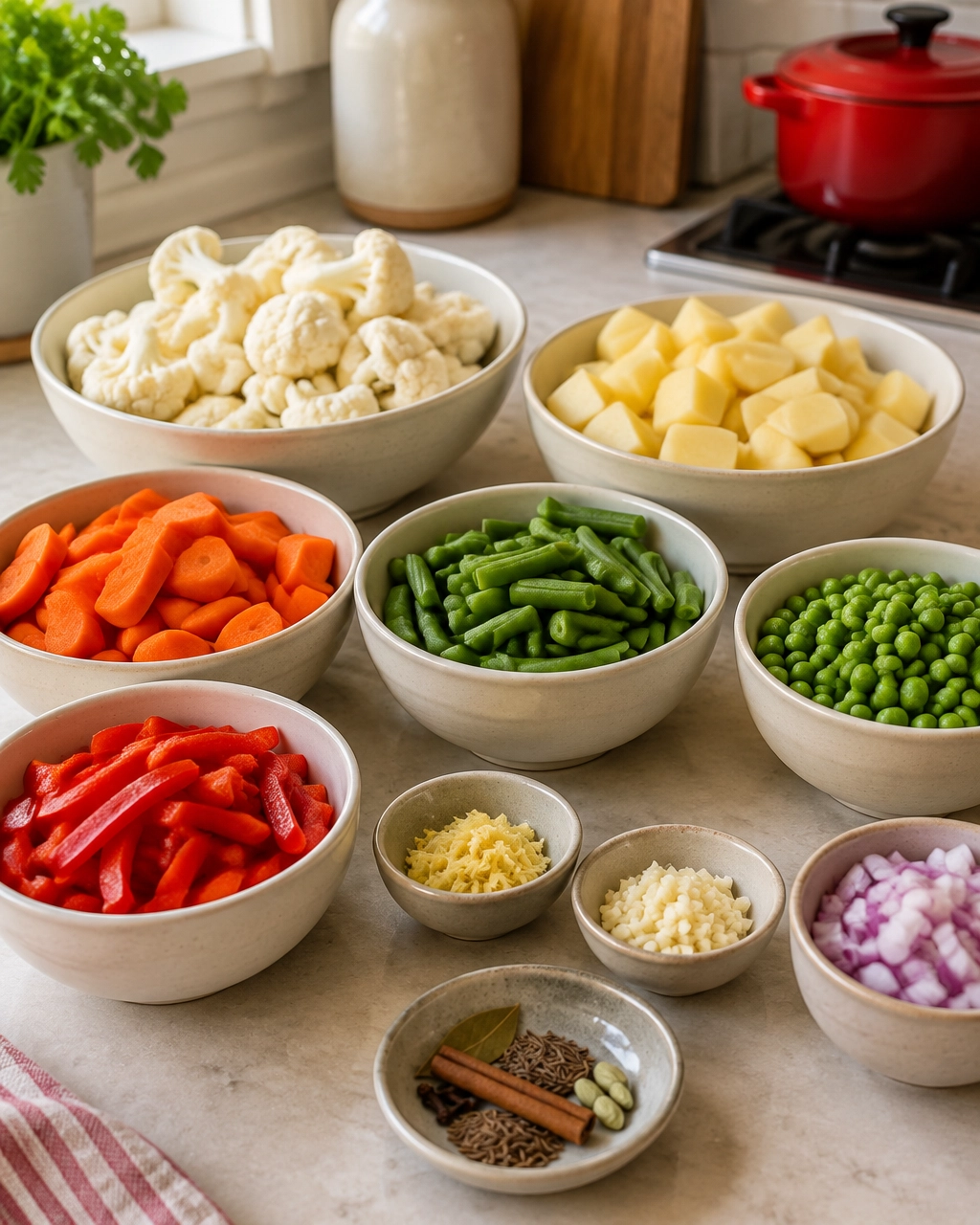
Preparation
Cut the vegetables into pieces of similar size. Small potato cubes cook more quickly and help keep the total cooking time within 35 minutes.
Soak the cashews in hot water for 10 minutes. This softens them and allows them to blend into the coconut milk. If a high-powered blender is not available, soak the cashews for 20 minutes instead.
Prepare the sauce ingredients before heating the pan. The onion, garlic, ginger, tomato paste, and spices are added in sequence. Having them ready prevents the aromatics from overcooking while the remaining ingredients are measured.
Timing
The stated 35-minute preparation time is based on overlapping a small number of tasks.
- Vegetable preparation: 10 minutes
- Cashew soaking: 10 minutes
- Vegetable cooking: 8 to 10 minutes
- Sauce preparation: 10 to 12 minutes
- Final simmer: 5 to 7 minutes
The cashews can soak while the vegetables are being prepared. The sauce can also be started as soon as the vegetables have been drained.
Texture
The sauce should coat the vegetables without becoming pasty. Full-fat coconut milk produces the most stable result. Light coconut milk can be used, but the finished curry will be thinner.
For a smoother sauce, blend the cashews and coconut milk until no visible pieces remain. For a sauce with more texture, blend the cashews briefly and leave small pieces throughout.
The potatoes should hold their shape. Cut them too large and they may remain firm while the other vegetables soften. Cut them too small and they may break apart during the final simmer.
Variations
Use sweet potato in place of regular potato. It cooks quickly and adds a mild sweetness to the sauce.
Replace the green beans with broccoli, courgette, or sugar snap peas. Add delicate vegetables later in the process to prevent overcooking.
For more heat, add a finely chopped green chilli with the garlic and ginger. For a mild korma, omit the chilli powder and green chilli entirely.
If cashews are not suitable, omit them and use the coconut milk alone. The sauce will remain creamy, although it will have less body. A small amount of ground almond can provide a similar thickening effect where appropriate.
To add protein, stir in drained chickpeas during the final simmer. Cooked lentils can also be added, but additional water may be required.
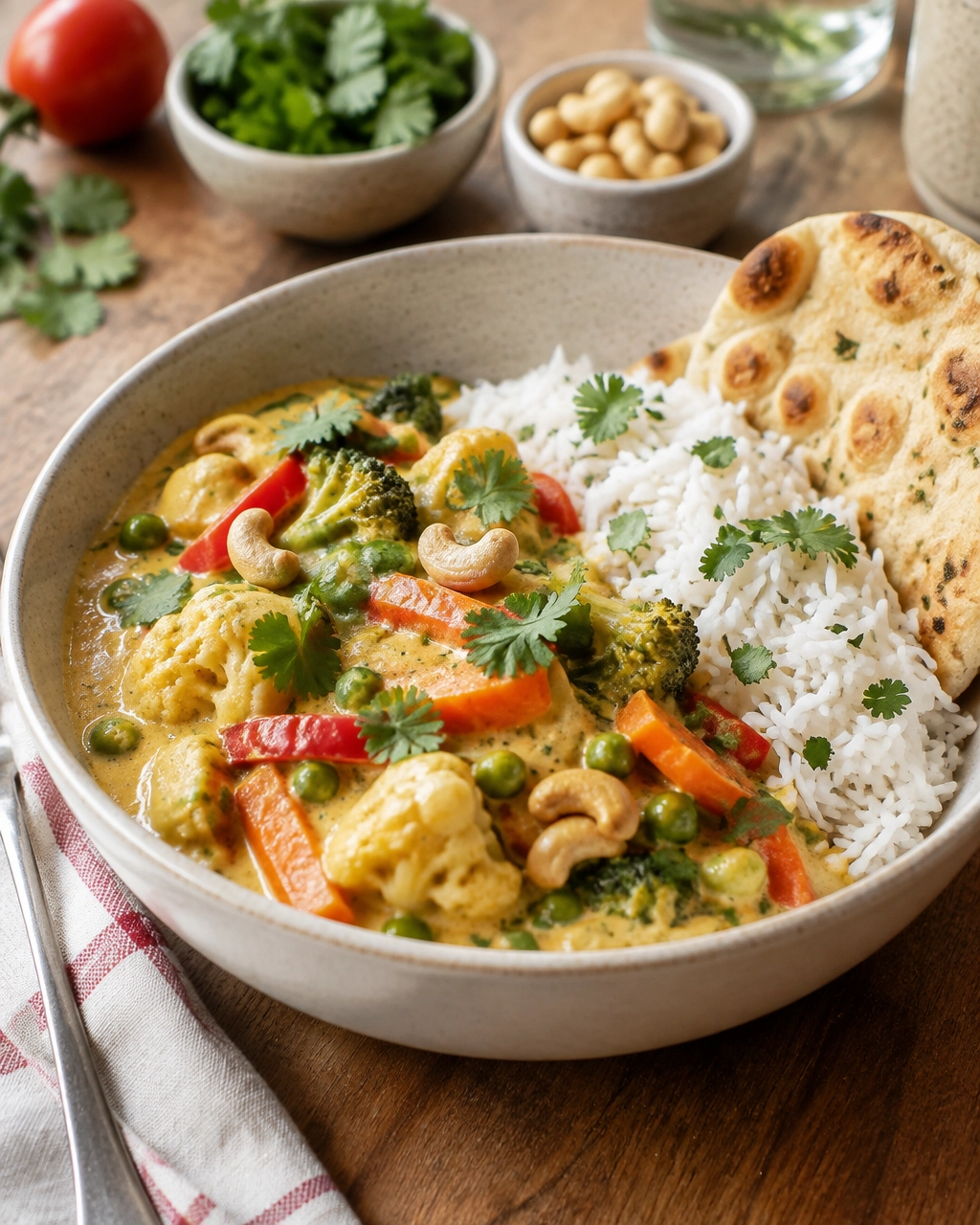
Serving
Serve the korma over steamed basmati rice. The rice absorbs the sauce and provides a neutral base for the spices.
Warm naan or flatbread can be served alongside the curry. Fresh coriander adds a clean herbal note, while lemon juice keeps the coconut sauce from becoming overly rich.
A simple cucumber salad is suitable if a crisp side dish is required. Keep the salad lightly seasoned so it does not compete with the curry.
Storage
Allow leftovers to cool before transferring them to a sealed container. Refrigerate for up to 3 days.
Reheat the korma in a saucepan over low to medium heat. Add a splash of water and stir regularly, as the coconut sauce thickens when chilled.
The curry can be frozen for up to 2 months. Thaw it in the refrigerator and reheat gently. The texture of the vegetables may become softer after freezing.
Questions
Can the korma be made without cashews?
Yes. Omit the cashews and blend the coconut milk with the sauce ingredients as directed. The result will be less dense but still creamy.
Is vegetable korma spicy?
This version is mild. The chilli powder and fresh chilli are optional. Curry powder, coriander, cumin, turmeric, and garam masala provide flavour without requiring significant heat.
Can the vegetables be cooked directly in the sauce?
Yes, but the timing will be less uniform. Potatoes and carrots require more time than peas and bell pepper. Briefly cooking the vegetables first produces a more consistent result.
Why is the sauce too thick?
Add water one tablespoon at a time while the curry is over low heat. Stir after each addition until the desired consistency is reached.
Why is the sauce too thin?
Simmer the uncovered curry for several minutes. This allows excess liquid to evaporate. Do not use high heat, as coconut milk can separate.