Recipe
Serves
2 1×
Serves 2Prep 5 minCook 15 minTotal 20 min
Ingredients
Method
- Mix the soy sauce, mirin, water or dashi, and sesame oil.
- Heat the neutral oil in a large wok or frying pan over medium-high heat.
- Add the chicken and stir-fry for 3 to 4 minutes, until browned and cooked through. Transfer to a clean plate.
- Add the onion, carrot, cabbage, spring onion whites and mushrooms. Stir-fry for 2 to 3 minutes.
- Add the garlic and cook for 20 to 30 seconds.
- Add the udon. If frozen, add 2 tablespoons of water and cover until loosened.
- Return the chicken to the pan. Add the sauce and toss for 2 to 3 minutes, until hot and coated.
- Add the spring onion greens. Serve with sesame seeds or shichimi togarashi.
Yaki Udon with Chicken (20-Minute Stir Fry)
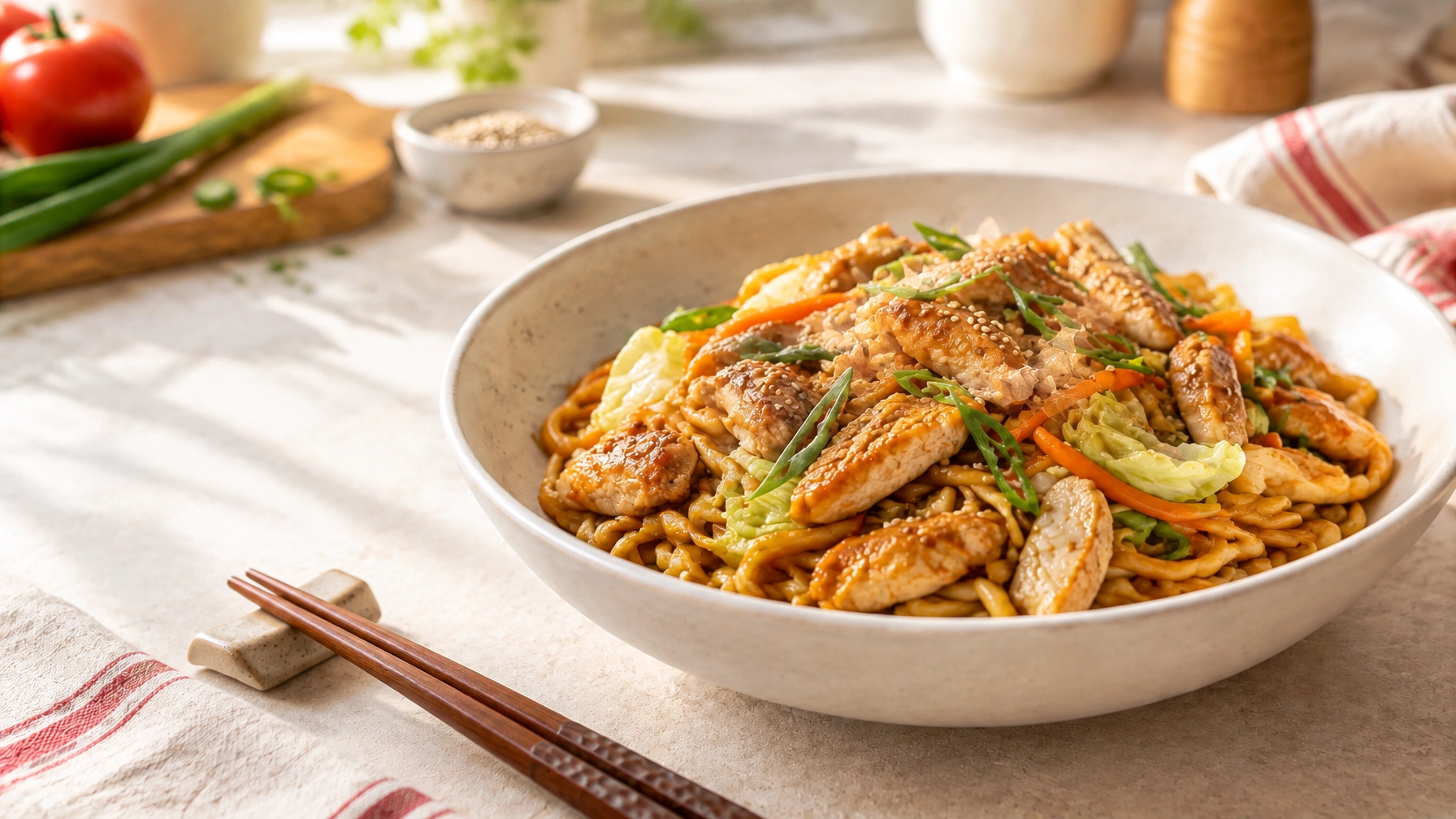
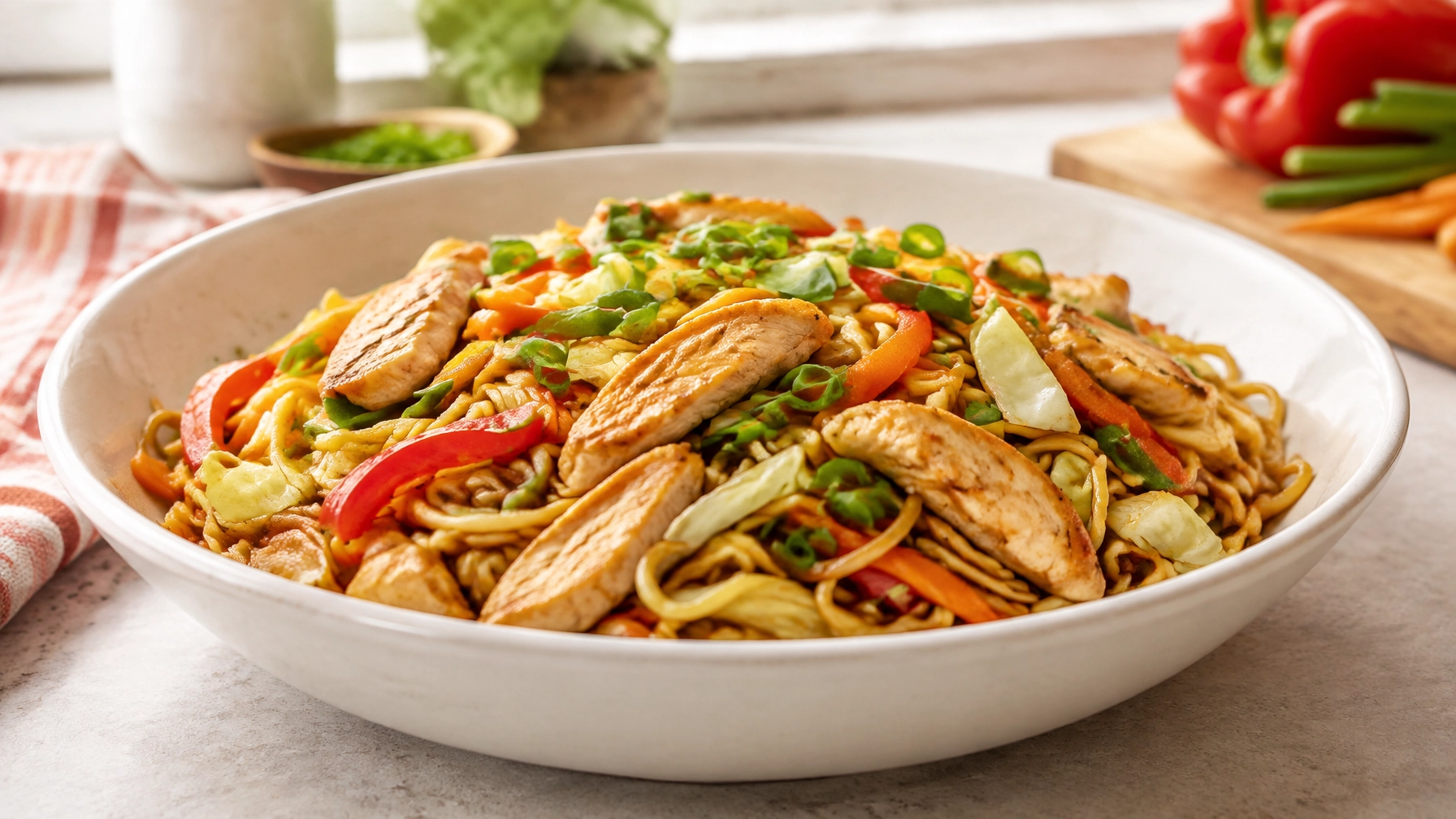
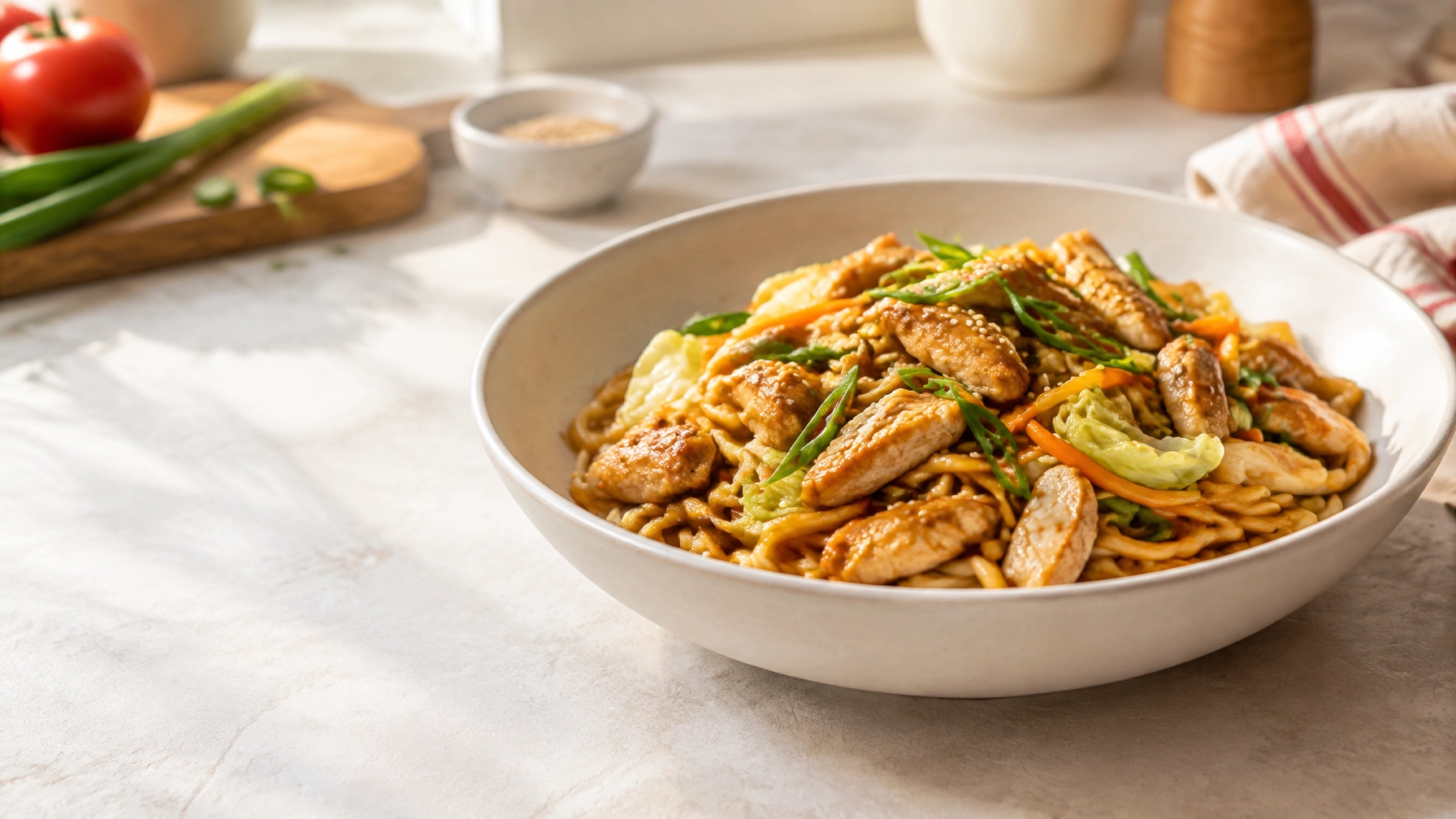
Yaki udon is a Japanese stir-fried noodle dish made with thick, springy wheat noodles, vegetables and a soy-based sauce. This chicken version is designed for a 20-minute dinner using one wok or large frying pan.
The method is administrative: prepare the sauce, cook the chicken, stir-fry the vegetables, then combine all components. The result is a complete meal with a sweet-savoury coating and minimal washing up.
Definition
Yaki (noun element): fried or grilled.
Udon (noun): a thick Japanese wheat noodle with a soft, chewy texture.
Yaki udon is not the same as yakisoba. Yakisoba uses thinner wheat noodles, while udon has a substantially thicker shape that holds sauce well. Fresh, frozen or vacuum-packed cooked udon can be used for this recipe.
Preparation
Slice the chicken into thin, even pieces. Thin slices cook quickly and reduce the risk of a browned exterior with an undercooked centre.
Prepare the vegetables before heating the pan. Stir-frying moves rapidly once the oil is hot. Mix the sauce in a small bowl and set it near the hob.
For frozen udon, follow the packet instructions. If there are no instructions, place the frozen noodle blocks in the hot pan later with approximately 2 tablespoons of water and cover for 1 to 2 minutes.
Fresh or vacuum-packed udon can usually be loosened in boiling water for 1 to 2 minutes. Drain thoroughly. Do not leave the noodles soaking, as excess water will dilute the sauce.
Timing
- Preparation: 5 minutes
- Cooking: 15 minutes
- Total: 20 minutes
The stated timing assumes the chicken and vegetables are sliced before the pan is heated. Large pieces, a crowded pan or frozen ingredients that have not been loosened may increase the cooking time.
Tips
Use a large pan
A crowded pan traps steam. This softens the vegetables and prevents the chicken from browning properly. Use the largest wok or frying pan available, or cook the chicken in two batches.
Keep the chicken moving
Thin chicken pieces cook quickly. Stir regularly after the first side has browned, then remove them from the pan. This prevents overcooking while the vegetables and noodles are prepared.
Do not overcook the udon
Udon is already cooked before it reaches the pan. Its purpose in this recipe is to warm through and absorb the sauce. Excessive cooking can make the noodles soft and sticky.
Adjust the sauce carefully
Add a small splash of water if the noodles clump. Add more soy sauce only after tasting, since the sauce becomes more concentrated as it reduces.
Protect the texture
Keep the vegetables crisp-tender. The contrast between soft udon, browned chicken and lightly cooked cabbage is part of the dish's structure.
Variations
Chicken breast: Use thinly sliced breast meat. It cooks quickly but is less forgiving than thigh. Avoid cooking it beyond the point required for safe doneness.
Vegetarian: Replace the chicken with firm tofu, mushrooms or additional cabbage. Use a vegetarian dashi or water. Check that the soy sauce and noodle products meet your requirements.
Spicy: Add dried chilli, shichimi togarashi or a small amount of chilli oil with the sauce.
More vegetables: Add pak choi, bean sprouts, red pepper or tenderstem broccoli. Cut dense vegetables into small pieces so they cook within the same time.
Dashi flavour: Replace the water in the sauce with dashi. This adds savoury depth without requiring a larger amount of soy sauce.
Sesame finish: Add toasted sesame seeds immediately before serving. They provide texture and a mild nutty flavour.
Storage
Refrigerate leftovers in a covered container within 2 hours. Use them within 3 to 4 days. Reheat until piping hot throughout, with a small splash of water to loosen the noodles.
Do not store cooked noodles in the same container as raw chicken. Wash the plate, utensils and work surface that have contacted raw poultry before using them for cooked food. Further guidance is available from the Food Standards Agency food safety guidance.
FAQ
Can I use frozen udon?
Yes. Frozen udon is suitable and often has an excellent chewy texture. Add it to the pan with a small amount of water, cover briefly, then separate the noodles as they loosen.
Can I use dried udon?
Yes, but cook it according to the packet instructions before stir-frying. Drain it thoroughly and rinse briefly if the noodles are starchy or sticking together.
Can I use chicken breast instead of thigh?
Yes. Slice it thinly and remove it from the pan as soon as it reaches a safe internal temperature. Chicken thigh is more tolerant of high-heat cooking and remains juicier.
Is yaki udon spicy?
This base recipe is not spicy. Add chilli oil, shichimi togarashi or dried chilli if required.
Why are my noodles sticky?
The pan may be too crowded, the noodles may have been overcooked, or insufficient water was used to loosen them. Add the noodles after the vegetables have softened and toss them with the sauce immediately.
Can I make the sauce sweeter?
Add 1 teaspoon of brown sugar or extra mirin. Make the adjustment gradually. Excess sugar can cause the sauce to burn at high heat.
Can I prepare the vegetables in advance?
Yes. Slice the vegetables up to 24 hours in advance and refrigerate them in a sealed container. Keep raw chicken separate from ready-to-eat ingredients and clean any surface used during preparation.
<a id="recipe"></a>
Recipe
Servings: 2
Prep time: 5 minutes
Cook time: 15 minutes
Total time: 20 minutes