Recipe
Servings
Servings 1×
Ingredients
- Shrimp
- Peas
- Garlic
- Fresh ginger
- Lime
- Cooking oil
Method
- Use this method when you want something fresh and satisfying fast: and when the takeaway menu starts looking suspiciously tempting.
- Pat the shrimp dry before they meet the pan.
- Use paper towels and press lightly.
- Heat a wok or wide skillet until it feels properly hot.
- Add the oil only after the pan is ready, then move quickly.
- Use a wide pan rather than a small one.
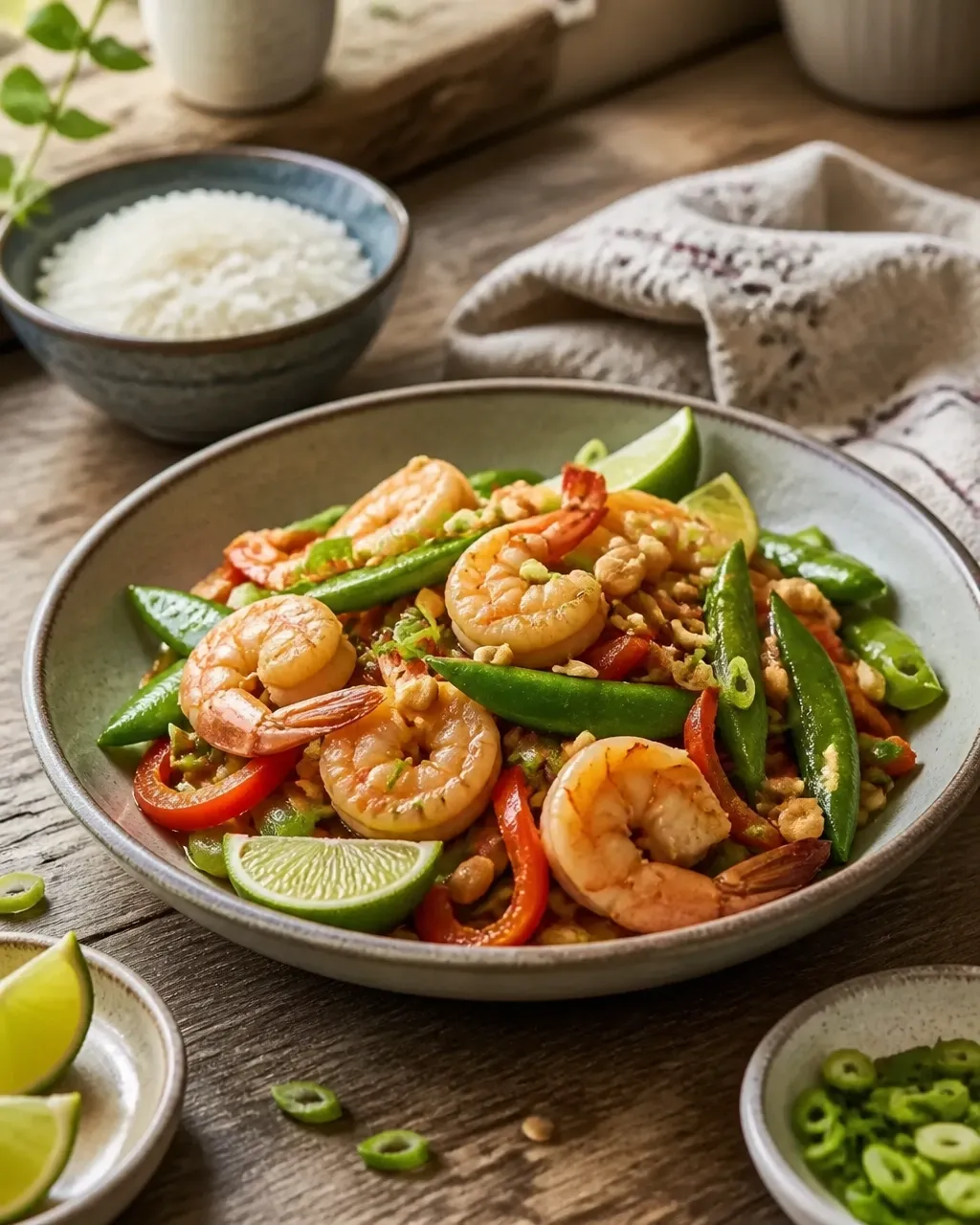
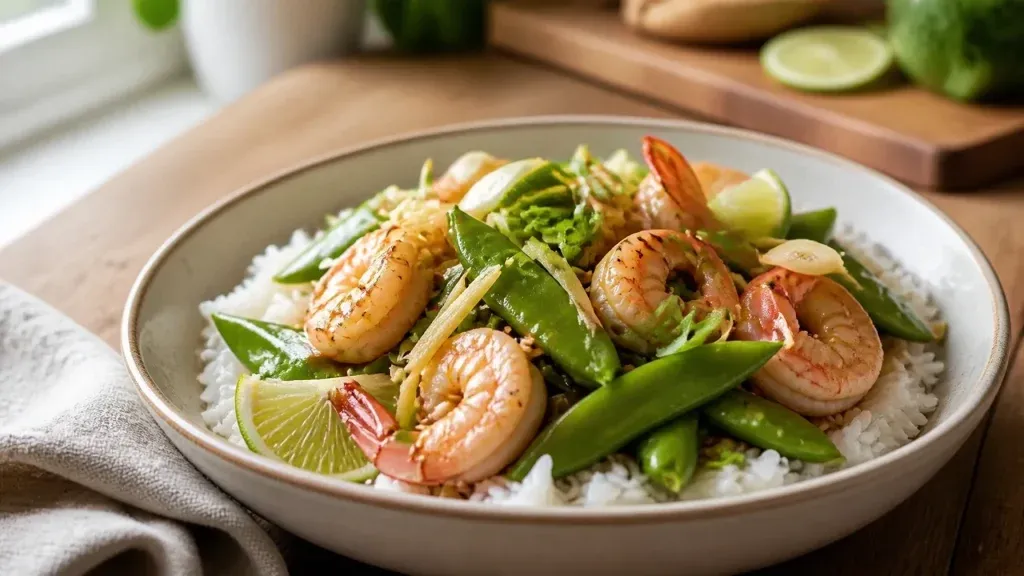
Some dinners need a long simmer and a patient mood. This one needs a hot pan, a quick stir, and roughly 15 minutes of your attention. Ginger lime shrimp and sugar snap pea stir-fry delivers tender seafood, crisp vegetables, and a bright sauce without turning your kitchen into a restaurant prep station. Use this method when you want something fresh and satisfying fast: and when the takeaway menu starts looking suspiciously tempting.
Tips & Technique: Make Every Minute Count
Start with dry shrimp for better browning
Pat the shrimp dry before they meet the pan. This small step matters because surface moisture creates steam. Steam cooks gently, but it does not give you the quick browning that makes stir-fried food taste so good.
Use paper towels and press lightly. Do not crush the shrimp; they are delicate little commas. A dry surface lets the hot pan do its job immediately, creating light caramelized notes while keeping the center tender.
For more guidance on fast shrimp cooking, compare the approach in this 15-minute ginger shrimp stir-fry. The principle is simple: remove excess moisture, increase contact with the hot pan, and avoid crowding.
Heat the pan before adding anything
Heat a wok or wide skillet until it feels properly hot. Add the oil only after the pan is ready, then move quickly.
A lukewarm pan causes three common problems: the shrimp release water, the vegetables soften before they brown, and the aromatics sit in oil too long and turn bitter. High heat shortens the cooking time and creates contrast: slightly seared shrimp, crisp peas, and a sauce that clings instead of pooling.
Use a wide pan rather than a small one. Give each ingredient room to touch the hot surface. If everything is piled together, the pan temperature drops and your stir-fry becomes a very fast braise.
Bloom ginger briefly, but protect the garlic
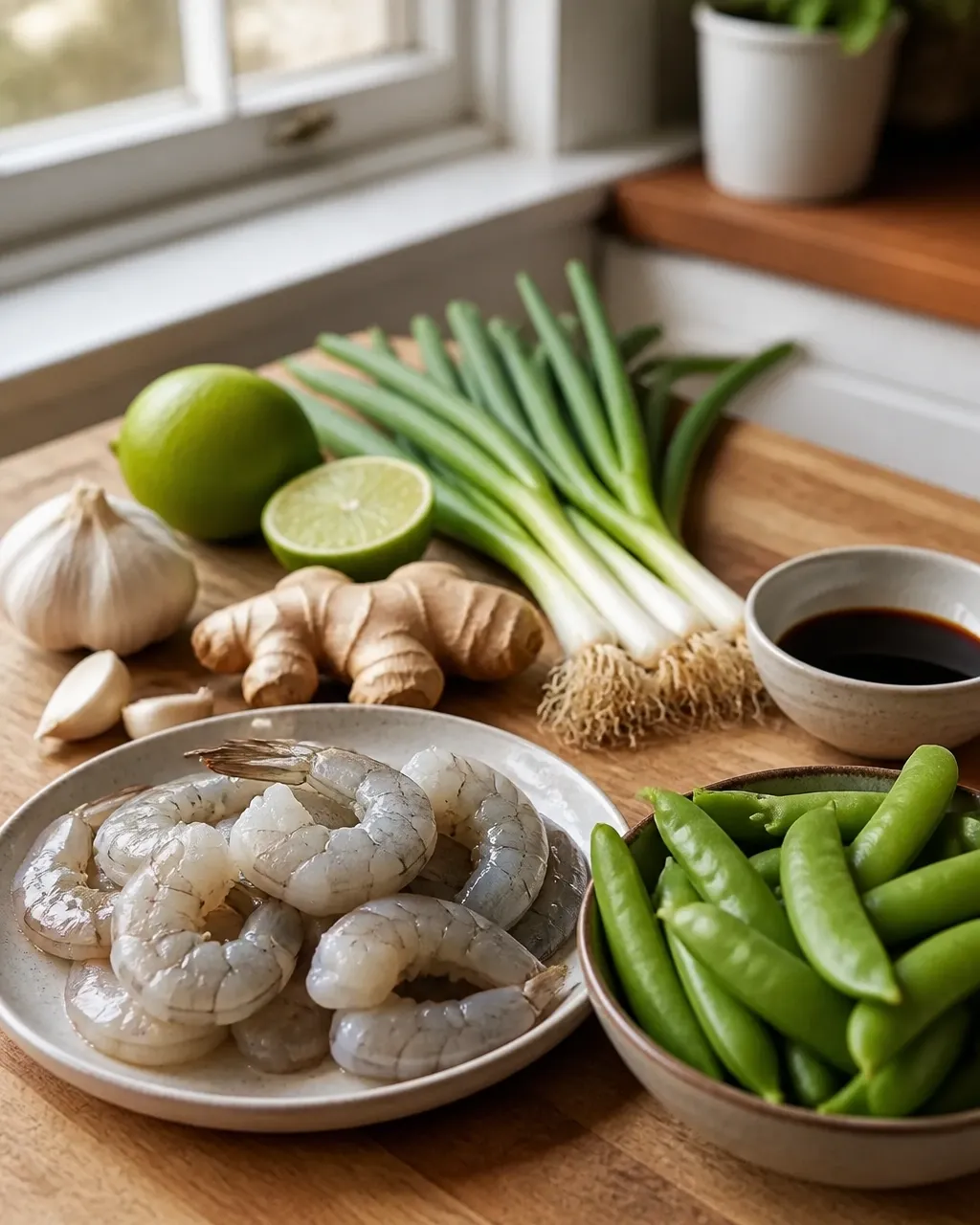
Fresh ginger contains aromatic oils that become more fragrant when warmed in fat. Add it early enough to perfume the pan, but do not let it sit unattended. Ginger can handle a little heat; garlic is less forgiving and moves from golden to bitter with remarkable enthusiasm.
Cook the ginger until it smells lively and begins to soften. Add garlic later and stir constantly. This creates a more rounded flavor than adding both at the same time, because each aromatic gets the heat it needs.
Keep the ginger pieces small so they spread through the dish. You want bright warmth in every bite, not one dramatic ginger surprise.
Cook snap peas until crisp-tender
Sugar snap peas should remain green, juicy, and slightly crunchy. Their appeal is the snap: quite literally: so cook them only until they begin to soften.
Short cooking preserves their texture and helps them retain their fresh flavor. It also creates a useful contrast with the shrimp. Soft shrimp alongside soft vegetables can feel flat, even when the sauce is excellent. Crisp peas keep the dish lively.
If your shrimp are large or your pan is crowded, cook the peas briefly and move them to a bowl while you sear the seafood. Add them back at the end. This extra bit of organization prevents overcooking and is one of the secrets behind reliable 15-minute meals.
Treat shrimp as a timing exercise
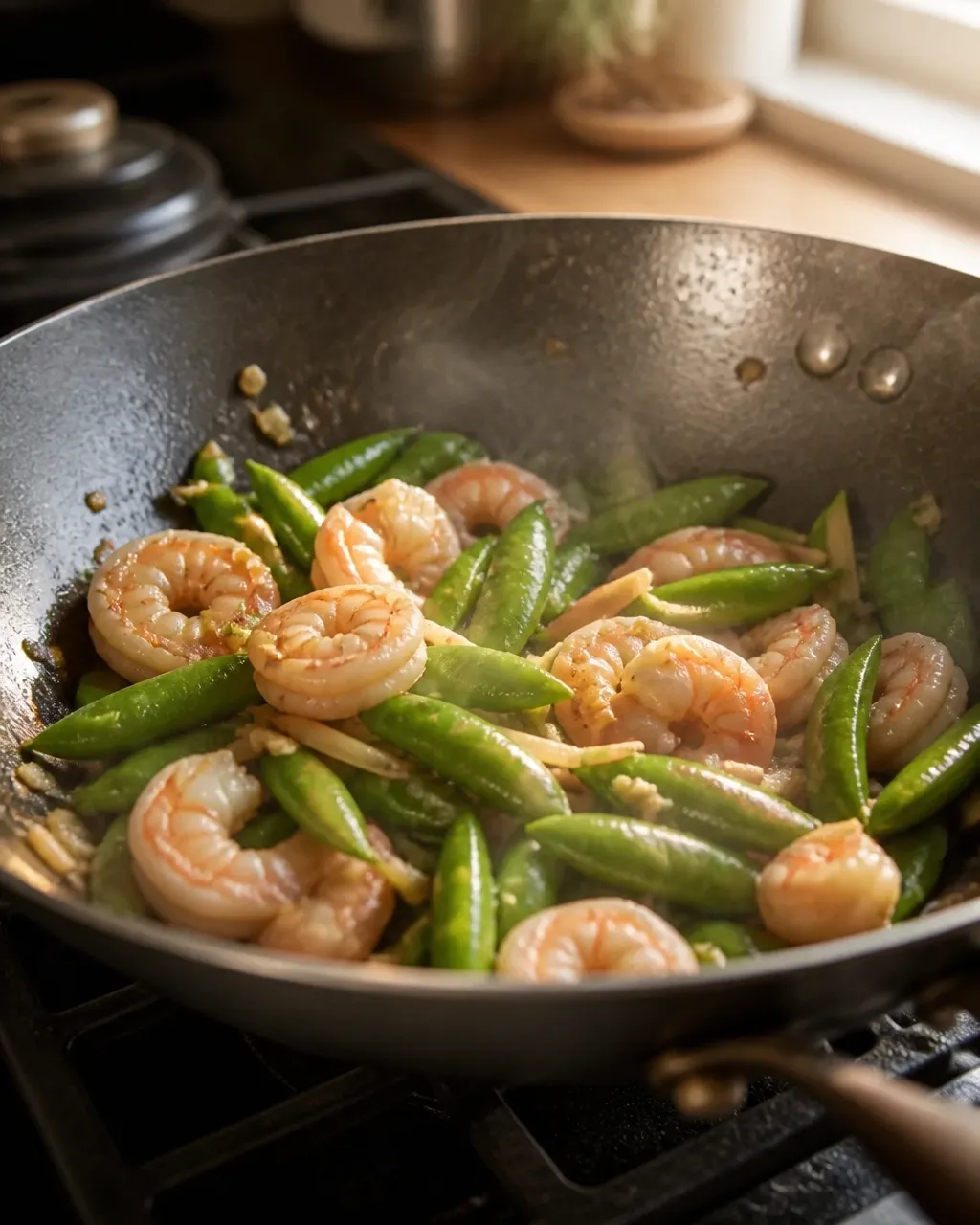
Shrimp cook quickly because their muscle fibers are thin. Watch them rather than relying only on the clock. They should curl gently, turn pink, and become opaque through the center.
Avoid cooking them until they form tight circles. That usually means the proteins have tightened too much, giving the shrimp a rubbery texture. Remove them from direct heat when they are nearly done, then let the sauce finish the job.
Cook shrimp in a single layer whenever possible. Sear one side, turn them, and keep the second side brief. They will receive another blast of heat when you combine everything, so build in that final minute rather than treating it as an afterthought.
Add lime at the right moment
Lime brings acidity, which cuts through the savory sauce and makes the dish taste lighter. Add most of it near the end. Long cooking can dull its fresh aroma and reduce the clean, zippy flavor that makes this stir-fry work.
Think of lime as the final adjustment, not just another liquid. Taste after the sauce has thickened, then add enough lime to wake everything up. If the dish tastes heavy, add acidity. If it tastes sharp, use a touch of sweetness to round the edges.
This balance is why ginger, lime, and shrimp make such a useful team: ginger adds warmth, lime adds lift, and shrimp bring a naturally sweet, delicate flavor.
Let the sauce thicken quickly
A small amount of cornstarch helps the sauce cling to the shrimp and peas. It thickens when heated in liquid, so mix it thoroughly before adding it to the pan. Otherwise, the starch may settle at the bottom and leave you with a sauce that is thin in one bite and oddly thick in the next.
Do not boil the sauce for ages. Once it bubbles and lightly coats the back of a spoon, it is ready. Extended cooking can make the sauce too thick and can push the shrimp past their tender stage.
For another example of using a fast sauce to finish shrimp, see this ginger shrimp technique from Walder Wellness.
Variations: Keep the Balance, Change the Mood
Turn this stir-fry into a flexible weeknight formula without losing its bright character.
For extra heat, add sliced red chile or a pinch of chili flakes with the ginger. Keep the lime generous so the heat feels fresh rather than heavy. A little toasted sesame oil at the end adds nuttiness, but use it sparingly; too much can overwhelm the lime.
Swap the sugar snap peas for snow peas, thin asparagus, broccoli florets, or sliced bell pepper. Choose vegetables that cook quickly and cut them into similar-sized pieces. If you use a dense vegetable such as broccoli, give it a short head start with a splash of water and cover the pan briefly.
Make it more filling with rice, rice noodles, quinoa, or cauliflower rice. Use plain sides so the ginger-lime sauce remains the star. For a lighter version, serve the stir-fry over shredded cabbage or simply eat it from a bowl with extra lime.
For plant-based diners, replace the shrimp with firm tofu. Press it well and brown it before adding the vegetables. The timing changes because tofu needs more browning, but the same balance of ginger, lime, savory seasoning, and crunch still works. You can find more inspiration in Cookpedia’s vegetarian dinner recipes.
If you are collecting air fryer recipes dinner ideas, use the air fryer for a side such as crisped tofu or roasted broccoli, then make this stir-fry on the stovetop for the best shrimp texture.
Side Dish Pairings: Add Contrast, Not Competition
Serve the stir-fry with steamed jasmine rice when you want something comforting that absorbs the sauce. Brown rice adds chew and a deeper nutty flavor, while cauliflower rice keeps the meal lighter and lets the vegetables do more of the work.
Add a simple cucumber salad for coolness and crunch. A few drops of rice vinegar or lime juice will echo the stir-fry without copying it. Keep the dressing sharp and light; a creamy side can make the meal feel heavier than necessary.
For a larger table, offer plain rice noodles, edamame, or lightly steamed bok choy. Avoid heavily seasoned sides. The shrimp already bring ginger, lime, and savory richness, so the best pairing either cools the palate, adds texture, or quietly catches the sauce.
These combinations fit neatly into a rotation of quick family meals because they require little extra cooking and can be placed on the table while the pan is still warm.
FAQ: What If the Stir-Fry Goes Sideways?
What if my shrimp release lots of liquid?
Your shrimp were probably wet, the pan was not hot enough, or it was overcrowded. Do not panic. Move the shrimp to a plate, pour off excess liquid, and reheat the pan before continuing. Patting the shrimp dry next time will help, as will cooking in batches.
Avoid adding more shrimp to a pan that is already steaming. More food does not mean faster dinner here; it usually means less browning and longer cooking.
What if my shrimp become rubbery?
They stayed on the heat too long. Shrimp continue cooking from residual heat, especially after you add hot sauce. Remove them when they are just opaque and gently curled, then return them to the pan only long enough to coat and finish.
Use visual cues rather than waiting for dramatic color. Tight, fully curled shrimp are usually overdone.
What if the snap peas are soft and dull?
The pan was likely crowded, or the peas cooked too long in the sauce. Snap peas need only a short trip through the heat. Cook them until bright green with some resistance, then remove them while the shrimp finish.
Add the peas back at the very end. They need warming, not a second full cooking session.
What if the sauce is too thin?
Let it bubble briefly so the starch can activate. Stir continuously and give it a little time to coat the spoon. If it still looks thin, mix a very small amount of cornstarch with cold water separately, then add it gradually.
Do not sprinkle dry cornstarch straight into the hot pan. It will clump before it thickens, creating tiny sauce dumplings nobody requested.
What if the sauce is too thick?
Add a splash of water or stock and toss over low heat. Thin it gradually because it is easy to go too far. Finish with lime juice after adjusting the consistency so the acidity stays bright.
Remember that the sauce will seem thicker as it cools. Stop cooking when it lightly coats the shrimp rather than when it looks like syrup.
Can I use frozen shrimp?
Yes. Thaw them completely first, then drain and dry them thoroughly. Frozen shrimp carry extra surface water, which makes browning more difficult. Never add them frozen to a hot stir-fry unless you want a watery pan and uneven cooking.
Thaw overnight in the refrigerator, or place the sealed shrimp in cold water for a quicker option. Avoid warm water, which can soften the outside before the center has thawed.
How can I turn this into meal prep?
Cook the rice and prepare the sauce ahead, but make the shrimp close to serving time. Seafood is at its best when freshly cooked, and reheating can make it firm.
For packed lunches, slightly undercook the snap peas and keep lime wedges separate. Reheat gently, then add the lime just before eating. This keeps the vegetables brighter and the flavor fresher.
When you need more ideas for busy nights, browse Cookpedia’s quick meals and 30-minute dinner collection. Keep the pan hot, the shrimp dry, and the lime for last. That is the non-negotiable trio for a fast stir-fry that tastes freshly made.