Recipe
Servings
2–3 servings 1×
Serves 2–3Prep 8 minCook 7 minTotal 15 min
Ingredients
- 14 ounces extra-firm tofu, pressed and cubed
- 2 tablespoons cornstarch
- 1 tablespoon neutral oil, plus more as needed
- 1 bunch broccolini, trimmed
- 2 garlic cloves, minced
- 1 teaspoon grated fresh ginger
- 3 tablespoons soy sauce or tamari
- 1 tablespoon rice vinegar
- 1 teaspoon toasted sesame oil
- 1–2 teaspoons chili sauce or chili flakes
- 1 teaspoon maple syrup or honey
- 1 teaspoon cornstarch mixed with 2 tablespoons cold water
- Sesame seeds and sliced scallions, for serving
Method
- Pat the tofu very dry and toss it with the dry cornstarch until it has a thin, even coating.
- Heat the oil in a wide skillet over medium-high heat. Cook the tofu in a single layer, working in batches if necessary, until several sides are golden and crisp. Transfer it to a plate.
- Add the broccolini to the hot skillet and cook until bright green and crisp-tender, adding a small splash of water if the stems need help softening. Transfer it to the plate.
- Whisk the soy sauce, vinegar, sesame oil, chili, maple syrup, and cornstarch slurry. Add the garlic and ginger to the skillet and cook for 30 seconds.
- Pour in the sauce and stir until it bubbles and thickens. Return the tofu and broccolini and toss briefly so the glaze coats them without softening the crust.
- Finish with sesame seeds and scallions and serve immediately over rice or another grain.
Intro
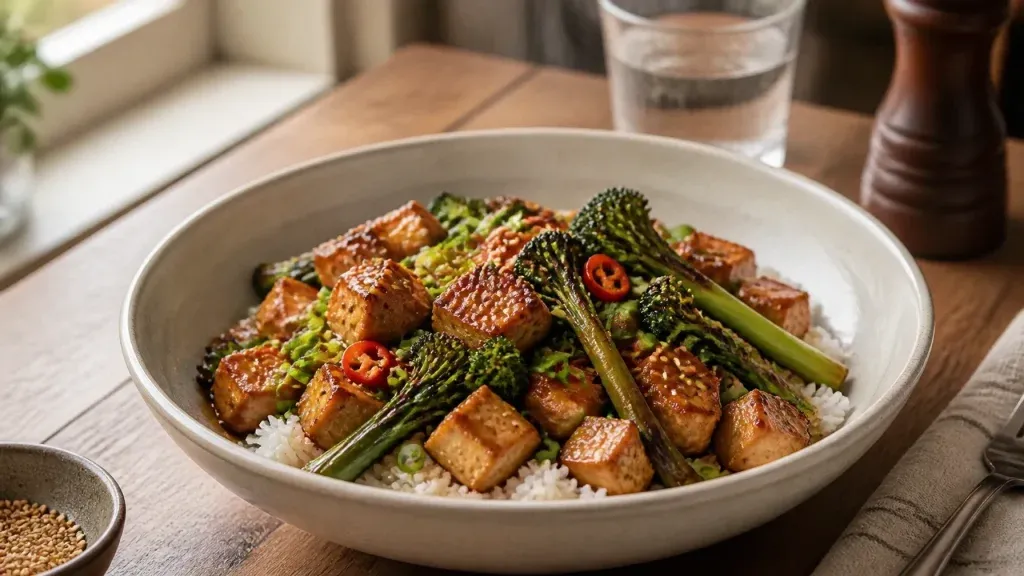
This spicy sesame tofu stir-fry with broccolini is my answer to the familiar weeknight question: “What can I make quickly that still tastes like real dinner?” You get crisp-edged tofu, bright green vegetables, a glossy savoury sauce, and enough chilli to wake up your taste buds, all in about 15 minutes of cooking time. The secret is not speed alone. It is heat, moisture control, and knowing exactly when to add the sauce.
Tips & Technique: The Science of Crisp Tofu
Dry tofu before you chase a crust
Treat surface moisture as the main obstacle between tofu and beautiful browning. Tofu contains a lot of water, and water must evaporate before the surface can become hot enough for deep browning reactions.
If the outside is wet, the tofu steams. If the outside is dry, the pan can create a firm, golden crust. That crust gives you the contrast that makes this dish satisfying: crisp corners outside, tender tofu inside.
Use extra-firm tofu and dry it thoroughly with a clean kitchen towel. For a true 15-minute dinner, skip a long weighted press and focus on removing moisture from the surface. If you have time earlier in the day, press the tofu in advance and refrigerate it until cooking.
Give the tofu a thin cornstarch coat
Use a light dusting of cornstarch to create a delicate shell around the tofu. Cornstarch absorbs a little surface moisture, then forms a crisp coating as it heats in oil. It is lighter and crunchier than a thick flour batter, which is exactly what this stir-fry needs.
Keep the coating thin. Heavy clumps can turn gummy when they meet the sauce. Shake off excess before the tofu reaches the pan. You are looking for a faint, dusty layer, not tofu wearing a winter coat.
Heat the pan, then protect the space
Preheat your skillet properly before adding the tofu. A hot cooking surface helps the exterior set quickly, while a crowded pan traps steam and lowers the temperature.
Arrange the tofu in a single layer with room around each piece. Work in batches if necessary. Yes, this adds a minute or two, but it saves you from pale, soft cubes and a pan full of disappointment.
Let the tofu sit long enough to brown before turning it. Moving it too soon can tear the coating and prevent a proper crust from forming. Once the underside releases easily, turn the pieces and continue until several sides are golden.
Cook broccolini for contrast, not collapse
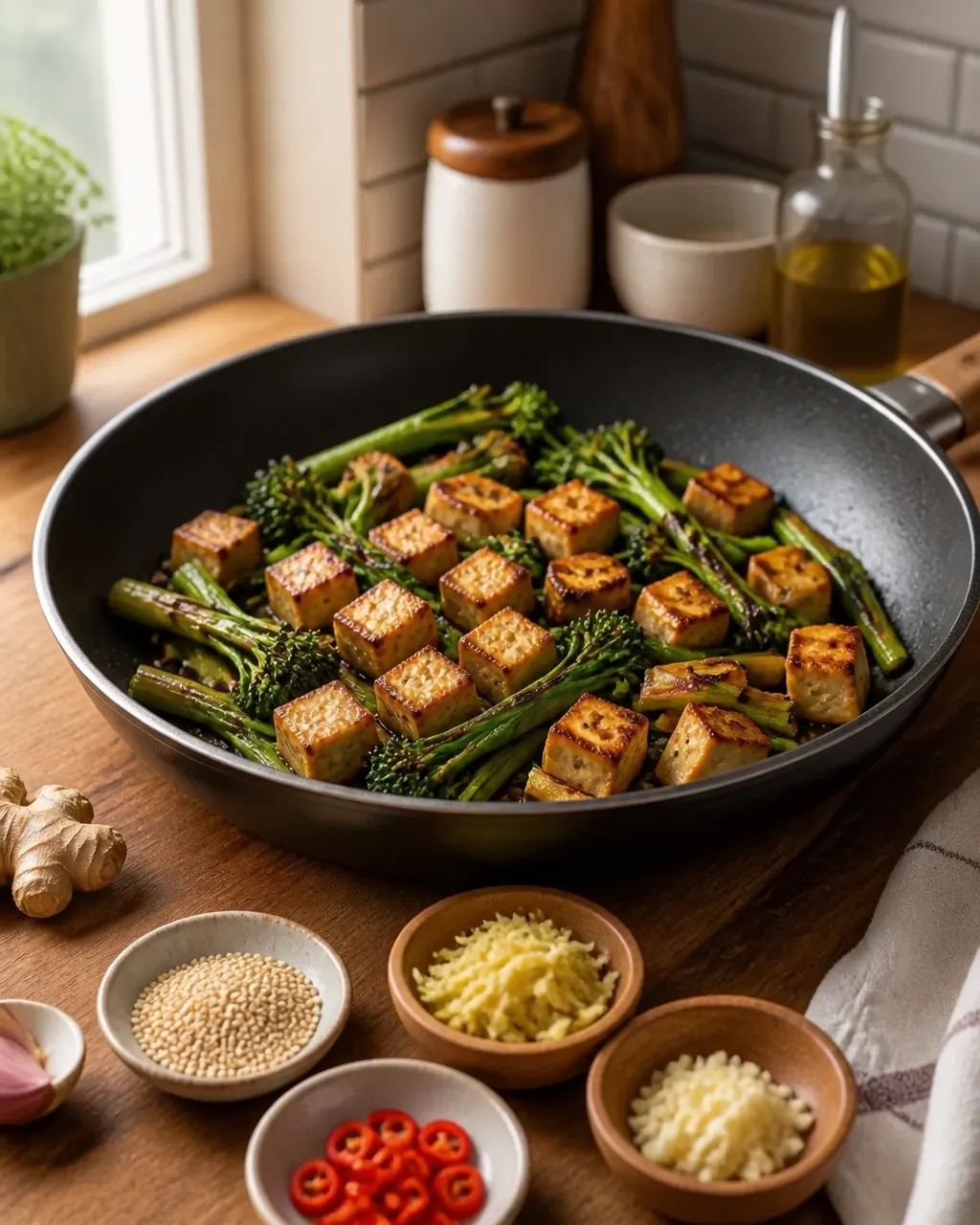
Broccolini has slender stems and small florets, so it cooks quickly. Aim for crisp-tender texture: bright green, lightly charred in places, and still firm enough to offer a clean bite.
Start with the thicker stem sections if they need extra time, then let the florets join later. A small splash of water can create a brief burst of steam, softening the stems without turning the whole vegetable limp.
Avoid burying broccolini in sauce too early. Its fresh, slightly bitter flavour balances the sweet-savoury glaze. If it cooks until floppy, that contrast disappears.
Build flavour in layers
The sauce works because it balances several taste sensations at once. Soy sauce brings salt and umami. Sesame oil contributes a toasted aroma. Chilli adds heat, while a touch of sweetness rounds out the sharper edges. Rice vinegar cuts through the richness and keeps the glaze lively.
Acidity matters here. Without it, the sauce can taste heavy and one-dimensional. Add enough vinegar to brighten the dish, but do not overdo it; the goal is balance, not a tofu pickle situation.
Cook garlic and ginger briefly so they release their aromatic oils without burning. Keep the pan moving once they hit the heat. Burnt garlic is bitter, and bitterness is not the kind of spice this dinner needs.
Thicken the sauce separately from the crisping
Use a cold cornstarch slurry to thicken the sauce smoothly. Mixing the starch with cold liquid first helps prevent lumps. Once heated, the starch granules swell and create that glossy texture that clings to tofu and broccolini.
Do not simmer the tofu in the sauce for several minutes. Add the crisp pieces only after the sauce has thickened, then toss briefly. A long soak rehydrates the cornstarch crust and softens it. The sauce should coat the tofu, not erase all evidence that you worked for that crunch.
For another useful tofu technique, compare this approach with Cookpedia’s Teriyaki Tofu with Charred Spring Onions. The flavour profile is different, but the same rules apply: dry tofu, high heat, and a short final glaze.
Finish with freshness
Add sesame seeds, sliced scallions, or fresh chilli at the end rather than cooking everything into submission. Fresh toppings provide aroma and texture, which makes the dish feel brighter and more complete.
Serve immediately. Crisp tofu waits for nobody.
Variations That Keep the Balance
Use this recipe as a flexible template rather than a strict personality test. For a milder dinner, reduce the chilli and add extra vinegar or a squeeze of lime at the table. Acid can make a dish taste more vibrant without adding more heat.
For a deeper, warmer version, add finely sliced mushrooms. Their moisture and umami pair well with tofu, but cook them until their liquid evaporates so they do not steam the tofu.
Swap broccolini for broccoli florets, snow peas, green beans, or thinly sliced bell pepper. Choose vegetables with different colours and textures, but avoid adding too many at once. A stir-fry is fast because each ingredient has room to meet the heat.
If you usually search for air fryer recipes dinner ideas, crisp the tofu in the air fryer and prepare the broccolini in a hot skillet. This gives you a slightly drier tofu crust, though the stovetop version is faster when you want everything finished in one pan.
For a gluten-free plate, use certified gluten-free tamari. For a fully plant-based meal, choose maple syrup instead of honey. Either way, keep the same flavour architecture: savoury depth, gentle sweetness, acidity, heat, and toasted sesame.
Side Dish Pairings: Add Freshness and Softness
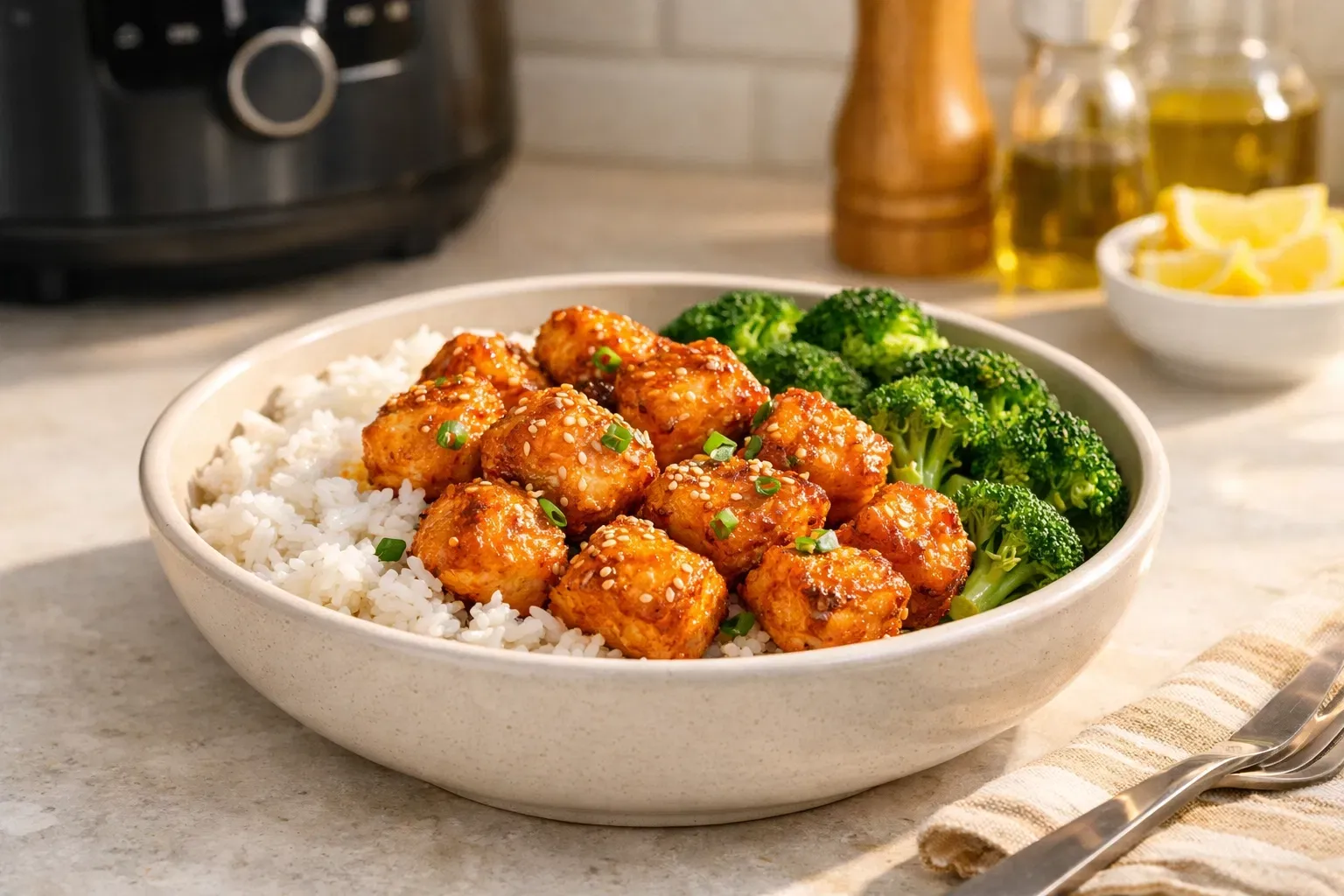
Serve the stir-fry over steamed white rice when you want the simplest option. The rice absorbs the extra glaze and softens the chilli, making each bite feel balanced.
Brown rice, quinoa, or mixed grains bring a nuttier flavour and more chew. Choose these when you want a heartier plate or need something that will hold up well for lunch the next day.
Pair the tofu with a cool cucumber salad if the sauce is particularly spicy. The cucumber’s water content and gentle crunch provide relief from the heat. A plain cabbage slaw works in the same way, especially with a little rice vinegar.
Keep extra sides lightly seasoned. The stir-fry already brings salt, umami, spice, and sweetness, so avoid serving it beside another rich or heavily sauced dish. A simple green salad, steamed edamame, or fresh fruit is enough to complete the meal.
For more inspiration, browse Cookpedia’s 15-minute meals and vegetarian dinner recipes for similarly efficient combinations.
FAQ: What If My Stir-Fry Goes Wrong?
What if my tofu stays soft instead of crisp?
Check the surface moisture first. Wet tofu steams, especially when the pan is crowded. Dry the pieces more thoroughly, use a hot pan, and leave space between them.
Also check the coating. Too much cornstarch can become pasty, while too little may not provide enough protection. Use a thin, even layer and shake away loose excess.
What if the tofu sticks to the skillet?
The pan may not be hot enough, or the tofu may have been moved before the crust set. Allow the cooking surface and oil to heat before adding the tofu. Then leave each side alone until it develops colour and releases more easily.
A well-seasoned skillet or quality nonstick pan also helps. Do not scrape aggressively; torn tofu loses its crust and looks rather sad doing it.
What if my sauce becomes lumpy?
The starch probably was not mixed into cold liquid before heating, or it was added too quickly. Whisk the slurry until smooth, then pour it into the simmering sauce while stirring.
If lumps appear, keep whisking immediately. Do not add dry cornstarch straight to a hot pan unless you are specifically hoping to create sauce dumplings.
What if the sauce tastes too salty?
Dilute it with a little water, unsalted stock, or another neutral liquid. Then restore balance with a small amount of vinegar or sweetness rather than adding more soy sauce.
Remember that the tofu and rice are not seasoned as strongly as the sauce, so the finished plate may taste more balanced once everything is combined. Taste the complete dish before making a dramatic rescue.
What if my sauce is too sweet?
Add acidity gradually. Rice vinegar or lime juice can sharpen the flavour and make the sweetness feel less dominant. A little extra chilli can also redirect attention, but do not use heat to hide a badly balanced sauce.
Can I make this ahead?
Prepare the tofu and vegetables ahead, but keep the sauce separate. Reheat the tofu in a hot skillet or air fryer so the crust has a chance to revive. Add the sauce only at the end.
Store leftovers in the refrigerator and use them within a few days. Expect the tofu to soften after storage; that is a texture change, not a cooking failure. Reheating uncovered helps remove some surface moisture.
Is this a healthy dinner?
It can be part of a balanced meal, especially when served with plenty of vegetables and a reasonable portion of rice or grains. Tofu provides plant-based protein, while broccolini adds fibre and micronutrients.
Keep in mind that soy-based sauces can be high in sodium. Use a lower-sodium version if needed, and balance the plate with unsalted sides. This is one of my favourite healthy dinner ideas because it delivers bold flavour without relying on a long ingredient list.
How do I make it work for a family?
Serve the chilli on the side or use a mild amount in the main sauce. Put the tofu, broccolini, rice, and toppings on the table separately so everyone can build a bowl.
That small bit of customisation makes this one of those quick family meals that feels flexible instead of fussy. Keep the non-negotiables: dry tofu, high heat, and a brief final toss: and let everyone choose their preferred level of spice.