Recipe
Servings
3–4 1×
Serves 3–4Prep 20 minCook 25 minTotal 45 min
Ingredients
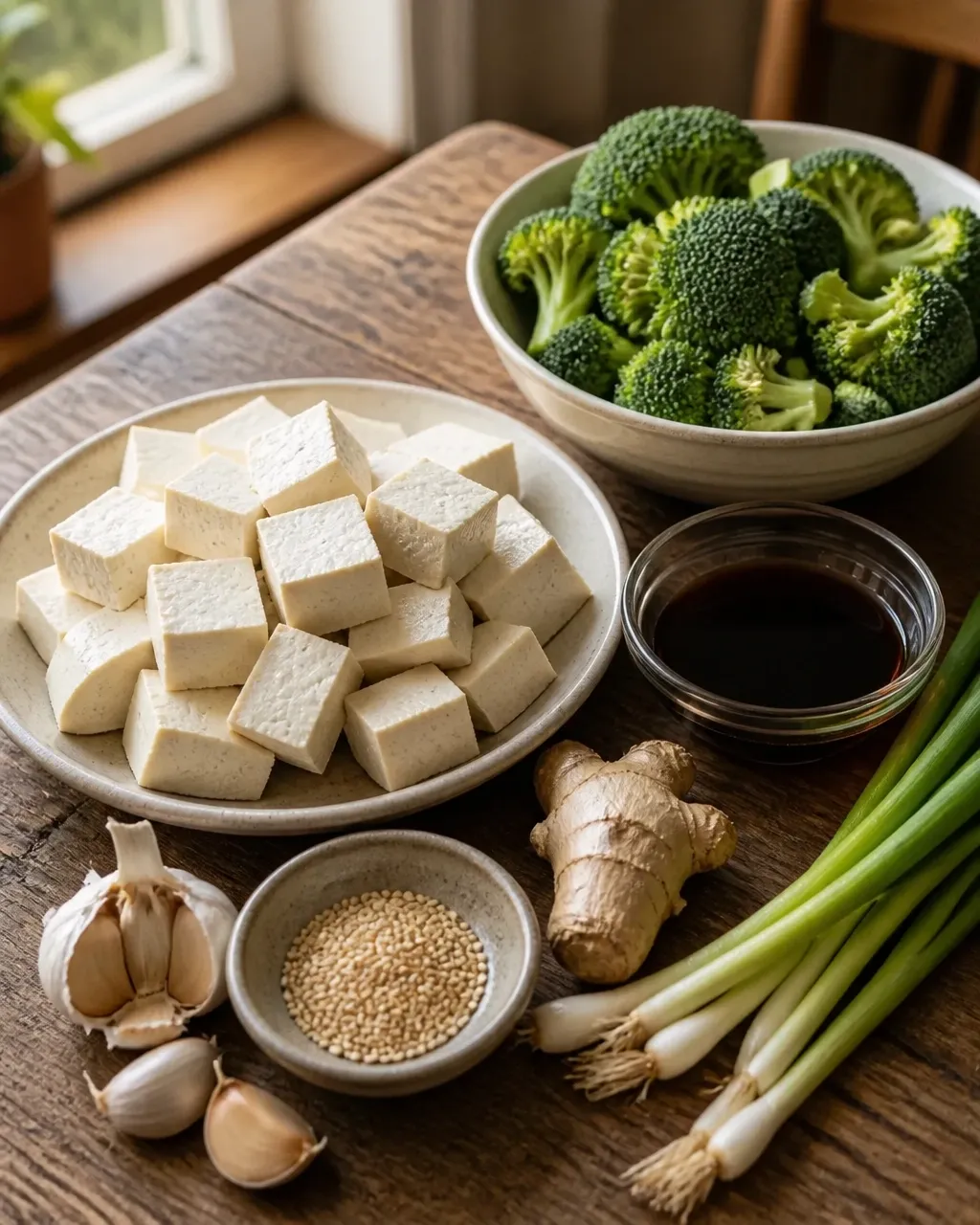
- 1 block extra-firm tofu, drained
- 4 cups broccoli florets
- 2–3 tablespoons cornstarch
- 2 tablespoons neutral oil
- 3 tablespoons soy sauce or gluten-free tamari
- 1 tablespoon toasted sesame oil
- 1 tablespoon rice vinegar or lime juice
- 1 tablespoon maple syrup
- 2–3 garlic cloves, minced
- 1 teaspoon grated ginger
- Sesame seeds, scallions, and chili flakes, for serving
- Cooked rice, quinoa, or noodles
Method
- Press the tofu for 15–20 minutes, then pat it very dry. Tear or cut it into bite-sized pieces and toss gently with cornstarch.
- Cook the tofu in a lightly oiled skillet over medium heat until golden and crisp on several sides. Work in batches if needed.
- Stir-fry or roast the broccoli until bright green and crisp-tender.
- Whisk the soy sauce, sesame oil, vinegar, maple syrup, garlic, and ginger. Warm the sauce briefly in a clean pan.
- Add the tofu and broccoli to the warm sauce and toss just until coated.
- Serve over rice, quinoa, or noodles. Finish with sesame seeds, scallions, and chili if desired.
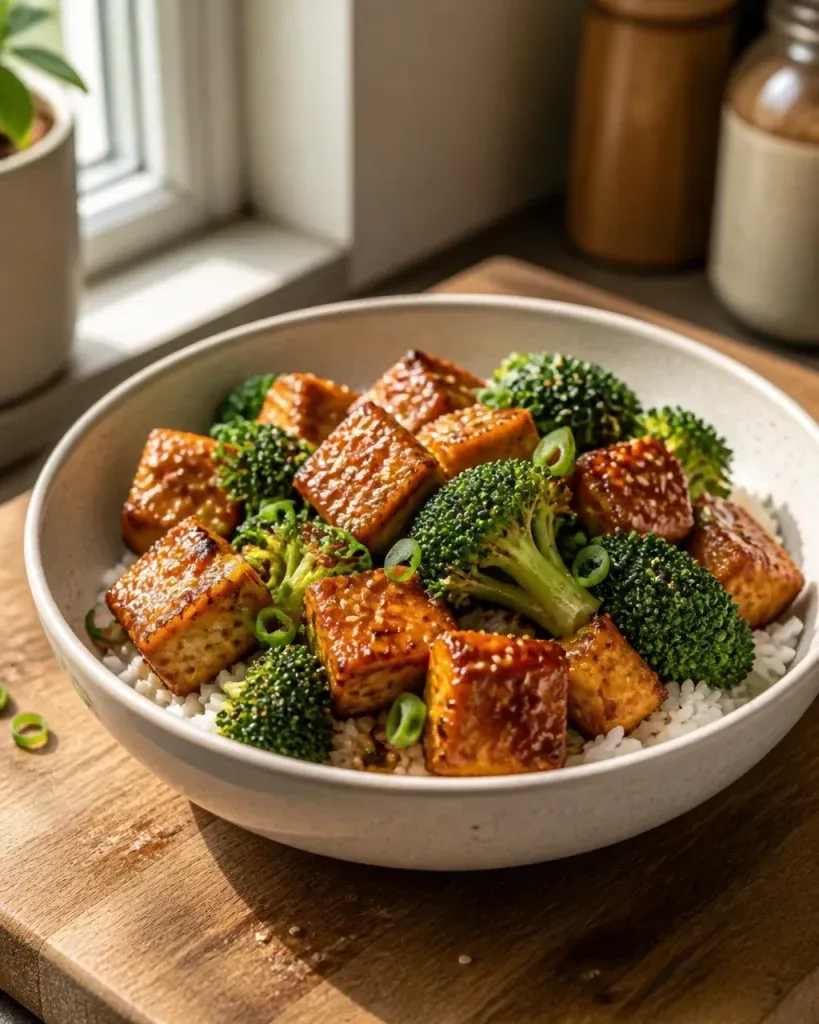
Some tofu dishes are soft, pale, and strangely determined to stick to the pan. This one is not. My crispy tofu and broccoli gets golden edges, tender centers, and a savory garlic sesame sauce that clings without turning the crust soggy. Serve it over rice, noodles, or quinoa for one of those plant-based dinner ideas that feels comforting, colorful, and completely doable on a busy evening.
Tips & Technique: Engineer the Crisp, Then Add the Sauce
Remove surface moisture before chasing browning
Treat tofu like a sponge-shaped protein, because that is essentially what it is. Extra-firm tofu still holds plenty of water, and water controls the temperature of the cooking surface. While that moisture is evaporating, the tofu steams instead of browning.
Press the tofu before cooking, then pat it dry. You do not need a special tofu press; a plate, a clean towel, and a moderately heavy pan work well. Pressing does not magically create crispness, but it removes free water and gives the exterior a head start.
Use extra-firm tofu for the most reliable texture. Softer varieties contain more water and are more likely to crumble or remain tender rather than crisp. That can be delicious in a curry, but it is not what you want here.
Create rough edges for more crunch
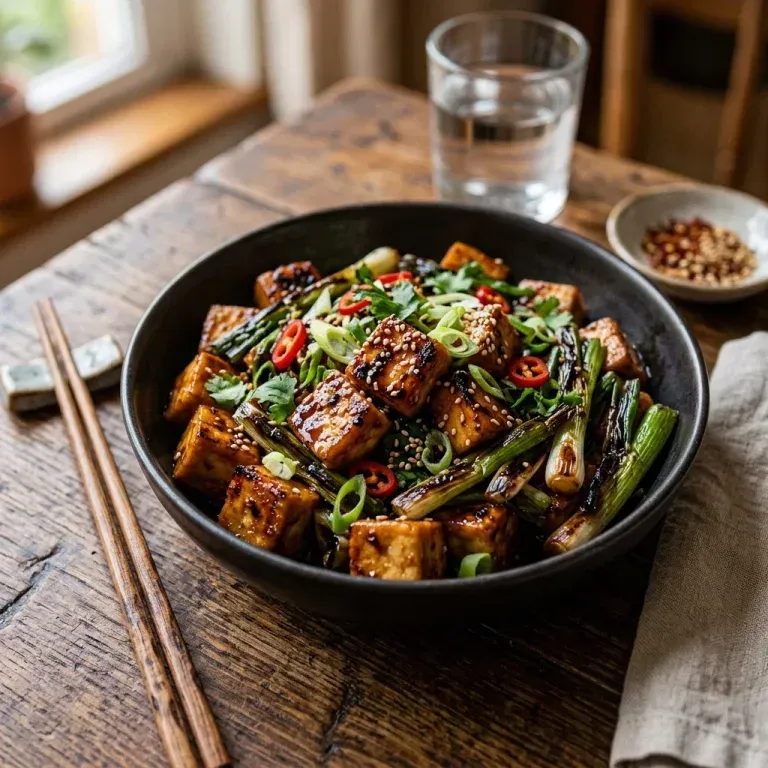
Cutting tofu into perfect cubes is tidy, but tearing it into uneven chunks is even better for texture. Jagged edges create more surface area, which means more corners to brown and more little ridges for sauce to catch.
Do not pulverize it. Aim for bite-sized pieces with a mixture of flat sides and craggy edges. Those irregular surfaces are not a mistake; they are your crunch insurance policy.
A light coating of cornstarch or potato starch helps form a dry shell around the tofu. Keep the coating thin and even. A thick, powdery layer can become pasty, while a barely coated surface may not provide enough protection from moisture. Toss gently until every piece looks lightly dusted rather than buried.
Let heat move through the tofu
Oil is a heat conductor, not a miracle worker. Use enough to coat the cooking surface and transfer heat evenly, but avoid deep-frying the tofu. Too little oil can create pale patches and sticking. Too much can brown the outside before the interior moisture has had time to escape.
Start with steady medium heat, and increase it slightly as the tofu dries. Extremely high heat sounds exciting, but it can seal the outside too quickly, leaving you with a leathery crust and a soft middle. Moderate, controlled heat gives water time to leave before the browning accelerates.
Listen for the pan. A lively sizzle is useful. Aggressive spitting usually means the tofu is still carrying too much water or the heat is too high.
Resist the urge to rearrange everything
Leave the tofu alone long enough to form a crust. Constant flipping tears the surface before it has set and exposes fresh, damp sides to the pan. The tofu may stick at first, but it should release more easily once the underside has browned.
Check one piece before moving the whole batch. If it is golden and releases with a gentle nudge, turn the tofu. If it drags or tears, give it another minute. Patience is a cooking tool, even if it is the least glamorous one in the drawer.
For an air fryer, spread the tofu in a single layer and leave space around each piece. Crowding traps steam and defeats the purpose of circulating hot air. Shake once or twice, but do not keep opening the basket. Every interruption drops the temperature and extends the cooking time.
Cook broccoli until bright and crisp-tender
Broccoli should bring contrast, not collapse into green mush. Brief roasting or stir-frying keeps the florets bright, with tender stems and slightly browned tips. Cut the florets into similar sizes so the small pieces do not burn while the large ones remain raw.
Avoid boiling the broccoli for this dish. Waterlogged florets dilute the sauce and soften the texture. If the broccoli seems dry during stir-frying, add a small splash of water and cover the pan briefly. That creates steam without turning the vegetables limp.
Broccoli also provides a useful flavor balance. Its mild bitterness keeps the sweet-savory sauce from tasting heavy, while its firm texture makes the crispy tofu feel more substantial.
Build the sauce around balance
Garlic, sesame oil, soy sauce or tamari, rice vinegar, and a small amount of maple syrup create the central flavor profile. Each part has a job. Soy sauce brings salt and umami. Sesame oil adds aroma and richness. Vinegar cuts through that richness. Maple syrup rounds the sharp edges and helps the sauce glaze.
Do not pour the sauce over the tofu too early. Moisture is the enemy of a crisp crust, and a long soak turns beautifully browned tofu into a soft sponge. Warm the sauce separately, then toss it with the tofu and broccoli just before serving.
Keep the sauce thick enough to coat the food rather than pool at the bottom of the bowl. If it becomes too concentrated, loosen it with water. If it seems thin, let it simmer briefly so some moisture evaporates. Think glossy coating, not soup.
For more background on why tofu browns better after drying and why rough surfaces crisp well, see this useful guide to the science of crisping tofu. My method also follows the practical principle of adding sauce after baking or frying, rather than marinating the tofu in a watery mixture, as explained in this crispy tofu guide.
Variations: Change the Flavor Without Losing the Texture
Make it spicy
Add chili flakes, sambal, or a spoonful of sriracha to the sauce. For a fresher heat, finish with thinly sliced red chili and scallions. Add spice gradually; vinegar and soy sauce can make chili taste sharper as the sauce reduces.
Make it gluten-free
Use certified gluten-free tamari instead of regular soy sauce, and check the labels on your starch and chili sauces. Tamari is often gluten-free, but brands vary. Serve the tofu with rice, quinoa, or rice noodles rather than wheat noodles.
Add more vegetables
Fold in snow peas, bell peppers, mushrooms, shredded carrots, or edamame. Keep the vegetables in separate groups while cooking so each one reaches the right texture. Mushrooms need time to release water and brown; snow peas need only a quick toss.
Use noodles or lettuce cups
Rice makes this a comforting bowl, while noodles turn it into a slurp-friendly dinner. For a lighter option, spoon the tofu and broccoli into lettuce cups and add extra scallions. The sauce will drip, so keep a napkin nearby. That is not a flaw. That is evidence of dinner.
Try a citrus finish
Replace some of the vinegar with lime juice, or add a little orange zest at the end. Citrus lifts the sesame flavor and gives the dish a brighter finish without requiring more sugar.
Side Dish Pairings: Add Contrast, Not Competition
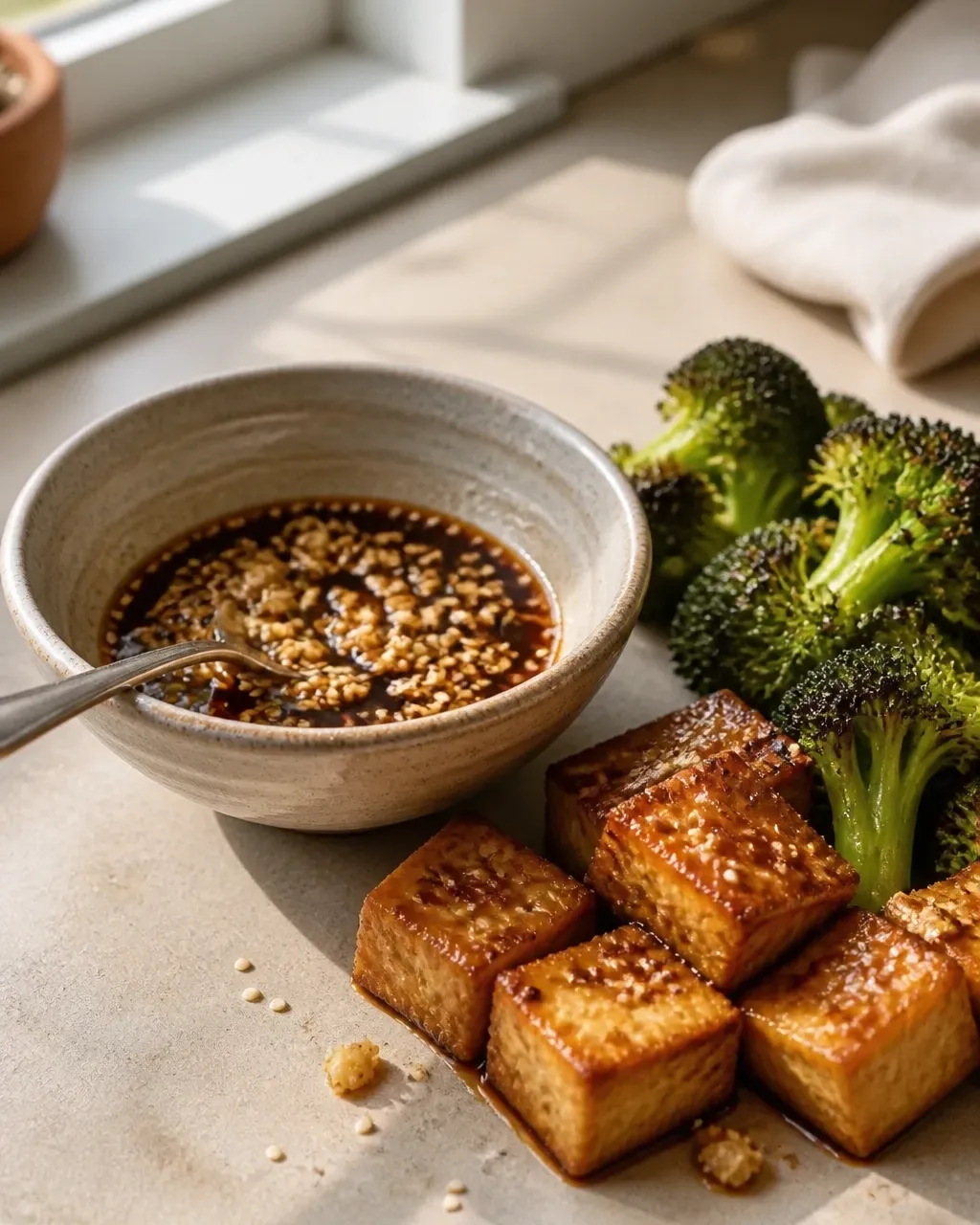
Serve this tofu and broccoli over steamed rice when you want a dependable, filling bowl. Brown rice, quinoa, or farro adds a nuttier flavor and more chew, while rice noodles keep the meal quick and light.
Balance the savory sauce with something fresh and acidic. Try quick cucumber ribbons dressed with rice vinegar, a simple cabbage slaw, or shredded carrots with lime. A small portion is enough; the side should refresh the palate rather than compete with the tofu.
For extra crunch, add roasted peanuts, cashews, or sesame seeds just before serving. For a low-effort finish, offer lime wedges and chili oil at the table. These small additions let everyone adjust the bowl without forcing you to cook three different dinners.
This recipe fits neatly beside other vegetarian dinner recipes from Cookpedia, especially when you are building a rotation of quick family meals that does not rely on meat to feel satisfying.
FAQ: Troubleshoot the Crisp and the Sauce
Why did my tofu turn out soft?
The most common cause is excess moisture. If the tofu was not pressed or dried well, the pan spent its energy evaporating water instead of browning the surface. Crowding the pan causes the same problem because trapped steam cannot escape.
Press the tofu longer, pat it dry, and cook in batches if necessary. Also wait before adding the sauce. Even perfectly crisp tofu will soften if it sits in a wet sauce for too long.
Can I skip the cornstarch?
Yes, but expect a thinner crust. Starch absorbs a little surface moisture and creates a rough coating that browns readily. Without it, tofu can still become golden, especially when it is well dried and cooked with enough space around each piece.
Use potato starch for an especially crisp finish, or choose arrowroot when you prefer a lighter coating. Arrowroot can become slippery in a very wet sauce, so add it only at the end and serve promptly.
Should I marinate the tofu first?
Avoid a long wet marinade if crispness is your priority. Tofu does not absorb thick flavors as deeply as you might expect, and a wet exterior makes browning harder. Season the tofu lightly before cooking, then add the concentrated garlic sesame sauce after the crust has formed.
If you want deeper seasoning, use a very short coating and allow the tofu to dry briefly before adding starch. Keep the surface tacky, not wet.
What if my sauce tastes too salty?
Add water, rice vinegar, or lime juice rather than more sweetener alone. Saltiness is reduced by dilution, while acid creates contrast and makes the sauce taste more balanced. You can also toss in more unsauced broccoli or serve the dish over a larger portion of plain rice.
Use low-sodium soy sauce next time, but still taste before adding extra salt. Sesame oil contributes aroma, not salt, so it will not fix an overly seasoned sauce by itself.
Can I make this ahead?
Prepare the sauce and vegetables ahead, but cook the tofu close to serving time for the best crust. Refrigeration softens the exterior, although reheating in an air fryer or hot oven can restore some crispness.
Store the tofu, broccoli, sauce, and rice separately. Reheat the tofu uncovered, then toss everything together at the table. This small bit of organization makes busy-night cooking much easier.
Is this suitable for meal prep?
Yes, with one texture compromise. Pack the sauce separately and keep any crunchy toppings in a small container. Reheat the tofu and broccoli until hot, then add the sauce just before eating.
For the best meal-prep result, use a sturdy grain such as brown rice or quinoa. It holds up better than delicate noodles and gives the sauce somewhere to settle without making the whole meal soggy.