Recipe
Serves
8 1×
Serves 8Prep 10 minCook 35 minTotal 45 min
Ingredients
Method
- Heat the oven to 220C and line a baking tray.
- Mix the wholemeal flour, plain flour, bicarbonate of soda and salt thoroughly in a large bowl.
- Make a well and add 350ml buttermilk, plus the honey or treacle if using.
- Bring the mixture together with a light hand. Add more buttermilk only if required.
- Turn out the dough and shape it into a round without kneading.
- Flatten the round slightly and place it on the baking tray.
- Cut a deep cross across the top.
- Bake for 15 minutes at 220C, then reduce the oven to 200C.
- Bake for a further 20 minutes, until the base sounds hollow when tapped.
- Confirm that the centre reaches at least 90C. Cool on a wire rack before slicing.
Brown Soda Bread (Irish, 45 Minutes)
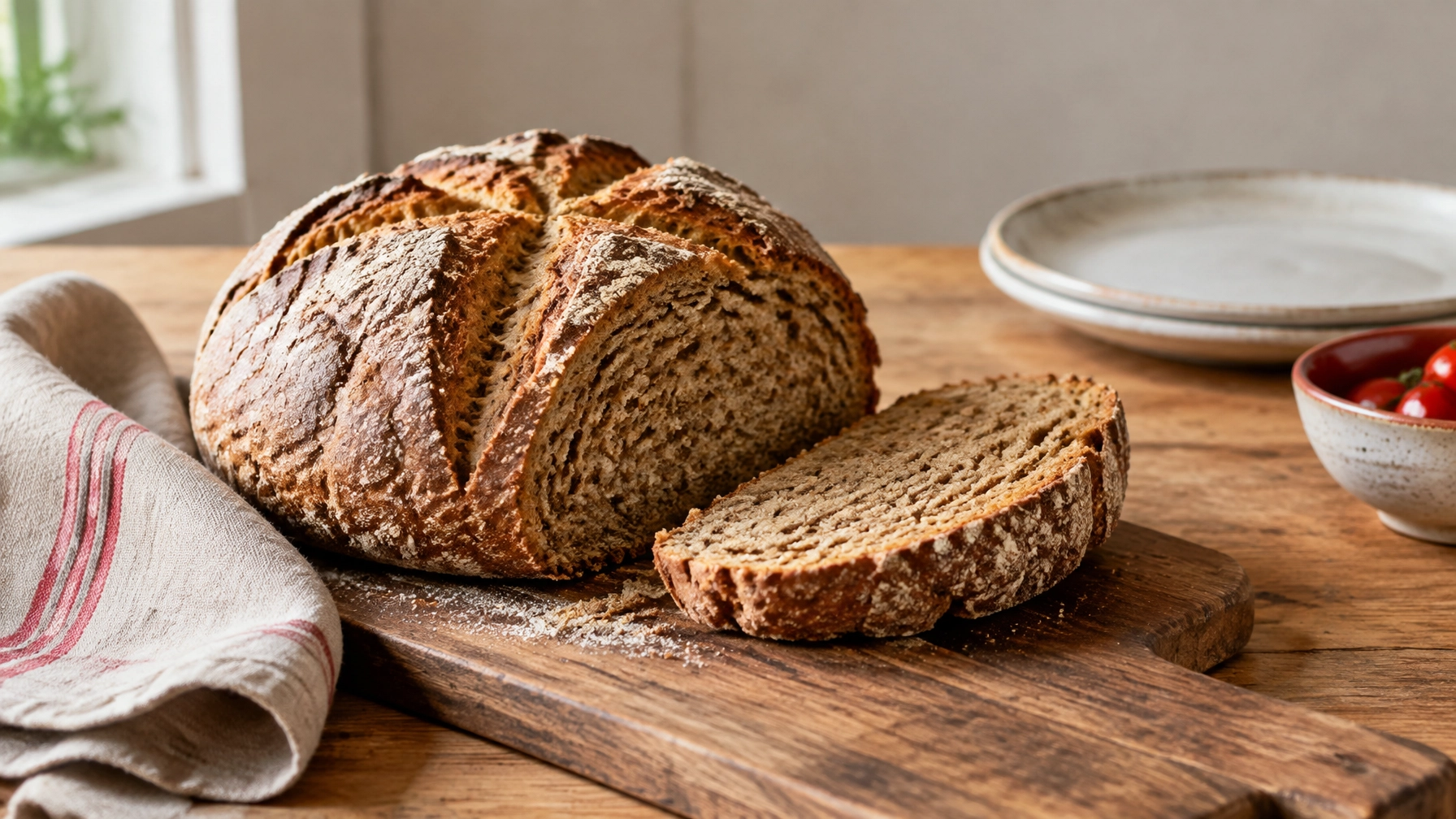
Traditional Irish brown soda bread is a no-yeast loaf made with wholemeal flour, plain flour, bicarbonate of soda, salt and buttermilk.
It requires no proving and no kneading. The dough is mixed briefly, shaped into one round loaf, scored with a cross and baked in a hot oven. The result is a firm crust with a moist, slightly nutty crumb.
Definition
soda bread (noun): bread leavened with bicarbonate of soda and an acidic liquid, usually buttermilk, rather than commercial yeast.
The bicarbonate of soda reacts with the acidity in the buttermilk. This produces carbon dioxide, which expands in the oven and raises the loaf. The process begins as soon as the liquid is added, so the dough should be mixed and baked without delay.
For a traditional brown loaf, wholemeal flour provides the characteristic flavour and texture. Plain flour keeps the bread lighter and helps it open as it bakes.
Texture
The dough should be soft and slightly sticky before baking. It should not be wet, elastic or smooth like a yeasted dough.
The finished bread should have:
- A firm, browned crust
- A close but not heavy crumb
- A mild wholemeal flavour
- A slightly irregular shape
- A dry, fully baked centre
If the loaf sounds dull when tapped, return it to the oven for 5 to 10 minutes. If the crust is already dark, cover the loaf loosely with foil.
Do not cut the loaf immediately after baking. The crumb continues to set as it cools. Cutting too soon can make the centre appear gummy.
Tips
Mix the soda thoroughly. Bicarbonate of soda is strong in a small quantity. It must be dispersed through the flour before the buttermilk is added.
Work quickly. The raising reaction starts as soon as the buttermilk meets the soda. Delays can reduce the lift.
Do not knead. A short mixing time is sufficient. The dough only needs to hold together.
Use enough liquid. Dry dough produces a dense, cracked loaf. Add the buttermilk gradually until all the flour is incorporated.
Cut the cross deeply. A shallow mark may not open properly. The traditional cross also divides the loaf into sections for serving.
Check the base. A hollow sound is a useful traditional test, but a temperature of at least 90C provides a more precise confirmation.
Variations
Seeded
Add 2 tablespoons of mixed seeds, such as sunflower, pumpkin, sesame or linseed. Reserve a few seeds for the top. Fold them into the dry ingredients before adding the buttermilk.
Treacle
Use 1 tablespoon of black treacle instead of honey. Treacle gives the bread a darker colour and a deeper, slightly bitter sweetness. Mix it into the buttermilk before adding the liquid to the flour.
White
Replace the wholemeal flour with an additional 250g of plain flour. The result is a lighter white soda bread with a softer crumb. It may require slightly less buttermilk, so add the liquid gradually.
Storage
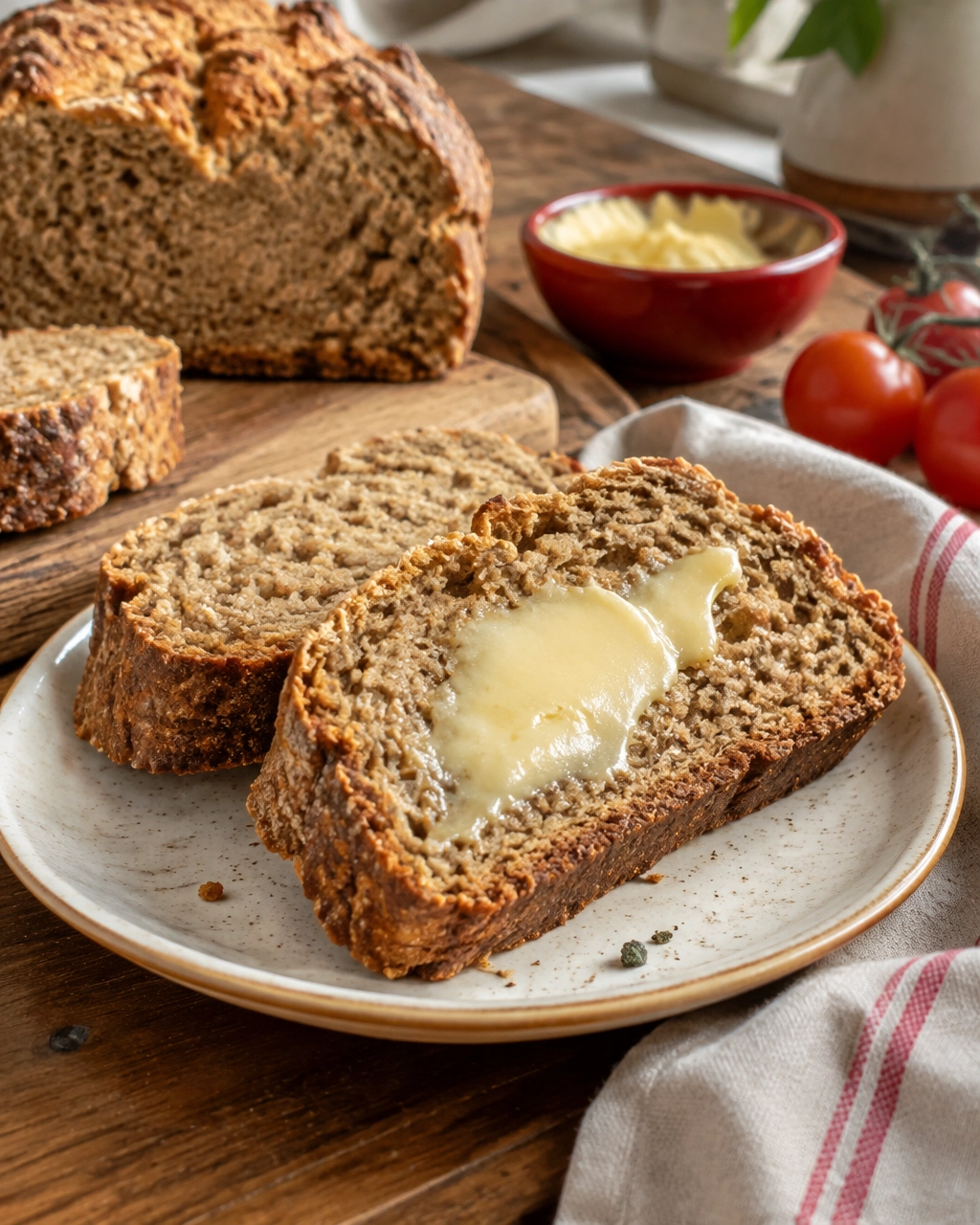
Store the cooled loaf in a paper bag or clean tea towel at room temperature. It is best eaten on the day of baking, but it will keep for up to 2 days.
Do not seal a warm loaf in plastic. Steam will soften the crust and may make the surface damp.
For longer storage, slice the cooled bread and freeze it in a sealed container for up to 3 months. Slices can be toasted directly from frozen.
FAQ
Can brown soda bread be made without buttermilk?
Yes. Add 1 tablespoon of lemon juice or white vinegar to 350ml milk. Leave it for 10 minutes, then use it as the buttermilk substitute. The acidity is required to activate the bicarbonate of soda.
Why did my soda bread turn out dense?
The dough may have been overworked, the bicarbonate of soda may not have been distributed evenly, or the dough may have been too dry. Measure the flour accurately, mix the dry ingredients thoroughly and handle the dough only until it comes together.
Why does soda bread need a cross on top?
The cross allows the loaf to expand during baking. It also helps heat reach the centre of a thick round loaf. Make the cuts deep enough to open during baking.
Can I prepare the dough in advance?
No. Once the buttermilk is added, the raising reaction begins. Shape and bake the dough immediately for the best rise.
How do I know when brown soda bread is cooked?
The loaf should sound hollow when tapped on the base. The centre should also register at least 90C on a probe thermometer. The crust should be browned and the cut cross should look dry rather than wet.